Extending the Table: Gardens, Hospitality, and Two Kalamkari Dastarkhwans

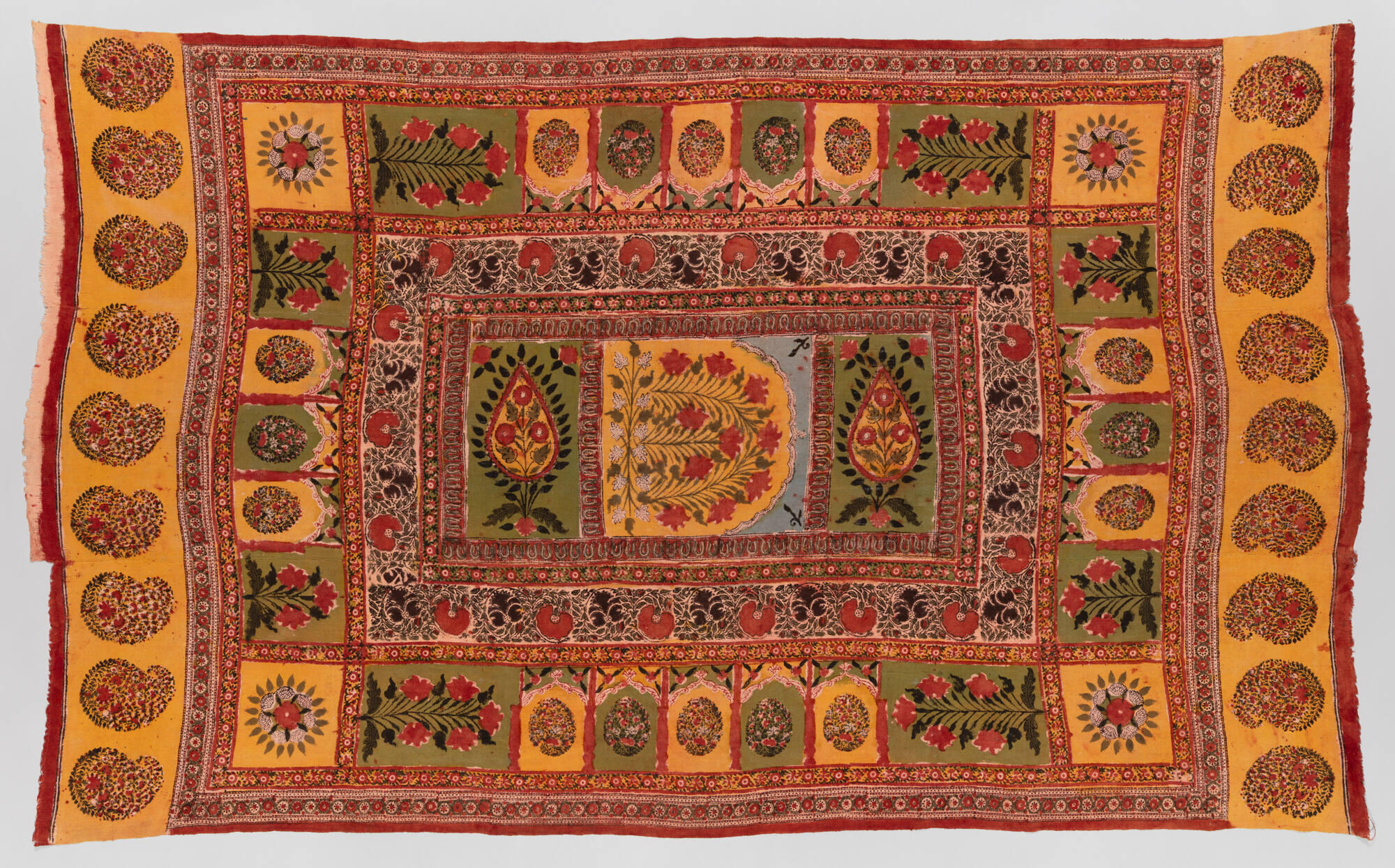
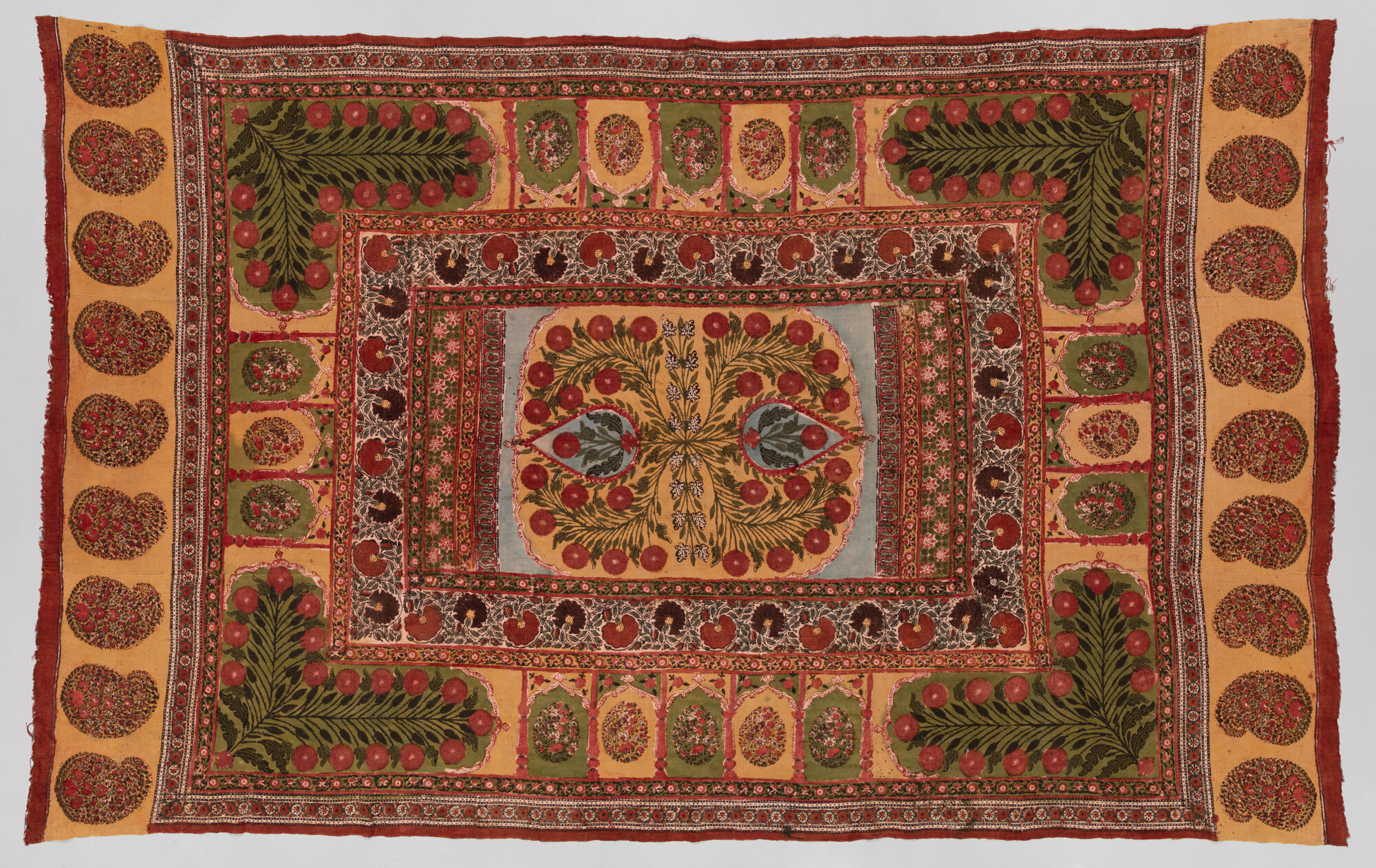
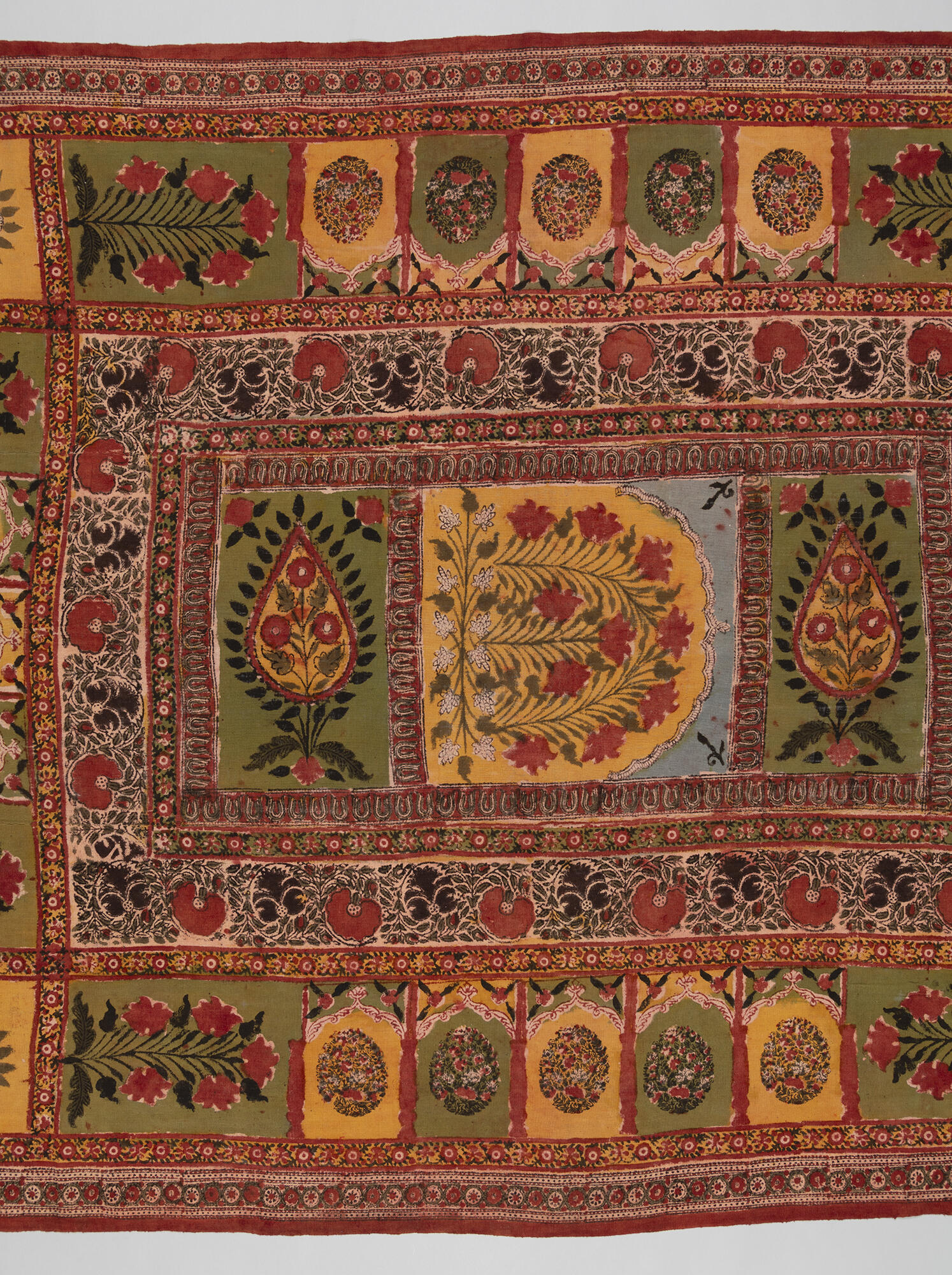
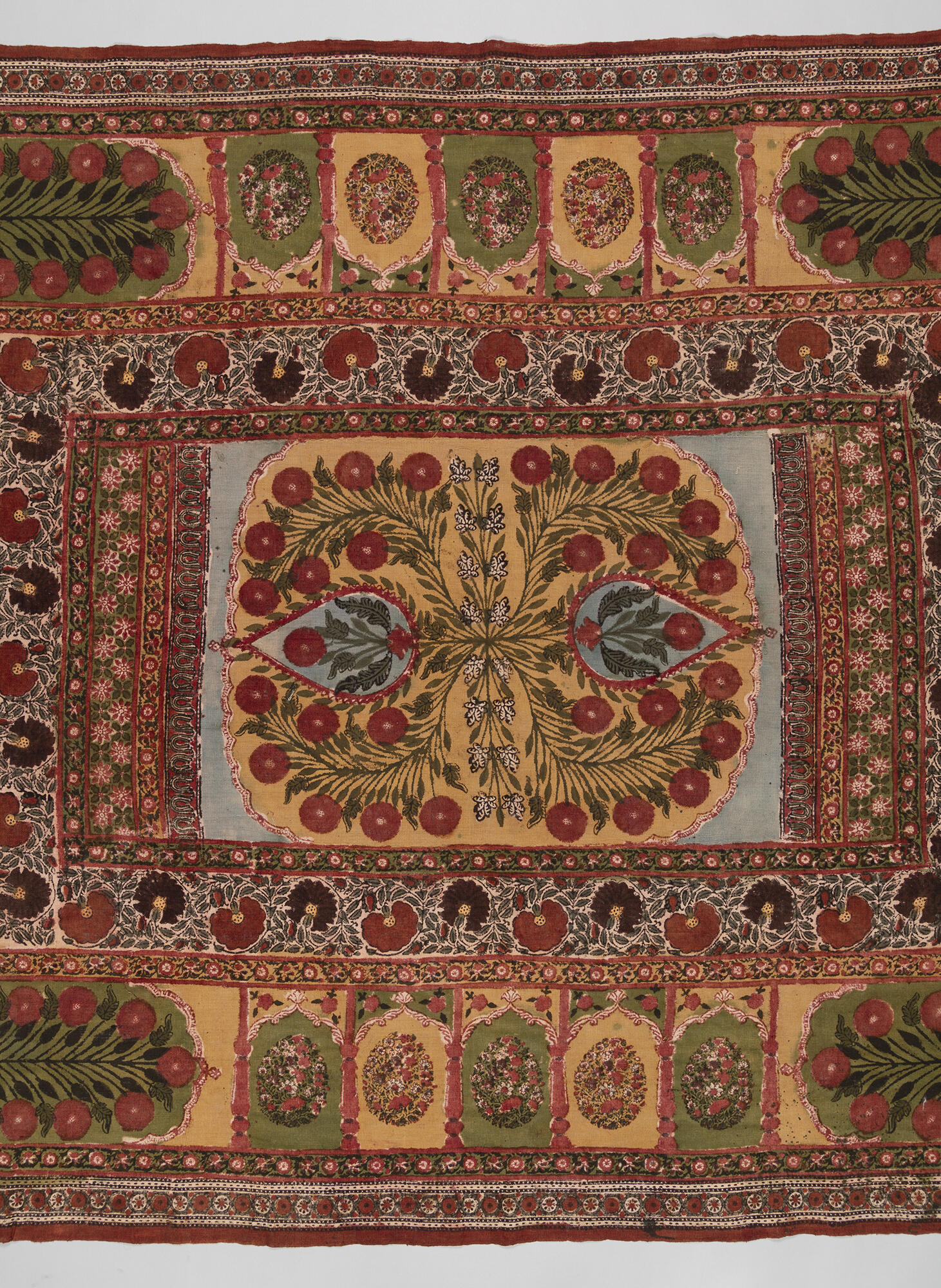
Two dastarkhwans in the Gardner Museum's collection showcase the technical mastery of 16th- and 17th-century Burhānpur Kalamkari artisans. Beyond their vibrant patterns, these cloths symbolize communal hospitality and connection, offering a link to the welcoming spirit of the Museum's iconic Courtyard.
 

share this:

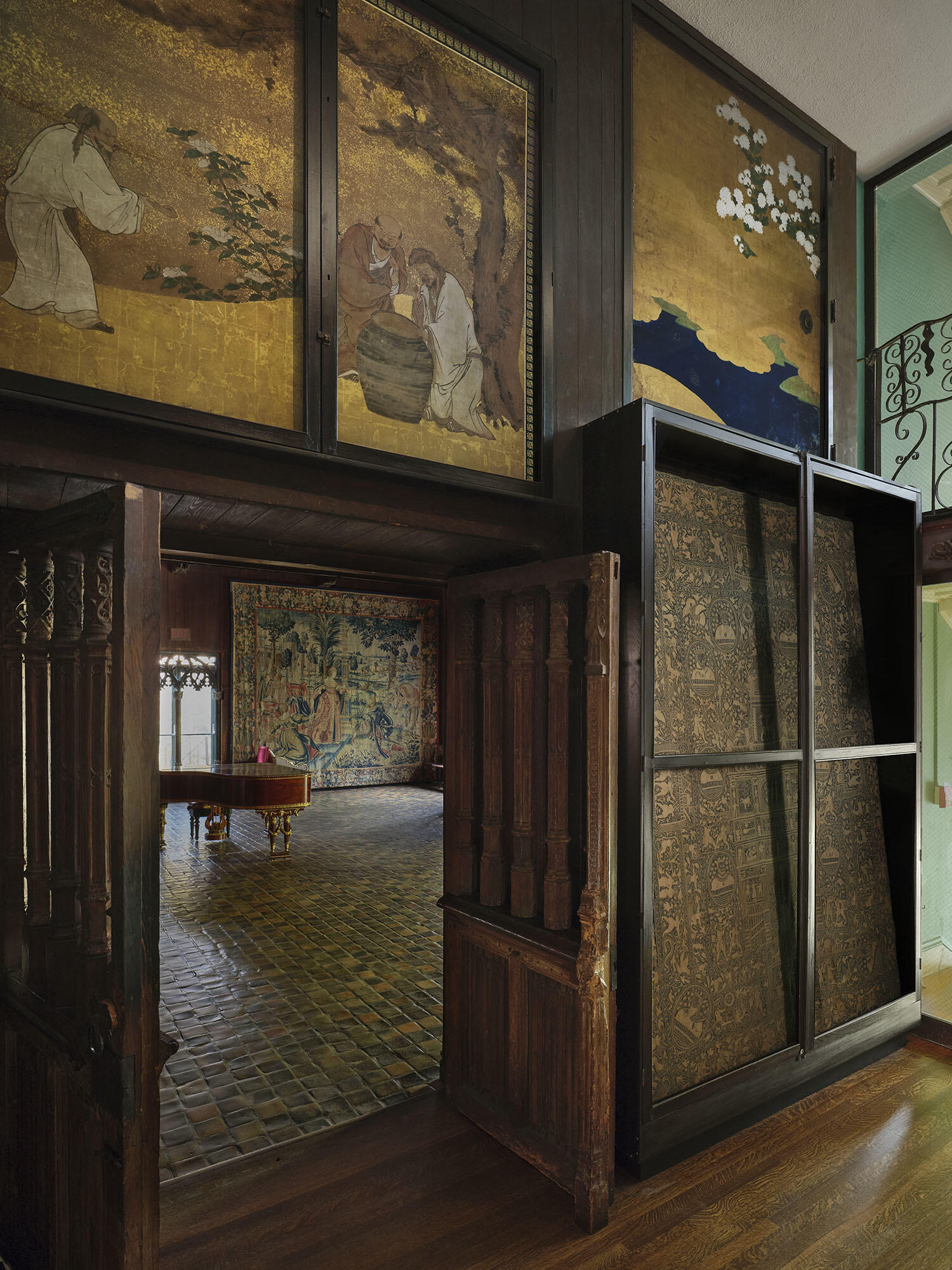
Originally tucked away inside a chest of drawers in the Short Gallery, two vibrant cotton gardens embody centuries of Mughal artistry and the warm, communal spirit of a South Asian feast. Isabella Stewart Gardner likely purchased the two printed and painted textiles in the Kalamkari style, during her 1884 travels in India. In 2025, I had the privilege of viewing them. As a Kalamkari artist and textile scholar, I was curious about what drew Isabella to these textiles, how she may have used them, and to determine more precisely where they were made.
 

During my close reading of the pieces, I drew on my experience working alongside artisans across India and my scholarship bridging oral histories, traditional knowledge systems, and the everyday practices of textile making with historical and contemporary contexts.

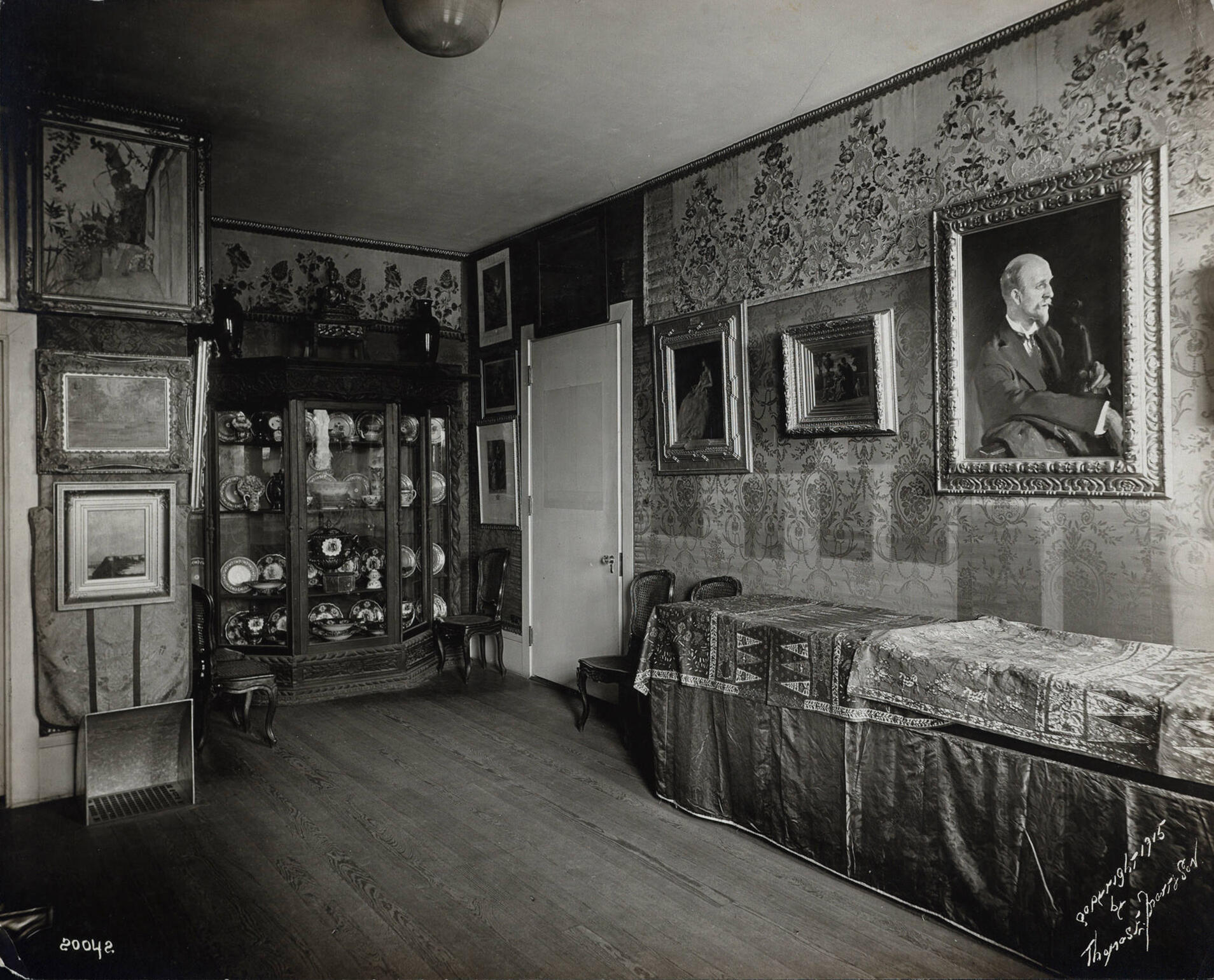
Isabella displayed a Bengal colcha (cover) in the Second Floor Passage and used other East Asian textiles to cover the Musicians Case in the Yellow Room. Did she use these Kalamkari pieces as covers too? Or did she know of their use as dastarkhwans?
 

Dastarkhwans: An Extension of Hospitality

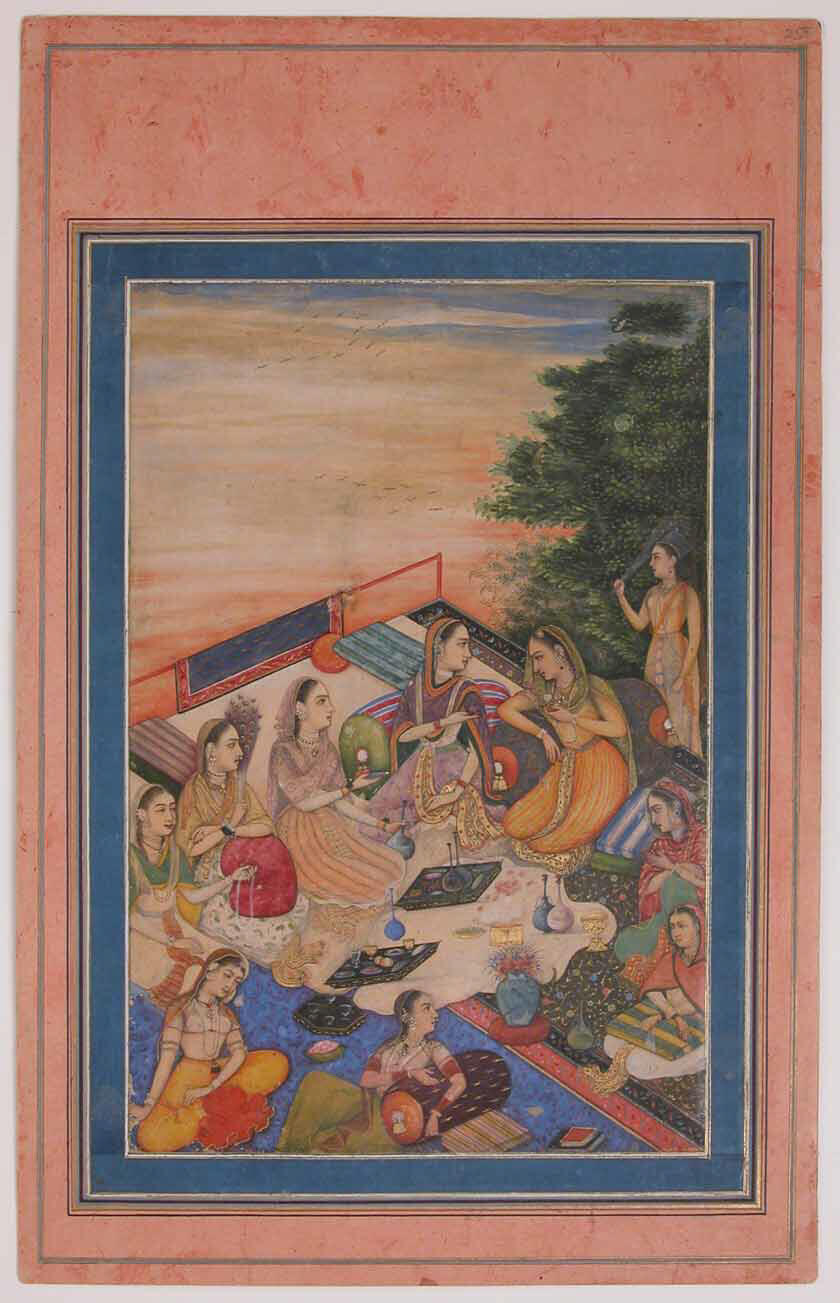
The word dastarkhwan comes from Persian and translates to “cloths to eat.” Dastarkhwans are mostly rectangular and come in many sizes. Made in cotton and decorated with print and paint, they were brought to India with Persianate rule in the 16th century. They served as carpets in outdoor spaces like palace terraces and gardens to host feasts, ceremonies, celebrations, and everyday dining—or as floor-spreads inside tents. 

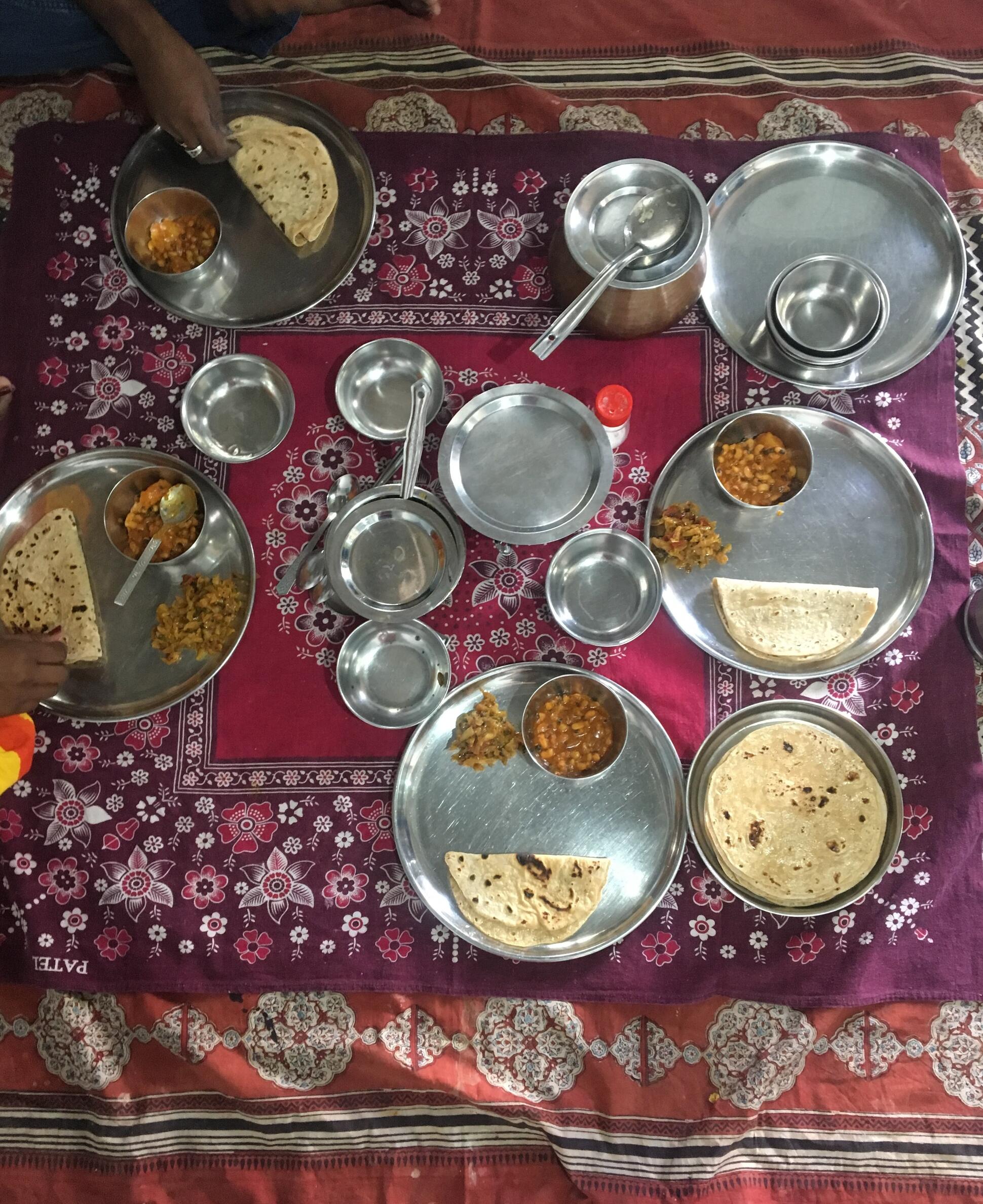
Today, in many Muslim households you will not find a dining table—instead, the call at mealtime is to "lay the dastarkhwan." Unlike dining tables that restrict the number of people at a meal to the number of chairs, dastarkhwans can accommodate more people easily— fitting for South Asian homes where mealtime isn't a closed-door affair. People may show up unannounced; a neighbour’s kid might turn up alongside your own. There is always more food, and there is always more space. Even in urban India, where there are dining tables, additional guests are accommodated by a cloth on the floor.
 

Yes, come on in, of course we have space, let's extend the dastarkhwan.

A dastarkhwan is not just a surface for dining, but also a conduit for communal connection, care, and hospitality. 

I want to believe Isabella knew about her textiles’ uses as dastarkhwans. Her travel journals and notes suggest she was interested in India's precolonial past, even as her experience remained largely American. Her diary reveals a consistent delight in what she perceived as "most Eastern," yet she was also trying to move beyond the orientalizing gaze to collect more "alternative" and authentic objects.
 

The Technique of Kalamkari from the Coromandel Coast and Burhānpur

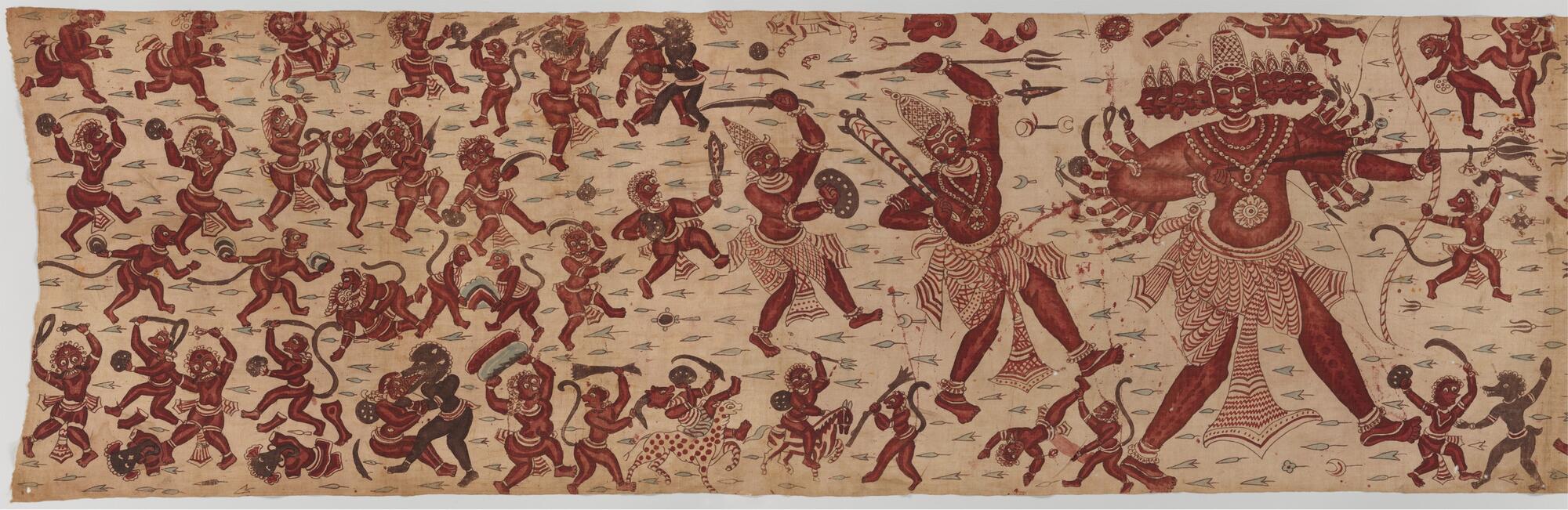
The two dastarkhwans in the Gardner collection are made through the technique of Kalamkari. The word Kalamkari translates to "pen-work" in Persian, referring to motifs and natural pigments painted freehand through a laborious mordant-and-dye process and a unique bamboo pen (the kalam). Kalamkari is believed to be a 3000-year-old technique with material evidence from the 12th–13th century. Its production is usually attributed to the Coromandel Coast in southeast India, most popular for its narrative scrolls, figural imagery, and a deep red color drawn from the chay root plant and the minerals from the river beds. The hue is so vivid that it is hard to believe it is a natural dye. Today, Kalamkari is only produced in Srikalahasti, India on the Coromandel Coast. 
 

In the late 16th–17th century, there was another important center of Kalamkari production: the historic city of Burhānpur in central India. Here under Mughal imperial patronage, Kalamkaris were made specifically for tent panels (qanats), canopies, hangings, and carpets. After the 17th century, the technique of print and paint was adapted in different areas in the surrounding region.

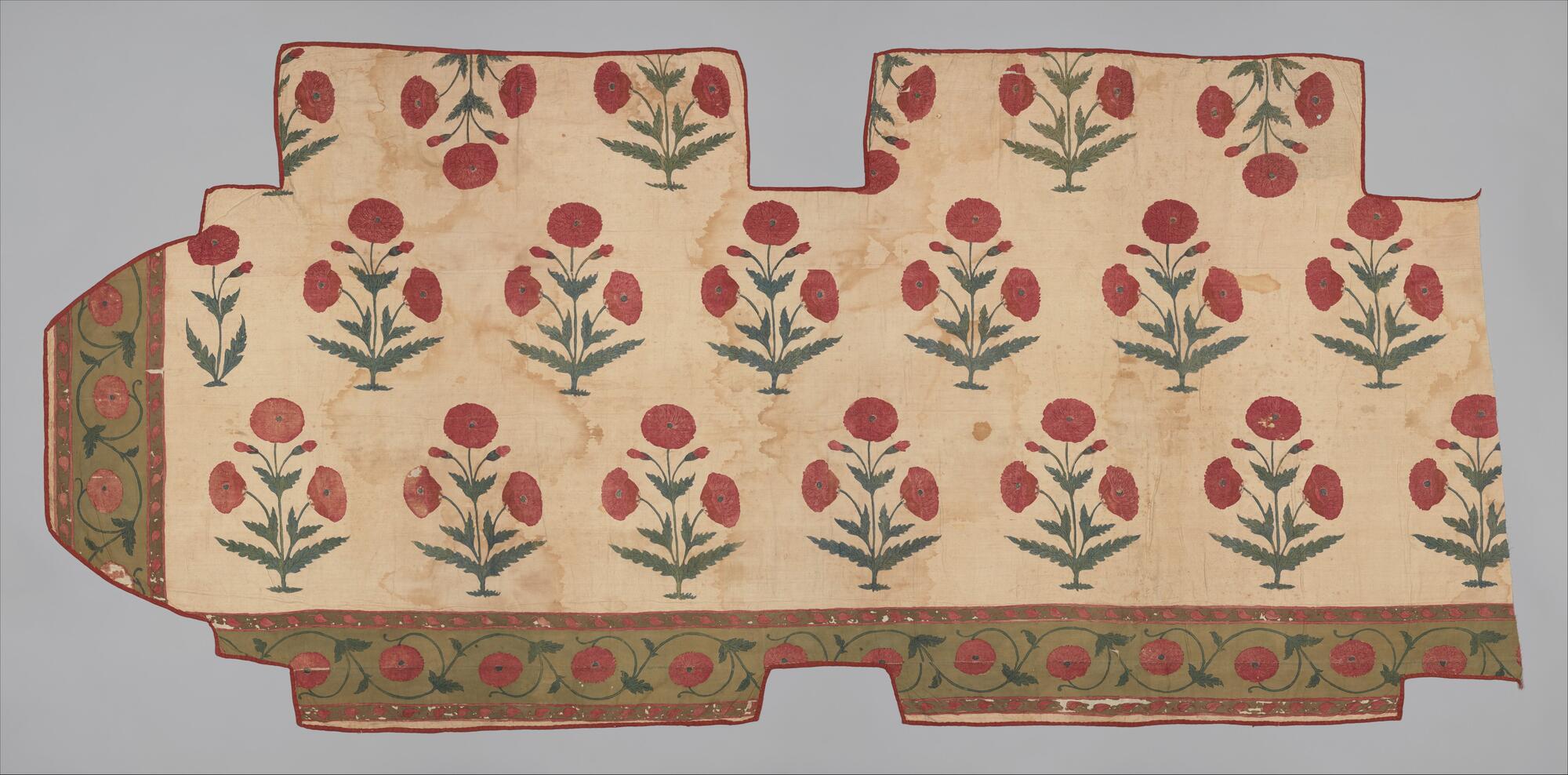
The design language of these textiles championed the structured, mathematically precise, and botanically stylized aesthetics of the Mughal court. Panels were mapped symmetrically, with heavy structured borders, architectural arches, and repeated jaali grids. Flowers like tulips, poppies, and irises were drawn with crisp, botanical fidelity, placed neatly as isolated, repeating upright sprigs (buttas) or enclosed within formal cartouches. Trees were rendered with balanced, mirroring branches, frequently growing from a central, stylized decorative mount or formal vase, heavily reflecting Persian court aesthetics.
 

Burhānpur had also pioneered a hybrid system where geometric borders and small flower heads were block-printed, while larger elements were drawn by hand using the kalam. The fabric and mordants in this region were processed differently from the Coromandel Coast, giving a range of colors, including a bright yellow.

Where in India were the Gardner Kalamkari Cloths Made?

When you look at the Gardner pieces, they are emblematic of a Burhānpur-produced, printed and painted Kalamkari. Brightly hued in yellows and green, with red and hints of light blue, the structural pattern mimics a bird's-eye view of a well-manicured Mughal garden. Burhānpur's mastery of mixing block and kalam is seen exceptionally in the Gardner’s two cloths. The cypress tree forms the central field of both the dastarkhwans. 

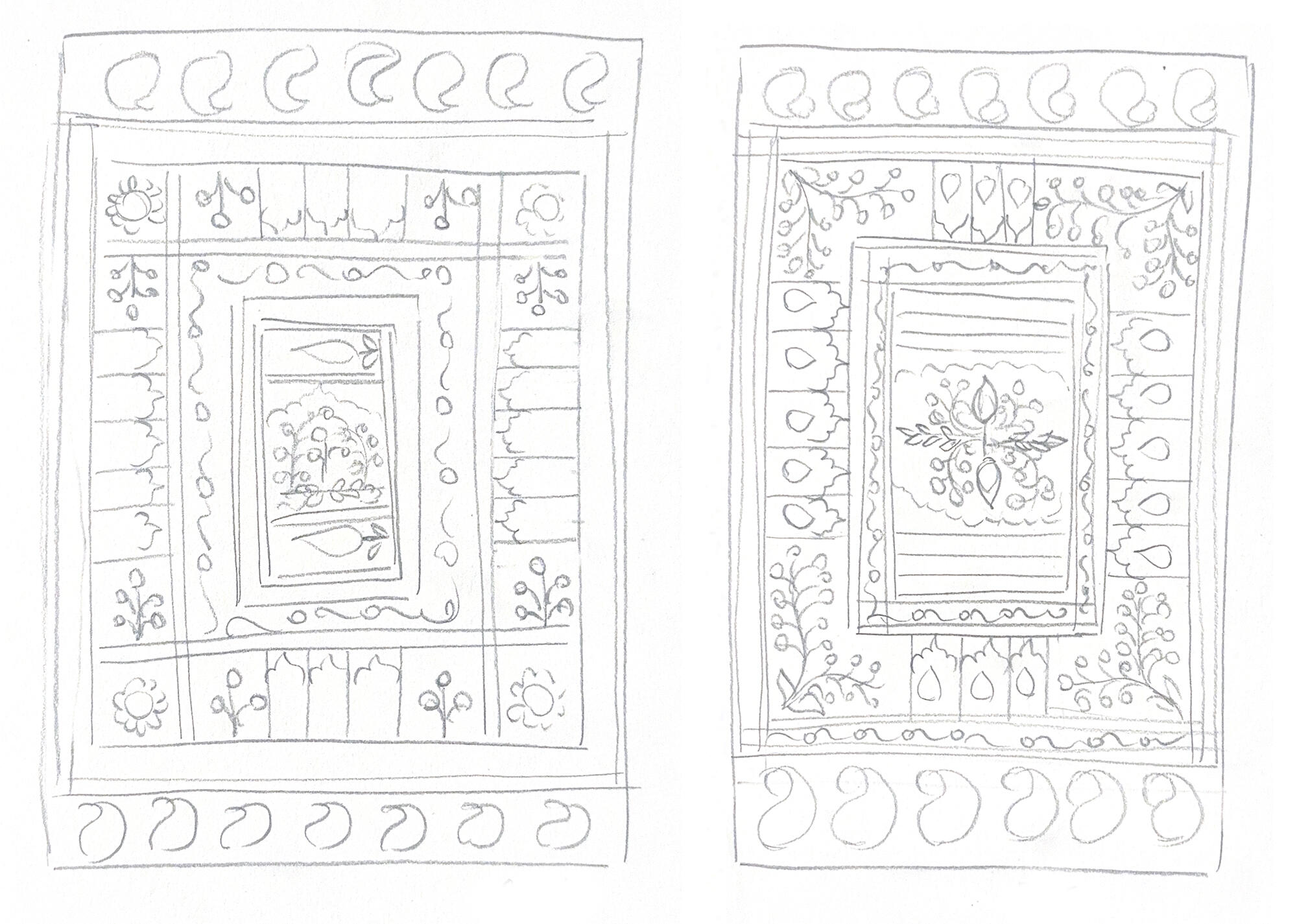
The single flowerheads are block-printed, while all the veins, stems, and leaves that make up the kuniya (corner motif) and the central garden around the cypress are hand-drawn. As we observe both dastarkhwans closely together, we see each layer: the borders and arches are the same on both cloths, but the motifs and buttas inside them vary.
 

Uncovering the origins of these two textiles and realizing their technical virtuosity can help us understand why they may have appealed to Isabella. When I look at them, they transport me directly to the garden in the Gardner Museum’s Courtyard. Were the Mughal gardens represented in the dastarkhwans one of Isabella’s inspirations for its architecture? We may never know, but for me the museum carries the same sense of hospitality that is represented by the cloths—the energy of welcoming and an invitation to linger a bit longer.