
John Kelly
Artist-in-Residence
John Kelly is a performance and visual artist and a creative genius, whose work integrates movement, theater, music, and image-making to explore the intersections of identity and societal marginalization. His passion for drawing began in childhood, and the performers he watched every week on The Ed Sullivan Show introduced him to a broader world of culture and creativity. These early experiences inspired his ambition to become an artist.
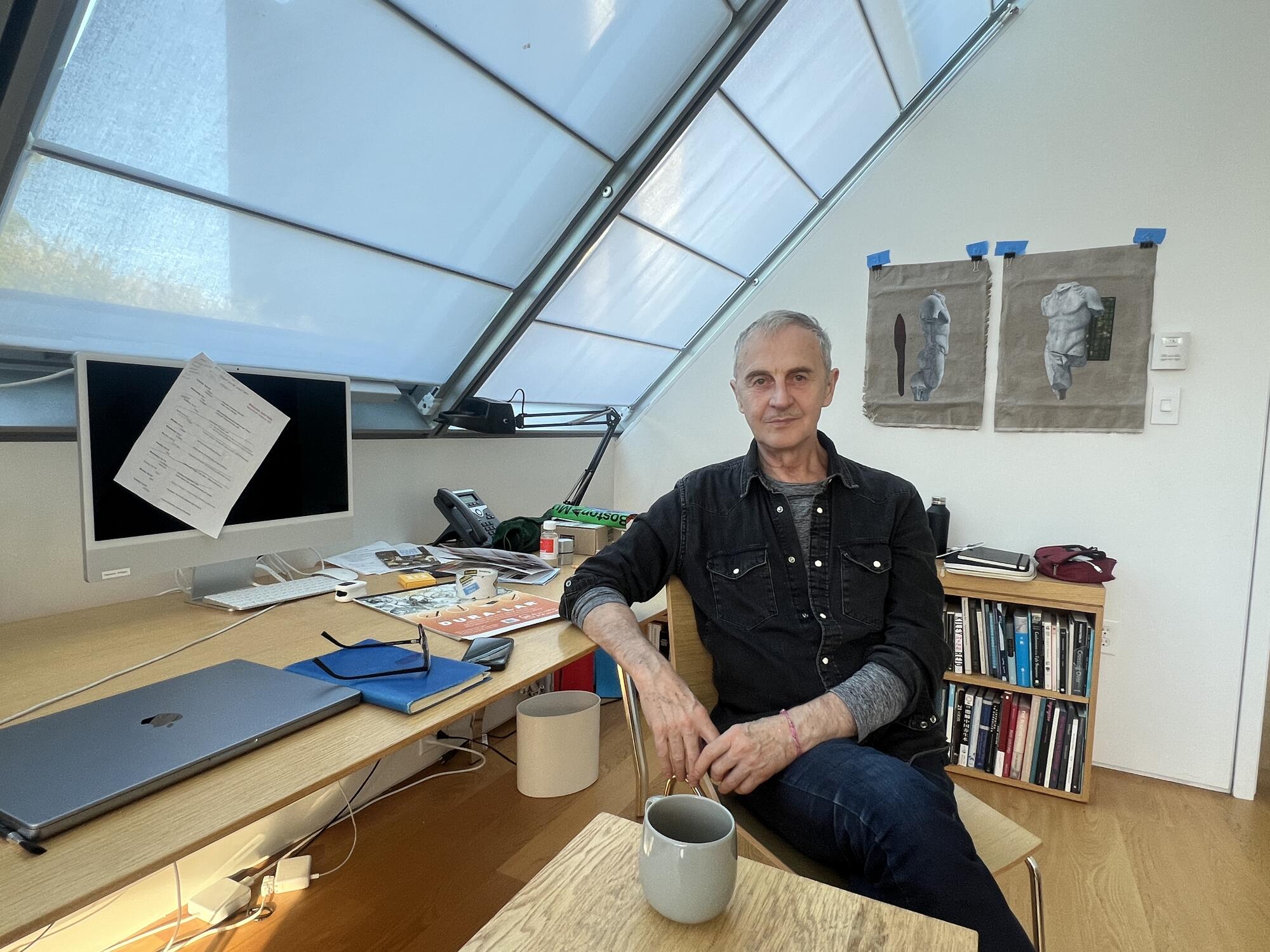
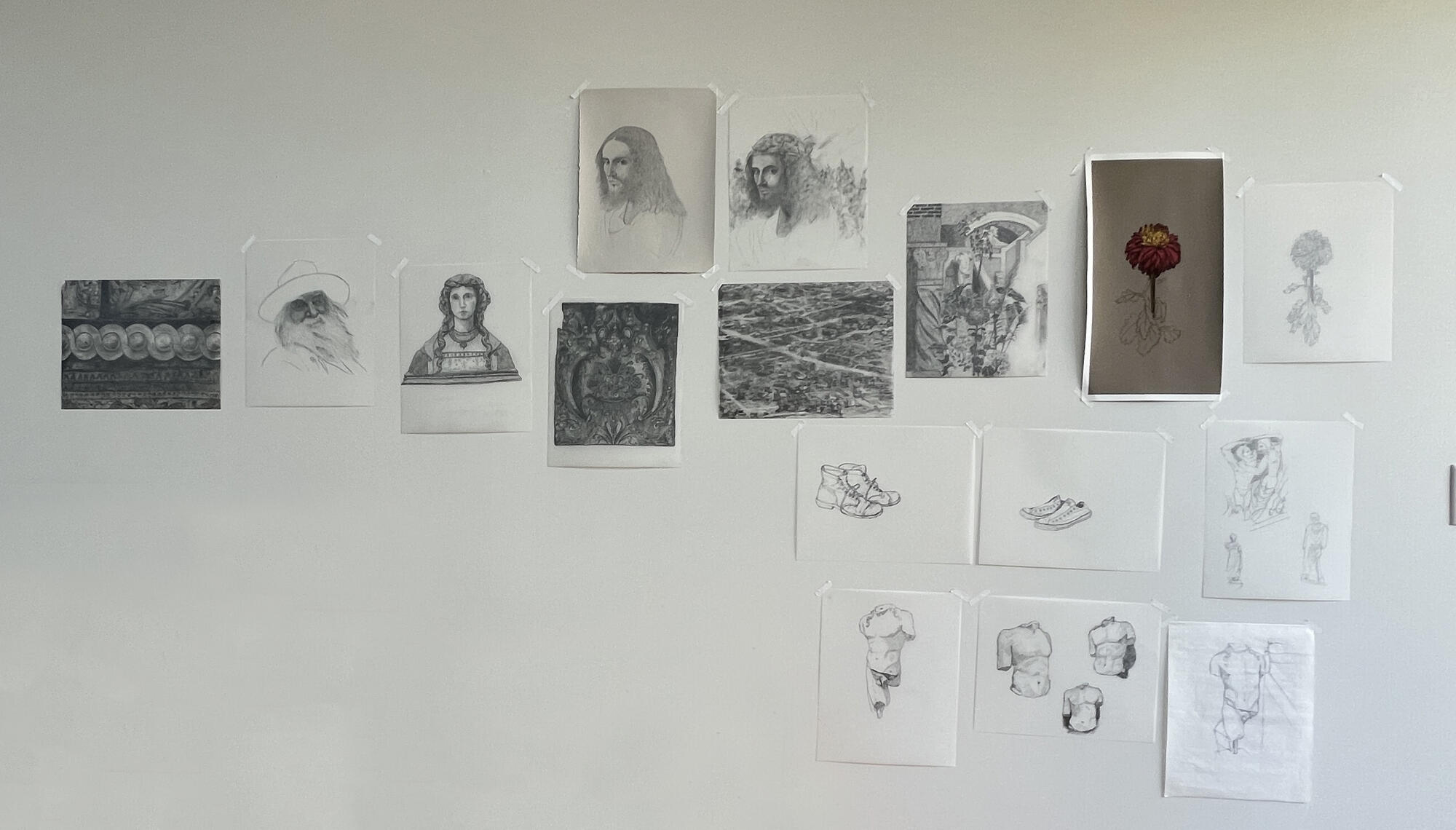
In October 2025, John Kelly lived and worked at the Museum as an Artist-in-Residence, immersing himself in the Collection while spending long hours drawing in the artist apartment. As he moved through the galleries, Kelly became interested in Isabella Stewart Gardner’s discerning collector’s eye and the distinctive way she juxtaposed and layered works of art, fabrics, and furniture. Kelly explored the photographs Gardner commissioned between 1900 and 1926 from T. E. Marr & Son at her Beacon St. home and at the Museum. These photographs reveal the multiple lives and shifting arrangements of the objects throughout the Collection’s history.
Among the many objects that captured his attention were the rich leather wall panels in the Veronese Room, various marble torsos and architectural fragments around the Courtyard, and Giovanni Bellini’s (1430–1516) painting of Christ Carrying the Cross in the Titian Room.
Kelly was also drawn to the work of painter James Abbott McNeill Whistler (1834–1903) in the Little Salon and to his practice of designing custom frames for his paintings. Rejecting the heavy Victorian moldings popular at the time, Whistler favored simple, harmonious frames that he saw as essential extensions of his artwork. In the Archives, Kelly read Whistler’s letters to Isabella Stewart Gardner, including several written on mourning stationery. This intimate glimpse into their friendship deepened his understanding of both Whistler’s artistic practice and his personal life.
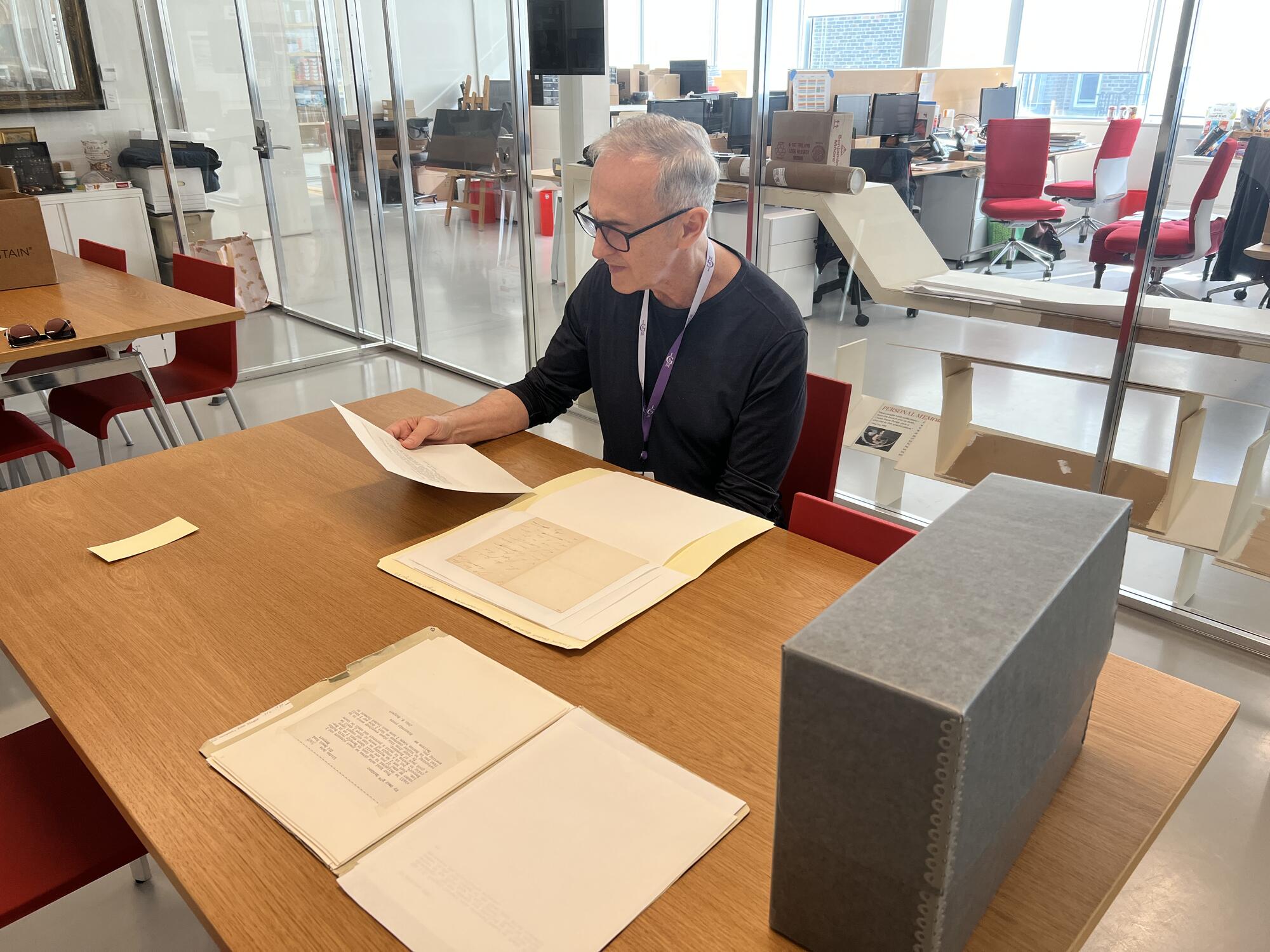
Time spent in the Archives also gave Kelly entry into another enduring and iconic friendship: Gardner and John Singer Sargent (1856–1925). Before beginning his residency, Kelly read Sargent’s biography and was eager to explore the ties between artist and patron through letters and other ephemera Gardner saved. As he read these, he was delighted to discover a letter from April 20, 1922, in which Sargent mentions attending a performance of Ruth Draper (1884–1956), the American actress. Widely credited with pioneering the one-woman show, Draper wrote and performed her own dramatic and comic monologues, earning acclaim in both the United States and Europe.
Kelly also discovered a letter Draper wrote to Gardner, alongside correspondence from celebrated performers including Sarah Bernhardt (1844–1923), Ellen Terry (1847–1928), Anna Pavlova (1881–1931), Charlotte Cushman (1816–1876), and Lady Gregory (1852–1932). This correspondence revealed Gardner’s remarkable network of artists and performers, resonating with Kelly’s own multidisciplinary practice and the creative communities he moves in.
Kelly became curious about Boston society during Gardner’s time—the friendships that shaped her life, the circles she traveled in, and the people who whispered behind her back. He appreciated the playful, rebellious spirit of the persona Gardner crafted, one that was both dramatic and enigmatic, as well as the deliberate way she controlled her public image. It amused him that she challenged the expectations of conservative Boston society through her unconventional choices and actions.
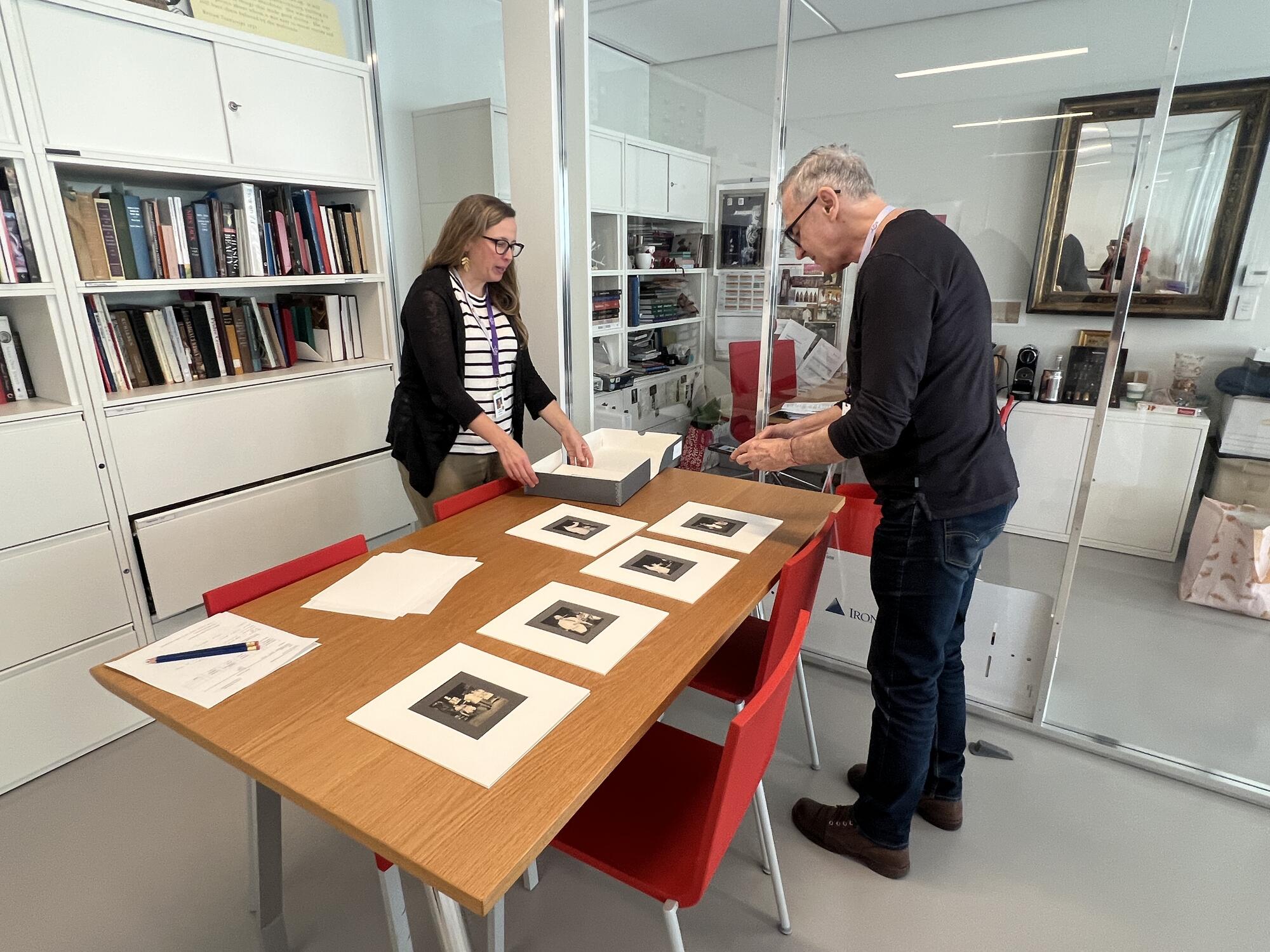
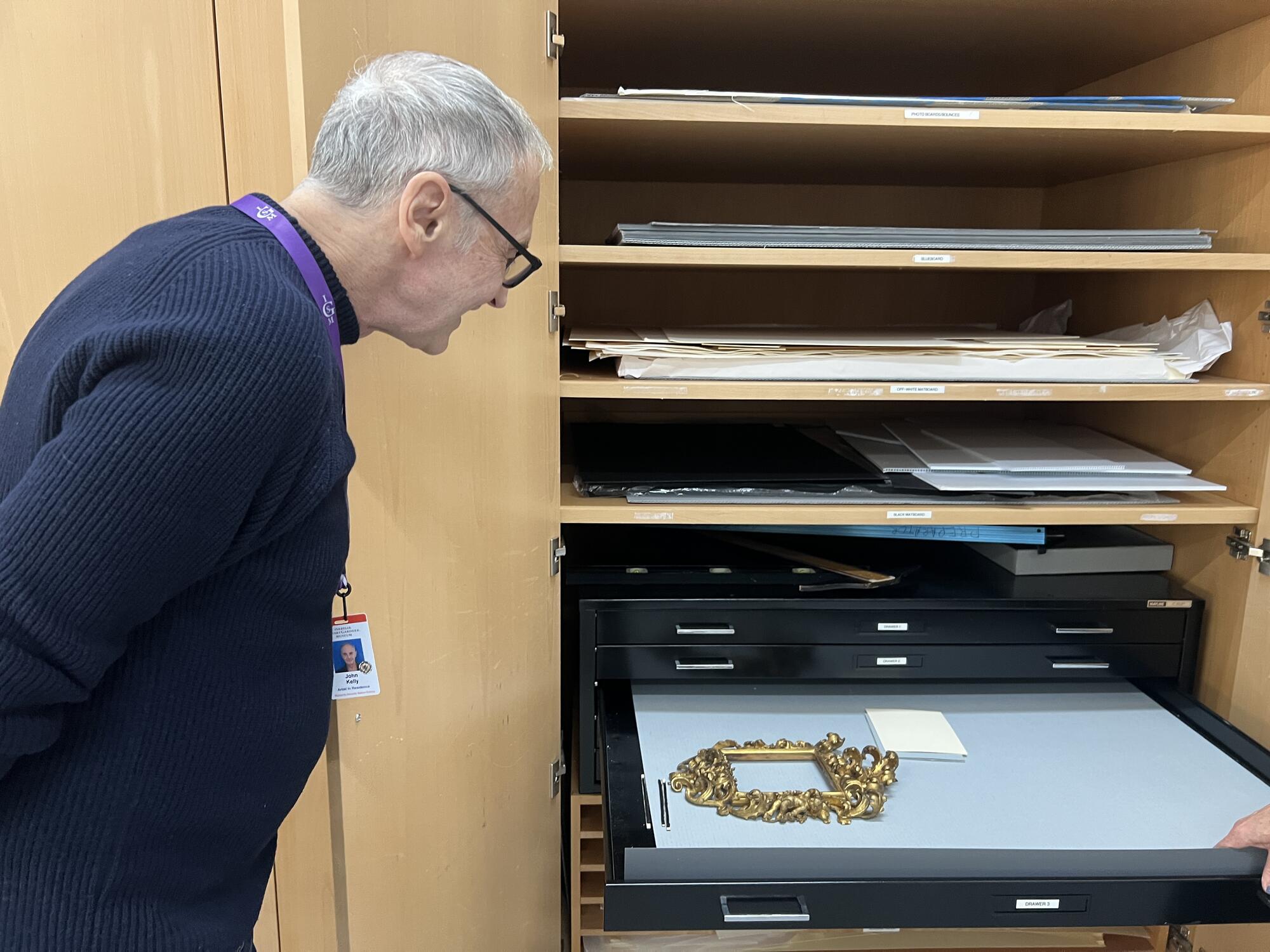
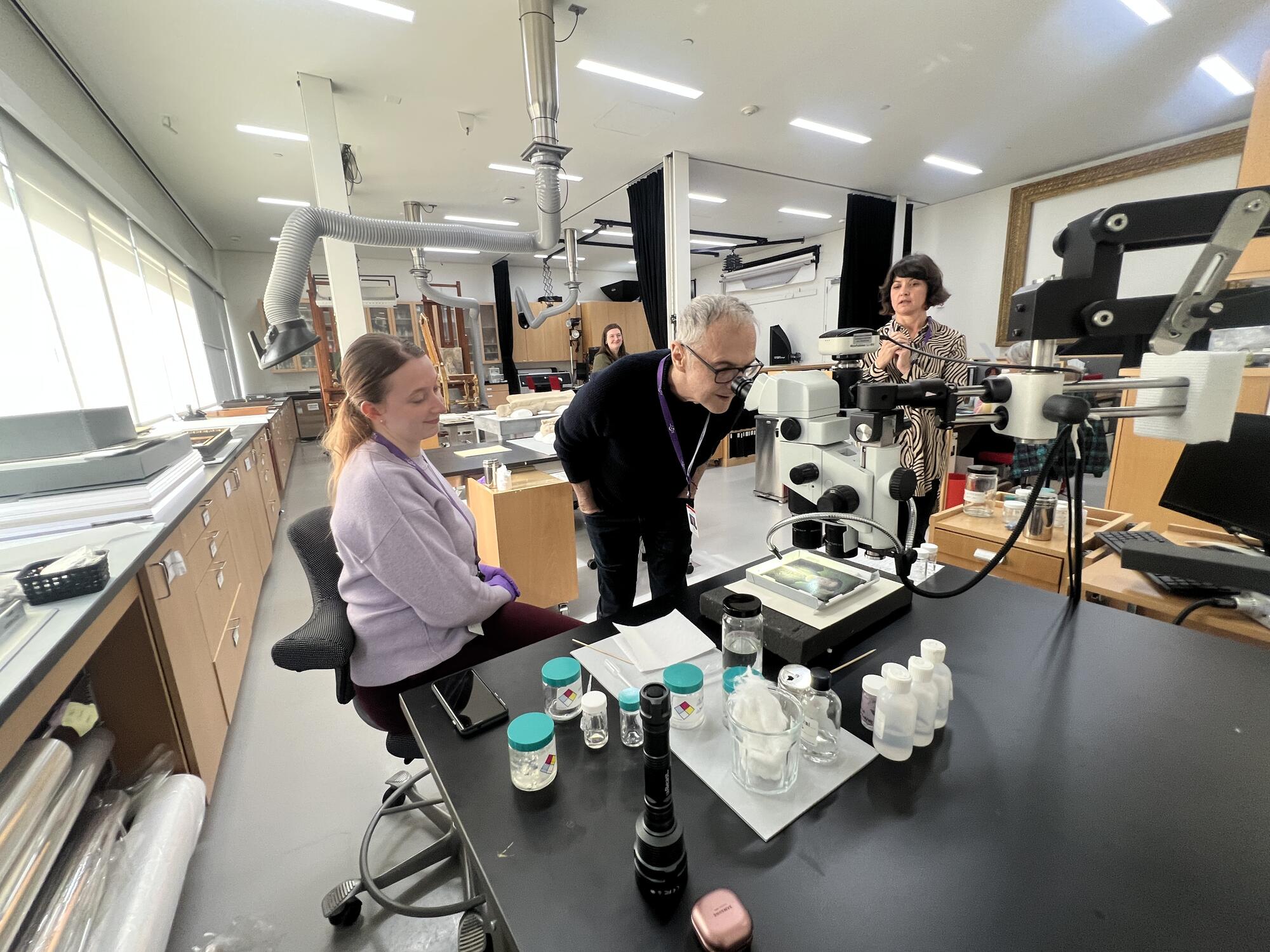
During his visit to the Poorvu Family Conservation Center, Kelly was introduced to several objects from the Dutch Room that were undergoing treatment as part of a larger, room-wide restoration project. Among them was a small portrait of the Dauphin of France (1518–1536) with a striking green background and shadowed edges, a style often attributed to Corneille de Lyon and his studio. Kelly was also captivated by the graceful, expressive hands of Anna van Bergen (1492–1541) delicately holding a folded piece of paper in Jan Gossaert’s (about 1472–1532) portrait of her.
As both paintings had been removed from their frames for treatment, Kelly asked to see them as well. Gossaert’s portrait is housed in a beautiful black-and-gold carved frame; however, Kelly was taken with the Dauphin’s ornate frame, admiring its gilded scrollwork and putti. He remarked that it gave the portrait a greater sense of grandeur while drawing attention to the plume in the young prince’s hat.
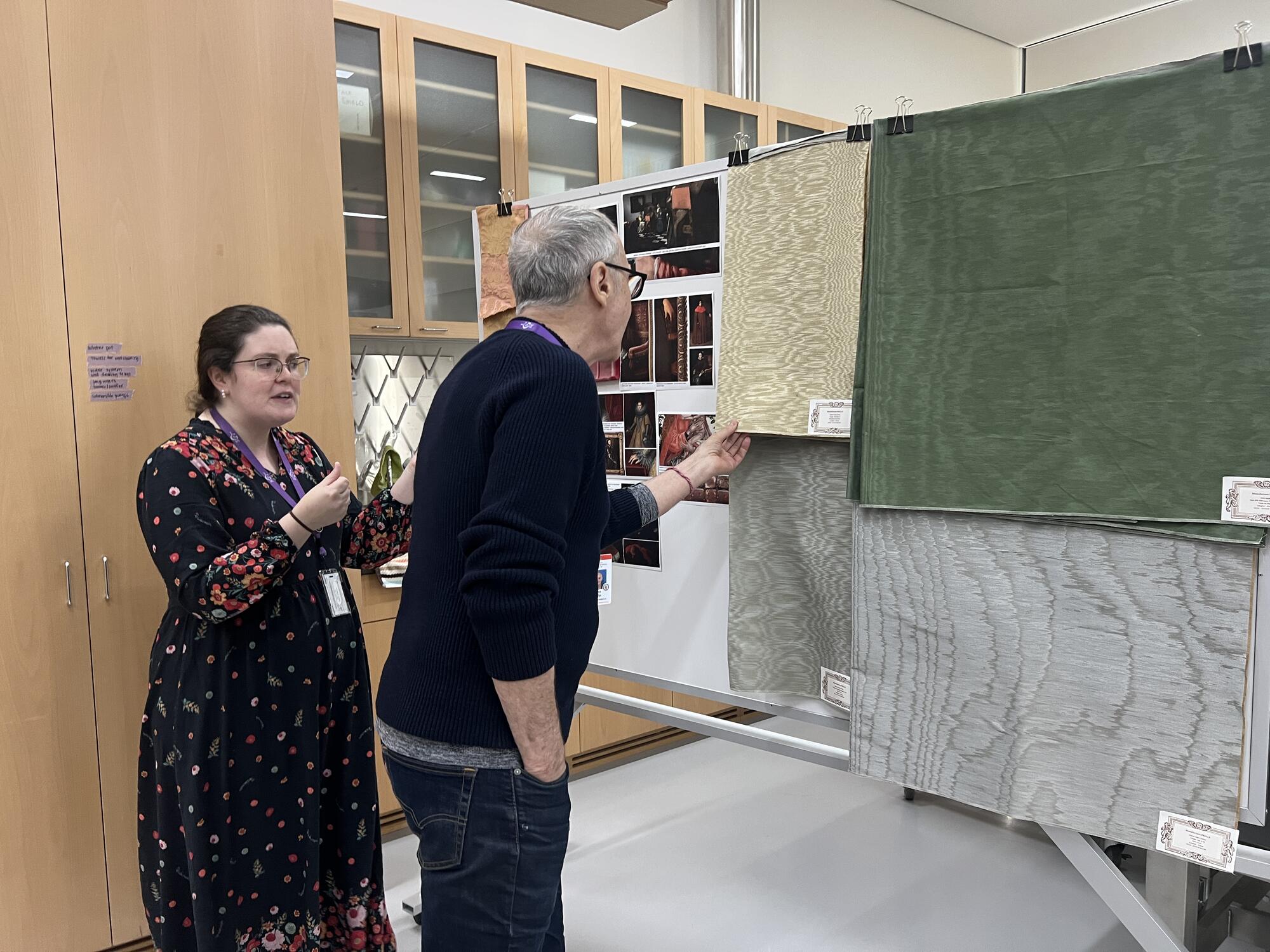
The other side of the lab was filled with textile and trim samples, alongside several chairs being reupholstered as part of the Dutch Room restoration. Isabella Stewart Gardner had a deep appreciation for textiles and used them throughout the Museum to create evocative environments. To identify the patchwork of fabrics she installed on the walls, conservators relied on the same T. E. Marr & Son photographs that Kelly had explored. He learned about the Museum’s collaboration with Manufacture Prelle, one of France’s oldest continuously operating textile houses, and how each fabric’s weave structure shapes the way light is experienced in the galleries. He examined some of the recreated samples, including samples of moiré, a luxurious silk treated with heat and heavy rollers to create its signature rippled, shimmering, water-like surface.
Between February 19 and May 10, 2026, two of John Kelly’s collaborative photographs with photographer John Dugdale were featured in Persona: Photography and the Re-Imagined Self. The exhibition brought together more than 80 works exploring how artists construct alter egos to question identity, representation, and social norms. The photographs depict one of Kelly’s best-known personas, Dagmar Onassis, an autobiographical alter ego inspired by his admiration for opera singer Maria Callas. In Kelly’s performance work, Dagmar imagines herself to be the fictional love child of Callas and Aristotle Onassis, a fantasy that spirals into obsession and self-destruction. Kelly was unable to attend the opening celebration for the exhibition because, months earlier, visionary director Martha Clarke had tapped him to portray Henry Darger in BUGHOUSE, a one-man, off-Broadway play that brought audiences inside the mind of one of the 20th century’s most startling outsider artists.
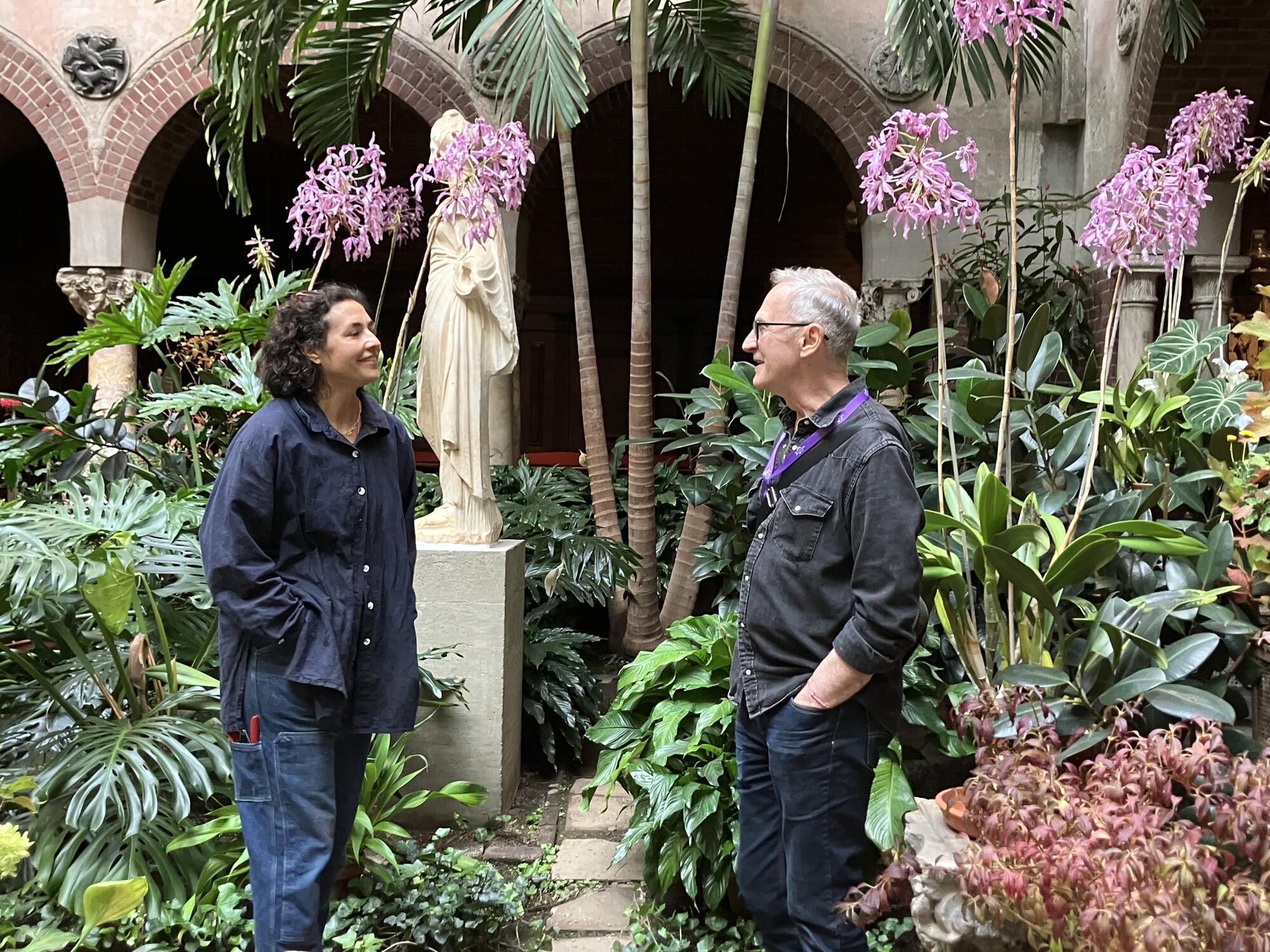
John Kelly and the director of horticulture, Erika Rumbley, spend time in the Museum’s Courtyard, 2025
John Kelly’s performance work evolved from a background in dance and visual art, and a resulting relationship with the mirror—cultivated in dance and rehearsal studios through a process of self-realization, as well as an ongoing practice of self-portraiture. The coincident impulses of introspection and presentation have led him to create over 40 character-driven performance works. Varying degrees of autobiography have also permeated these works: performance as self-portrait. Out of high school, Kelly received a scholarship to The American Ballet Theatre School, and trained with the Harkness Ballet. He also danced with modern dance pioneer Charles Weidman before abandoning dance to pursue his visual art calling at Parsons School of Design and The School of the Museum of Fine Arts, Boston.
In his early 20s, Kelly gravitated to the lively East Village club scene where he developed short works that evolved into ambitious multimedia productions. These projects addressed topics such as gay persecution, 20th century tattoo culture, the Berlin Wall, the AIDS epidemic, mythology, and Expressionist film, as well as character studies of cultural icons like Egon Schiele, Caravaggio, Antonin Artaud, and Jean Cocteau. For many years he called the Pyramid Cocktail Lounge home. Here he worked alongside Lady Bunny, Ethyl Eichelberger, and Hattie Hathaway and honed the personas of Joni Mitchell and his alter ego, Dagmar Onassis.
Kelly’s work has been commissioned and presented by institutions including MET Live Arts, The Kitchen, La MaMa, Lincoln Center, BAM’s Next Wave Festival, NY Live Arts, the Whitney Biennial, and Tate Modern. Honors include two Bessie Awards, two Obie Awards, two NEA American Masterpieces Awards, the CalArts/Alpert Award in Dance/Performance, the Visual AIDS Vanguard Award, and fellowships from the Rome Prize, Guggenheim Foundation, Radcliffe Institute, Sundance Theatre Institute, and others. He has held residencies at Yaddo, MacDowell, Park Avenue Armory, Civitella Ranieri, and LMCC. Kelly has taught at Harvard and Bard and mentors emerging artists through Queer Art Mentorship and the Helix Queer Performance Network. In 2025, he completed his first graphic memoir, A Friend Gave Me a Book, which was exhibited at the P·P·O·W Gallery in New York the following year. John Kelly lives in the Hell’s Kitchen neighborhood of New York City.