
When Isabella Stewart Gardner created her Museum in the early 1900s, she made clear that she did not want the arrangement of the galleries to permanently change. Because of this, many people have the misconception that the Isabella Stewart Gardner Museum does not lend works of art to other institutions. In reality, the Gardner Museum has an active exhibition program and loans works of art—like Rembrandt’s Self-Portrait, Age 23 and the Flemish tapestry Esther Fainting before Ahasuerus to The Book of Esther in the Age of Rembrandt (co-organized by the Jewish Museum of Art and the North Carolina Museum of Art) and opening at the Gardner Museum on August 6, 2026.
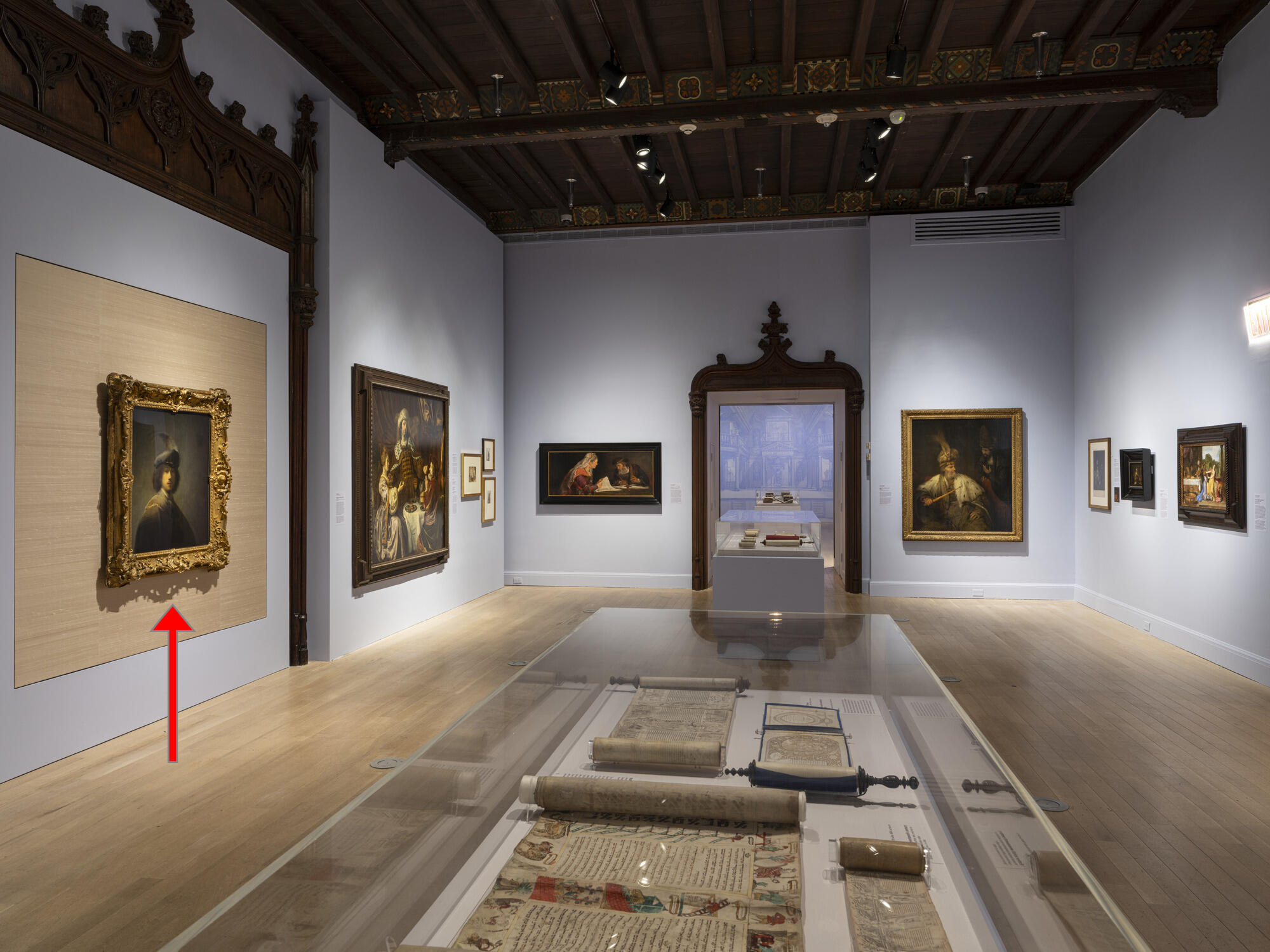
Photo by Kris Graves
Installation view of The Book of Esther in the Age of Rembrandt, at the Jewish Museum, NY, March 7–August 10, 2025, showing the Gardner Museum’s Rembrandt, Self-Portrait, Age 23
Isabella started the practice of temporarily lending works of art to special exhibitions in 1880 when she lent several works including Gustave Courbet’s View Across the River and Sarah Whyman Whitman’s Newport Canal, Shropshire to the Museum of Fine Arts, Boston. She continued to share paintings by contemporary artists with local and international exhibitions in support of scholarship, artists, and making art accessible.
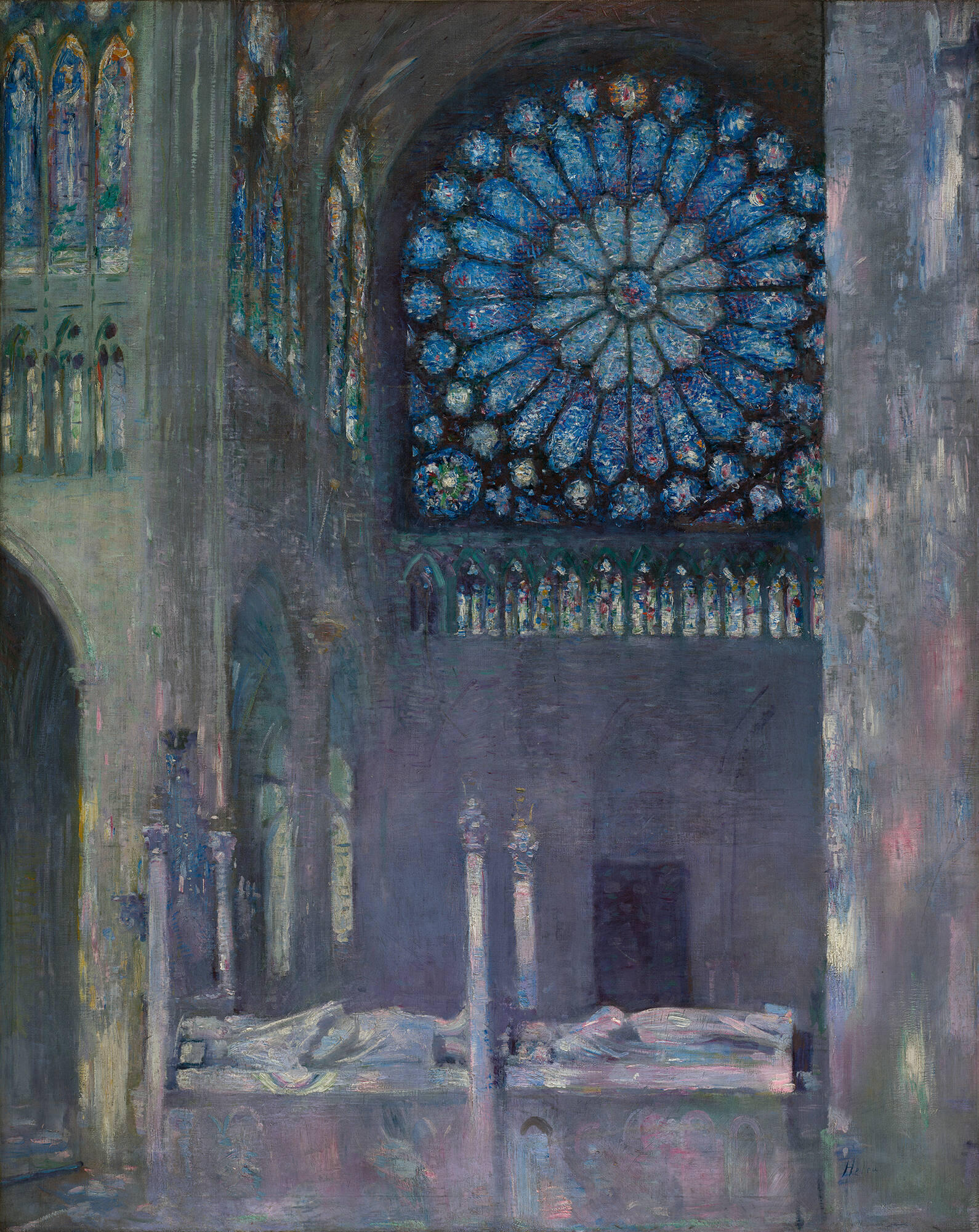
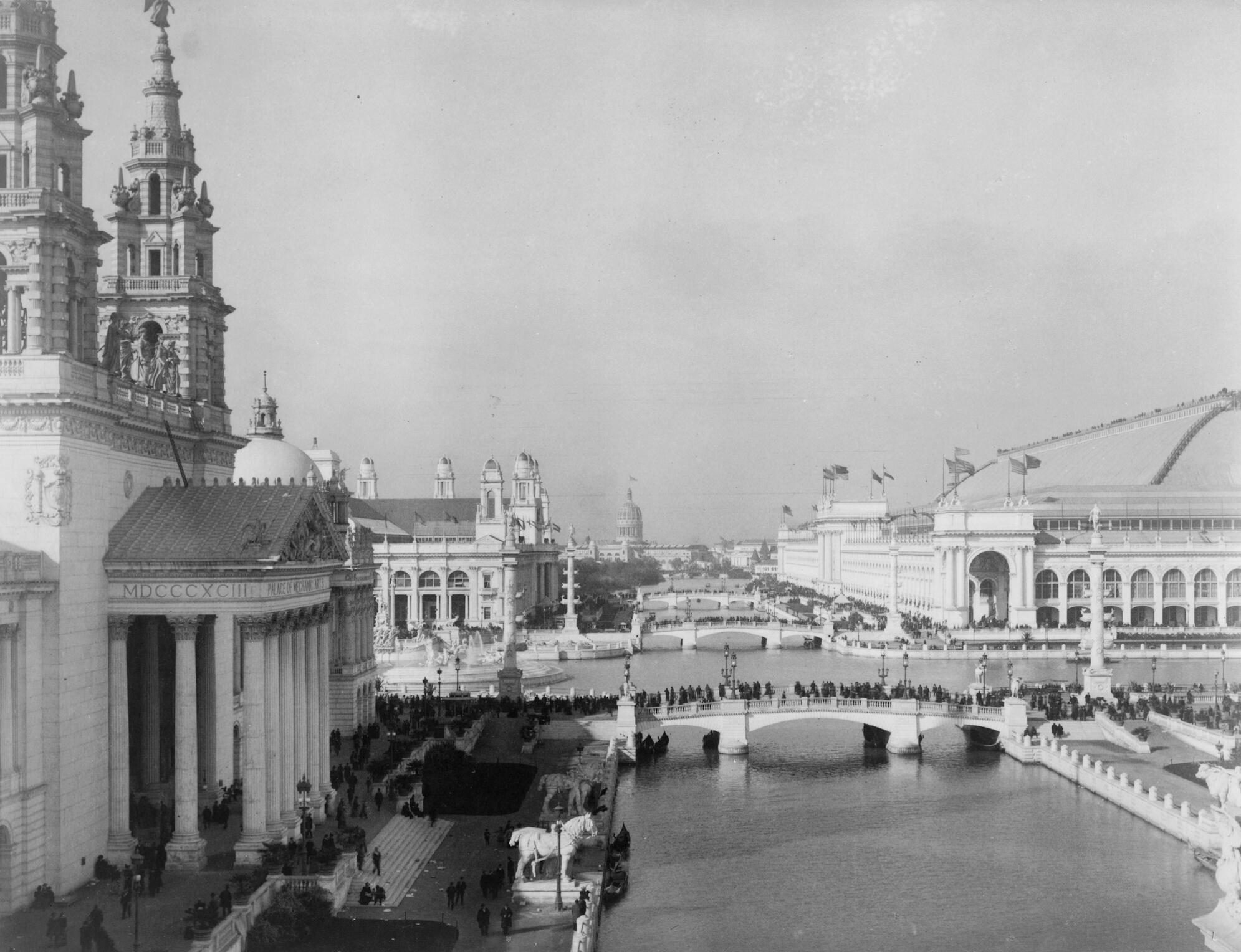
In 1893, she loaned what was then her only French Impressionist painting—The Interior of the Abbey Church of Saint Denis by Paul César Helleu—to the World’s Columbian Exposition, also known as the Chicago World’s Fair.
Isabella Stewart Gardner Museum, Boston (P28e15)
Paul César Helleu (French, 1859–1927), The Interior of the Abbey Church of Saint Denis, about 1891. Oil on canvas, 194 x 155 cm (76 3/8 x 61 in.)
Paul César Helleu (1859-1927)
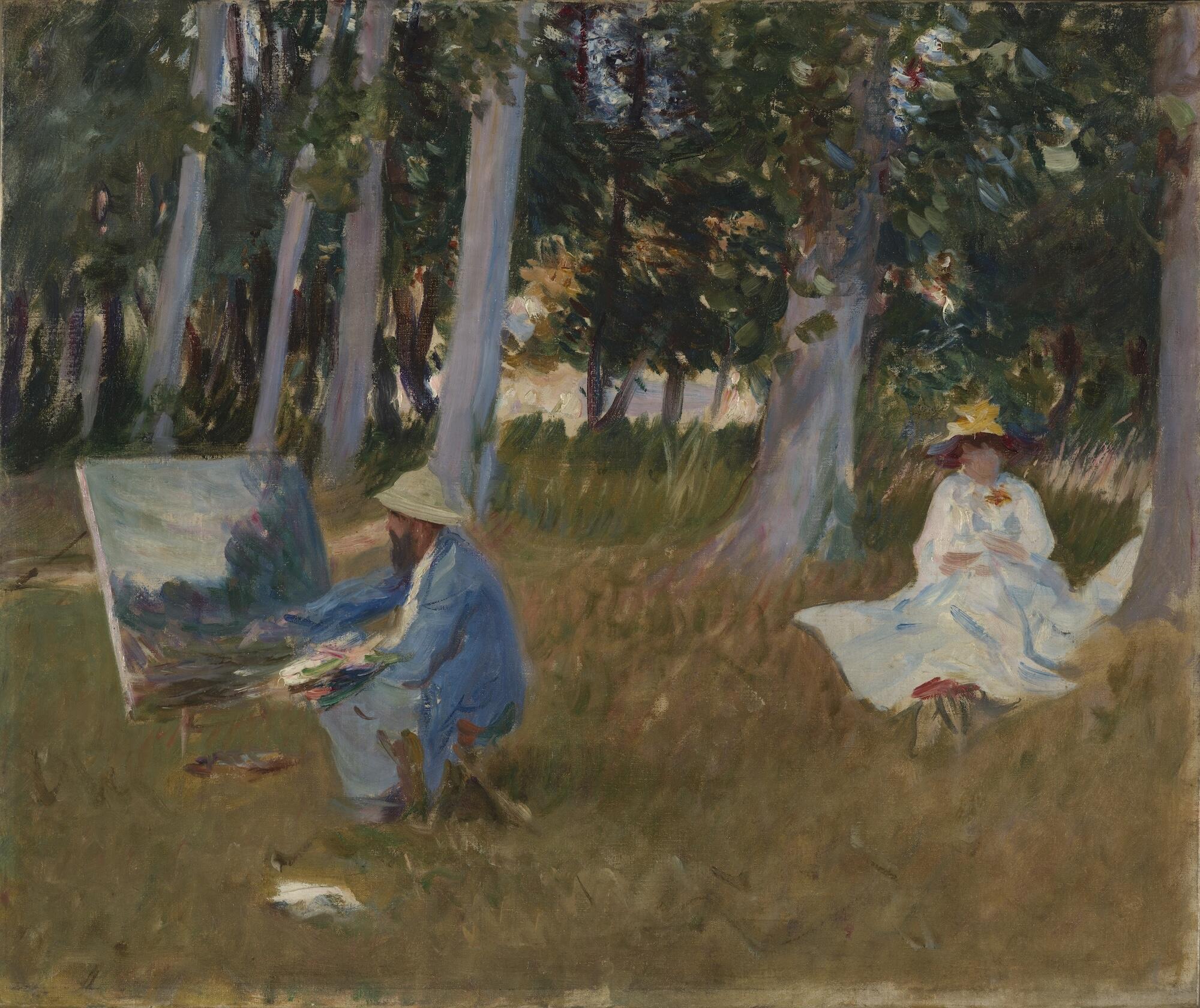
Isabella likely met Paul César Helleu in Paris through their mutual friend, artist John Singer Sargent (1856–1925). While Helleu was a young student at a prestigious Parisian art school, the École des Beaux Arts, he attended the Second Impressionist Exhibition of 1876. There, he met and befriended Sargent and Claude Monet (1840–1926). Both men encouraged Helleu’s artistic career.
Tate, Presented by Miss Emily Sargent and Mrs Ormond through the Art Fund 1925 (N04103)
John Singer Sargent (American, lived abroad, 1856–1925), Claude Monet Painting by the Edge of a Wood, about 1885. Oil on canvas, 54 x 64.8 cm (21 ¼ x 25 ½ in)
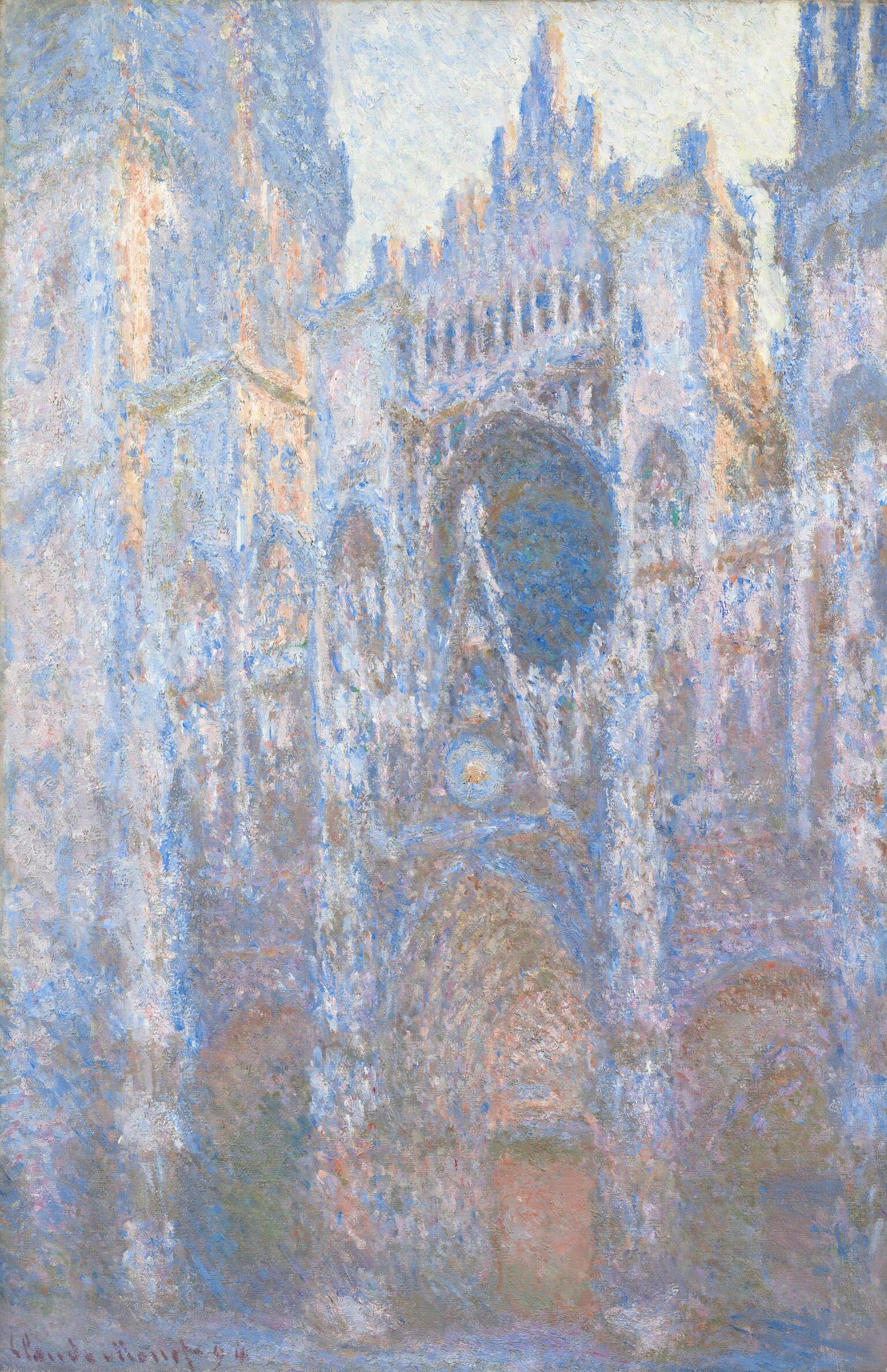
In 1892, Helleu accompanied Monet to paint cathedrals in the Ile-de-France and Normandy regions. While Monet was fascinated by the buildings’ exteriors and how their appearance changed based on the time of day, Helleu was interested in the cathedrals’ interiors, particularly the diffusion of light from stained-glass windows. Monet’s paintings of Rouen Cathedral—a series of more than 30 works—are famous, while Helleu’s paintings are mostly forgotten.
National Gallery of Art, Washington, DC (1963.10.49)
Claude Monet (French, 1840–1926), Rouen Cathedral, West Façade, 1894. Oil on canvas, 100.1 x 65.9 cm (39 3/8 x 25 15/16 in.)
Though now little-known, Isabella Stewart Gardner purchased one of Helleu’s cathedral paintings, likely during her trip to Paris in the spring of 1892. Isabella was a devout Christian and toured many European cathedrals. In her 1879 travel album, she devoted a page to photographs of Saint Denis—a church famous as the burial place of French kings and for its 40-foot rose windows.
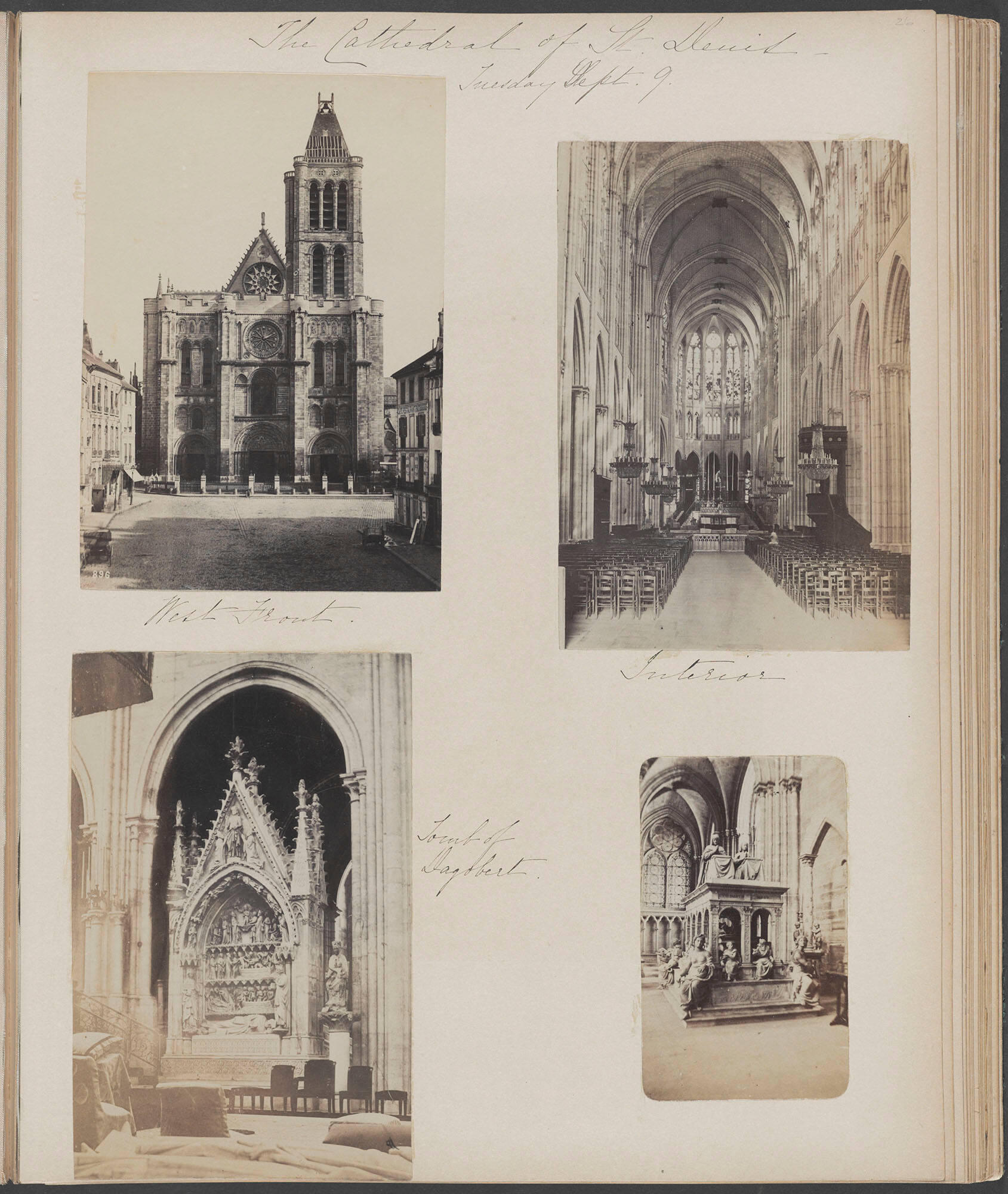
Isabella Stewart Gardner Museum, Boston (v.1.a.4.5)
Isabella Stewart Gardner (American, 1840–1924), Travel Album: Great Britain and France, 1879 (page 28, St. Denis)
Helleu’s Interior of the Abbey Church of Saint Denis was exhibited at the Salon du Champs-de-Mars of 1892, a juried art exhibition in Paris. Isabella and her husband Jack were in Paris that spring, and she likely saw the painting at the Salon or at Helleu’s home.
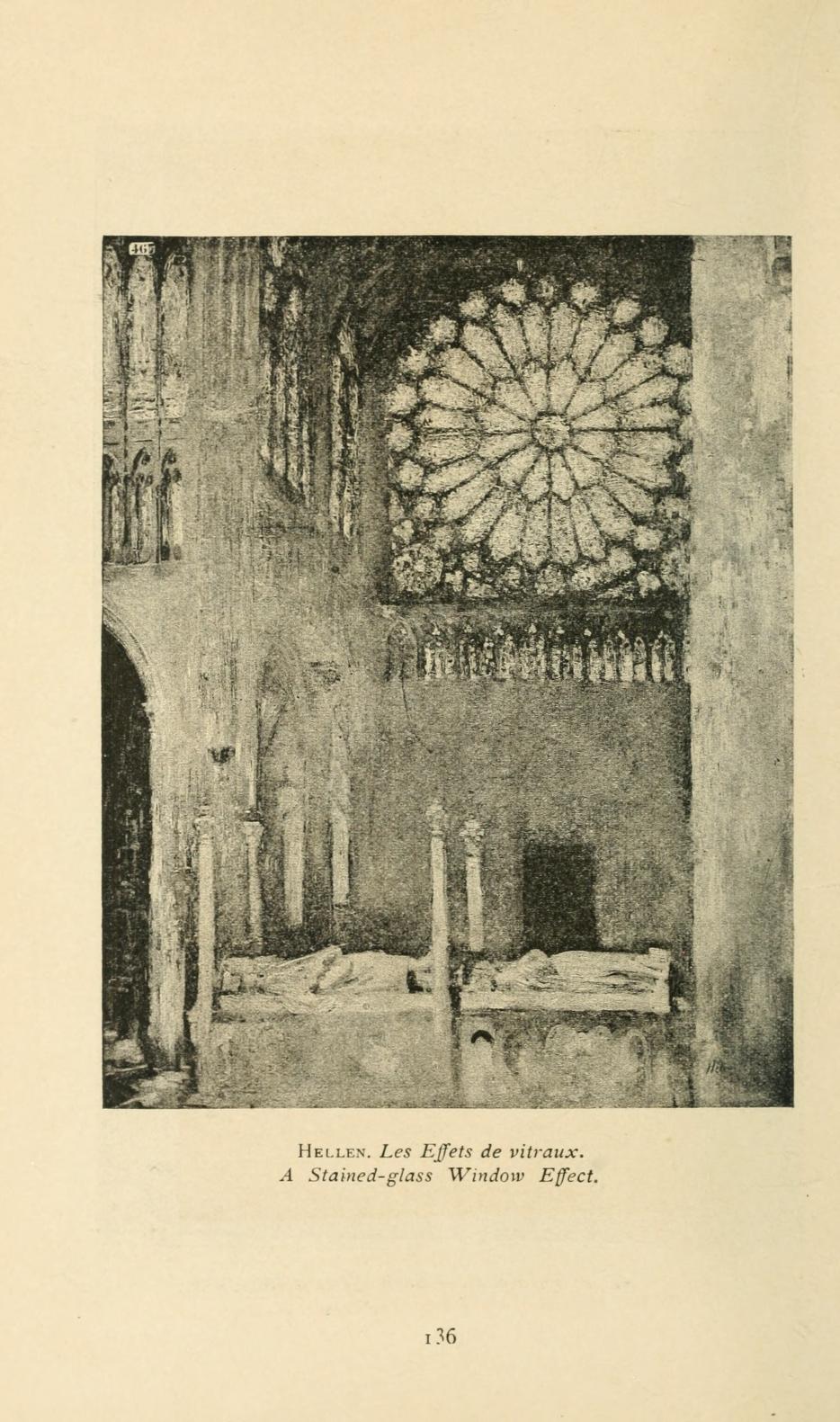
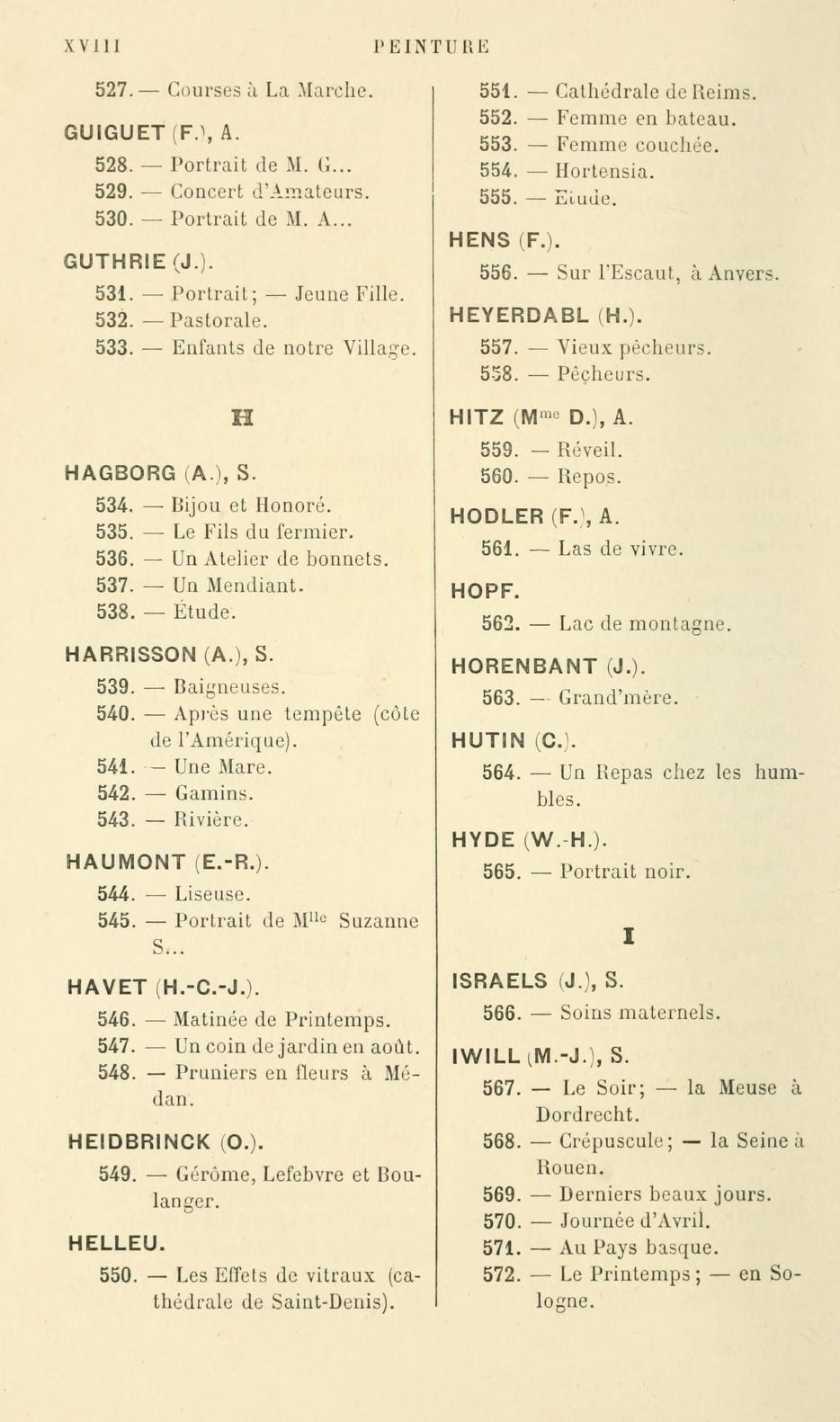
Isabella wrote to Sargent about her desire to purchase the painting. He responded in an undated letter, "I am so glad you want the St. Denis Cathedral... I remembered your mention of it when I saw you last ....”
French Pictures at the Chicago World’s Fair
Meanwhile, back in the States, planning for the art pavilions at the World's Columbian Exposition was underway. The Fair was a massive undertaking showcasing forty-six nations in nearly 200 buildings over 690 acres. As the host country, The United States aimed to display its power, influence, and progress, including in both the making and collecting of art.
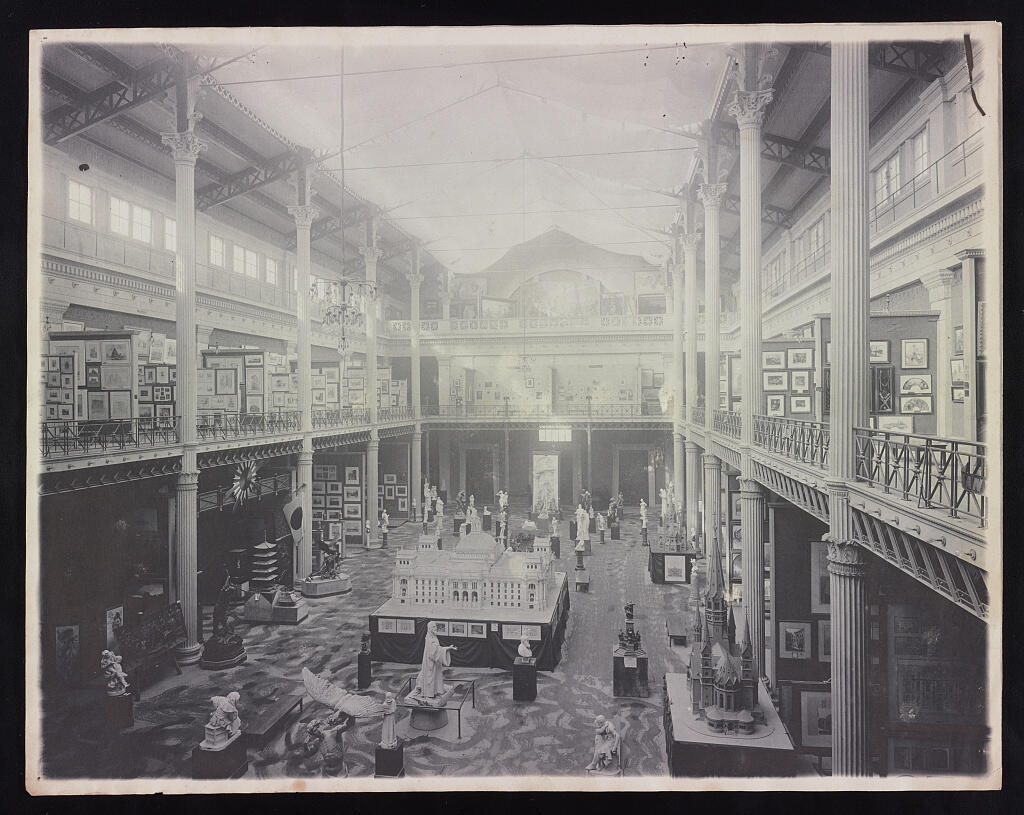
Curator and art advisor Sara Tyson Hallowell (1846–1924), who was passed over for the role of art director for the Fair due to her gender, was tasked with assembling an exhibition of foreign art in American collections. In a patriotic and competitive spirit, she wrote to her client Potter Palmer in Chicago from Paris, “We control the pictures borrowed in America, and I am of course eager to make that gallery of French pictures owned in America surpass what is sent from here [in France].”
Hallowell had well-established relationships with artists and collectors from her years of organizing Inter-State exhibitions, which were large-scale regional fairs that included juried art displays. After securing important loans in New York and Philadelphia, Sara moved on to Boston in February 1893. Isabella was one of six private collectors in Boston who agreed to lend to Hallowell and the Fair. It surely helped that Helleu was eager to have his picture on the world stage. The Interior of the Abbey Church of Saint Denis had not yet arrived at Isabella’s home and Sara arranged to have the painting shipped directly from the docks to Chicago, tariff-free.
I am very grateful to you for having sent St. Denis to Chicago.
As a lender to the Exposition, Isabella was invited to the preview days in Chicago before the Fair opened to the general public. She and Jack took the train to Chicago in mid-April of 1893 and stayed for almost 3 weeks. The Fair was a huge success, attracting 27 million visitors during its 6-month run. Paul Helleu saw an increased awareness of his work. He accepted many American commissions for etched portraits and even designed the ceiling in the Grand Concourse of Grand Central Station in New York.
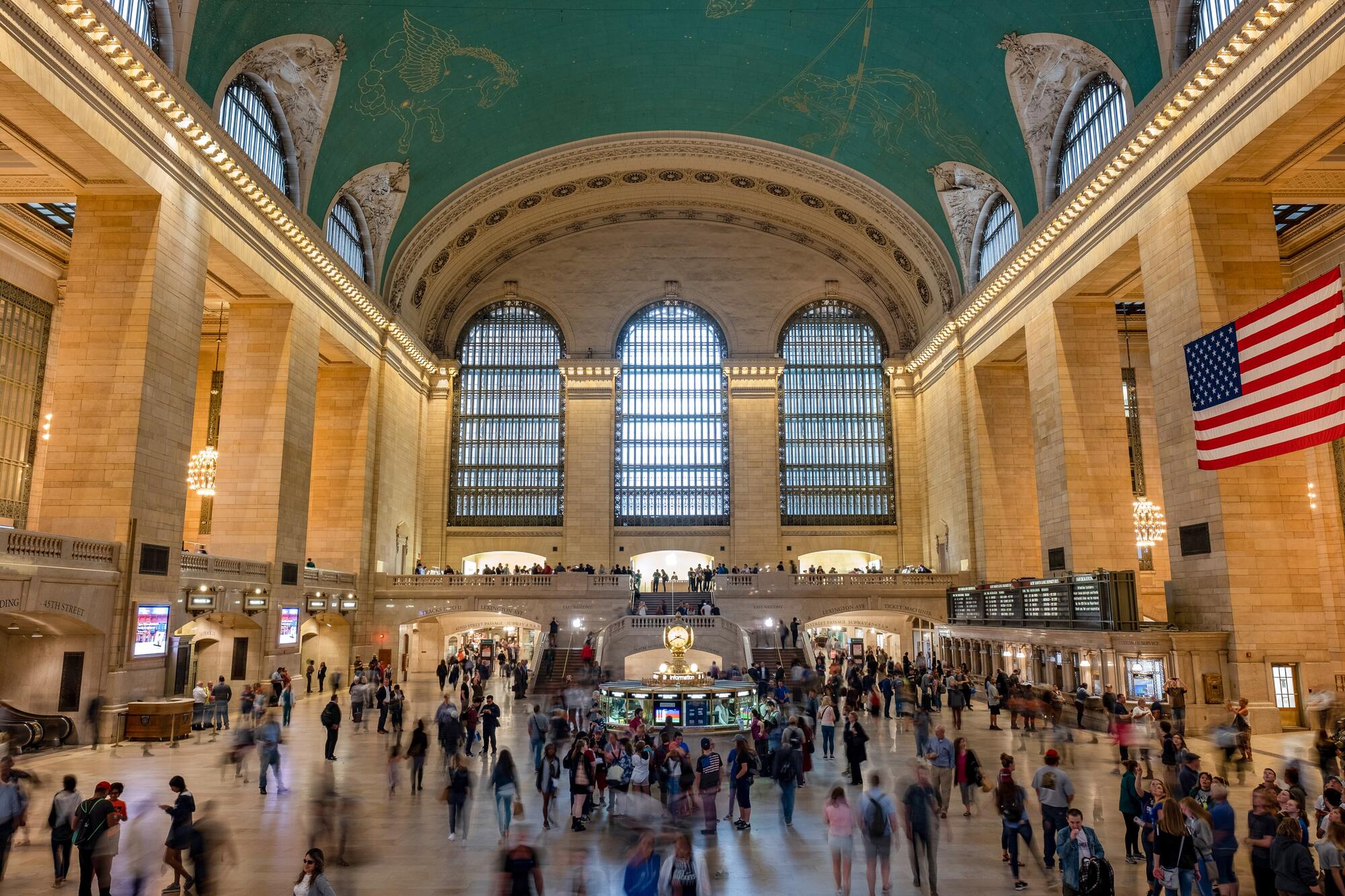
Image from Flickr published under Creative Commons Attribution 2.0 Generic (CC BY 2.0) by user soomness, CC BY 2.0 <https://creativecommons.org/licenses/by/2.0>, via Wikimedia Common
Grand Concourse, Grand Central Station, New York, showing the ceiling designed by Paul Helleu
Saint Denis in Boston
Gardner’s purchase of Helleu’s painting was the beginning of a friendship and her patronage of the young artist. She acquired several of Helleu’s prints and drawings (now on display in the Short Gallery) and displayed his letters in the Sargent / Whistler Case in the Long Gallery. When Isabella’s painting arrived in Boston, she hung it in the stairwell of her Back Bay townhouse next to John Singer Sargent’s painting Astarte. She surely enjoyed seeing the work of her two friends together.
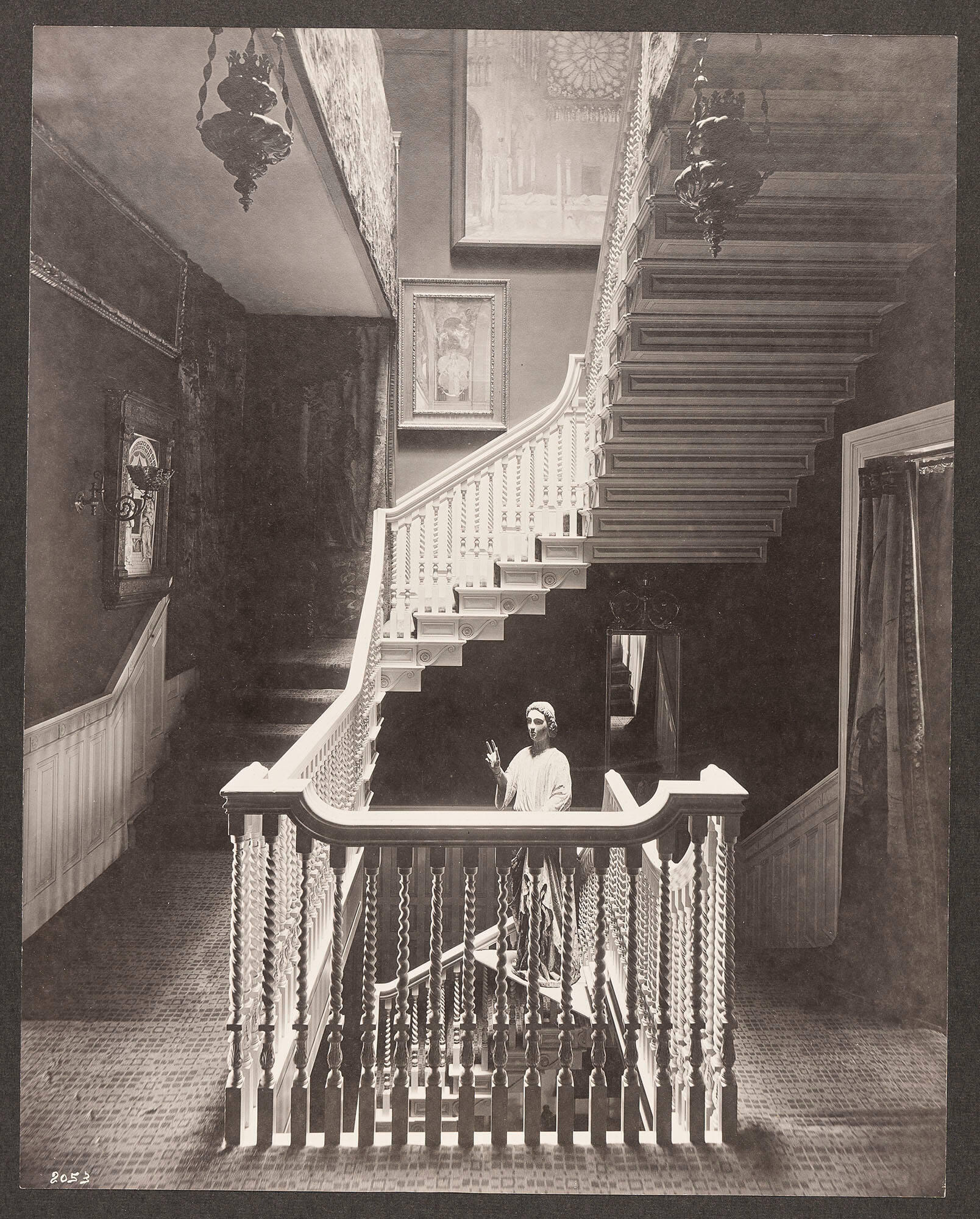
Isabella Stewart Gardner Museum (ARC.010190)
Paul Helleu’s painting of Saint Denis and John Singer Sargent’s painting Astarte in the stairwell of Isabella’s Back Bay home
Thomas E. Marr (Canadian, 1849–1910), Stairwell, 152 Beacon Street, Boston, Massachusetts, 1900. Gelatin silver print
Later, when Isabella created the Chapel on the third floor of her Museum, it made sense to hang Helleu’s painting of stained glass next to windows from two European cathedrals (Milan and Soissons). A painting that’s been seen by exhibition goers in Paris and Chicago now has a home in a gallery with a consecrated altar, where Boston Museum visitors can see it today.
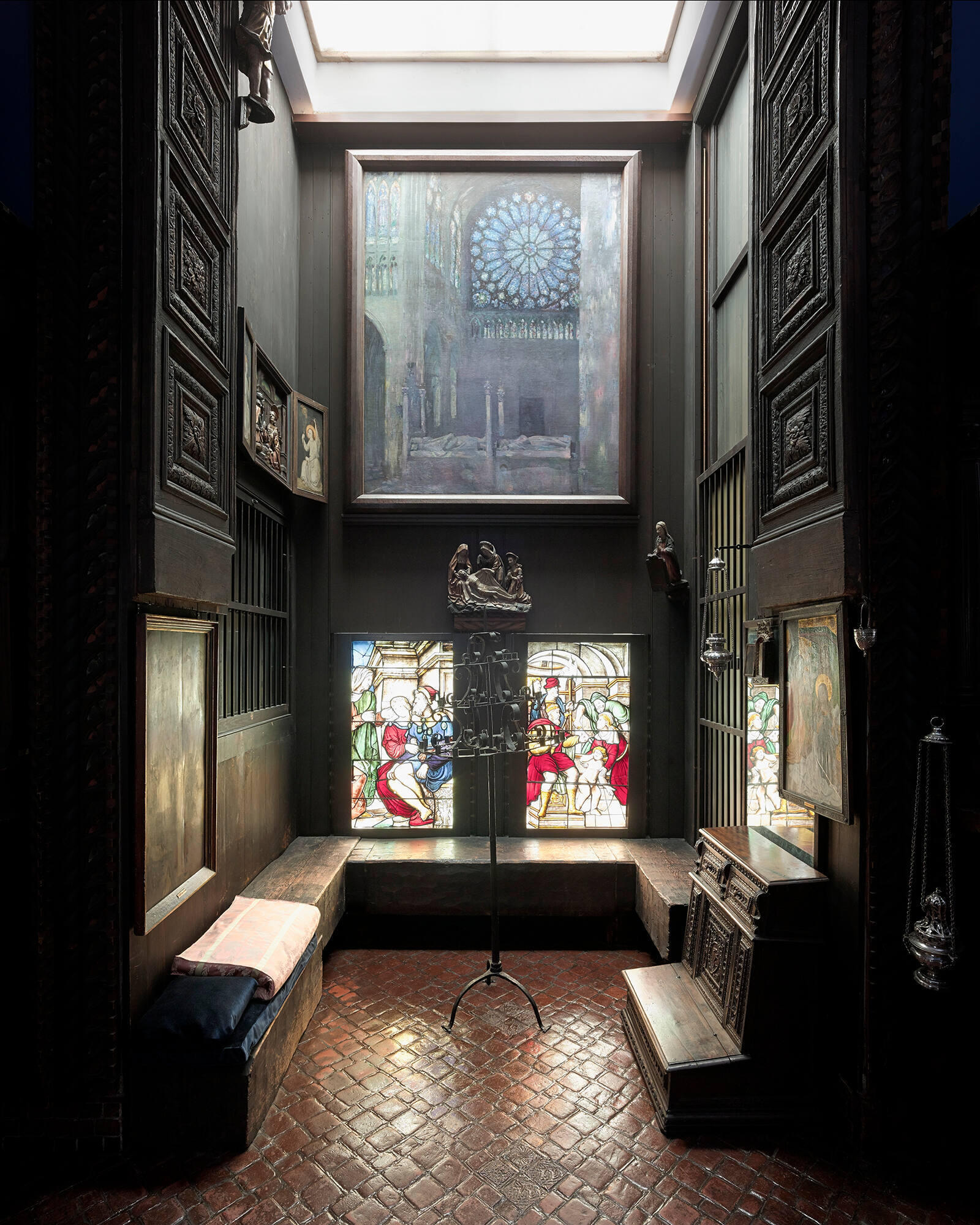
Isabella Stewart Gardner Museum, Boston. Photo: Sean Dungan
The Chapel with Paul Cesar Helleu’s The Interior of the Abbey Church of Saint Denis
You May Also Like

Read More on the Blog
Bertha Palmer, Isabella Stewart Gardner, and Anders Zorn

Read More on the Blog
John Singer Sargent’s Portrait of Isabella Stewart Gardner

Explore the Collection