
With radiant colors and sculptural forms, Dahlia blooms have enchanted gardeners for over a thousand years. Yet the initial impulse for Dahlia collecting was likely pragmatic. The plant’s flowers and tuberous roots are edible, medicinal, and nutritious. Beyond the quest for beauty and sustenance, people collect plants to understand and connect with the divine order of nature.
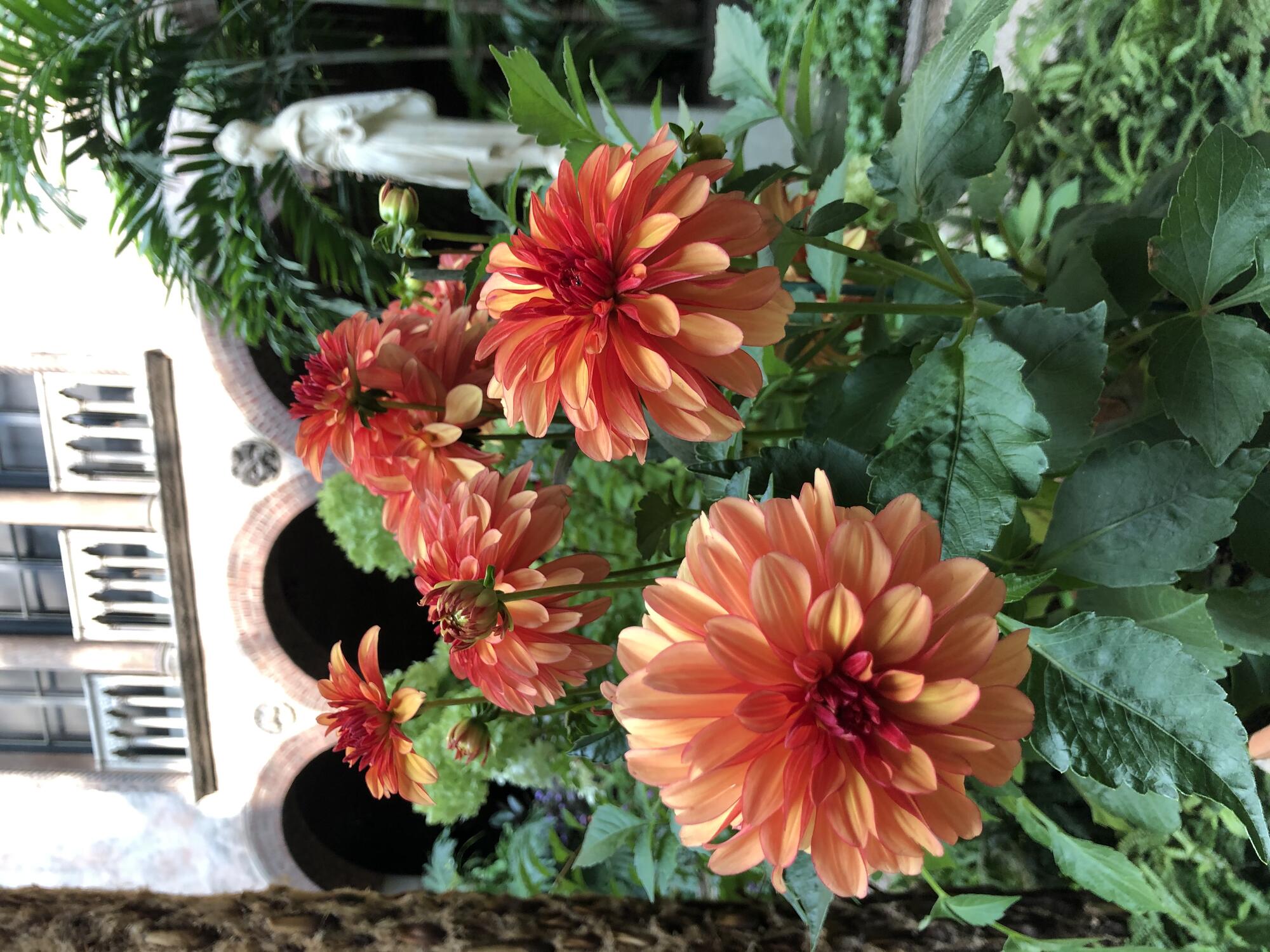
Photo by Jenny Pore
Dahlias in the Isabella Stewart Gardner Museum Courtyard, 2020
The ancient practice of plant collecting proliferated during the “Age of Discovery” of European colonialism. In the 16th century, the Spanish were the first Europeans to collect the Dahlia from its indigenous land. Native to the mountains of Mexico, Dahlias grow wild in pine-oak woodlands. The Aztecs cultivated them in sophisticated gardens nourished by advanced systems of irrigation. The floating gardens of Mesoamerica—or chinampas—are among the sustainable agricultural techniques still used to this day.

Retrieved from Wikimedia Commons
Karl Weule (German, 1864–1926), The Chinampas or Floating Garden near the city of Mexico. In Leitfaden der Voelkerkunde [Guide to Ethnology]. Bibliographisches Institut, Leipzig, 1912
The Floating Gardens of the Aztecs
Chinampas—meaning “in the fence of reeds” in Nahuatl—are small man-made islands of fertile, ploughable land used to grow crops on the surface of fresh water. Farmers weave together reeds to create rafts anchored by stakes in shallow lakes. The nutrient-rich soil from the lake bed is mixed with aquatic vegetation to create topsoil. The crops are watered by the lake.
Among the crops grown on chinampas by the Aztecs were maize, beans, squash—the “Three Sisters” of Indigenous American agriculture—and flowers. Flowers were integral to Aztec rituals believed vital to the rising of the sun each day. After Spanish conquistadors destroyed the Aztec Empire in 1521, they sent Mesoamerican crops back to Europe as spoils of war.
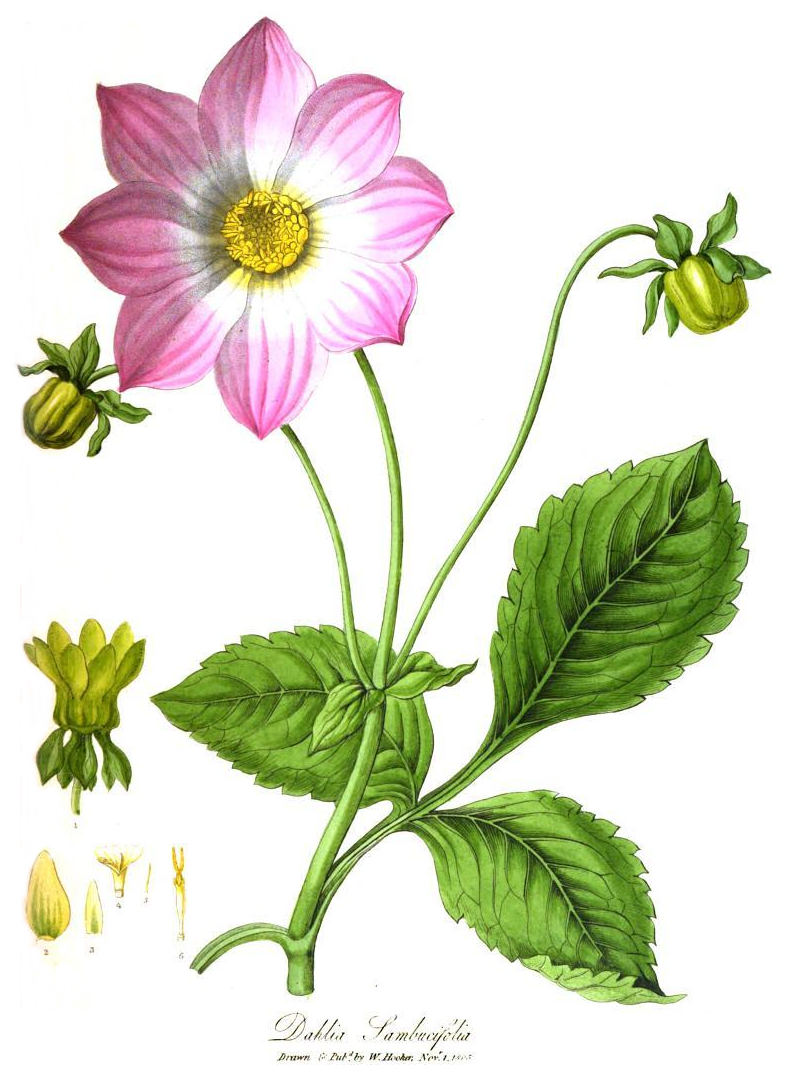
Harvard University, Cambridge, MA
William Hooker (English, 1779–1832), Dahlia sambucifolia (= Dahlia x pinnata), in The Paradisus Londiniensis: or Coloured Figures of Plants Cultivated in the Vicinity of the Metropolis, 1805
Appetites for Dahlias
Wild Dahlias have simple flowers with a single row of petals. By the 16th century, the Aztecs had created double forms through hybridization. They grew countless varieties and used them medicinally as a tonic for a range of internal ailments and skin conditions. Peppery Dahlia petals are rich in antioxidants and the nutritious tubers contain inulin—a soluble fiber that improves metabolic and digestive health. The Aztecs savored the sweet, starchy tubers boiled or baked in embers. A mocha-like syrup called dacopa made from the roasted tubers sweetens beverages.
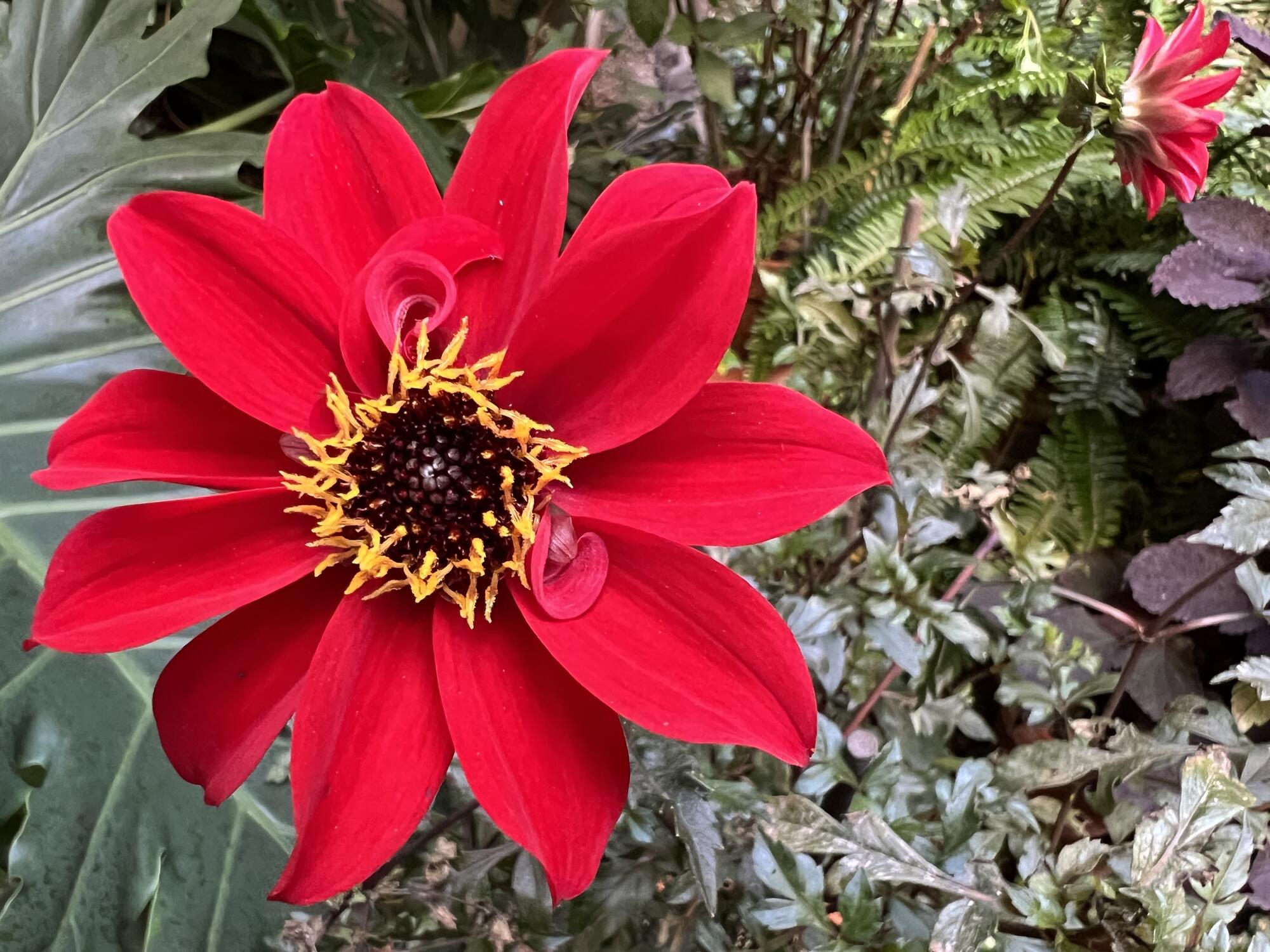
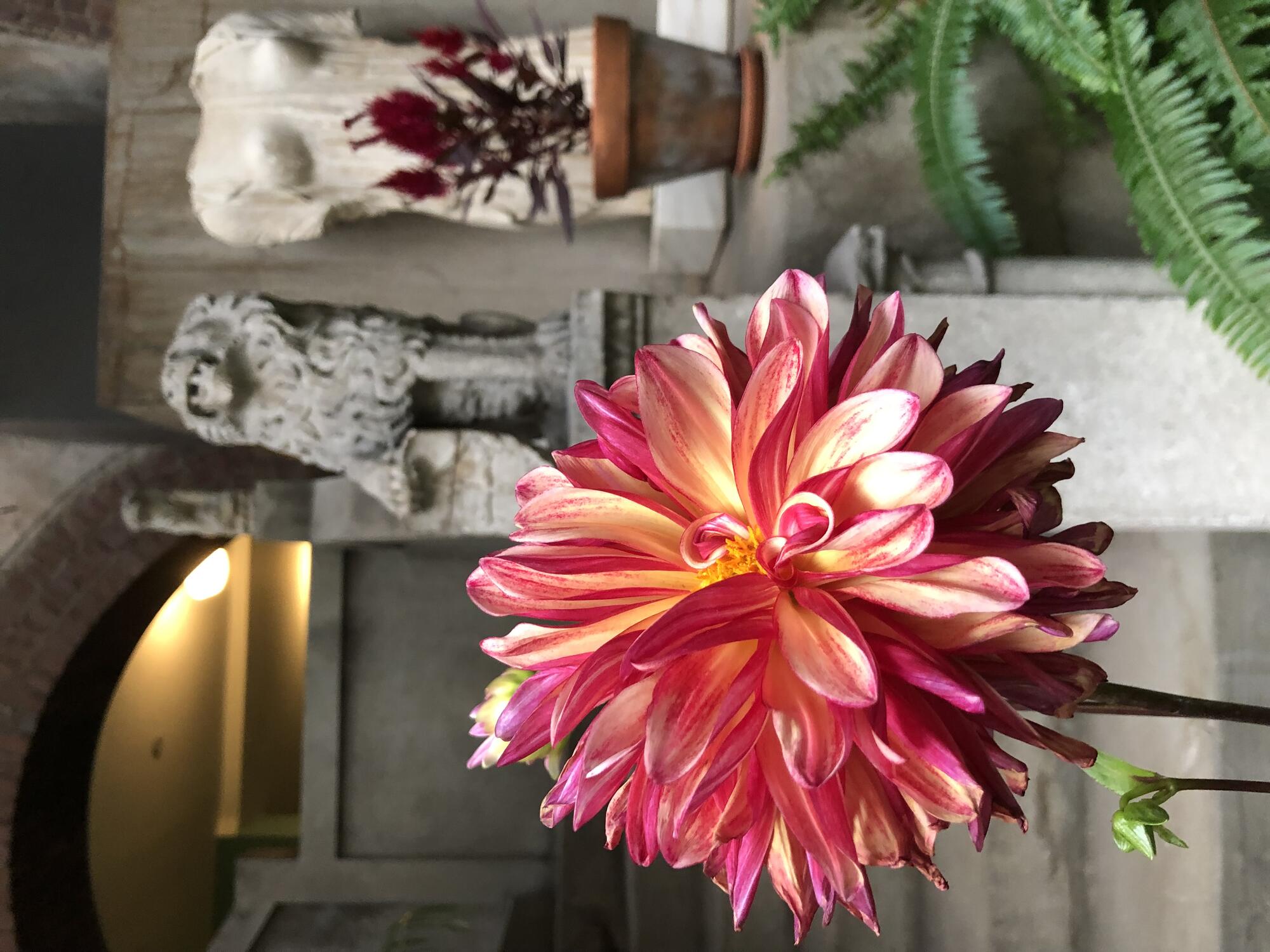
By the 18th century, Dahlia breeding swept through Europe. New cultivars were created in a kaleidoscope of shades and fanciful forms. Europeans bred Dahlias for their beauty, not their flavor. Despite the tubers tasting of celery, water chestnut, or sweet potato, Dahlias never quite caught on as food outside of Mexico. Today, the Dahlia remains a traditional ingredient in Oaxacan cuisine.
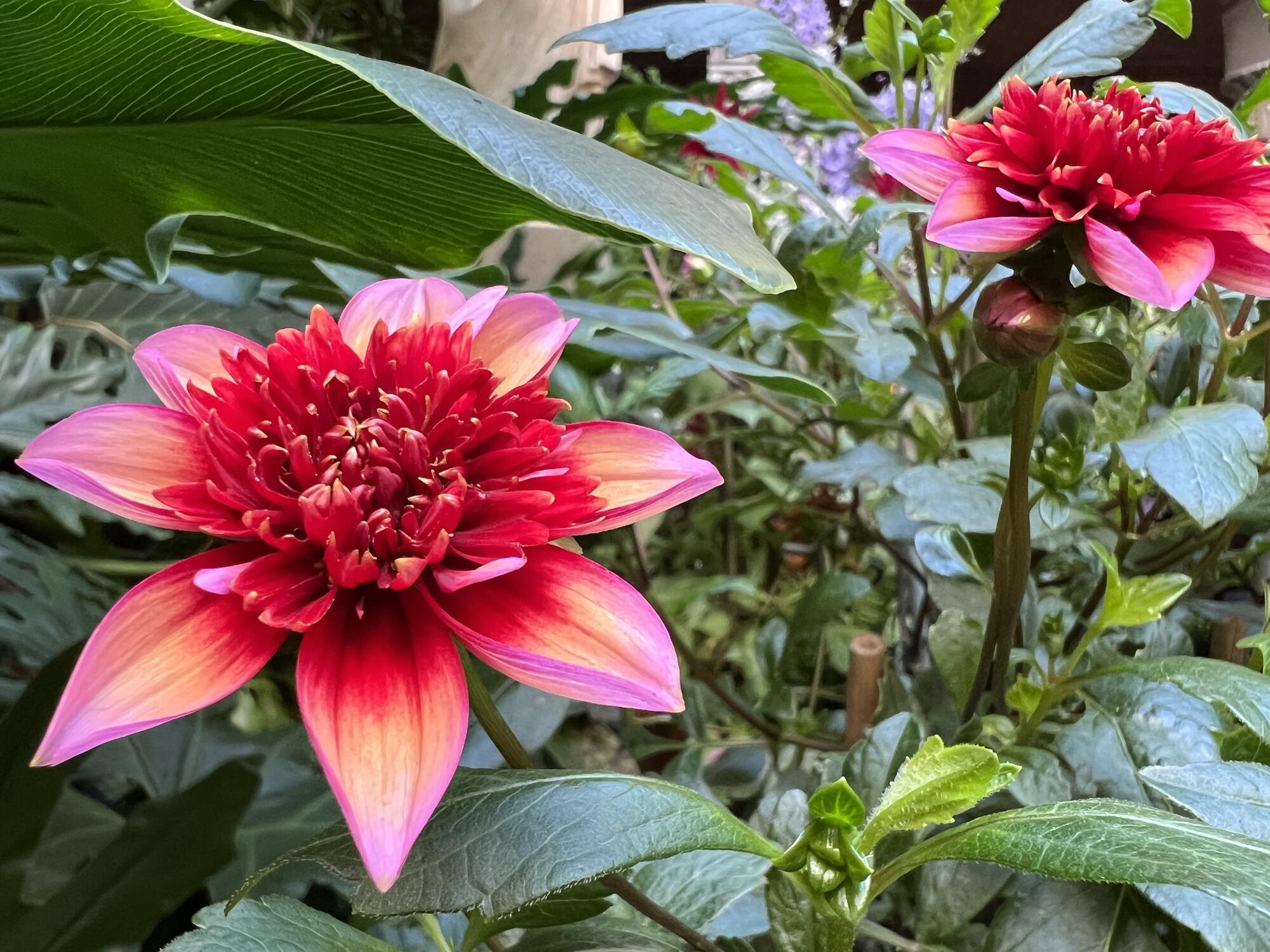
Photo by Jenny Pore
Dahlias in the Isabella Stewart Gardner Museum Courtyard, 2023.
Containing Dahlias
A seasoned gardener, Isabella Stewart Gardner cultivated plants both in gardens and containers in her conservatories and the Museum’s Courtyard garden. Gardner horticulturists carry on Isabella’s vision of displaying plants collected from the far corners of the world. We continue to experiment with production techniques to ensure success growing plants adapted to a habitat different from our own.
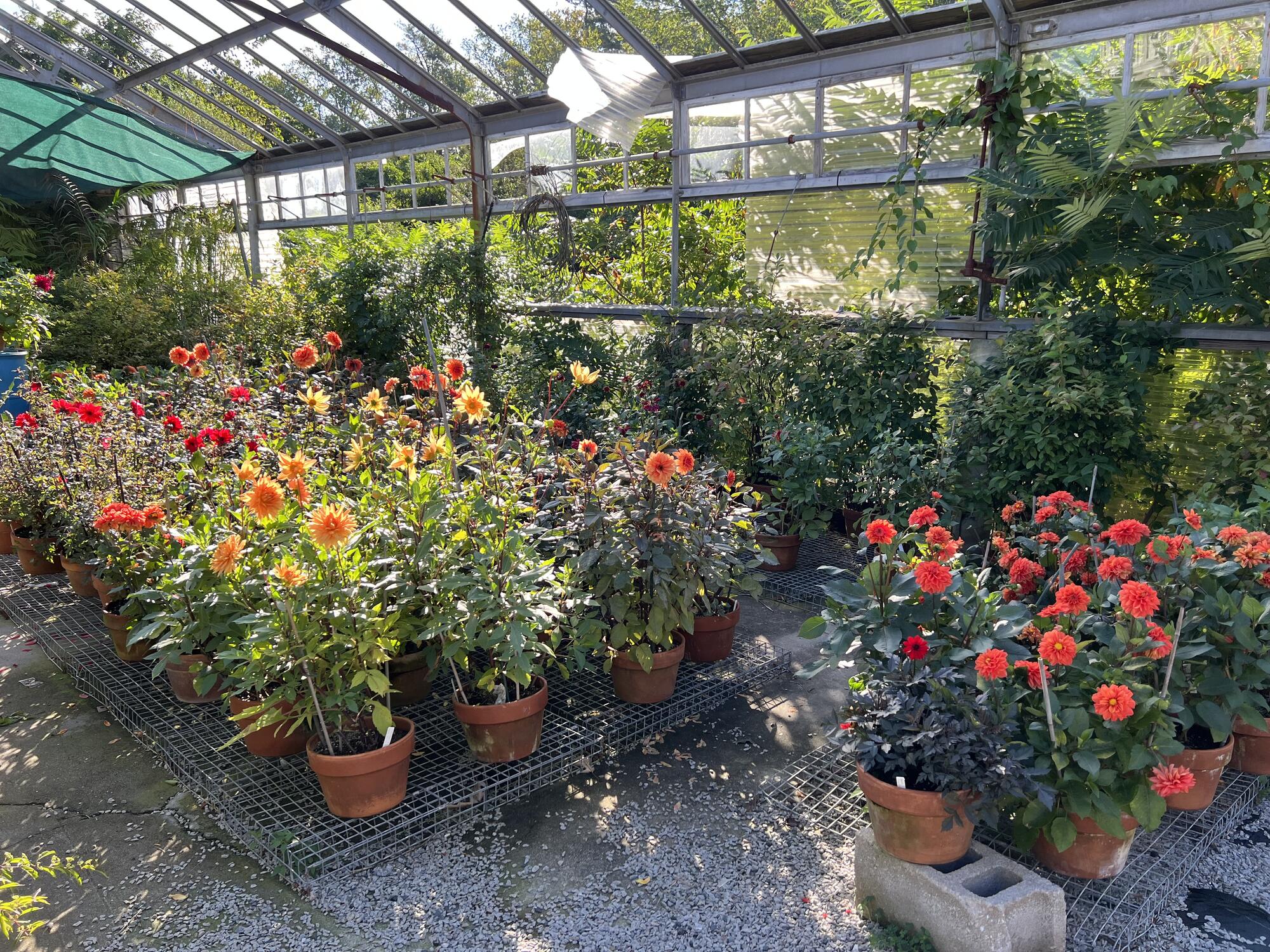
Photo by Jenny Pore
Dahlias in the Isabella Stewart Gardner Museum Nursery, 2023.
In its native subtropical highland climate, the Dahlia evolved to weather a frost but not a freeze. Gardner horticulturists allow our pot-bound Dahlias to experience a light frost before ushering them into the shelter of our Museum’s greenhouses. We allow the pots to dry before storing the cleaned tubers in boxes of vermiculite, cedar, or pine shavings in a cool potting room. We check in on the tubers throughout the winter for any signs of rot. In the late spring, we fish them out from their winter boxes.
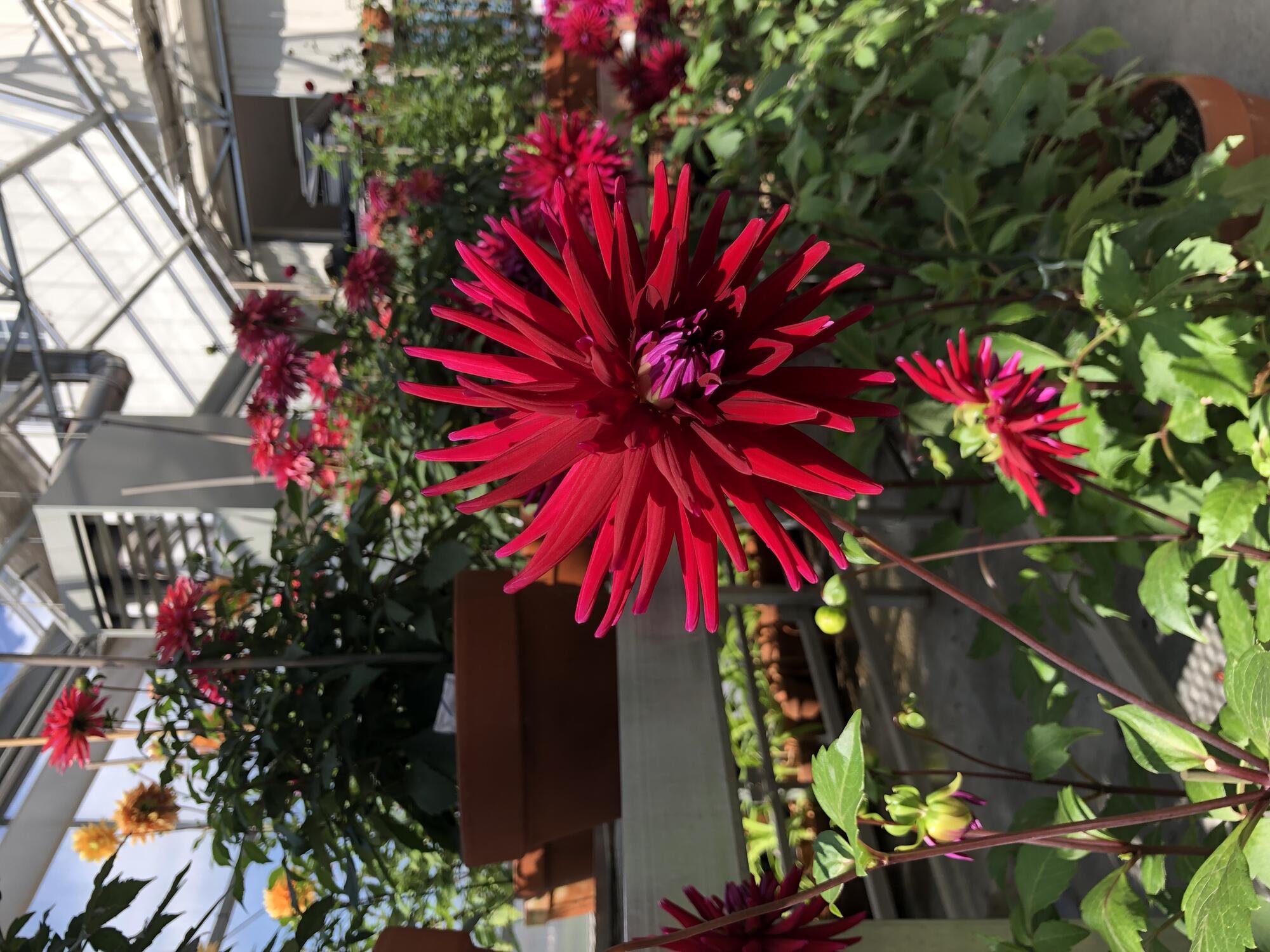
Photo by Jenny Pore
Dahlias in the Isabella Stewart Gardner Museum Greenhouses, 2021
If we were to grow Dahlias in the ground, we would divide the tuber clusters into individual bulbs, keeping the crown that attaches each tuber to its original, woodier mother tuber intact. Instead, since we show our Dahlias in fairly small containers in the Courtyard, we keep as much of the healthy cluster intact as will fit in the pot. With the tubers’ space restricted, we are aiming to create a display akin to a miniature Dahlia bonsai garden. By pinching early growth tips, we produce shorter, fuller plants with as many flowers as possible.
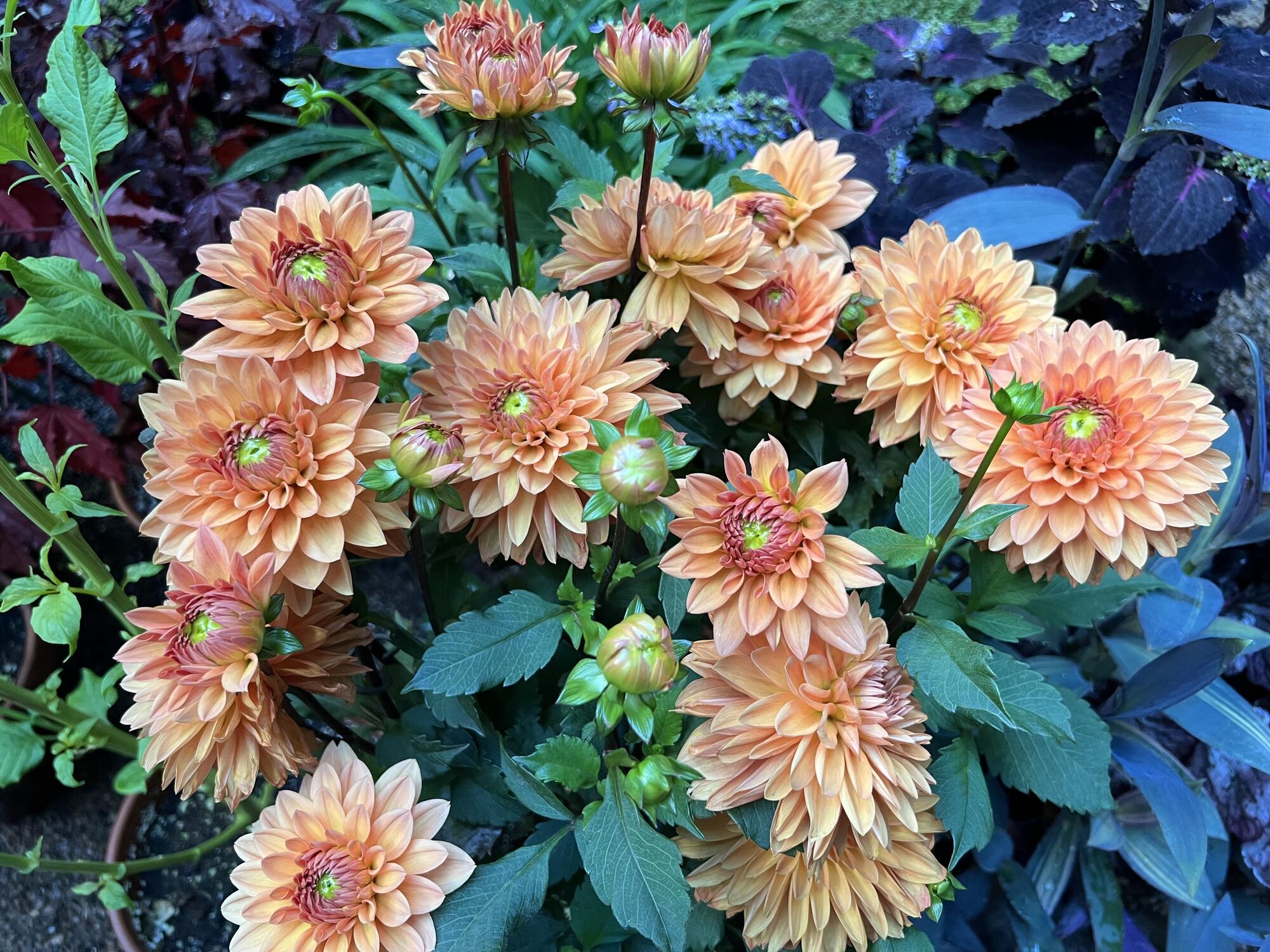
Photo by Jenny Pore
Dahlias in the Isabella Stewart Gardner Museum Courtyard, 2025
Isabella’s Namesake
... I have the honor to announce to your majesty that the dahlia known as the “Mrs. John L. Gardner” took the first prize in its class… The Stewart and Fisher people are propagating bulbs and next season will put them on the market… I thought you would be pleased to know that your namesake is a success.

Isabella Stewart Gardner Museum, Boston (ARC.002017)
Edmund C. Hill (American, 1855–1936), Letter and List of 1923 Trenton Dahlia Society Exhibition Winners to Isabella Stewart Gardner from New Jersey, 22 September 1923. Ink on paper
Isabella’s namesake Dahlia was described in various catalogs from the 1920s as a large, striking, long-stemmed, fancy hybrid cactus-type with blood-red petals tipped with pure white. These vivid depictions suggest the variety was just dramatic enough to bear the name of a visionary.
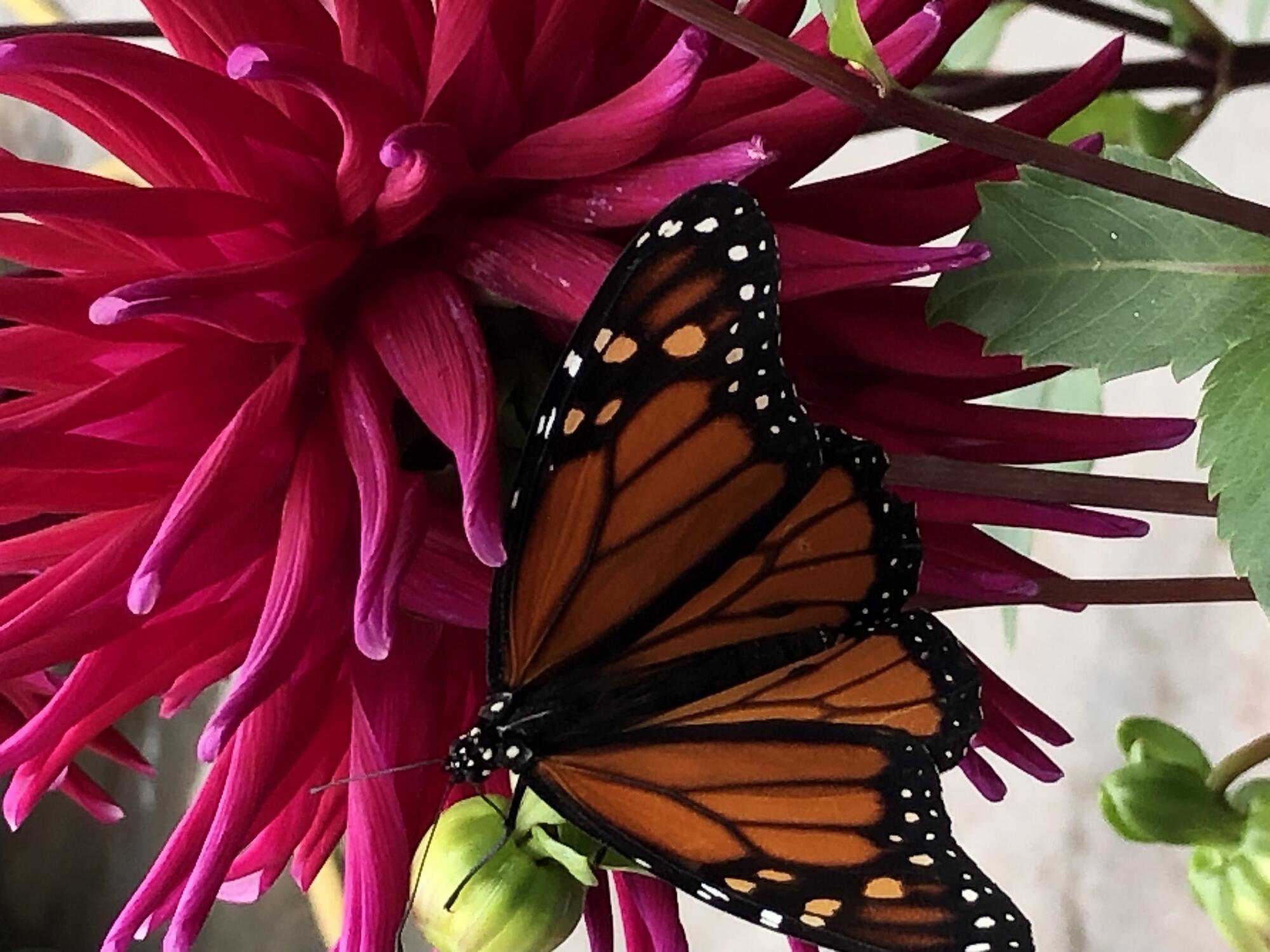
Photo by Jenny Pore
Monarch butterfly pollinating a crimson cactus Dahlia, 2021
As the days of summer grow shorter in September, the palette of the Courtyard garden becomes saturated with the rich hues of gemstones. Our Dahlias radiate brilliant shades of deep garnet and imperial topaz, in silhouettes diverse and decadent. Their clarity of form brings focus and calm. The beauty of nature rewards us with its hush.
You May Also Like

Read More on the Blog
Persephone’s Impossible Garden

Explore the Museum
Seasonal Courtyard Displays

Read More on the Blog