
The works of art Isabella Stewart Gardner collected hold legacies. Ancient myths are hidden in plain sight. Isabella left us clues in the installation of her Museum’s galleries. It can feel like a game to walk the Palace in search of the connections she created to echo the themes of the artworks. The marble sculptures that crown the Courtyard set the stage for the etiological myth of Persephone—the origin story of the four seasons. The living collection of plants frames the tale.
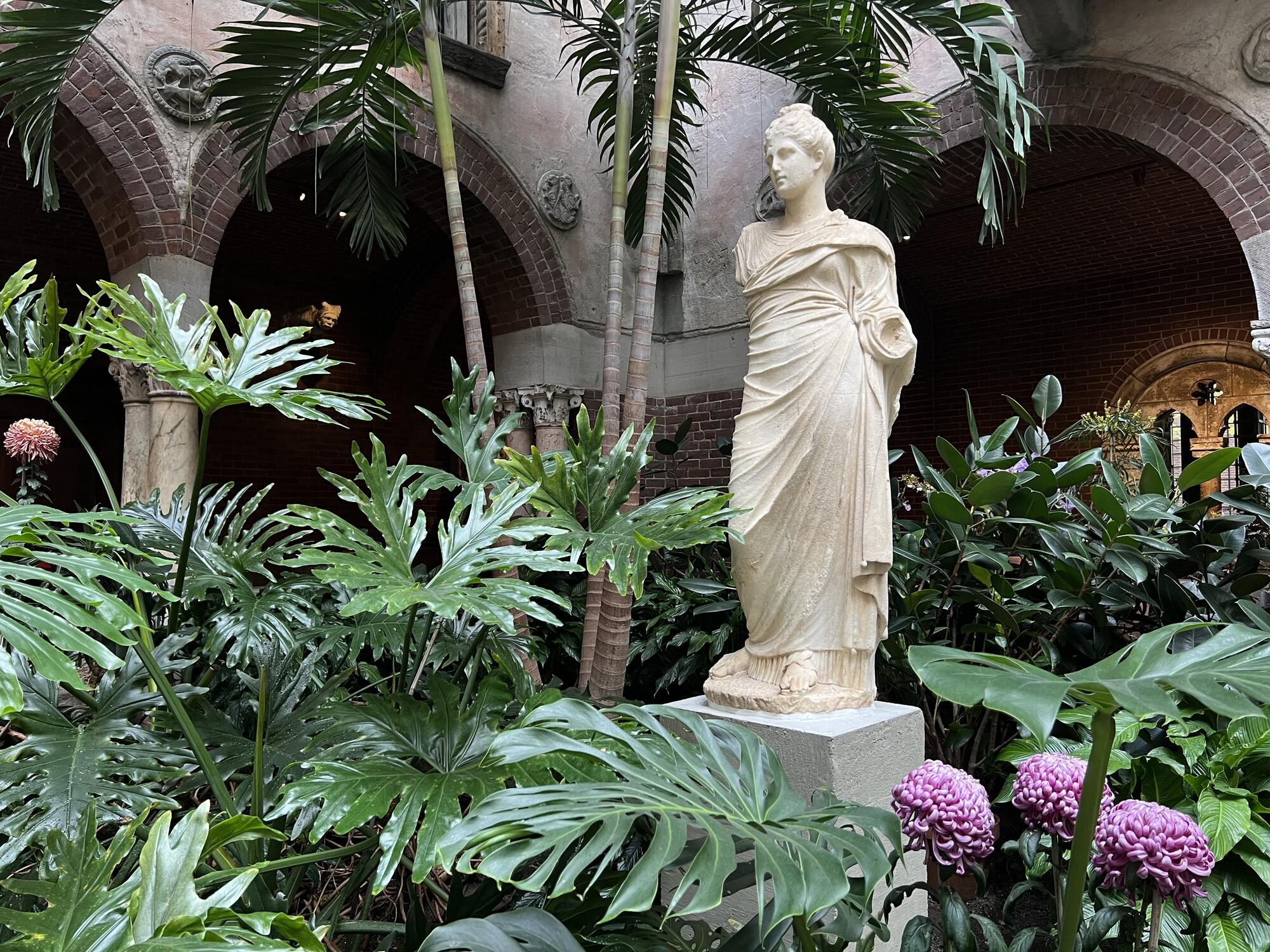
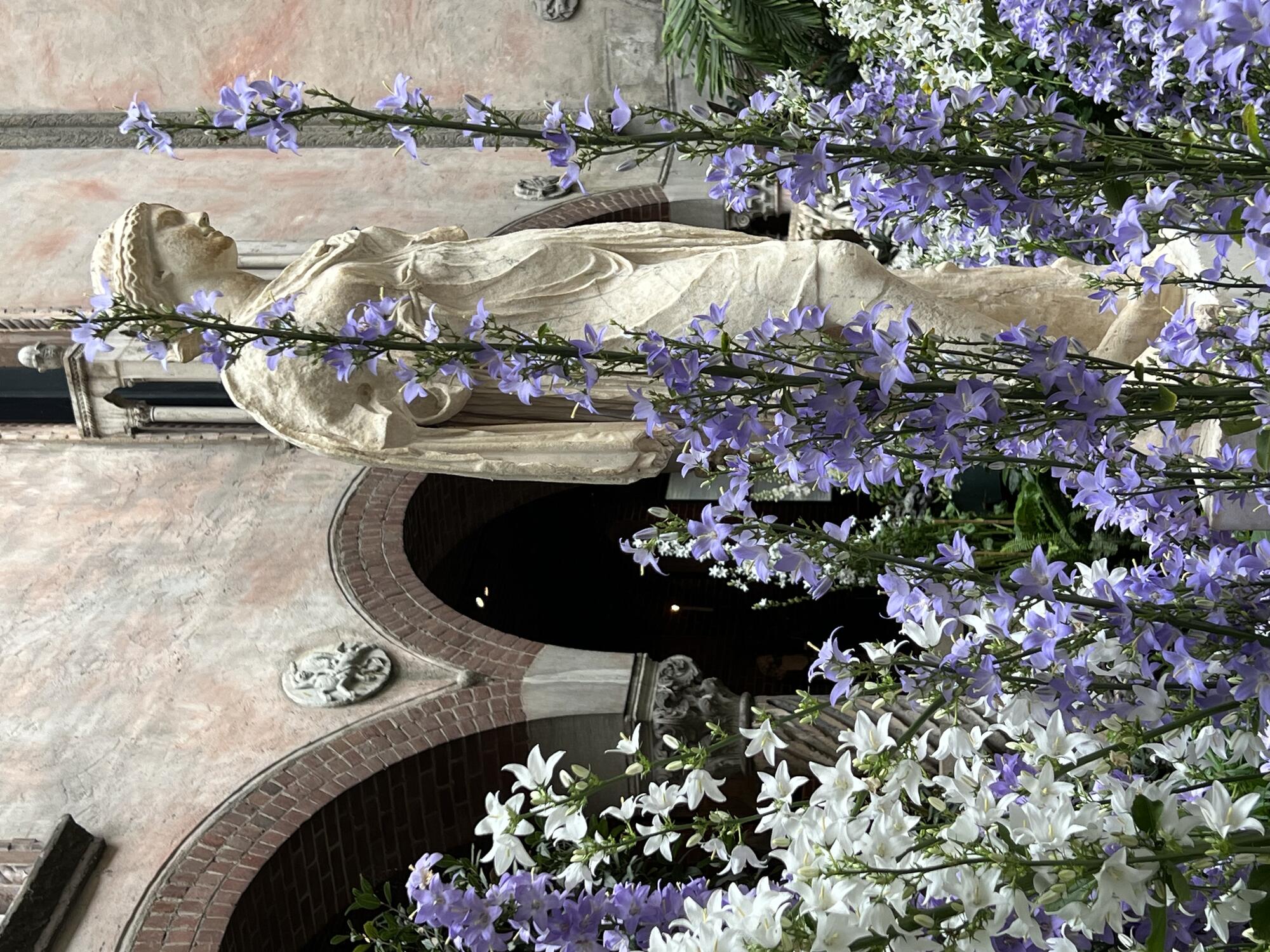
The northeast alcove of the Courtyard atrium is anchored by a marble sculpture of the Goddess Persephone. She stands amidst an impossible garden in perpetual bloom. Across the garden to the west, a statue of the Goddess Artemis gazes back at Persephone. According to Greek mythology they were half-sisters, both daughters of Zeus—king of the gods. They were gathering bouquets in a meadow of flowers that don’t naturally bloom together in modern times. The lure of Narcissus among a field of roses and larkspur sealed Persephone's fate. As she reached down to pick a flower, the earth opened up beneath her.
I was joyfully gathering the flowers, and then the earth beneath me gave way, and there it was that he sprang out, the powerful lord who receives many guests. He took me away under the earth in his golden chariot. It was very much against my will. I cried with a piercing voice.
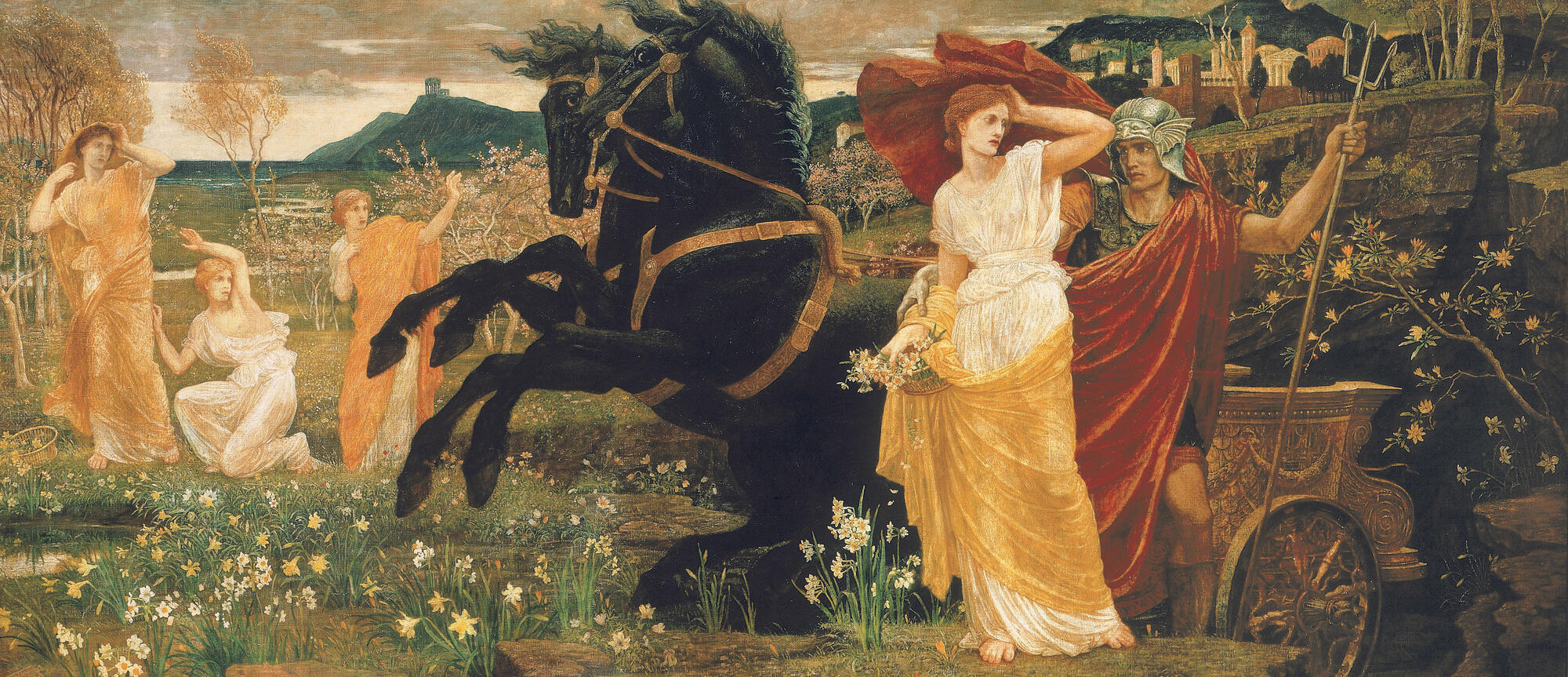
Christie's Images/Bridgeman Images
Walter Crane (English, 1845–1915), The Fate of Persephone, 1877. Oil and tempera on canvas, 48¼ x 105 1/8 in. (122.5 x 267 cm.) Private Collection
The Fate of Persephone
Like her mother Demeter, Persephone was a nature goddess. Her uncle Hades—god of the dead and king of the underworld—abducted Persephone and made her his chthonic queen. In mourning, Demeter abandoned her role as goddess of the harvest. The earth became barren and mortals were starving.
Pressed to save humanity, Zeus returned Persephone to her mother on earth. Yet because she had tasted the blood-red seeds of the pomegranate—food of the underworld—Persephone was condemned to return to Hades for part of each year eternally. The months when Persephone stayed with Demeter, flowers bloomed and crops flourished. Her cyclical sojourn to the underworld brought winter. The fate of Persephone created the four seasons.
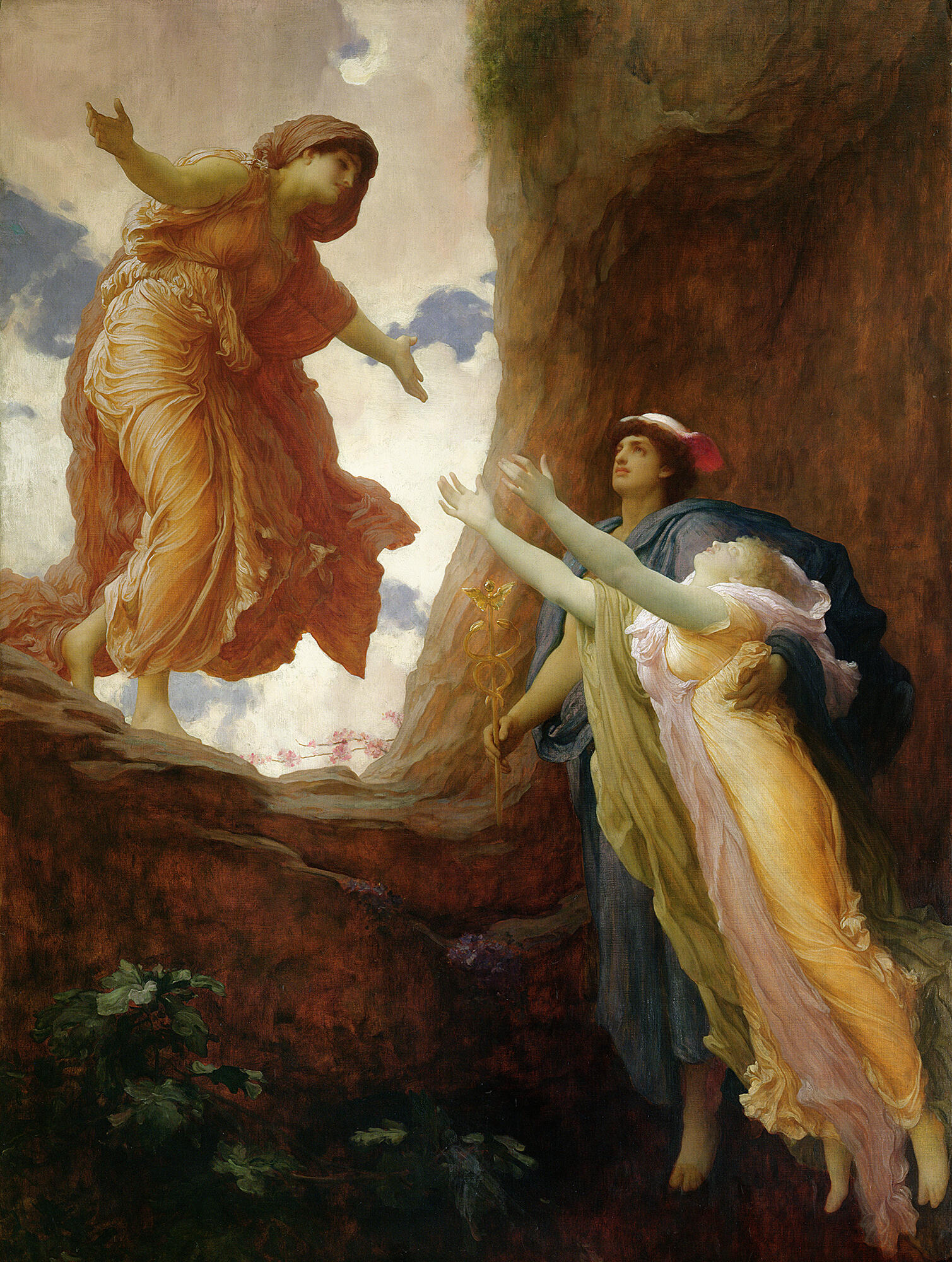
© Leeds Museums and Galleries, UK / Bridgeman Images
Frederic Leighton (English, 1830–1896), The Return of Persephone, 1891. Oil on canvas, 203 x 152 cm (80 x 59 7/ in.) Leeds Museums and Galleries (Leeds Art Gallery) UK
The Persephone Period
When winter comes, the days grow short which slows the growth of plants. Even plants sheltered in the warmth of a greenhouse drink less and hardly flower, conserving energy. Once daylight dips below ten hours a day, plant growth nearly stops. Horticulturists know this darkest time of the year as the ‘Persephone Period.’
Winter garden expert Eliot Coleman coined the phrase to help farmers schedule sowing of crops for winter harvest. The duration of the Persephone Period depends on a region’s latitude. The tropics experience no Persephone Period at all. In Boston, we endure this darkness from November 9th through February 1st.
Understanding the effects of dark days on our diverse living collection is crucial for Gardner Museum horticulturists. In addition to reducing watering and pausing repotting projects, we are careful not to water too late in the day as wet foliage overnight increases the risk of fungal and bacterial plant diseases.
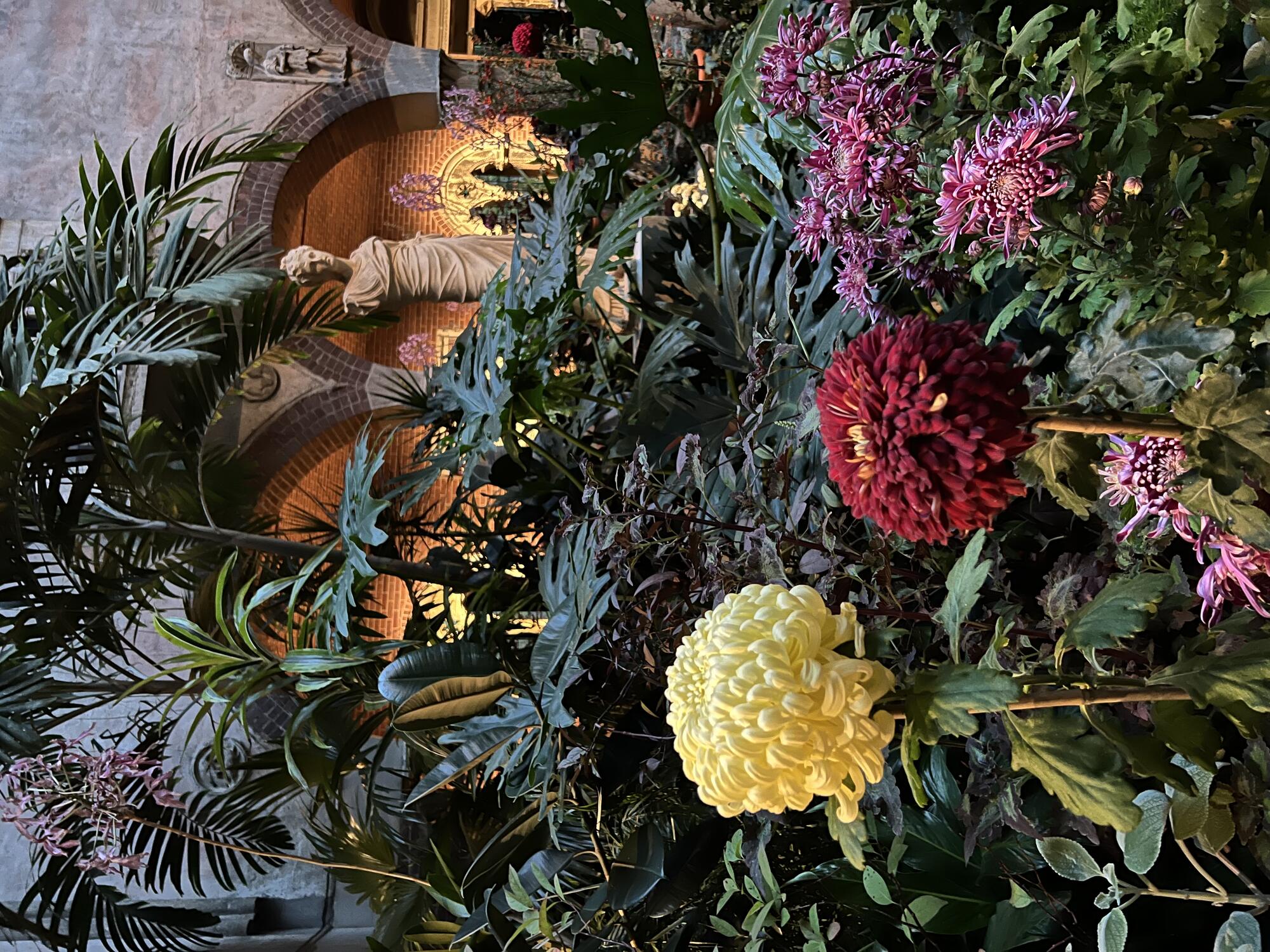
Isabella Stewart Gardner Museum, Boston. Photo: Jenny Pore
A Goddess (Persephone) in the Courtyard on a dark November morning, 2022
Like her art collection, the aesthetics of the Courtyard’s plant selections were influenced by Isabella’s travels. Gardner Museum horticulturists have inherited an eclectic collection of plants hailing from all over the world. At the Museum’s nursery, we coax certain plants to bloom outside of their natural cycle. By playing with greenhouse temperatures and scheduled dormancies, we’ve learned to create an impossible garden of plants that could never bloom at the same time in one climate.
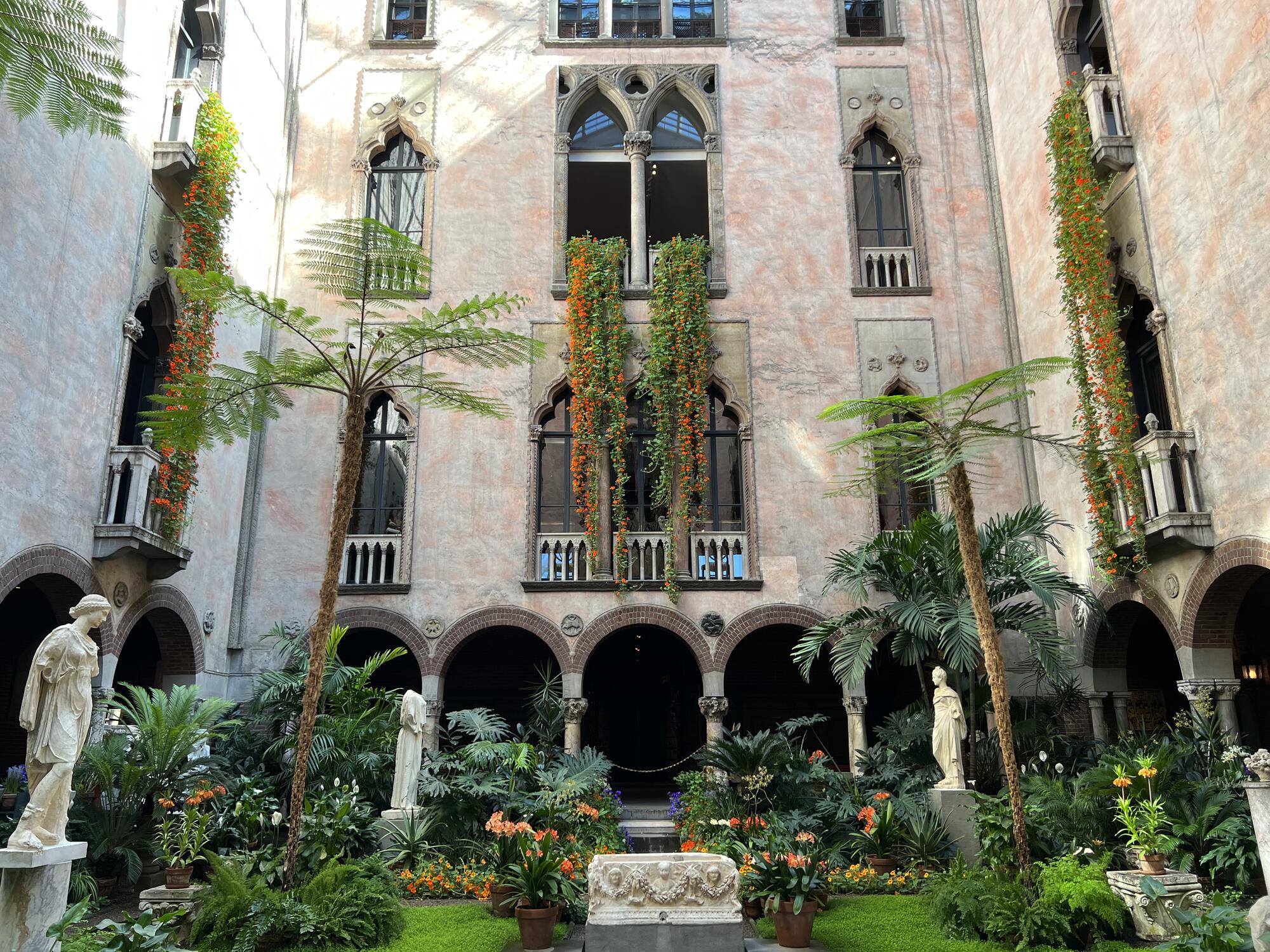
Isabella Stewart Gardner Museum, Boston. Photo: Jenny Pore
The Hanging Nasturtium installation in the Courtyard, 2023
Commemoration Garden
While plants and sculpture contribute to the storytelling of Persphone’s descent into the underworld, there is one aspect of the Courtyard that is curiously synchronistic. The Courtyard itself has been sinking. The Palace was built on strong supports, yet the Courtyard rests directly on landfill for Muddy River wetlands. In 2020, the Museum’s Conservation team braved the challenge of raising our sinking Persphone to her original level. Read about her rescue in the blog post "Persephone Rising."
Other works related to Persphone by myth include the Head of Aphrodite—Persephone’s rival. She glares at Persephone from the Courtyard’s southeast alcove.
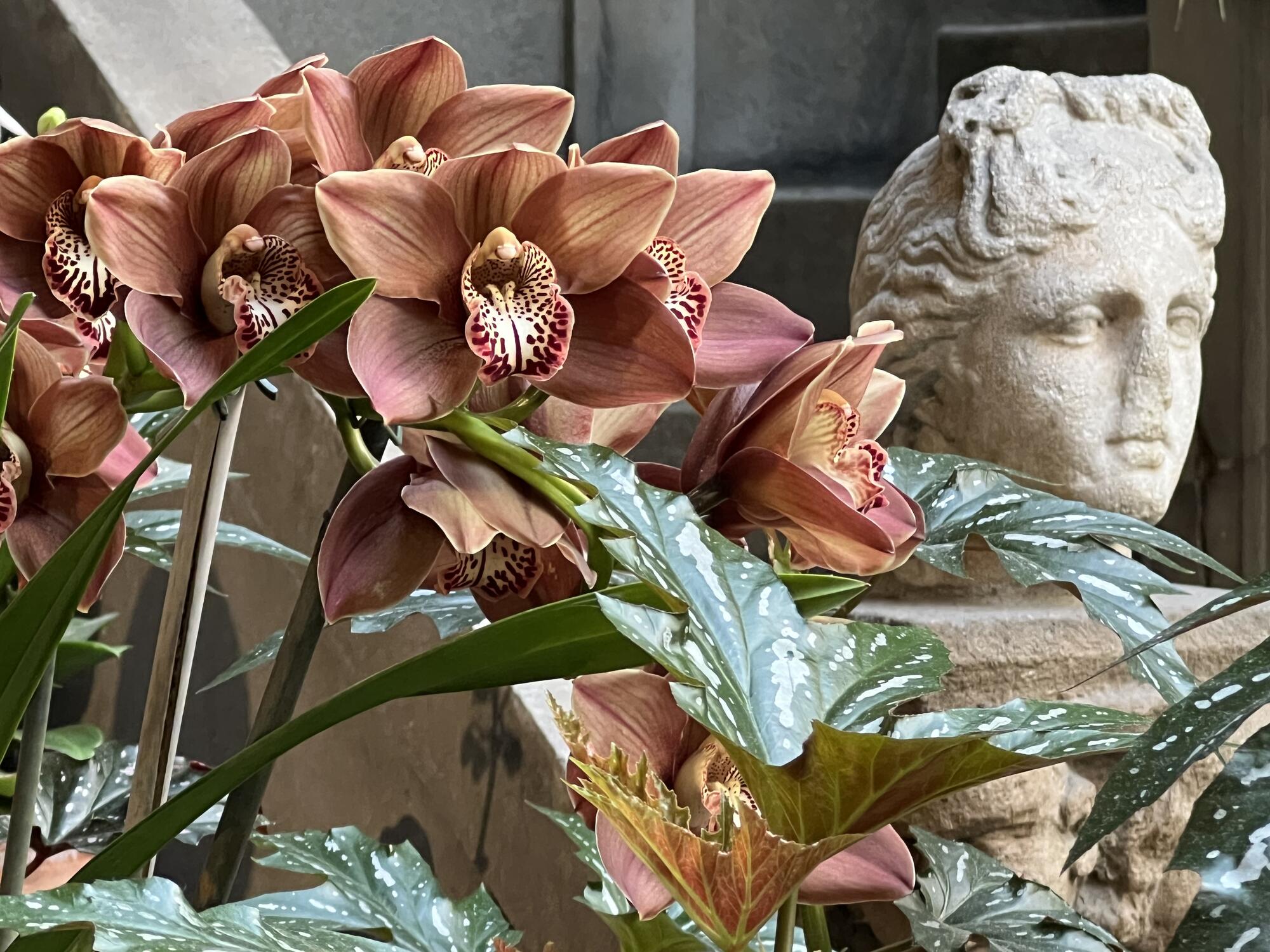
Isabella Stewart Gardner Museum, Boston. Photo: Jenny Pore
Roman, Head of Aphrodite, 2nd - 3rd century in the Courtyard, 2025
While goddesses govern the Gardner Museum Courtyard, the myths behind them are often misogynistic. The common theme of using women’s suffering to explain life’s enigmas is unsettling. Their presence in the Courtyard ultimately serves to highlight the extraordinary power of femininity in all its forms. Each day as sunlight transfigures Persephone’s garden, the flowers she coveted recall her story in an ephemeral work of art.
You May Also Like

Read More on the Blog
Behind the Show: Hydrangeas

Read More on the Blog
Persephone Rising

Read More on the Blog
Ovid, Titian, and The Depiction of Violence Against Women