The Haunted Atmosphere of the Isabella Stewart Gardner Museum

Step inside the suspended time and supernatural atmosphere of the Isabella Stewart Gardner Museum. In this post, discover how 19th-century uncanny tales and a historic parlor game are shaping the vision for an upcoming public installation on the Anne H. Fitzpatrick Façade.
 

share this:

In March of 2025, I began my artist residency at the Isabella Stewart Gardner Museum. The atmosphere of the galleries—one I describe as haunted—and a supernatural parlor game in the collection inspired me to create new drawings in preparation for a public work of art that will appear on the Anne H. Fitzpatrick Façade in the fall of 2027.

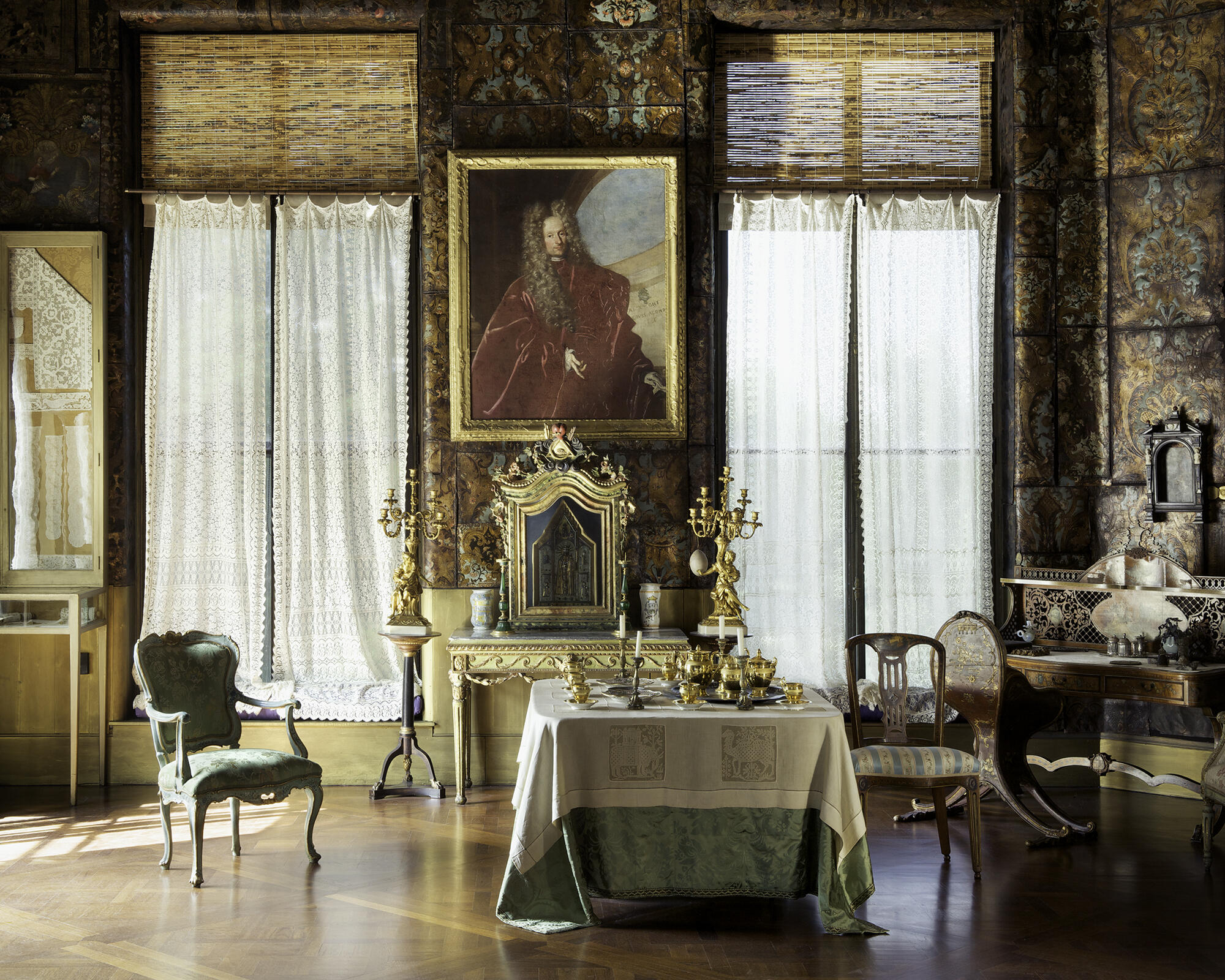
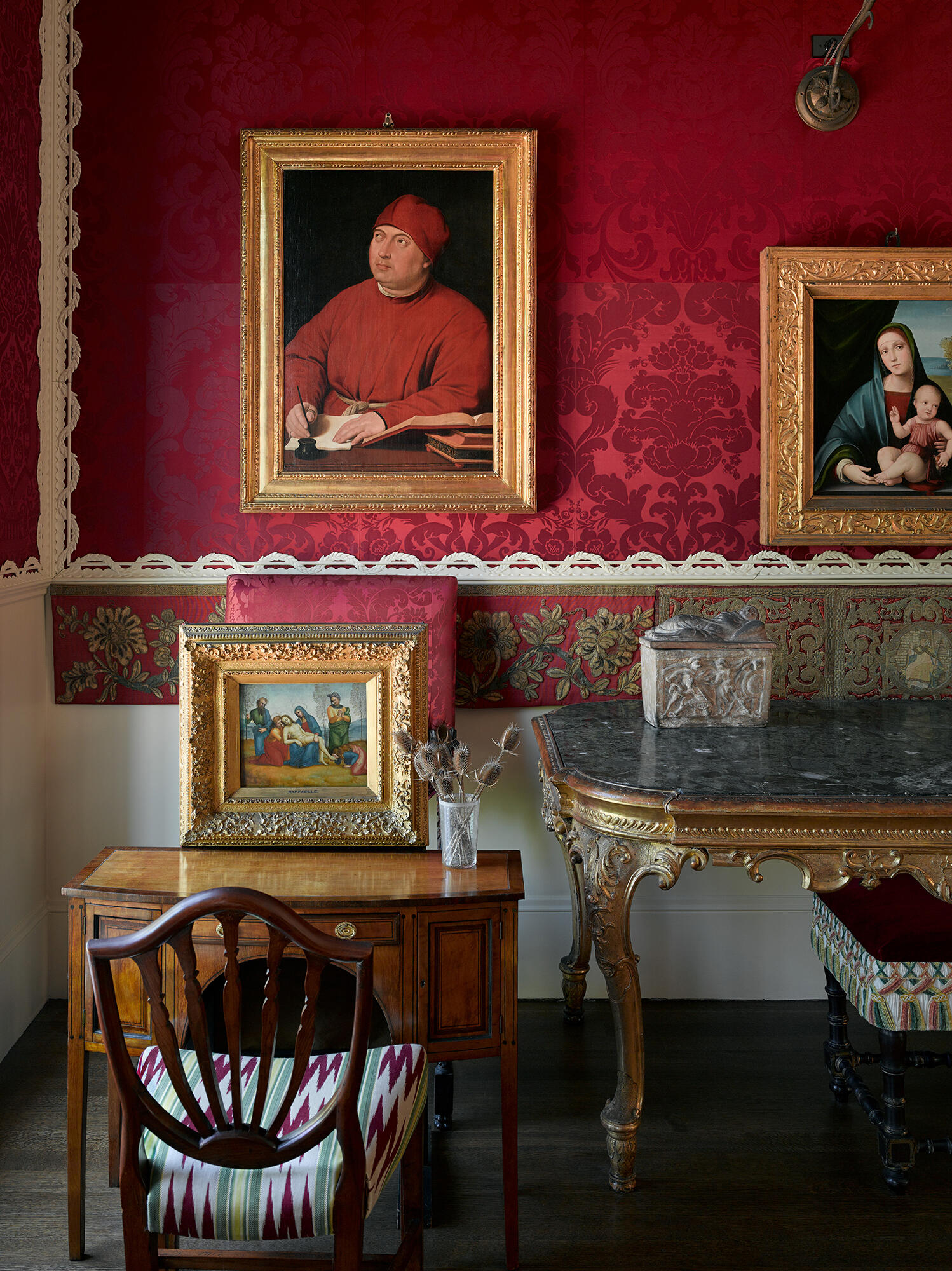
To me, being haunted is to feel the presence of something disembodied in the way that stories and lineages radiate from the rooms and objects in Isabella’s museum. Walking into the Palace of Mrs. Gardner, I entered a private and personal fiction, something between a home and a museum in which time is suspended. The furniture is never moved and the rooms are arranged by taste, not by time period. The building is intended to look like a Venetian palace, and it contains architectural elements and art objects from Venice, but it is an assemblage, not a replica. Because of the emphasis on imagination over reality, the atmosphere of the Gardner is one of its most magnetic powers, equal in attraction to its very real masterpieces. Time may stand still in these rooms, but the objects and furniture are in a constant dialog transcending category and chronology.

As an Artist-in-Residence, I sought out my own guides to the spirit I felt lingering behind the trove of visible and material things. Two works of literature by contemporaries and friends of Isabella’s spoke to the atmosphere: Hauntings by Vernon Lee (1890) and The Haunted Hotel by Wilkie Collins (1879).

Vernon Lee’s Hauntings

Isabella was friends with Vernon Lee, and she owned four of her books. Even though Hauntings is not one of them, its subjects surely would have appealed to Gardner. It is a collection of four ghost stories about enchanted works of art: sculpture, music, and painting, that exert supernatural influence on those around them.

In her preface to Hauntings, Vernon Lee explains that a good ghost story depends on mystery, not ghoulishness. 
 

It seems to me that the supernatural, in order to call forth those sensations, terrible to our ancestors and terrible but delicious to ourselves, skeptical posterity, must necessarily, and with but few exceptions, remain enwrapped in mystery.

— Vernon Lee

In one of the tales, Oke of Okhurst, a portrait painter visits a young couple to paint the wife’s portrait and witnesses the wife’s deadly obsession with an ancestor depicted in an old painting. Portraits that enthrall and a Venetian palace that contains a dark mystery behind its glittering facade, reminded me of the Gardner Museum.

Wilkie Collins’ The Haunted Hotel

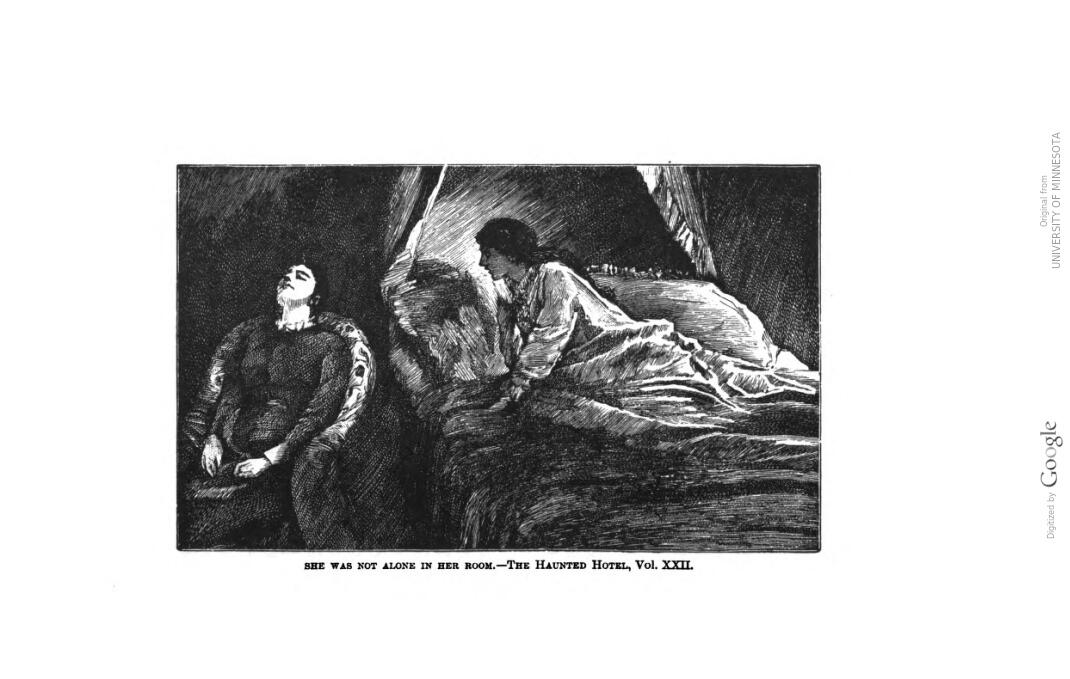
The theatricality to the interiors Isabella created are also evocative of the novels’ settings. In The Haunted Hotel, Collins tells a story about a Venetian palace where a man is murdered. The building is sold and turned into a luxury hotel where the victim’s family comes to visit. Collins uses floor plans, furniture organization, and room layouts to reflect or anticipate how events unfold and characters react. The newly renovated palace is transformed from a decrepit pile—the perfect setting for a murder—to a glamorous hotel.  Before its refurbishment, the immense building separated public expectations, exemplified by grand staircases and reception rooms, from the private deeds carried out in the sparsely furnished private quarters. Everything is gutted and modernized to create the hotel except the bedroom of the murdered lord—which happens to be the best and most opulent bedroom. The highest-priced room in the hotel is also the only remaining piece of the old palace and a symbol of past sins. 

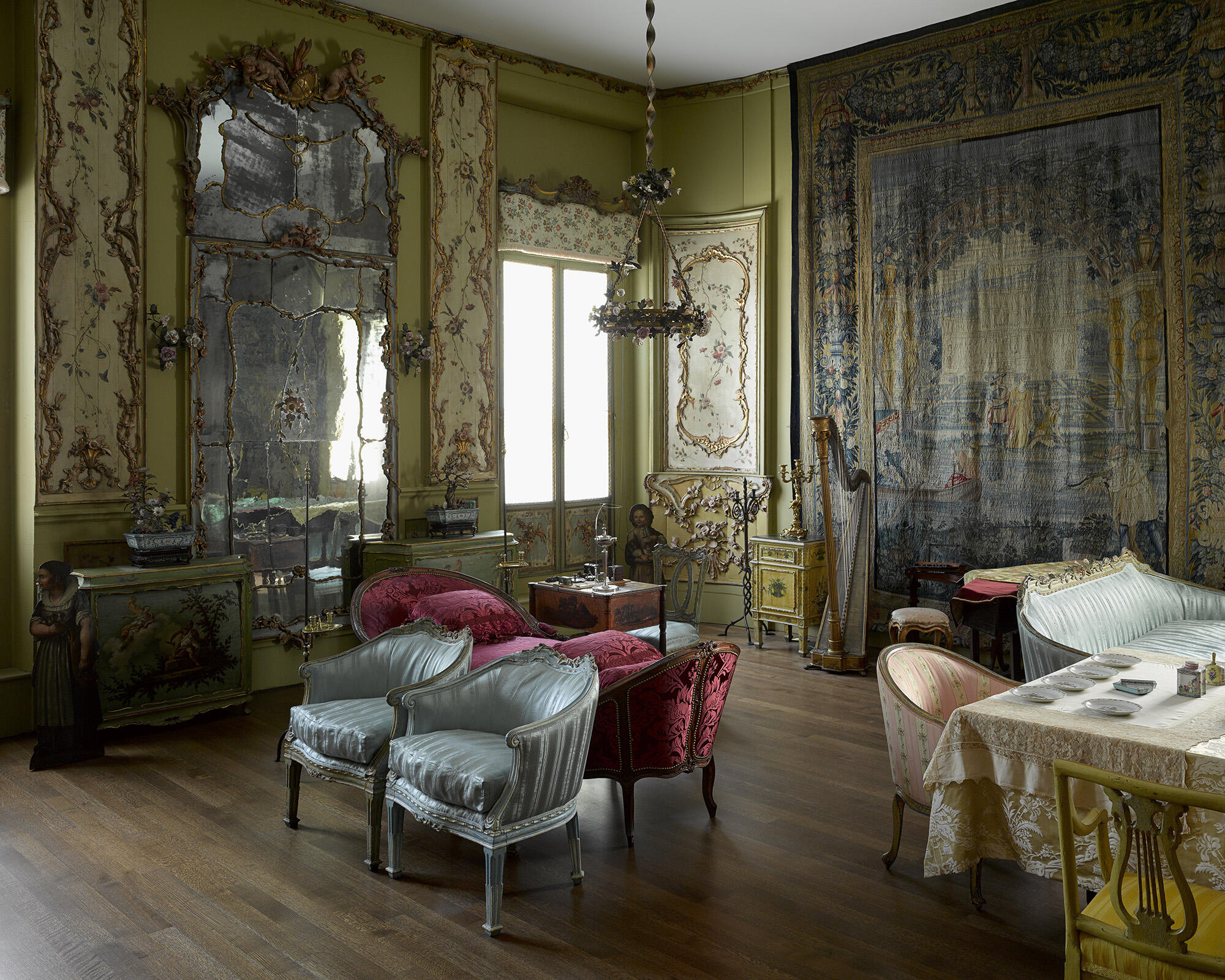
Like the settings of the stories, the Gardner interiors are staged for the eye, with the furniture and art pieces playing their parts. There are the clusters of chatty couches with their gem-colored upholstery in the Little Salon, waiting for a tea party that will never happen. In the bright red Raphael Room, two arm chairs are arranged in a tête-à-tête before the fireplace, conjuring eavesdropping and intrigue. These conversational furniture groupings are balanced by occasional, solitary tables where one chair has been drawn up to contemplate art objects arranged on an altar—chairs where no one may sit.

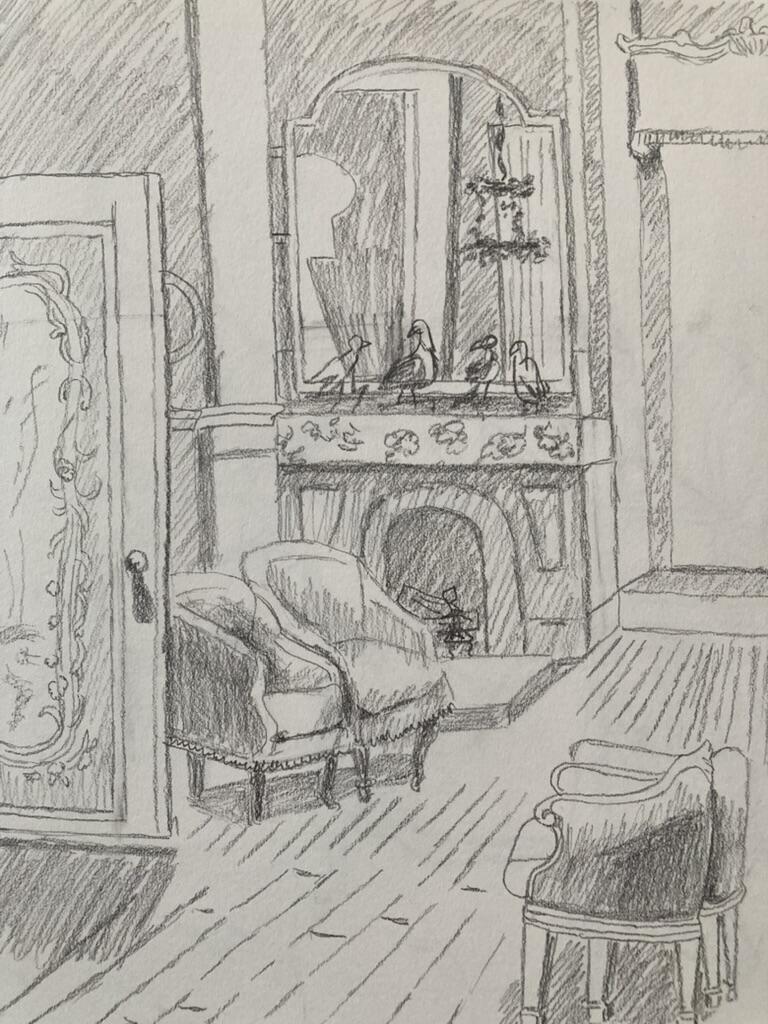
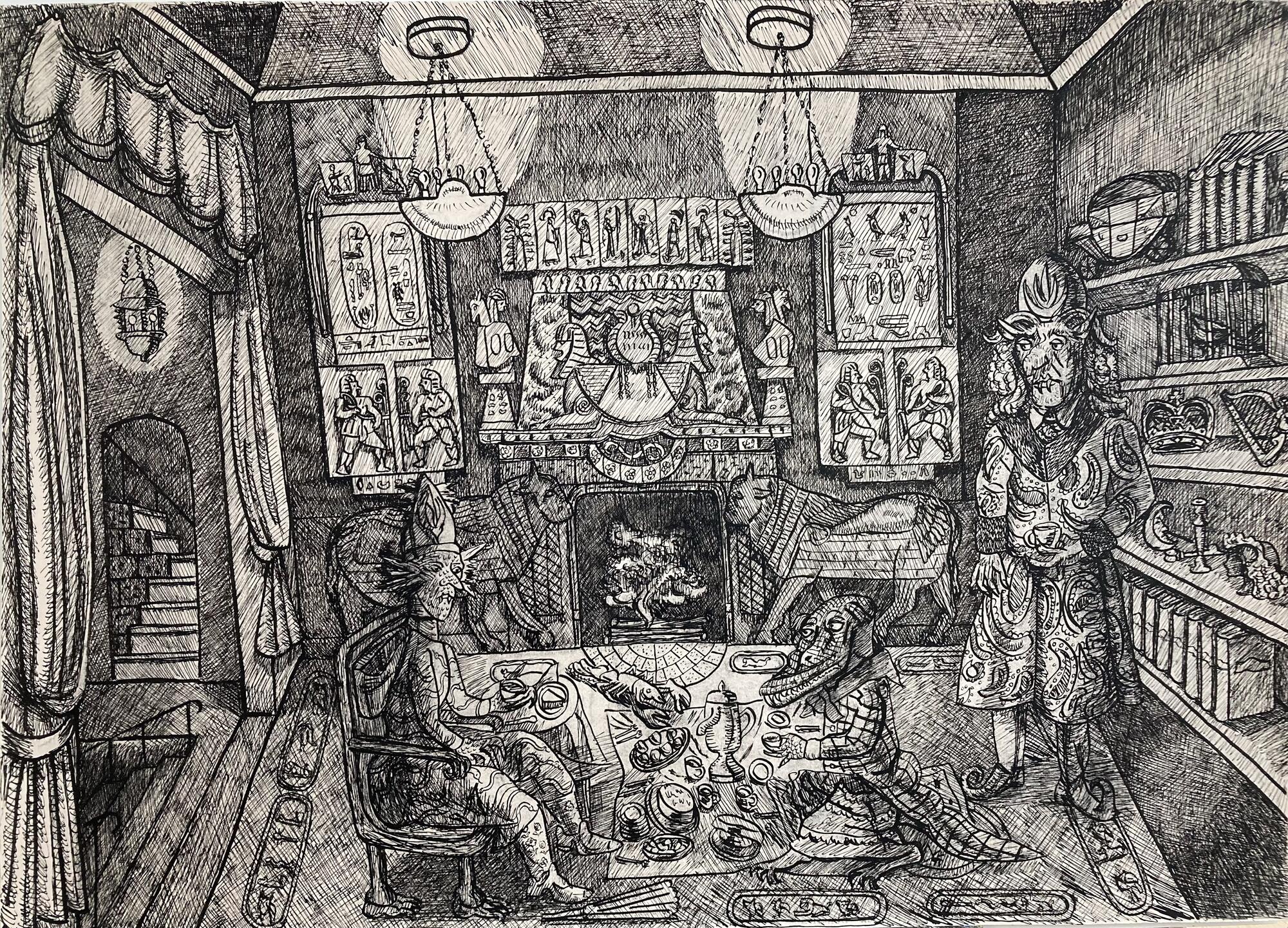
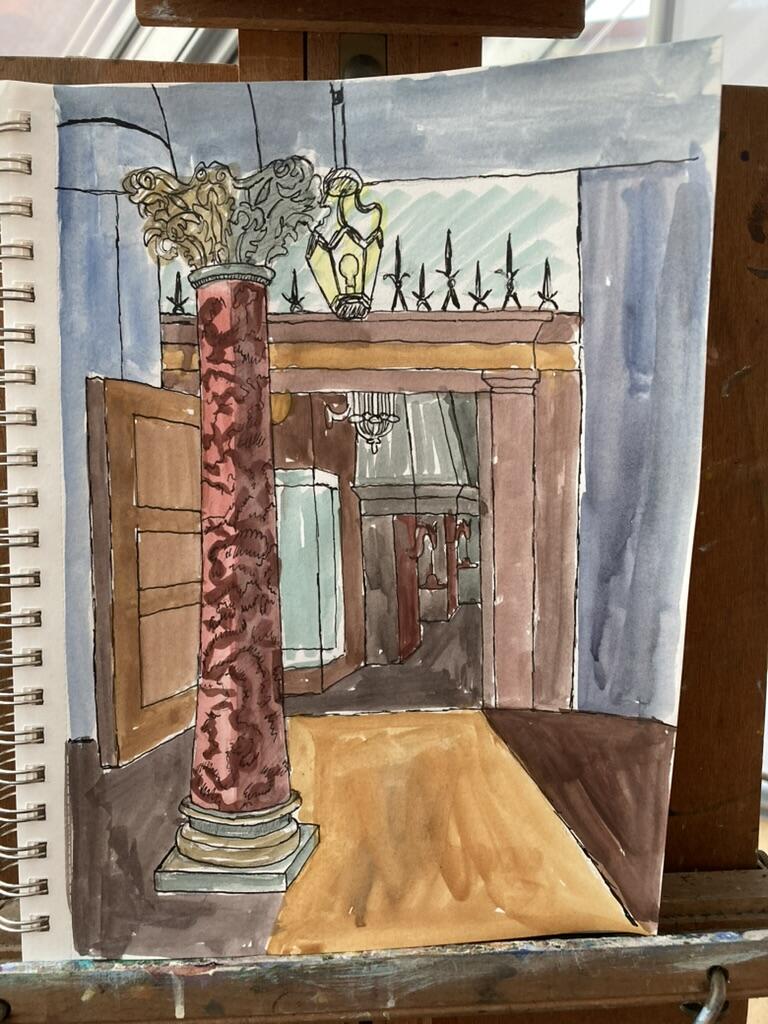
As my residency went on, I felt inspired by Isabella’s collaging of art and furniture from different periods to create something new. I set out to draw an imaginary villa with a haunted atmosphere including features the museum has, such as staircases, and some spaces the museum might have had but doesn’t, such as Egyptian rooms and grottos. 

Into these architectural spaces, I wove the illustrated emblems and cryptic symbols of Sybilline Leaves—a 19th-century parlor game in Isabella’s collection that uses pictorial symbols to read the participant’s mind. Like the game itself, my imagined paper villa operates as a playful conjuring act: a souvenir of the museum’s suspended atmosphere, charged with art, mystery, and a few funny-looking characters sipping champagne. In translating Isabella’s enchanted interiors into this private fiction, I sought to capture the spirit of an assemblage where time refuses to settle. When my work arrives on the Anne H. Fitzpatrick Façade in the fall of 2027, it will invite every passerby to step into our shared game of imagination.

You May Also Like