
There are many places to engage with ancient Egypt in the Boston area, but did you know the Gardner Museum is one of them? Join me, an Egyptologist, on a mini-tour of encounters with ancient Egypt at the Gardner, which you can experience yourself on your next visit.
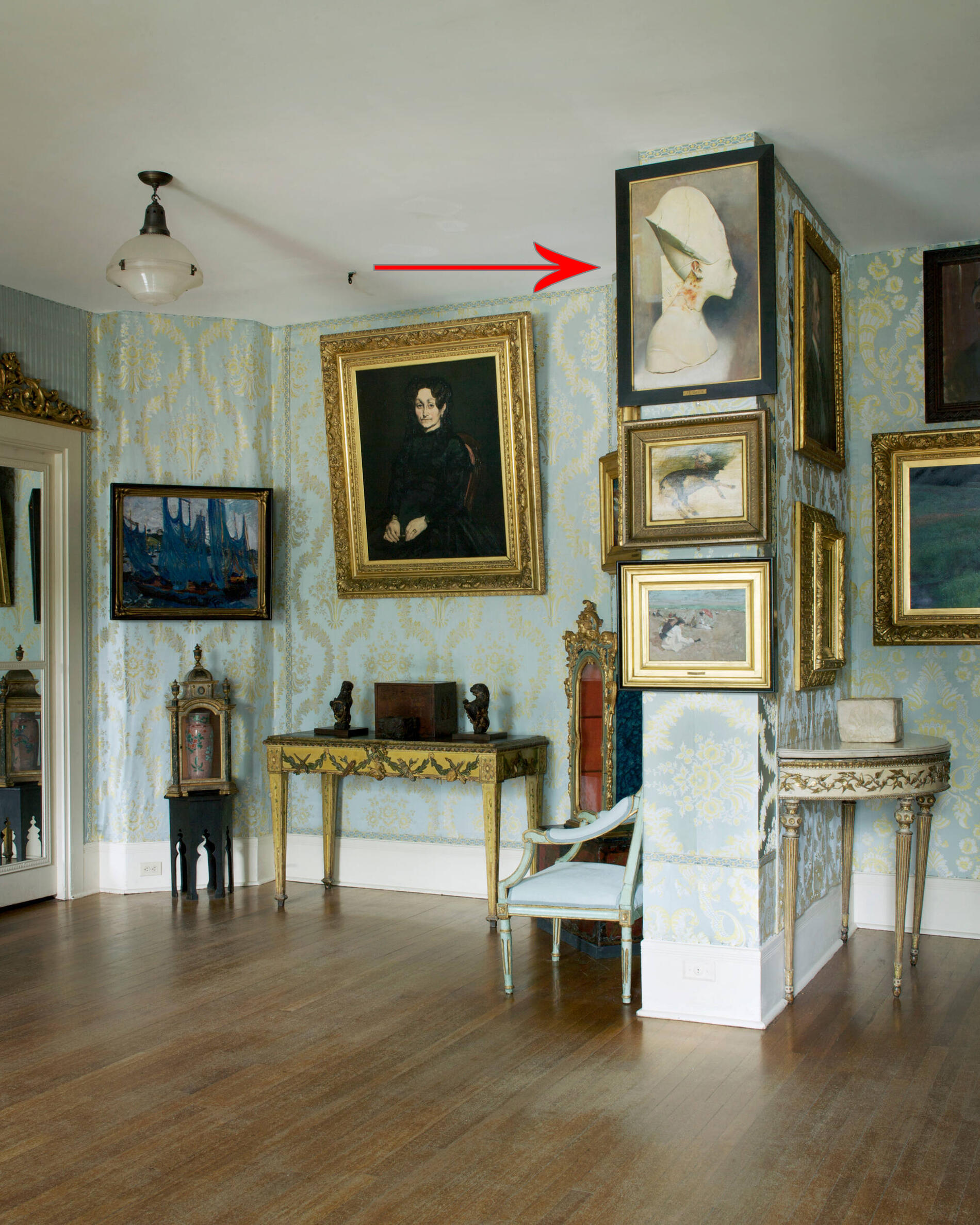
Let’s begin on the first floor of the Palace, in the Blue Room. Look up to your right and you’ll see a painting by one of Isabella’s dear friends, the Rhode Island-born painter Joseph Lindon Smith.
Isabella Stewart Gardner Museum, Boston. Photo: Sean Dungan
The Blue Room, showing Joseph Lindon Smith's Bust of Akhenaten
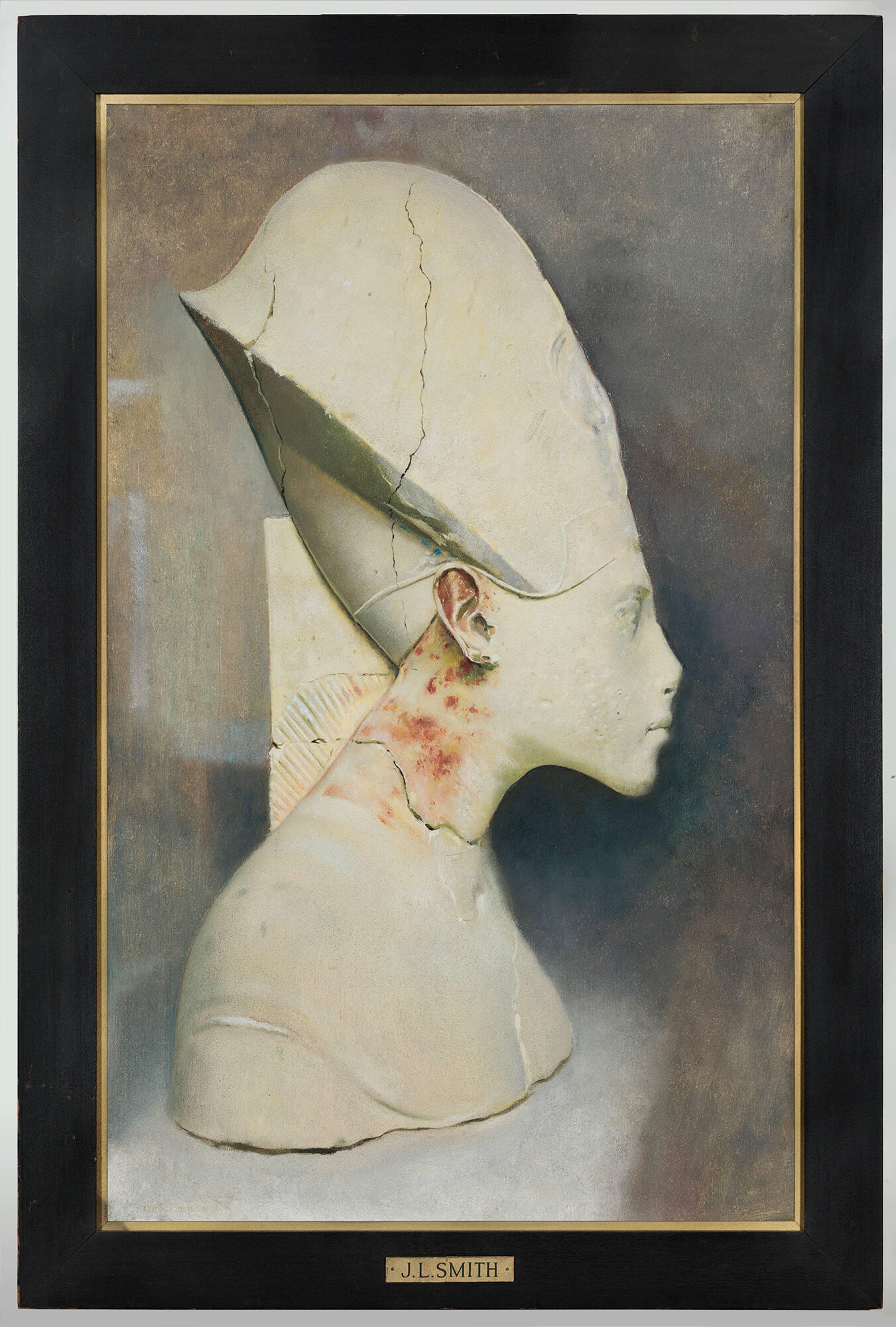
Before he became famous for his representations of Egyptian artifacts, Smith studied at the School of the Museum of Fine Arts and was a member of the Harvard-MFA archaeological expedition. Isabella met “Joe” in Italy in 1892; he went on to copy famous paintings for her and helped her purchase works of art, including antiquities. The painting in the Blue Room depicts a stone bust of the Egyptian king Akhenaten, who reigned in the mid-14th century BCE. Here Smith shows us the artifact as he saw it at the Louvre in 1908. He wrote to Isabella about heading straight to Paris from his work in Egypt, “where I hope to paint a study of a splendid head of a Pharaoh.”
Isabella Stewart Gardner Museum, Boston (P3215). See it in the Blue Room
Joseph Lindon Smith (American, 1863–1950), Bust of Akhenaten, 1908. Oil on canvas, 74 x 44 cm (29 1/8 x 17 5/16 in.)
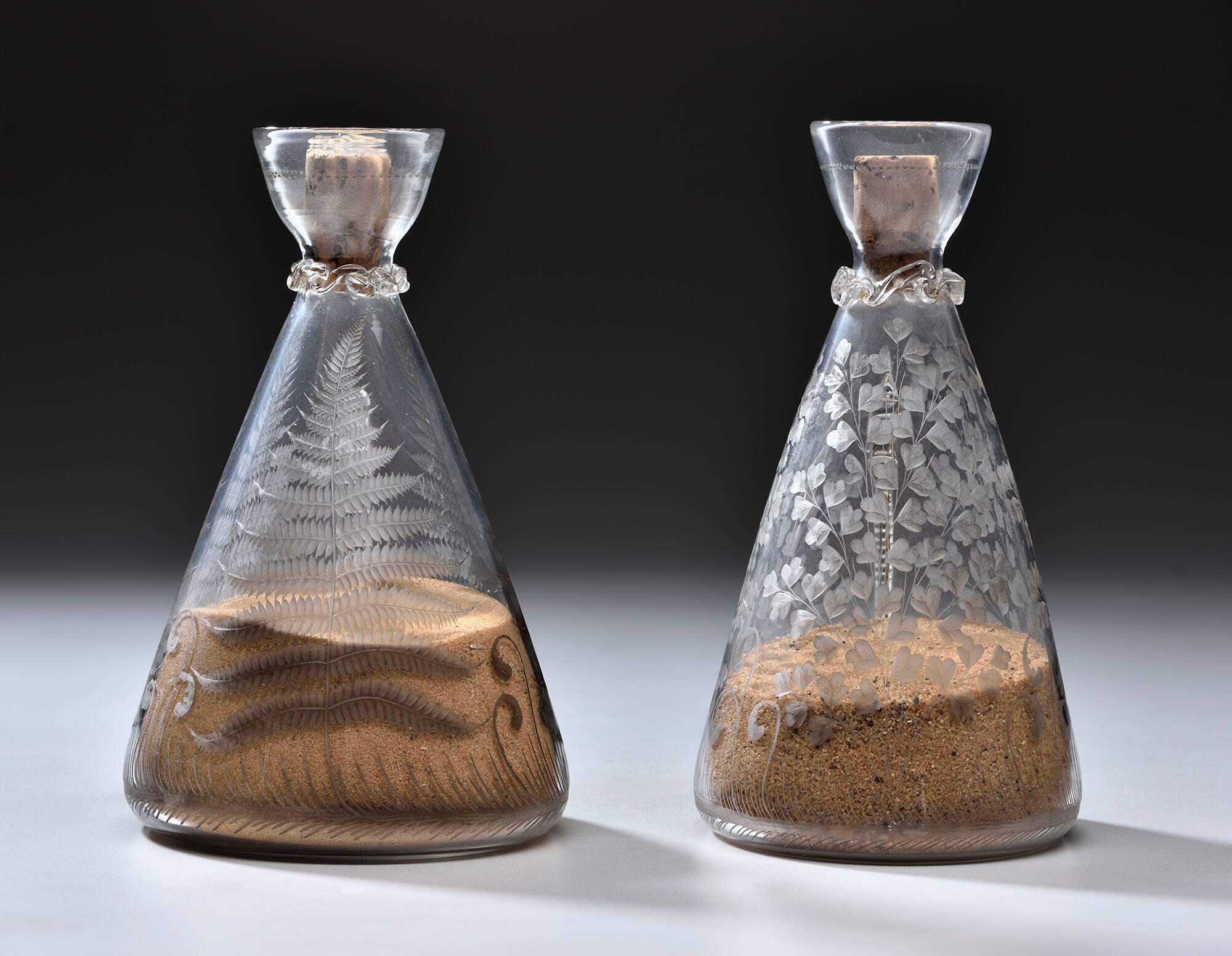
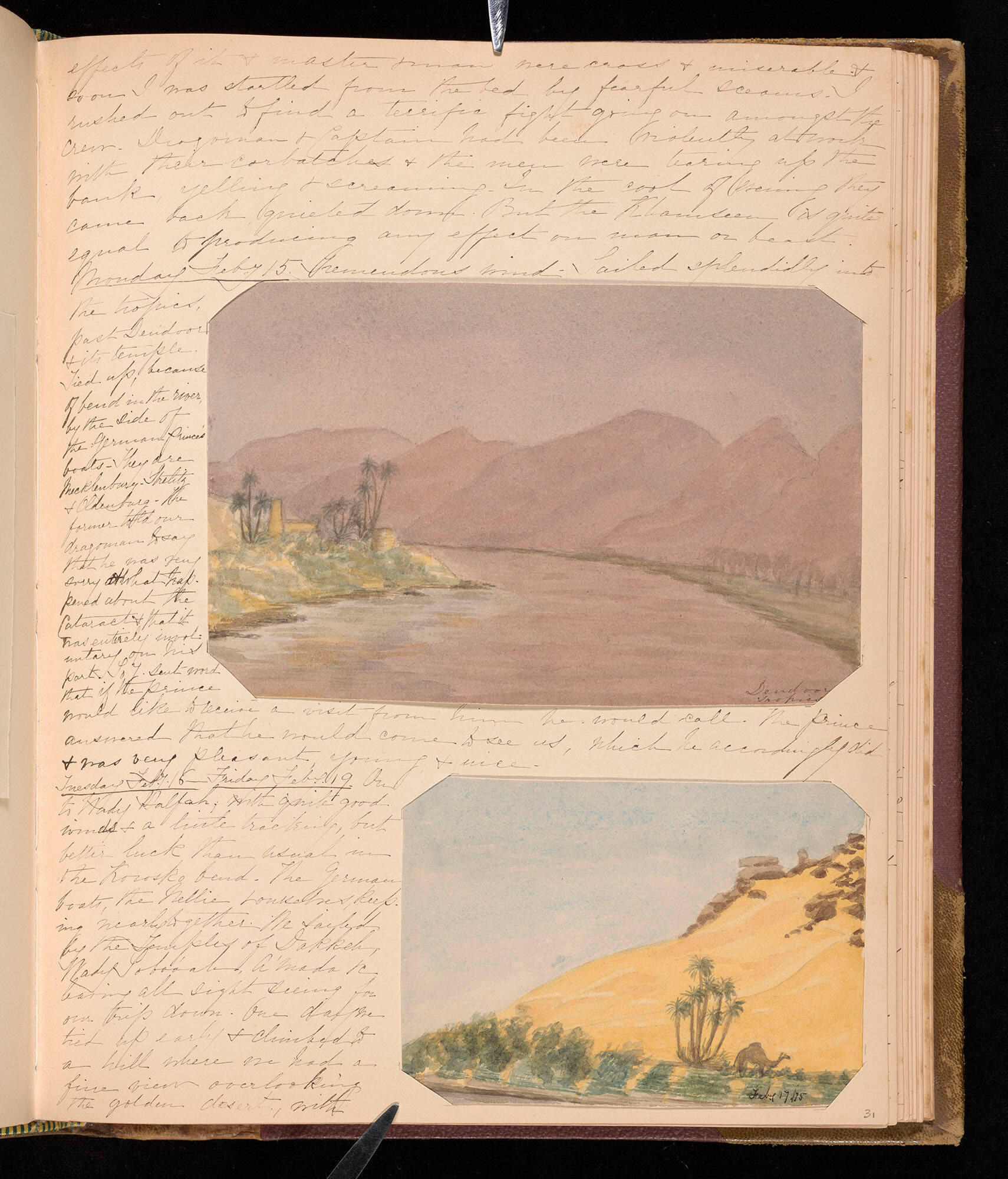
Head across the hall to the Macknight Room and spot the two cone-shaped glass bottles on the table near the door. These are filled with sand Isabella collected on her own trip to Egypt. In her meticulous and beautifully illustrated travel album (which is not on view, but you can page through it online), she wrote a romantic description of her experience lying alone in that same sand at Giza, using words such as “solemnity” and “mystery.” This attitude is characteristic of the time, when Western travelers regarded Egypt as the source of a deep and irretrievable past. Of course, Egypt was and is very much alive with contemporary people and culture, some of which also appear in Isabella’s album.
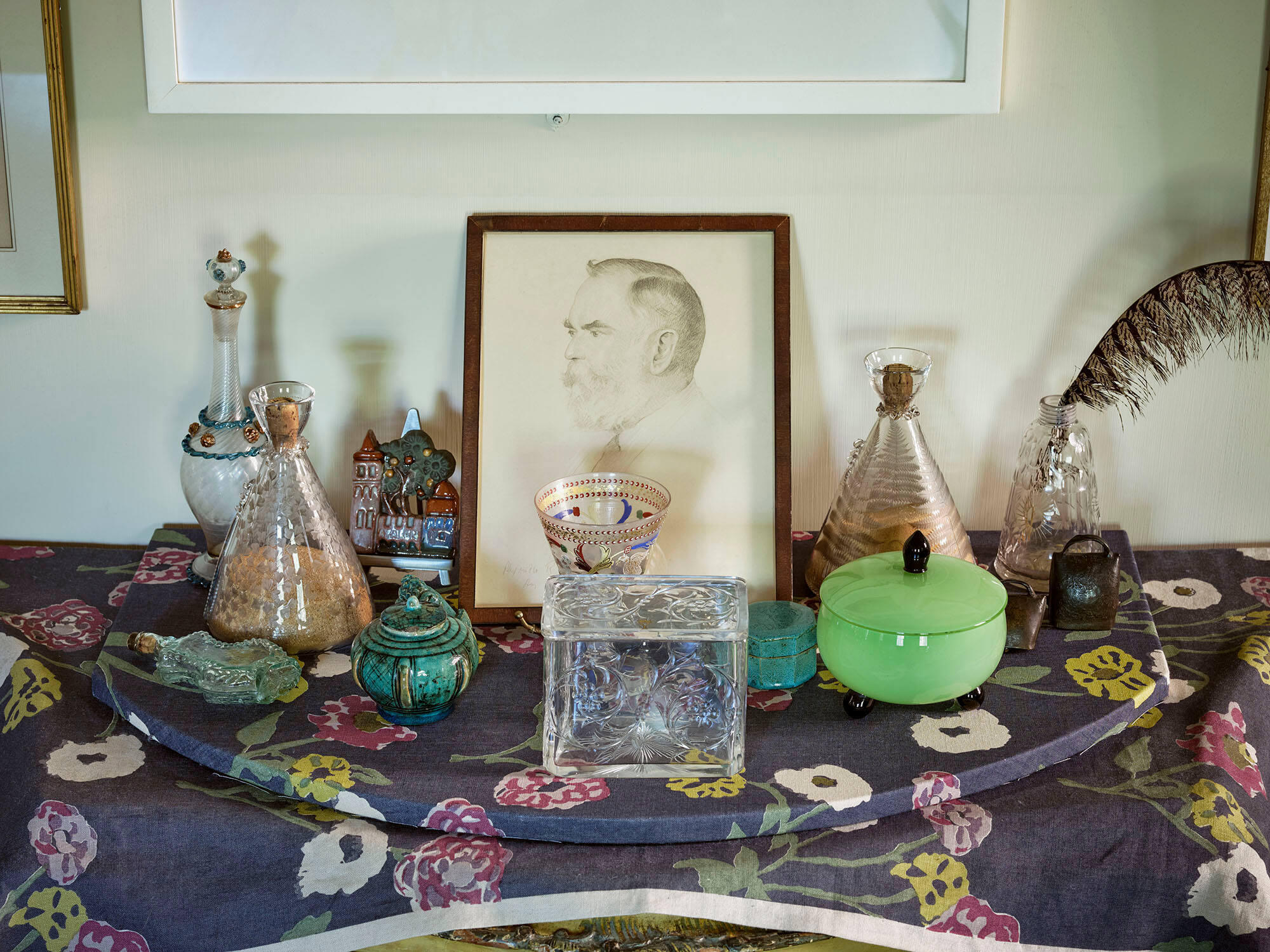
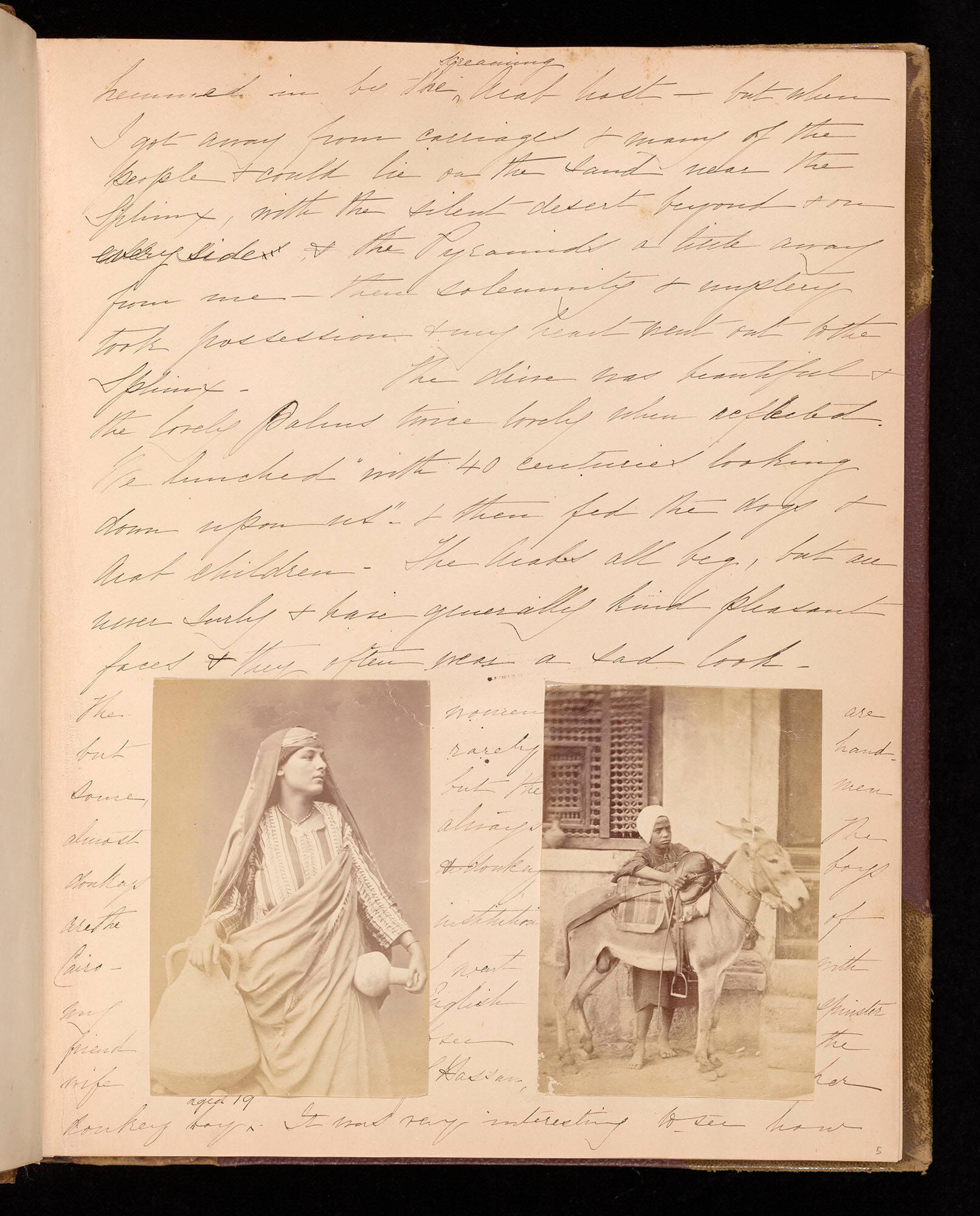
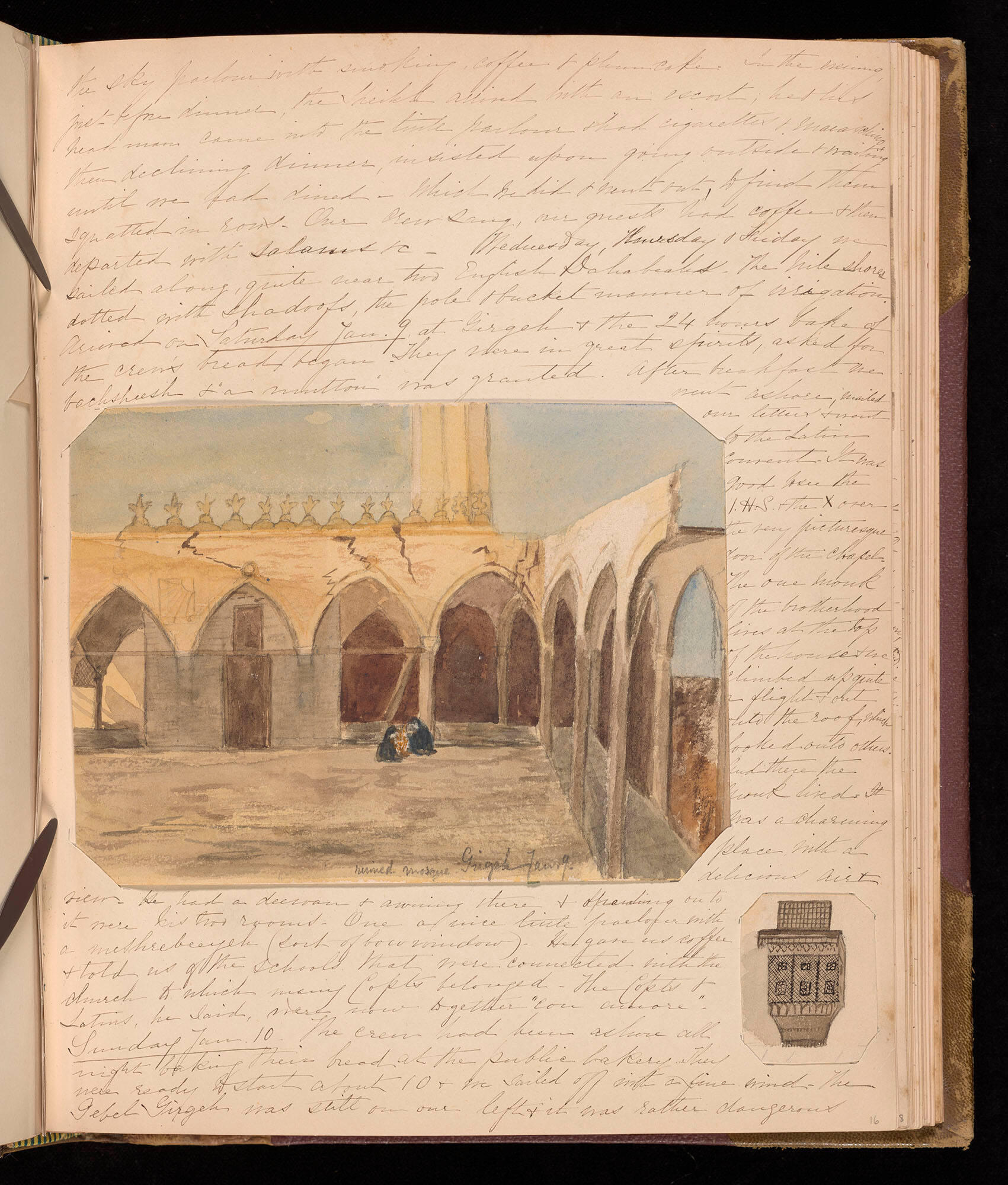
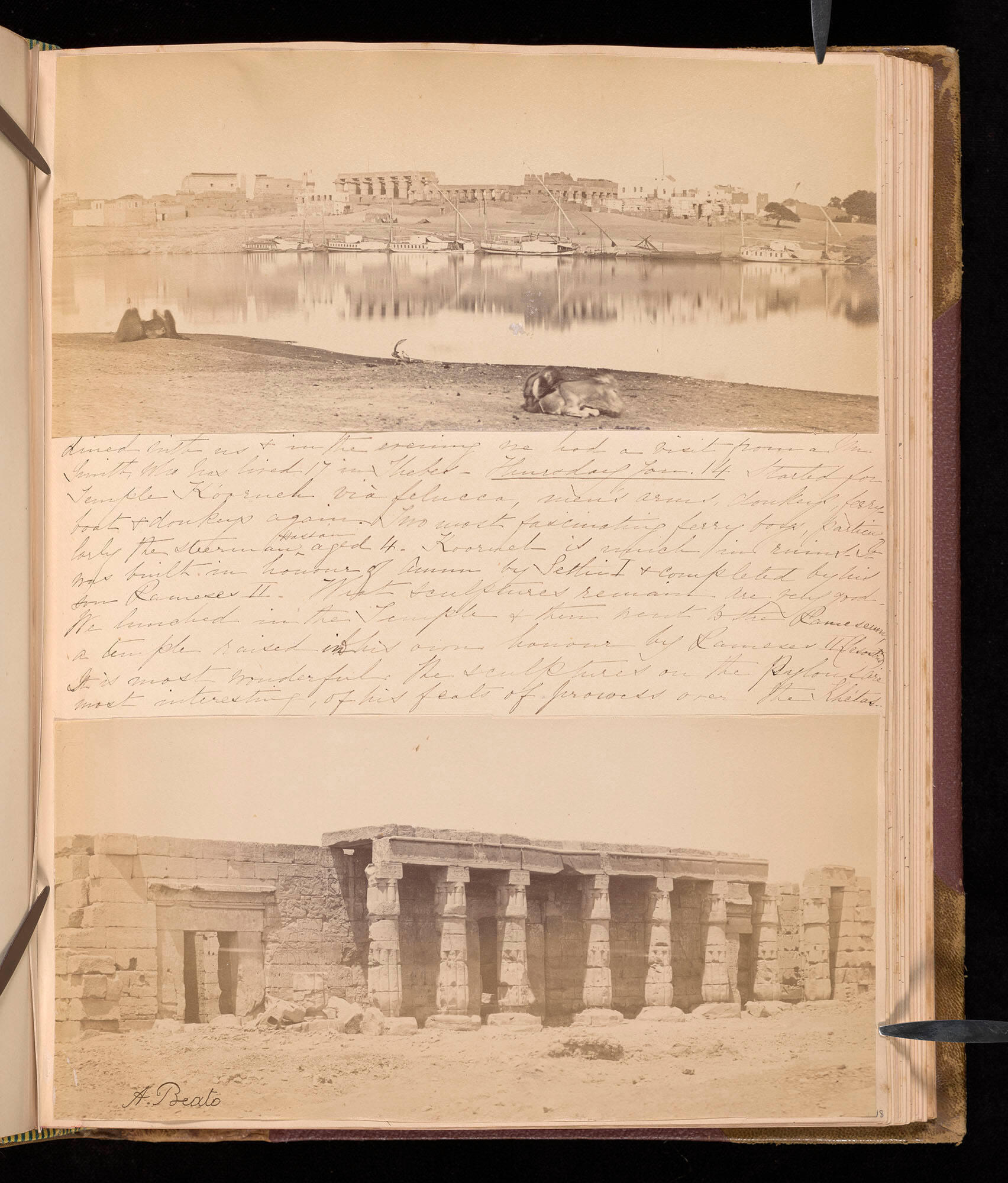
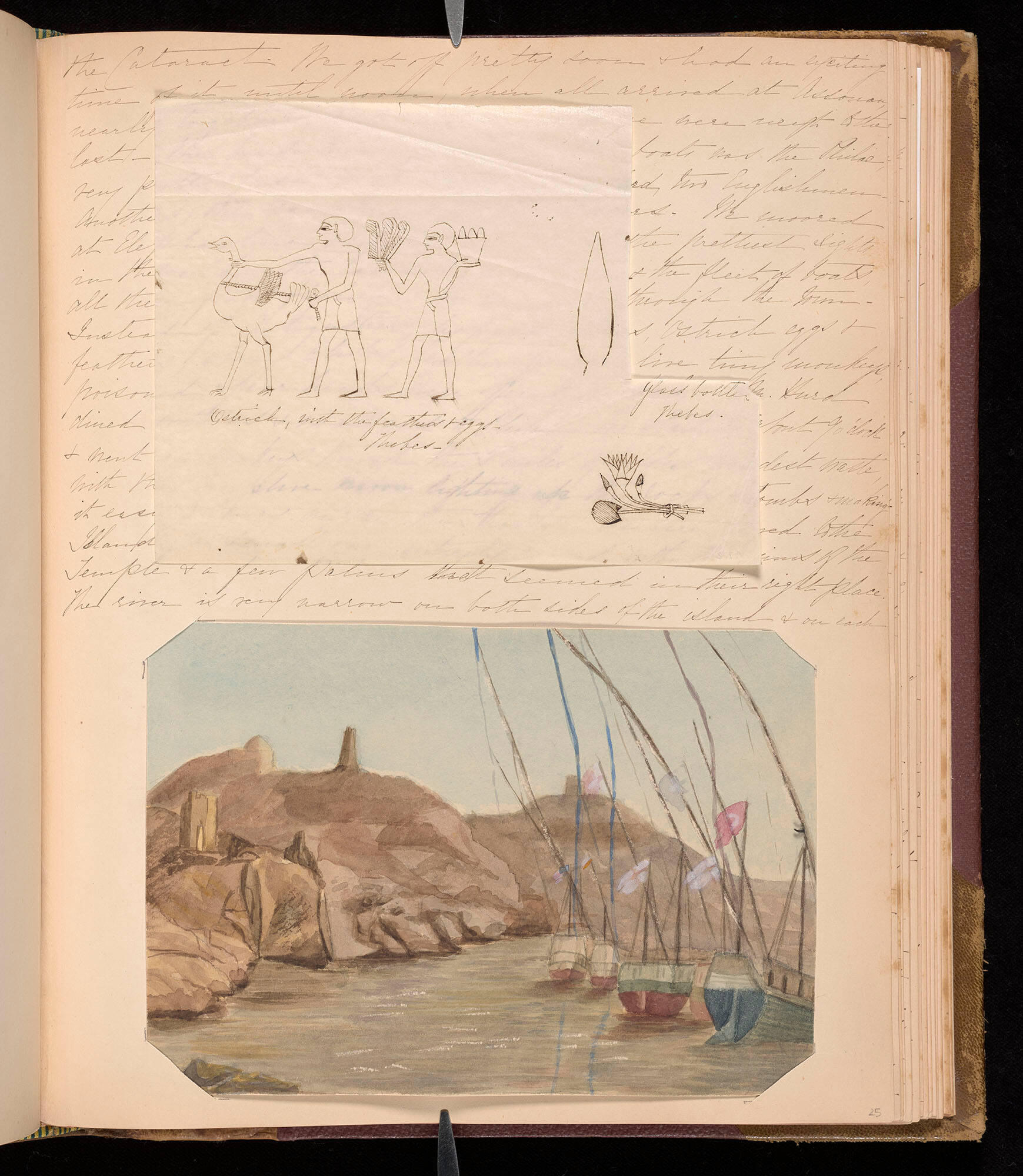
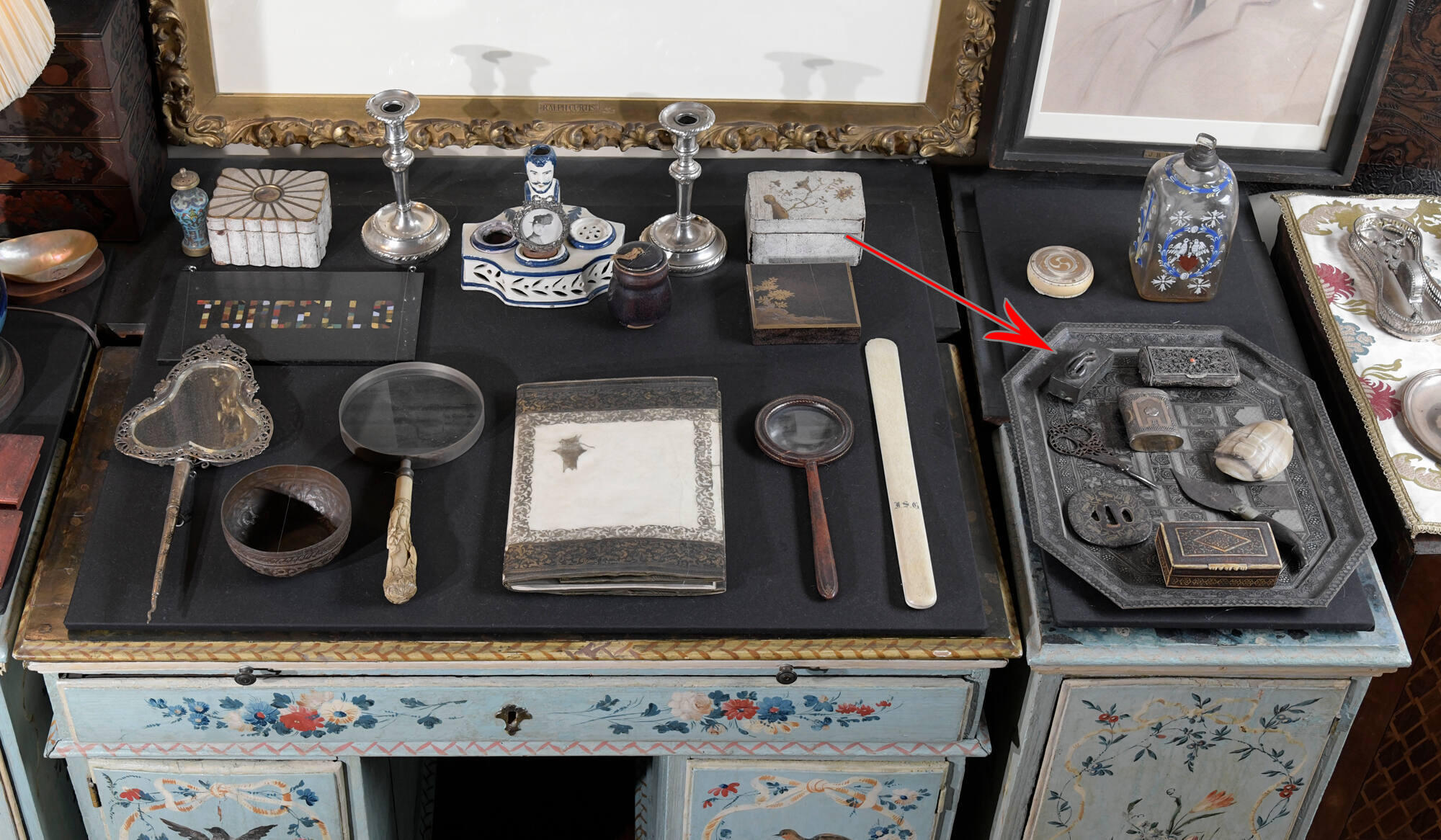
While you’re in the Macknight Room, have a look at Isabella’s desk. One of the many items on top is a rectangular bronze box with the form of a snake on top.
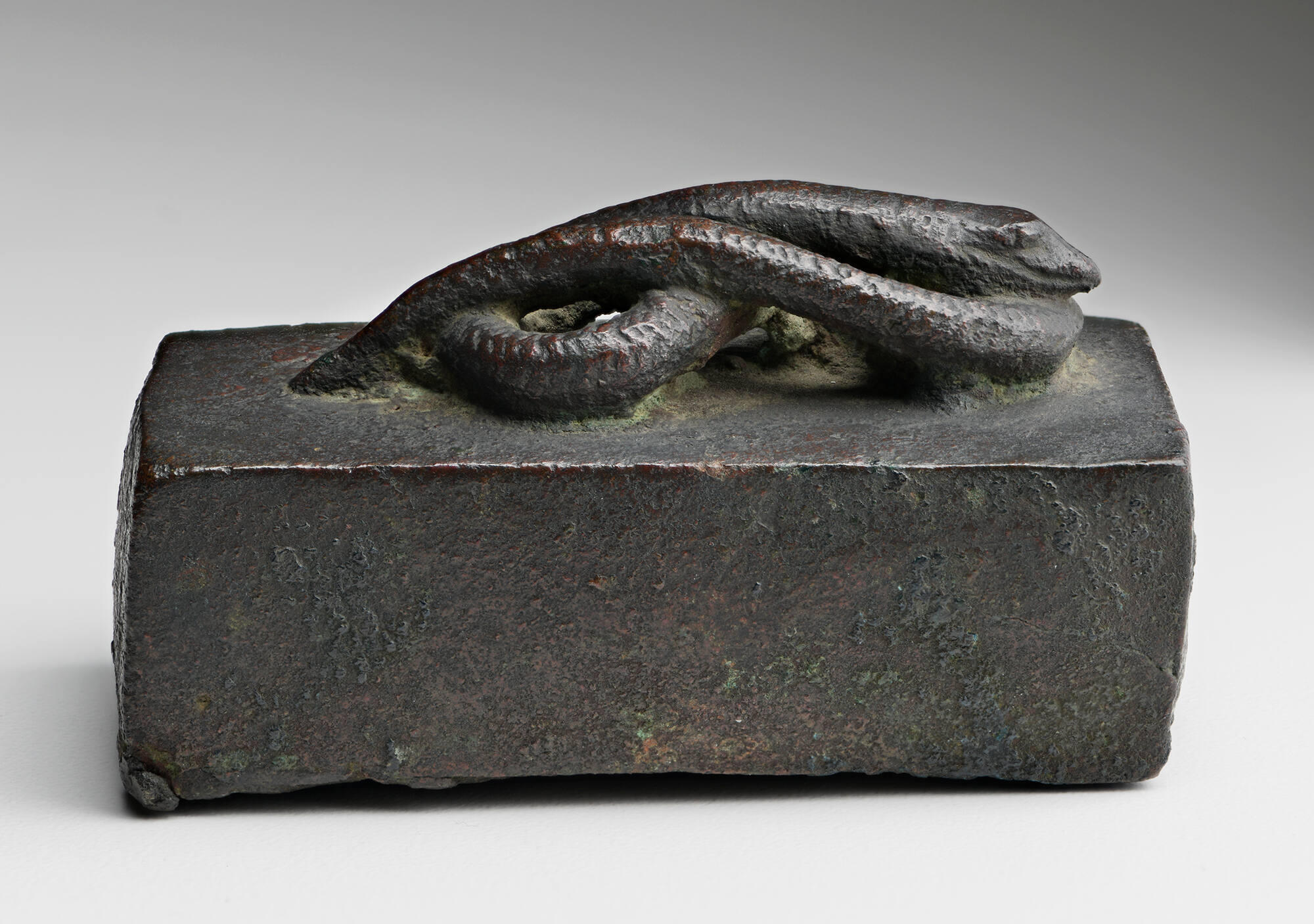
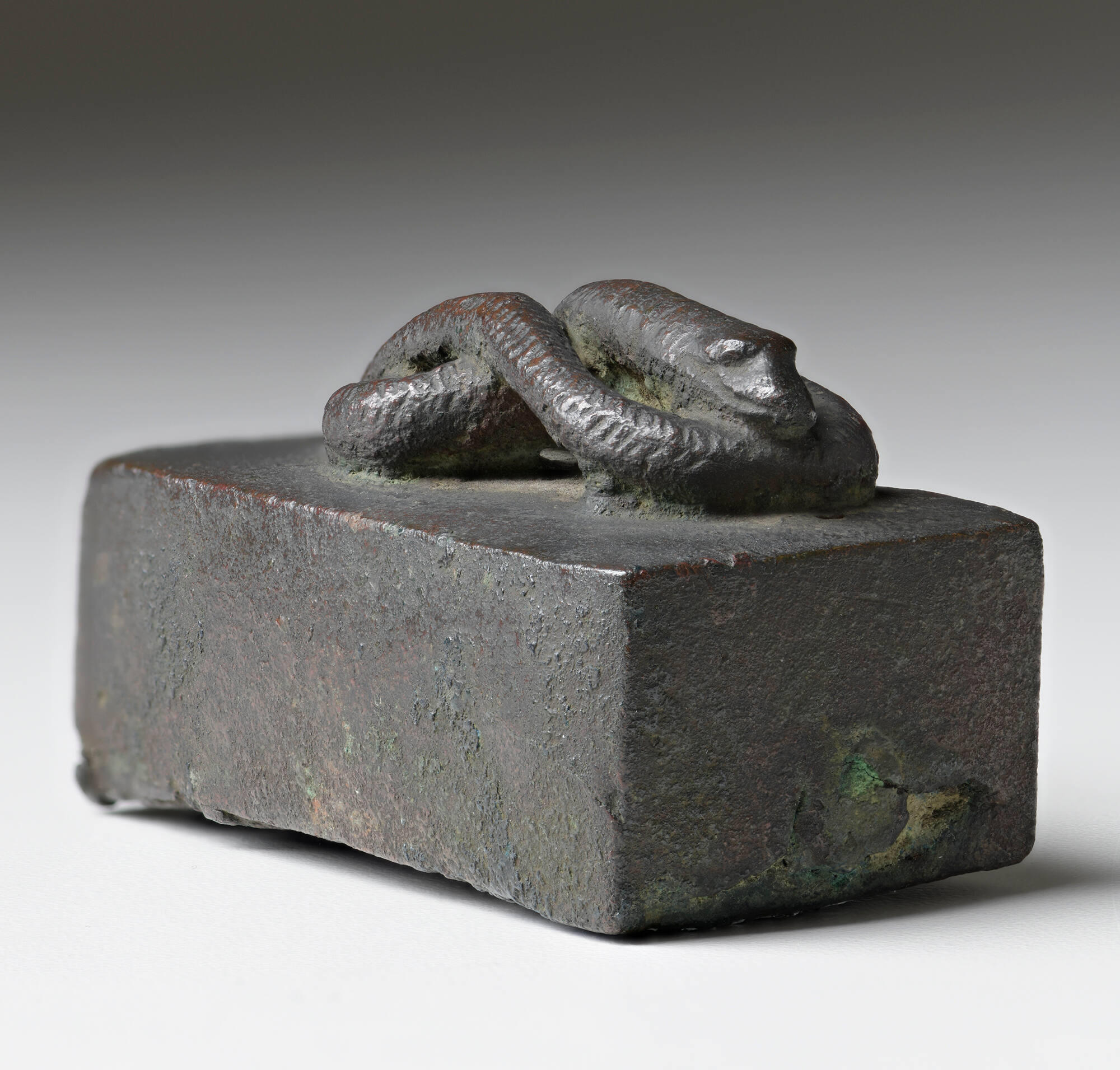
It was made to house the remains of a mummified snake or one of the other animals sacred to the god Atum. Along with mummified animals wrapped in intricate linen patterns, ancient Egyptian people gave bronzes containing animal remains—and sometimes “pseudo-mummies” pretending to be the real thing—as votives: objects dedicated to the gods in their temples in exchange for the resolution of a complaint or request, as a show of thanks or devotion, or to carry a message to the divine. This practice was so common during the first millennium BCE that millions of mummified animals are known to have been dispatched in this manner. Bronze receptacles were made using the lost-wax casting method and then sealed with a bronze “patch” once the animal mummy was inserted. But here, if you look at the back of the box, you’ll see that a square hole remains where the patch should be—an indicator that this particular example may never have been filled. It’s the thought that counts! (For a similar box with the donor’s inscription to the god Atum, see this one in the care of the Harvard Art Museums.)
Speaking of animals, head to the Courtyard. Among the flowers you’ll see a granite sculpture of a falcon representing the Egyptian god of kingship, Horus.
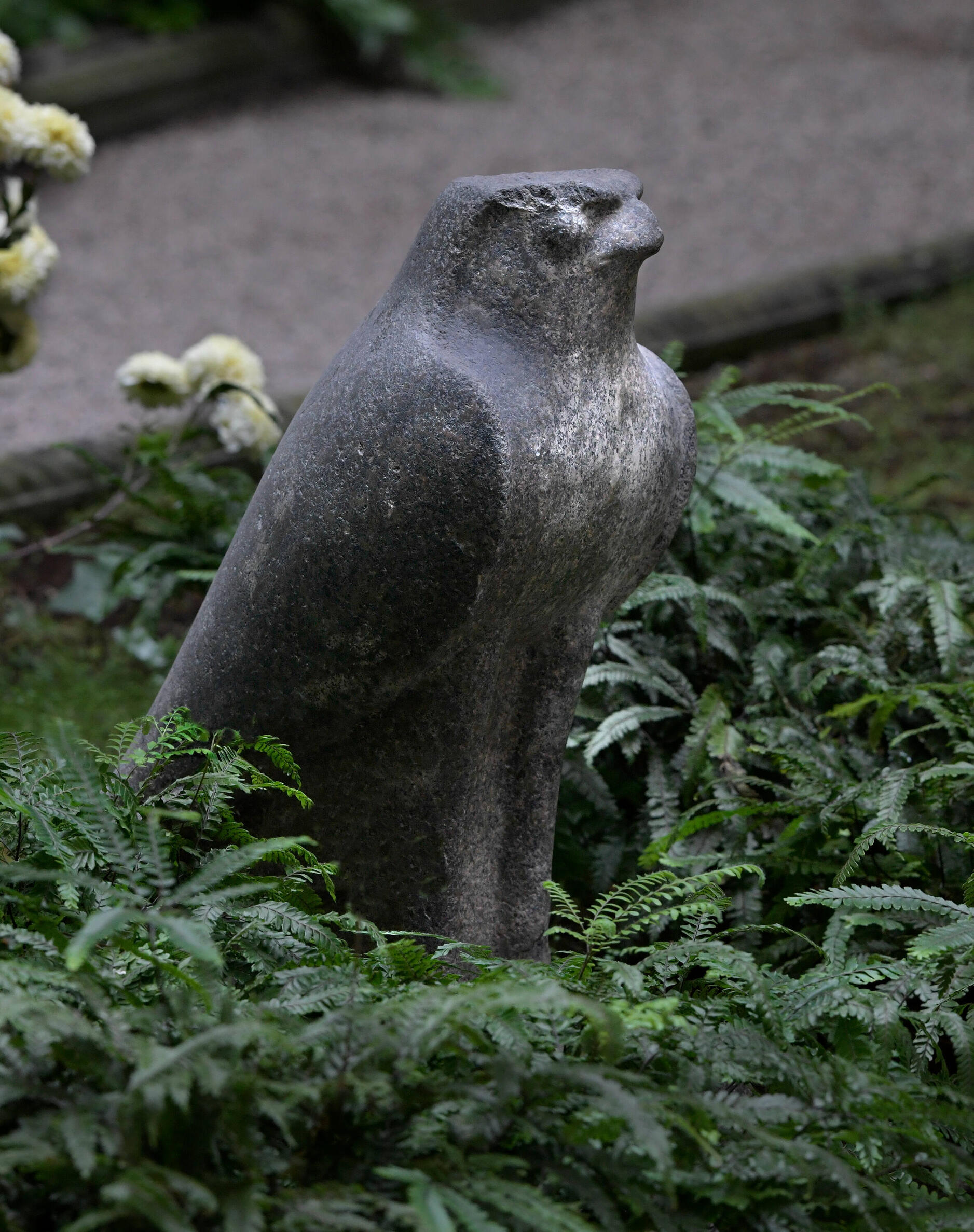
Isabella Stewart Gardner Museum, Boston (S5c9). See it in the Courtyard
Egyptian, Horus Falcon, about 331 BCE–323 BCE. Granite, 54.3 x 49.5 x 23.5 cm (21 3/8 x 19 1/2 x 9 1/4 in.)
He is often shown wearing the Dual Crown of Upper (southern) and Lower (northern) Egypt, a sign of the king’s rule over the entire land. You will notice the depression on the top of this falcon’s head, which makes me wonder whether the crown was once there, before Isabella purchased it at auction. She bought it in Rome, which raises the possibility that it had been reused and perhaps reworked there, even in antiquity. It likely came from an Egyptian temple, like this colossal one at Edfu.
Heading upstairs to the second floor, turn your attention to the first case on your left in the Early Italian Room. On the top shelf are two ancient Egyptian objects. The first is a canopic jar, which once held a mummified organ of its owner.
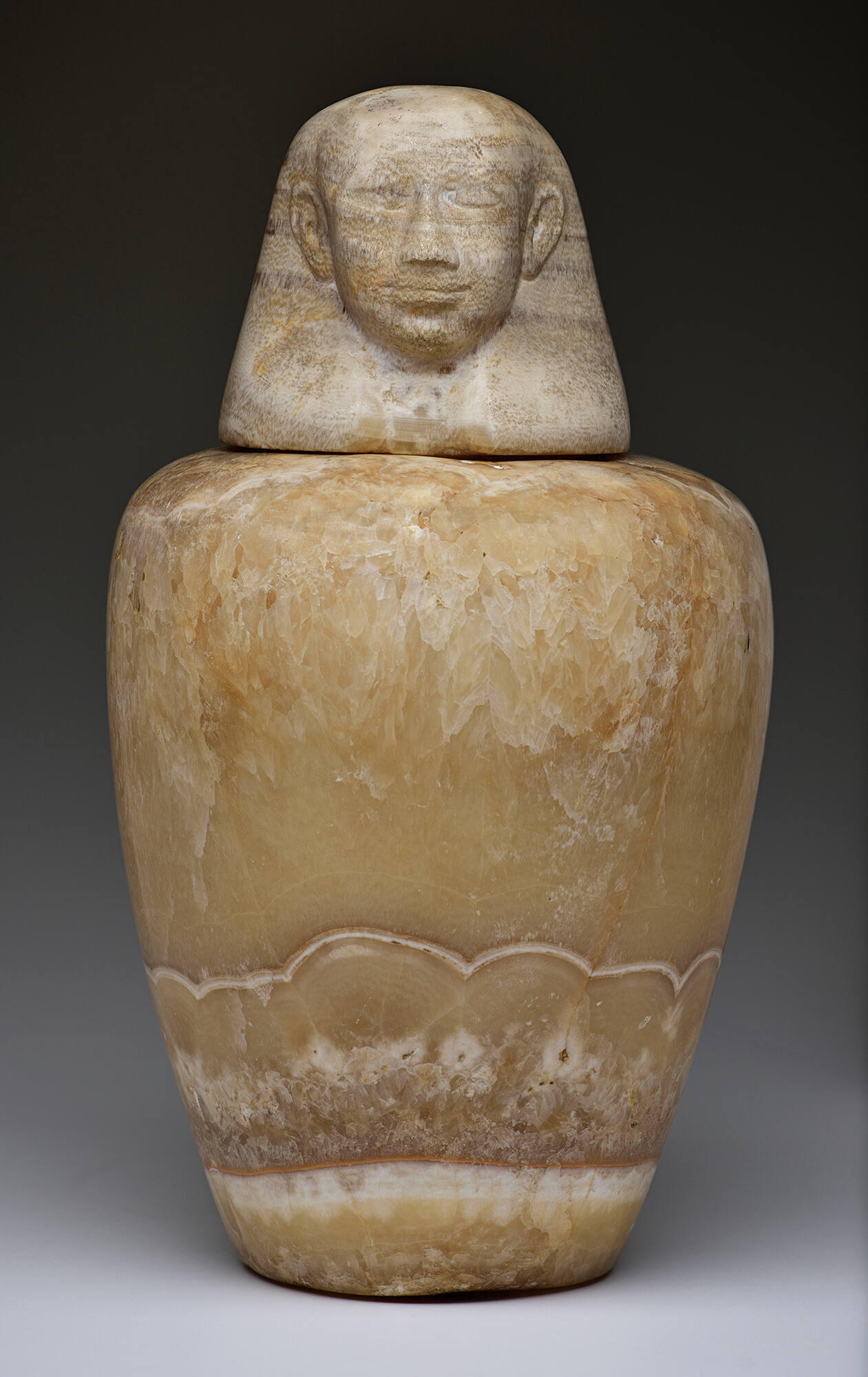
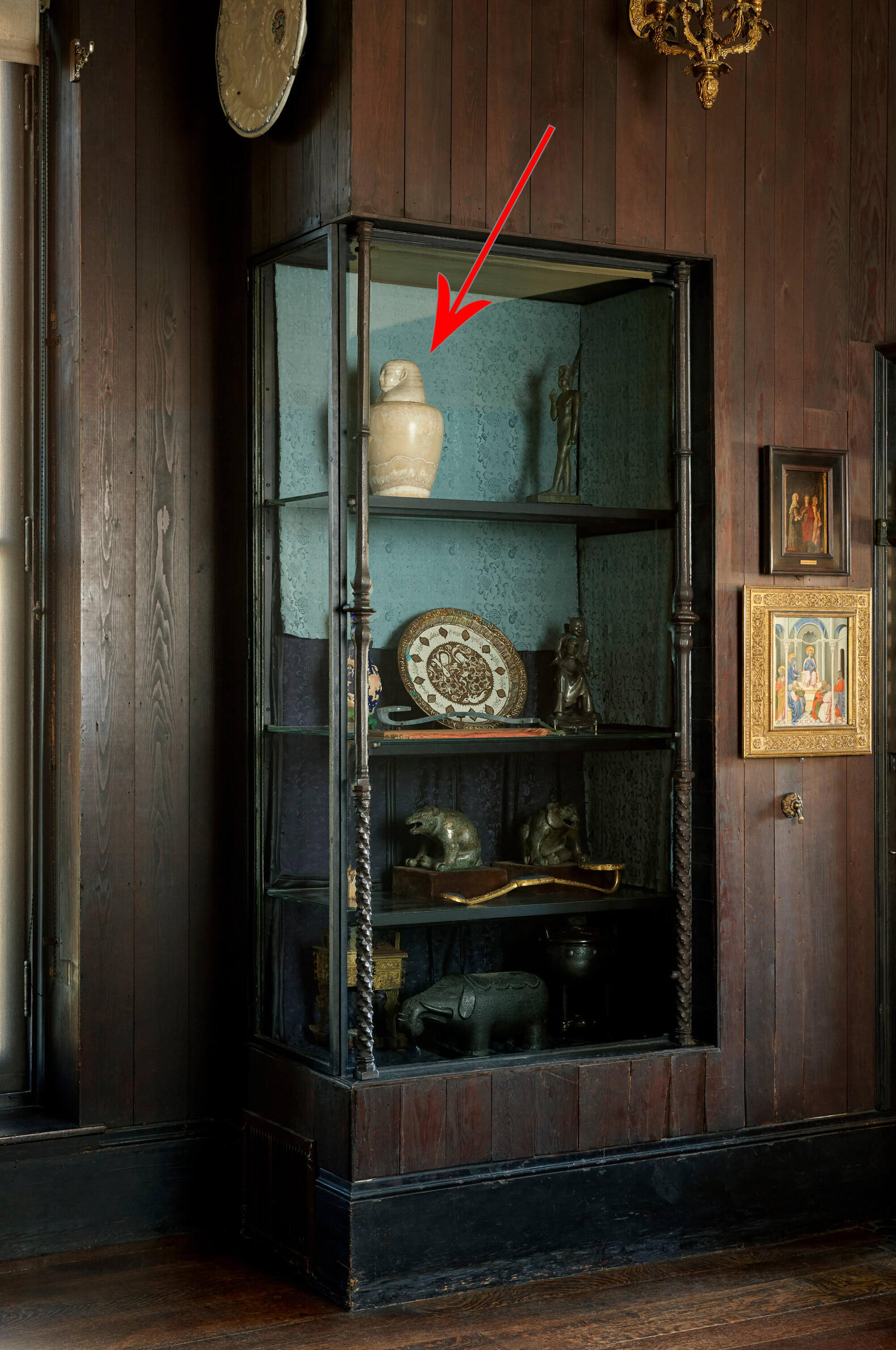
Not all people whose bodies were mummified in ancient Egypt received canopic jars, but if you had the “full treatment,” as it were, then four specific organs would each be given their own receptacle: the stomach, intestine, liver, and lungs (Egyptology students remember this by the acronym SILL). The lids of these jars often took the form of the heads of four gods known as the Four Sons of Horus, each of whom was believed to protect one of the organs. The human-headed god Imsety was thought to protect a person’s liver, which might lead us to assume that the now-anonymous jar owner’s liver was once inside. But that may not be the case: these objects often found themselves on the antiquities market, which led to the mismatching of some lids, and the lid on this jar doesn’t look quite right to me. Joseph Lindon Smith helped Isabella acquire this jar in 1913.
Next to the jar is a bronze figure of the god Horus as a child, also known by his Greek name Harpokrates (from the Egyptian Hor-pa-khered, Horus the Child).
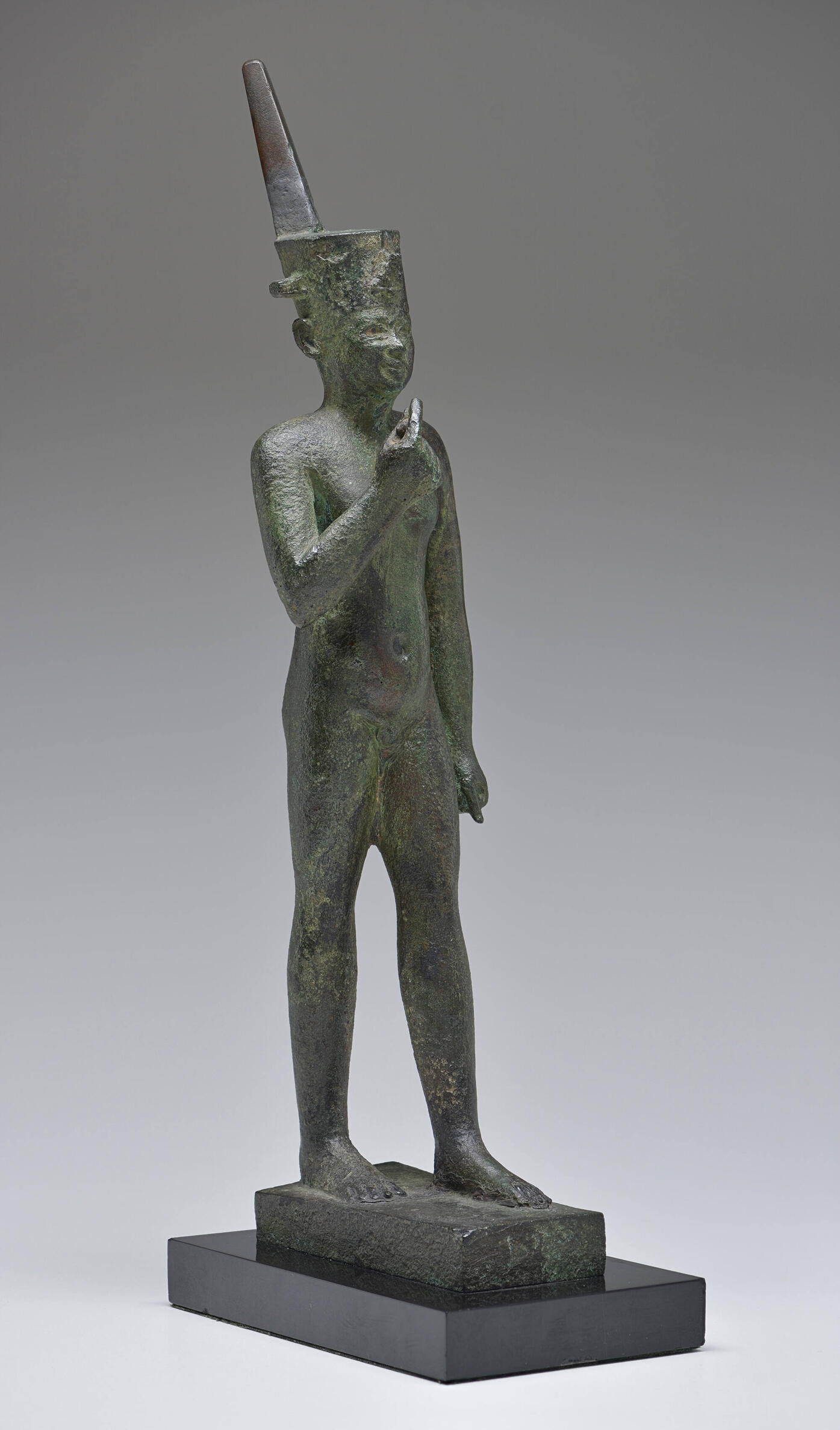
Isabella Stewart Gardner Museum, Boston (S15w8). See it in the Early Italian Room
Egyptian, Harpocrates, 4th century BCE–1st century BCE. Bronze, height: 40.5 cm (15 15/16 in.)
In ancient Egypt, children were often depicted nude and with a single lock of hair on one side of their head. Notice the puzzling protrusion on the left side of this figure’s head: it is almost certainly where a lock of hair was once attached. This Horus is also wearing the Red Crown of Lower Egypt, which comprises half of the Dual Crown I mentioned earlier. Perhaps he once had a partner sculpture wearing the other half, the White Crown of Upper Egypt. Like the Horus falcon in the Courtyard, I suspect this object came from a temple.
As you enter the Short Gallery you’ll notice an ornate cabinet against the wall. On the right side of the third shelf is a bright blue human-shaped figure called an ushabti.
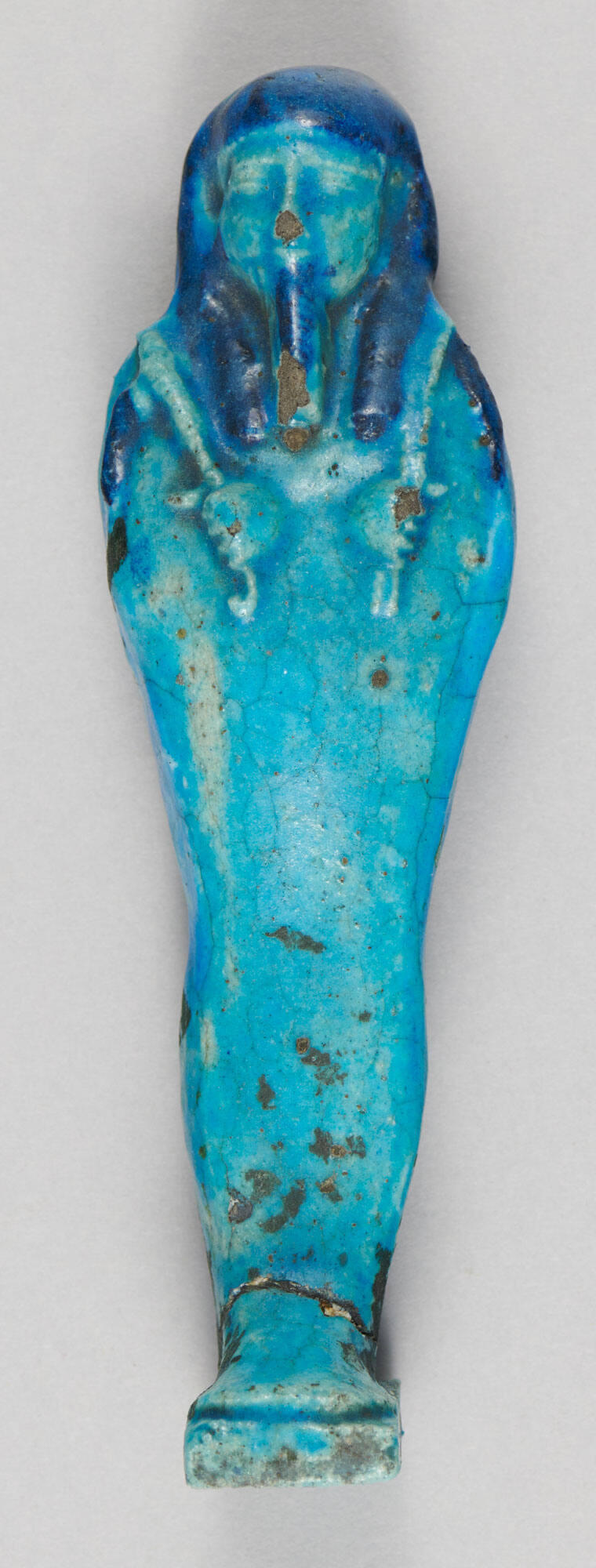
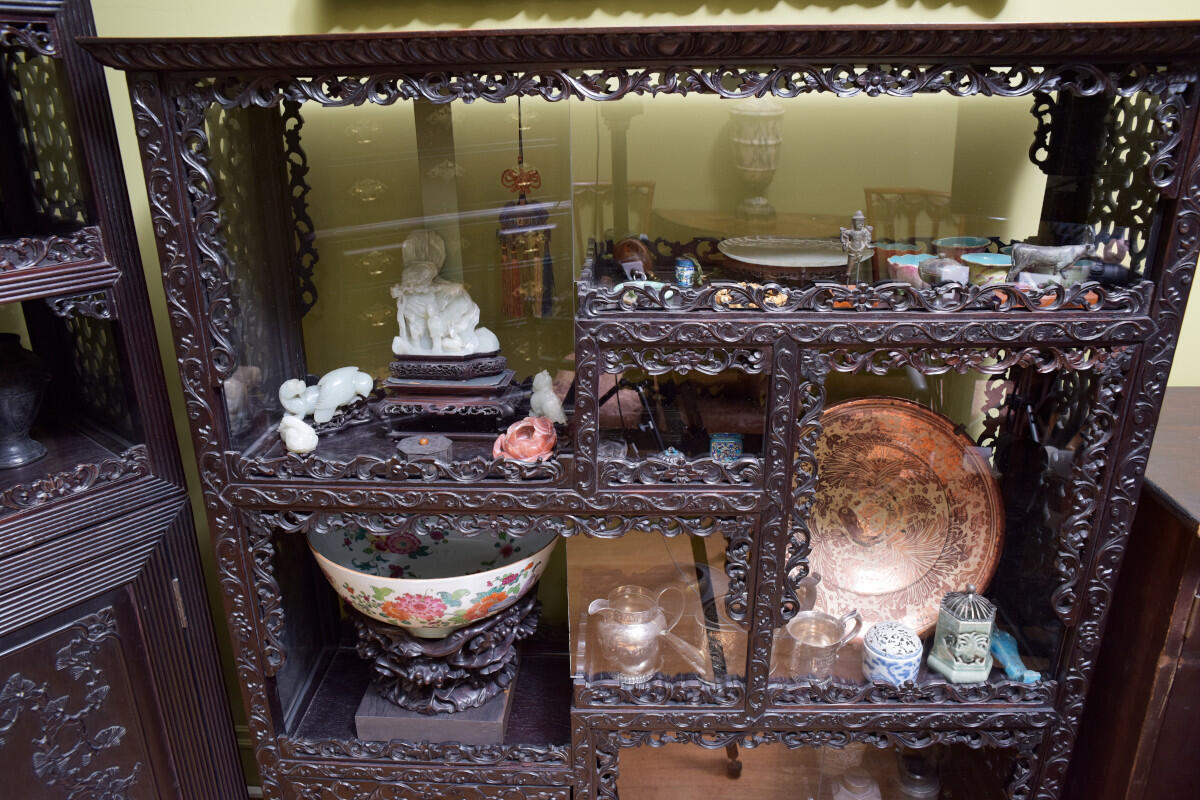
Ushabtis were buried with the deceased person to serve as their household staff in the afterlife, completing apparently undesirable tasks such as “ferrying sand from west to east and vice-versa” (an ancient phrase used in the inscriptions on some ushabtis; I don’t quite understand what it means, but it stands in stark contrast to Isabella’s experience in the sand at Giza). This particular ushabti might not be ancient; it looks more like a modern imitation to me, and forgeries of this type of object, sold to unsuspecting travelers, were not uncommon.
We’ll finish the mini-tour with my favorite (and indeed ancient!) Egyptian object at the Gardner. It is in a cabinet in the corner of the Little Salon.
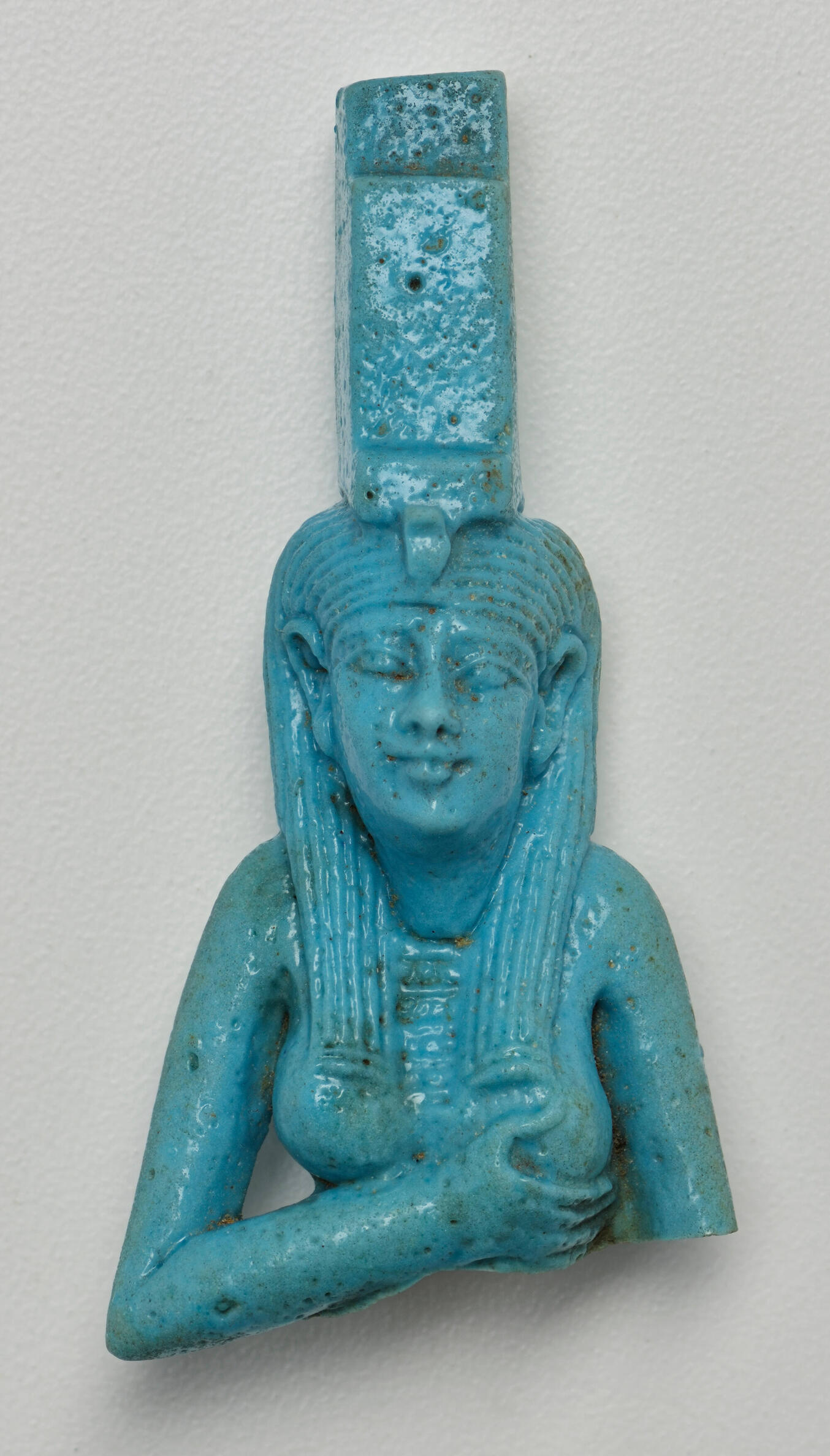
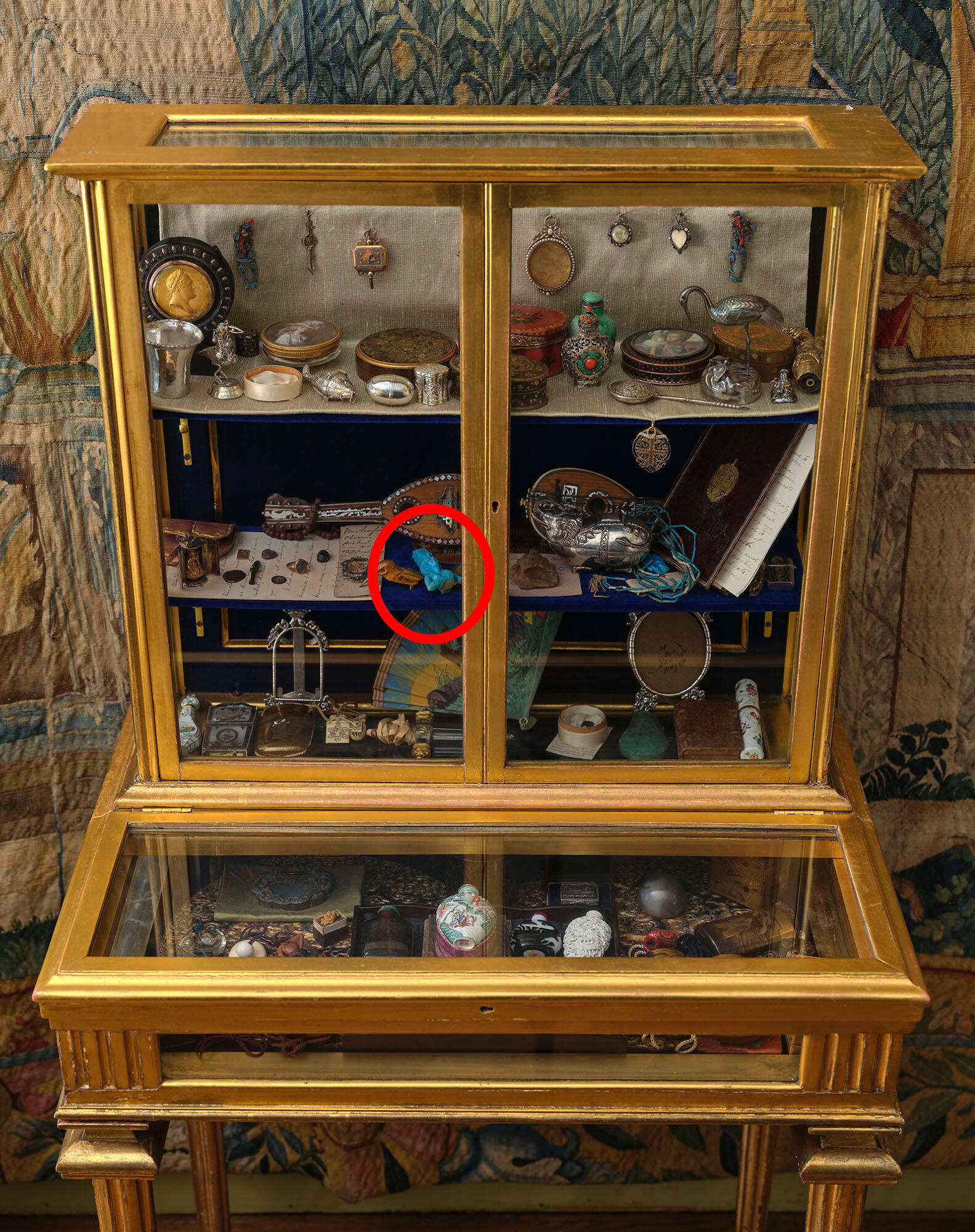
A lighter blue with a more delicate surface texture than the ushabti, this object is made of a remarkable ancient ceramic known to the Egyptians as tjehenet, “the shining thing” (among Egyptologists, this material is called faience). It is colored blue by the addition of copper and because of this color’s association with rebirth and rejuvenation. The figure in the cabinet is the upper part of a statuette of the goddess Isis, who likely had her son Osiris seated on her lap, as in this example. She is recognizable by her crown, which takes the form of a throne and identifies her as the divine mother of kings.
Before you go, I invite you to have a look online at this sketch Isabella made while in Egypt. She appears to have faithfully copied the forms of these deities—Amun-Re, Khonsu, Khnum, Sobek, and Bastet—but did not quite get their names right.
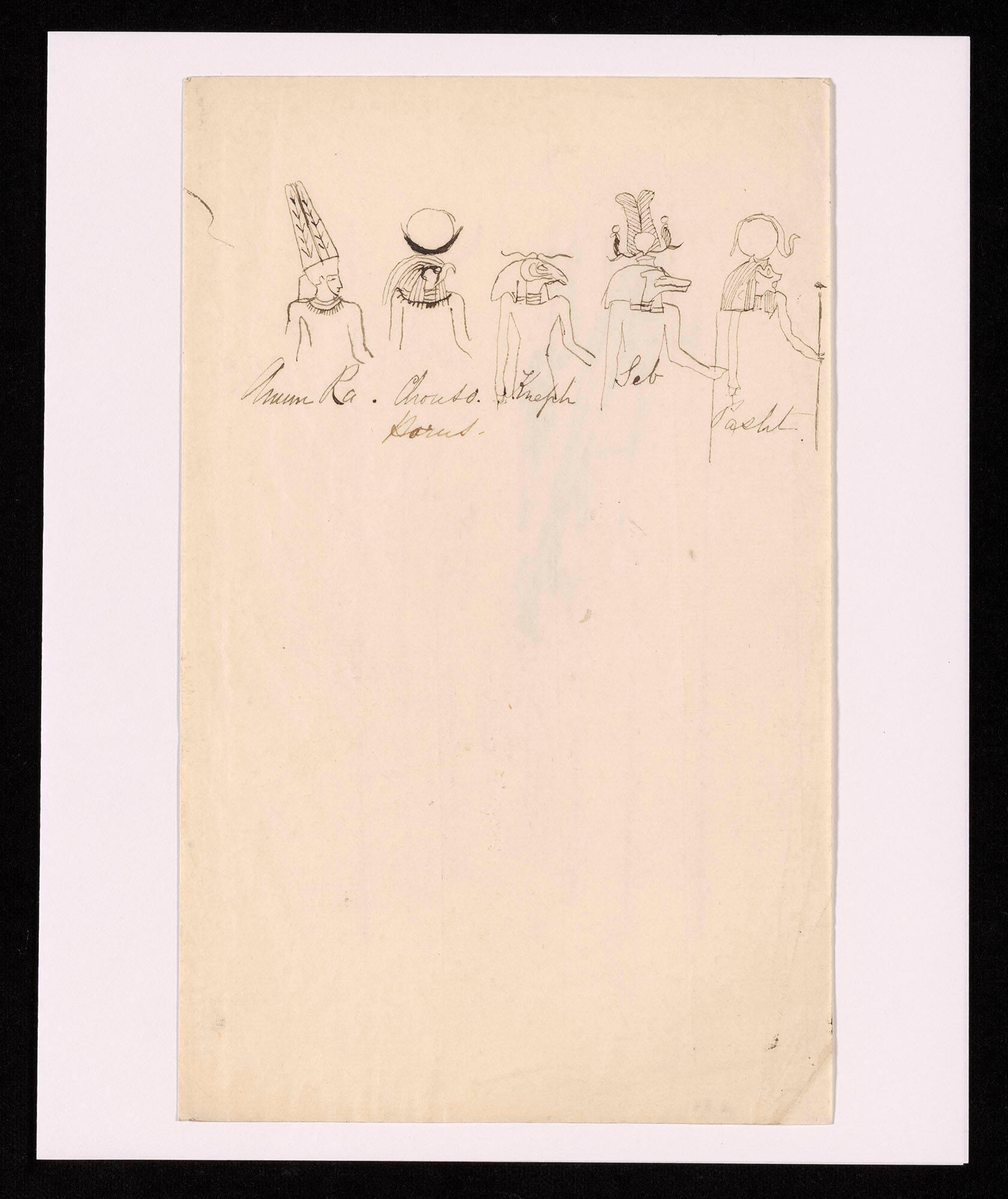
Isabella Stewart Gardner Museum, Boston (ARC.011076)
Isabella Stewart Gardner (American, 1840–1924), Sketch of Egyptian Deities, 1874-1875. Ink and pencil on paper, 20 x 12.5 cm, (7 7/8 x 4 15/16 in.)
This endearing effort is, to me, representative of the broader experience of travelers, “explorers,” and collectors in Egypt in the late 19th century: absorbing everything they could (presumably from knowledgeable local guides), with a sense of awe, but not fully understanding all that they were seeing. For Isabella, the experience was clearly moving nonetheless. Although we don’t know much about some of the Egyptian objects at the Gardner due to the loss of context that comes with their passing through the antiquities market, I hope your experience with them will prove meaningful, too.
You May Also Like

On the Blog
Joseph Lindon Smith’s Chinese Theater

On the Blog
Sarcophagus for a Serpent

On the Blog