
Tomokazu Matsuyama
Artist-in-Residence
Tomokazu Matsuyama’s practice encompasses painting, sculpture, and installation in vivid chromatic colors. Often referred to by his artist name, “Matsu,” he engages and reconfigures contrasting elements ranging from ancient to modern, figurative to abstract, Eastern to Western, and small-scale to large-scale public installations presented worldwide. His work reflects both his cross-cultural experiences and the evolving nature of contemporary society in our information-driven age.
Isabella Stewart Gardner also blended styles, time periods, and cultures at Fenway Court, the name of Museum from its founding until Gardner's death in 1924. Over roughly twenty years, she assembled a rich array of paintings, textiles, furniture, curios, sculpture, and lacquerware, which she carefully layered and juxtaposed with other works of art, a courtyard of plants, and architectural elements. This interplay of layers, combined with the Museum’s air of mystery, resonated deeply with Matsu, offering an ideal setting for new exploration and discovery.
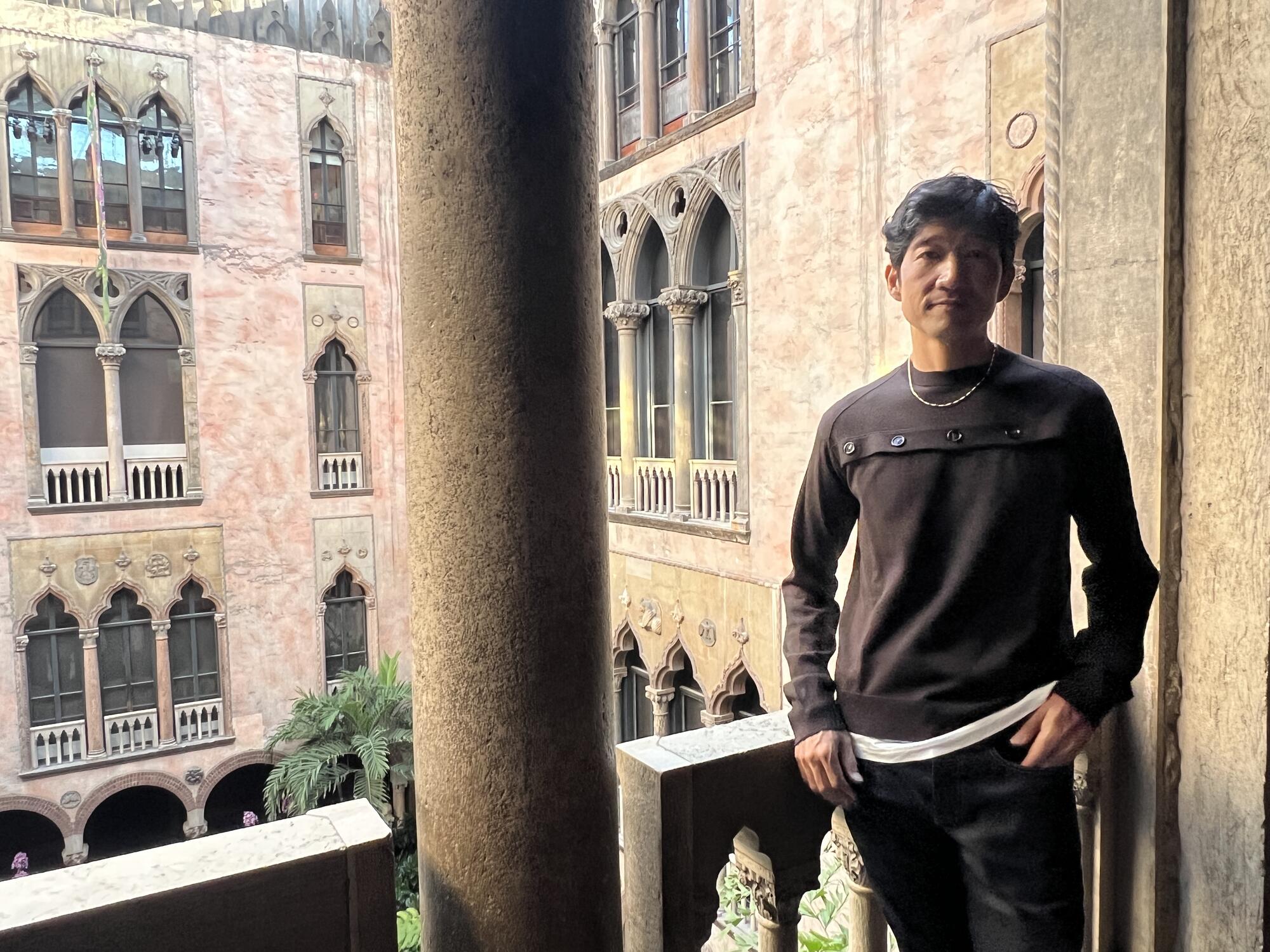
Tomokazu Matsuyama divided his residency between July and October 2025, spending the first two weeks exploring the galleries and meeting with Gardner curators, conservators, and the Museum’s archivist, Shana McKenna, who guided him through the letters, photographs, and ephemera Isabella Stewart Gardner placed on view in the first and third-floor galleries. He spent time in the Museum before it opened to the public, both wandering through the galleries and taking in the magical atmosphere created by the light filtering through the stained glass windows and the Courtyard's glass roof.
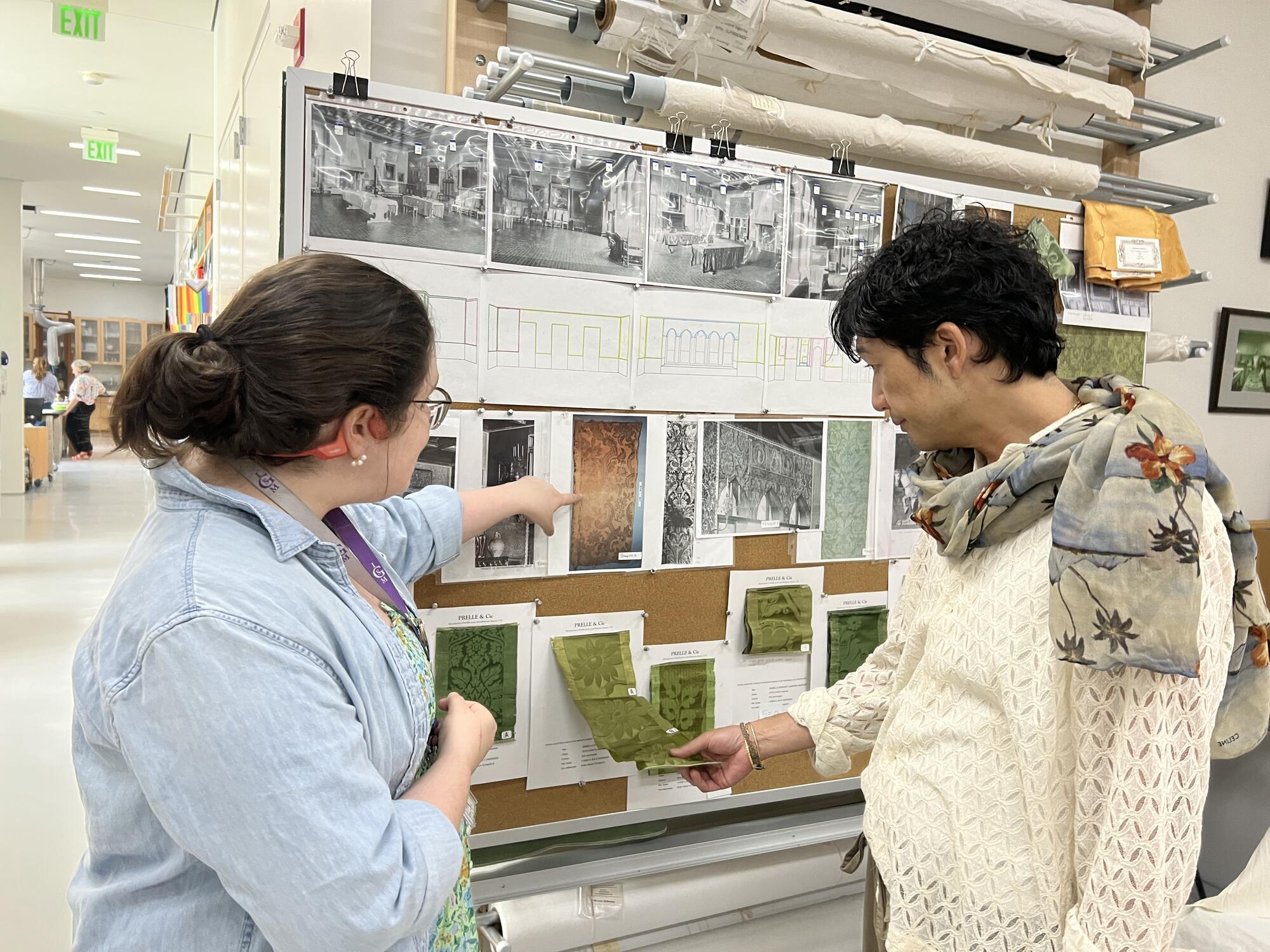
In the Poorvu Family Conservation Center, he saw several objects from the Dutch Room which were being treated as part of a room-wide renovation, including a painting of Anna de Berghes, Marquise of Veere, 1526–1530 attributed to Jan Gossaert Mabuse (Netherlandish, about 1478–1532). The conservators gave him insight into the mold-making and casting methods they used to recreate a missing component of a crystal and silver candlestick. In the Textile Lab, Matsu learned that new textiles were being woven for the Dutch Room walls and was able to study a Chinese furnishing fabric decorated with designs of landscapes and bats (19th century) from the Blue Room. This piece will spend the next few years resting in storage after many years of sun exposure. The team has created an identical printed paper reproduction to hold its place in the gallery.
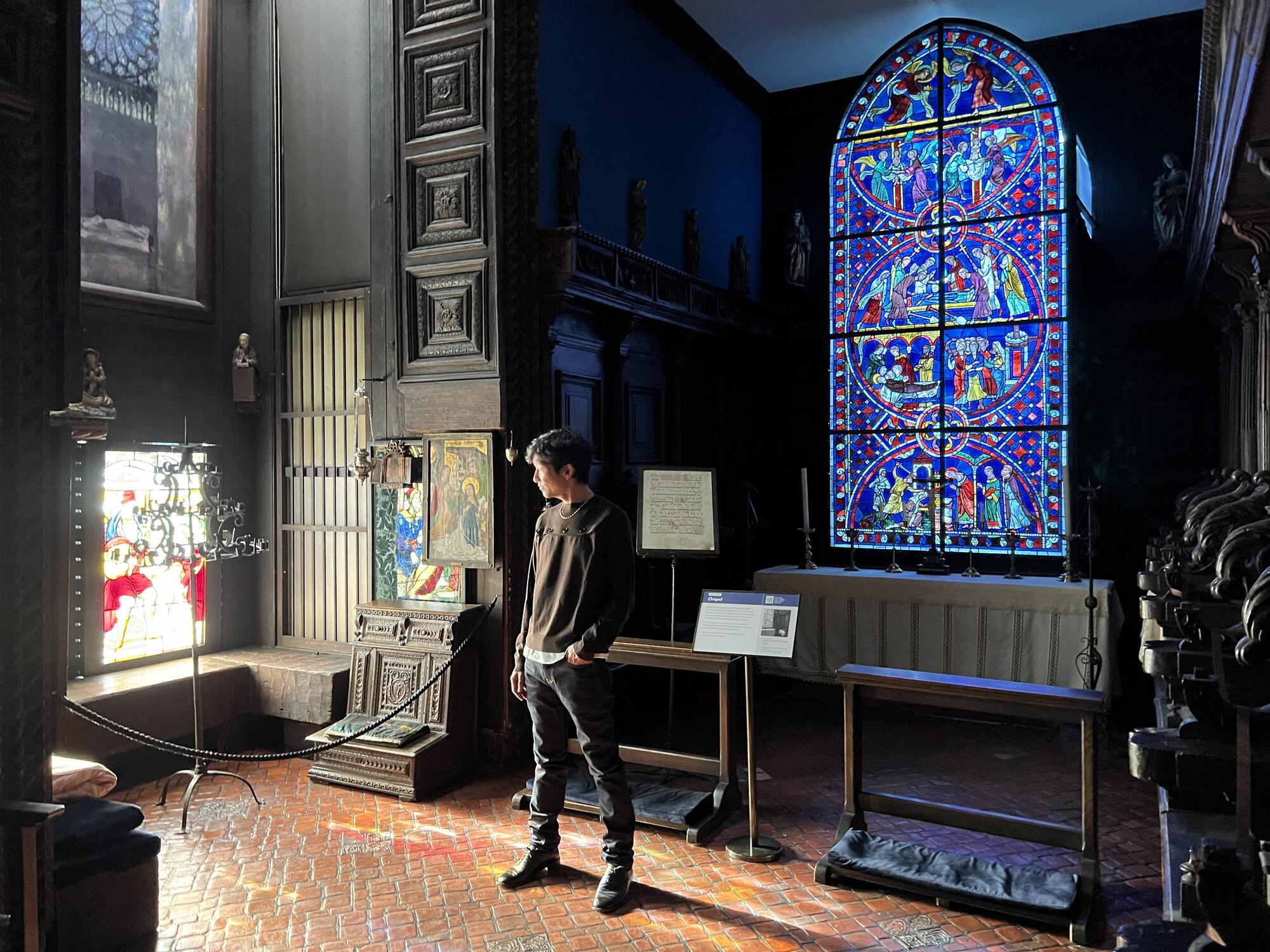
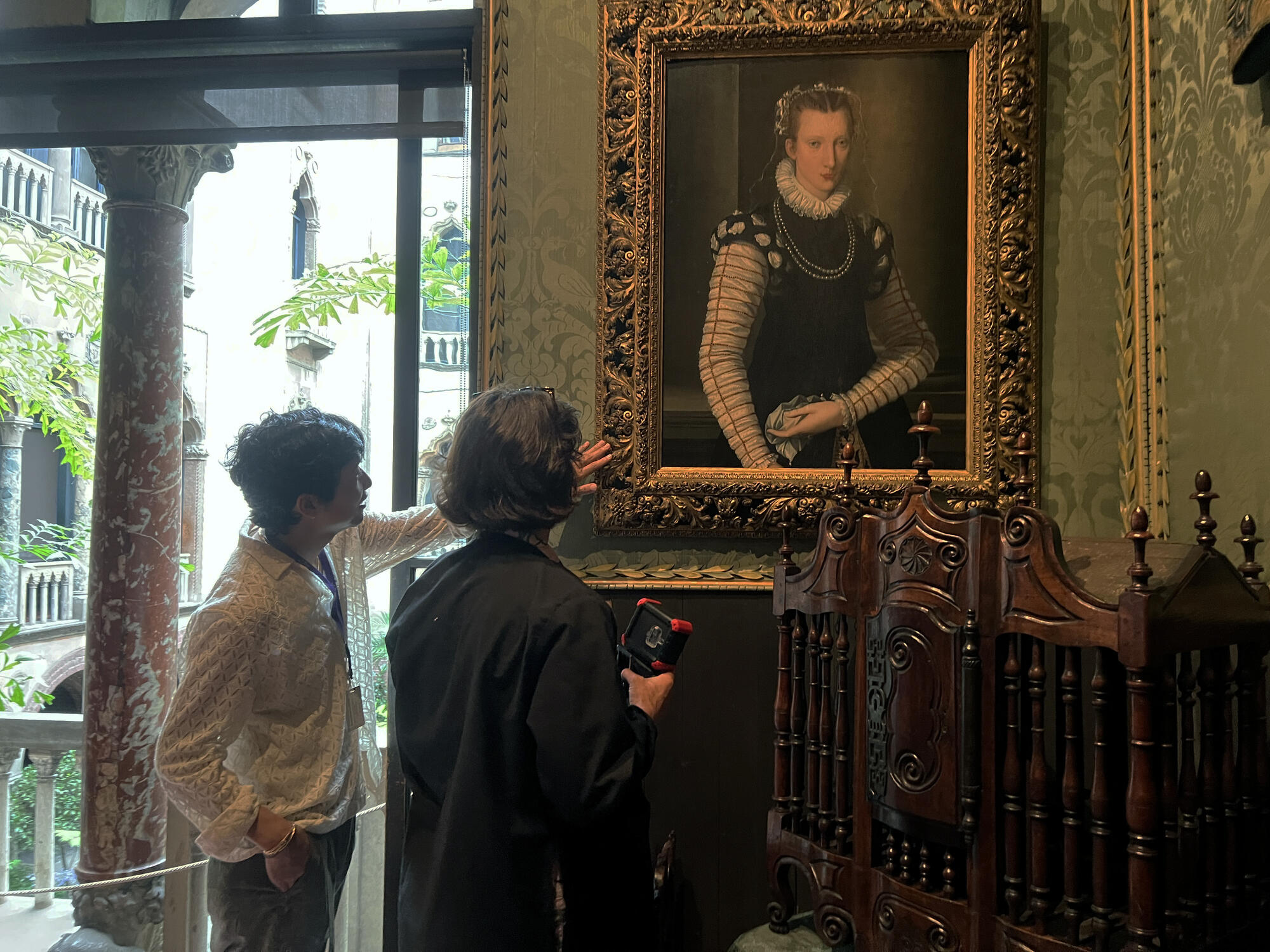
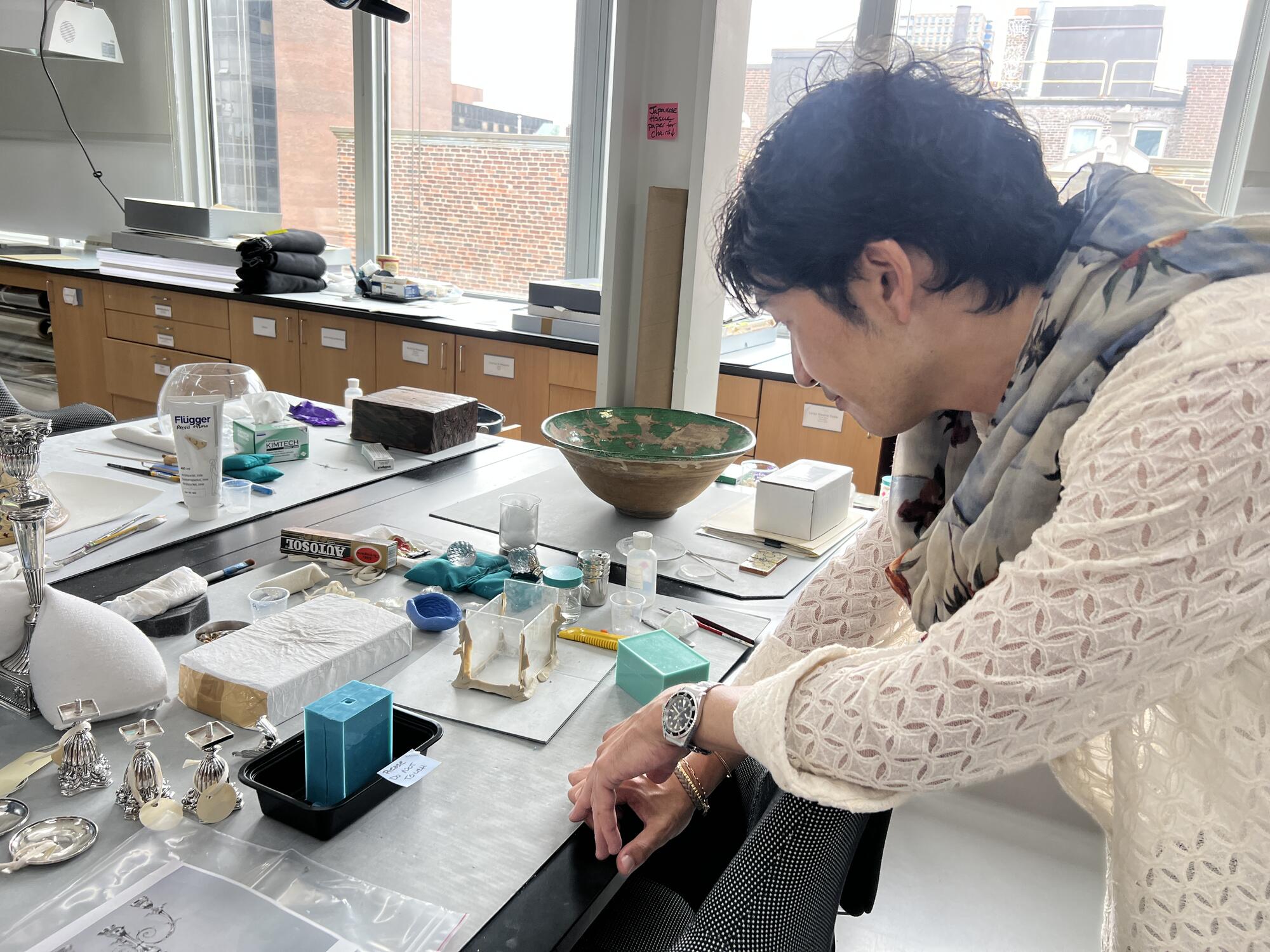
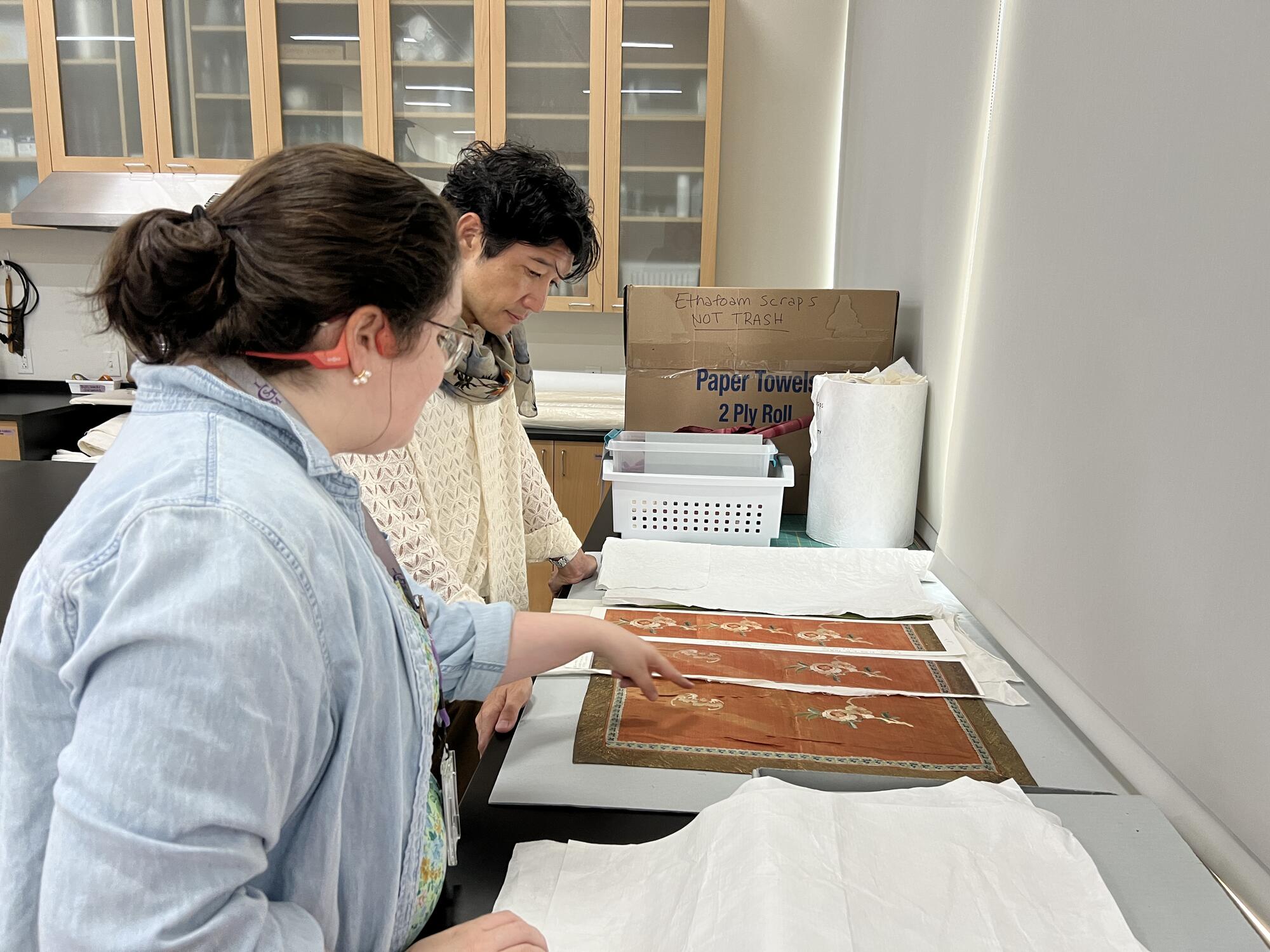
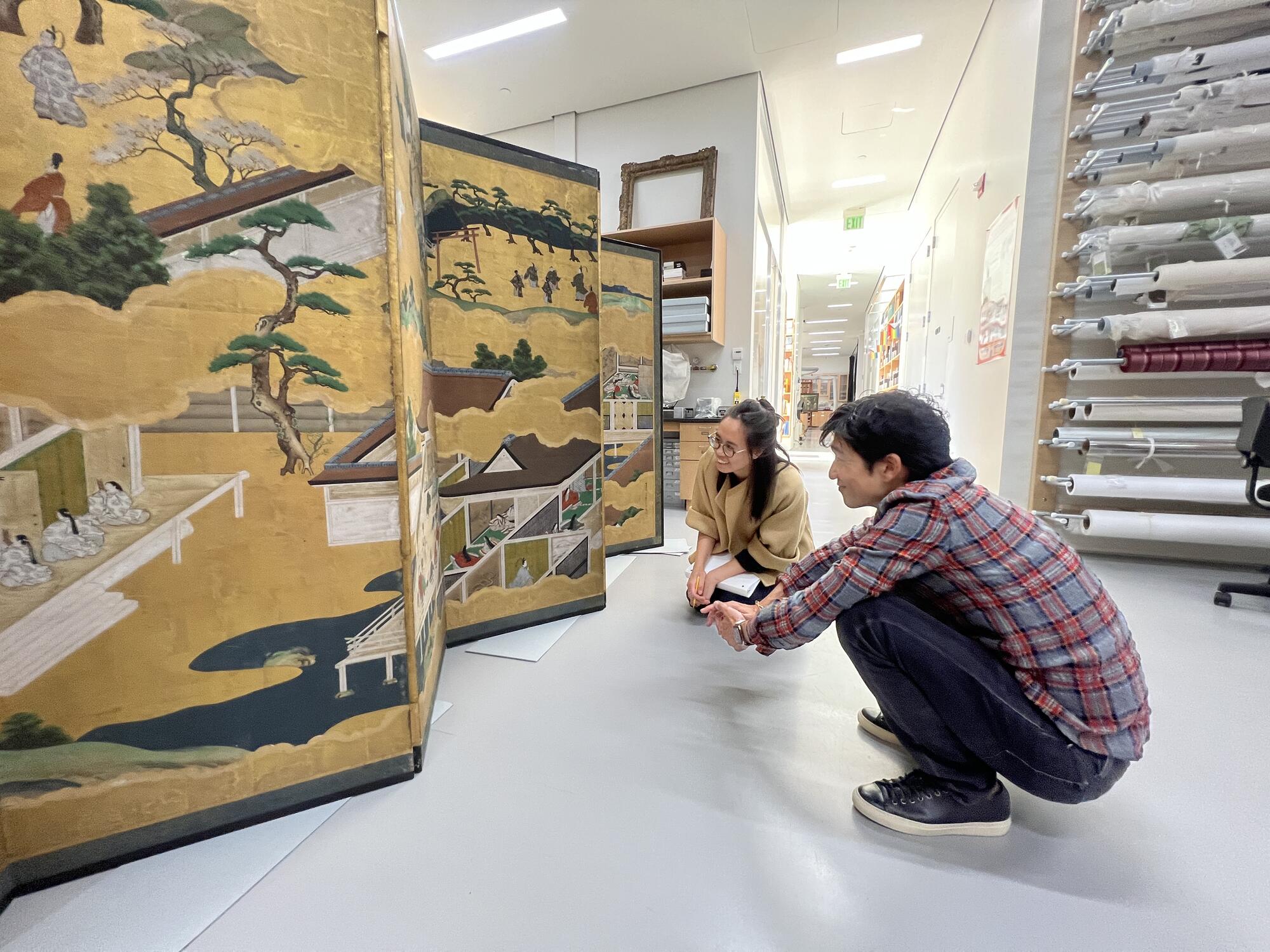
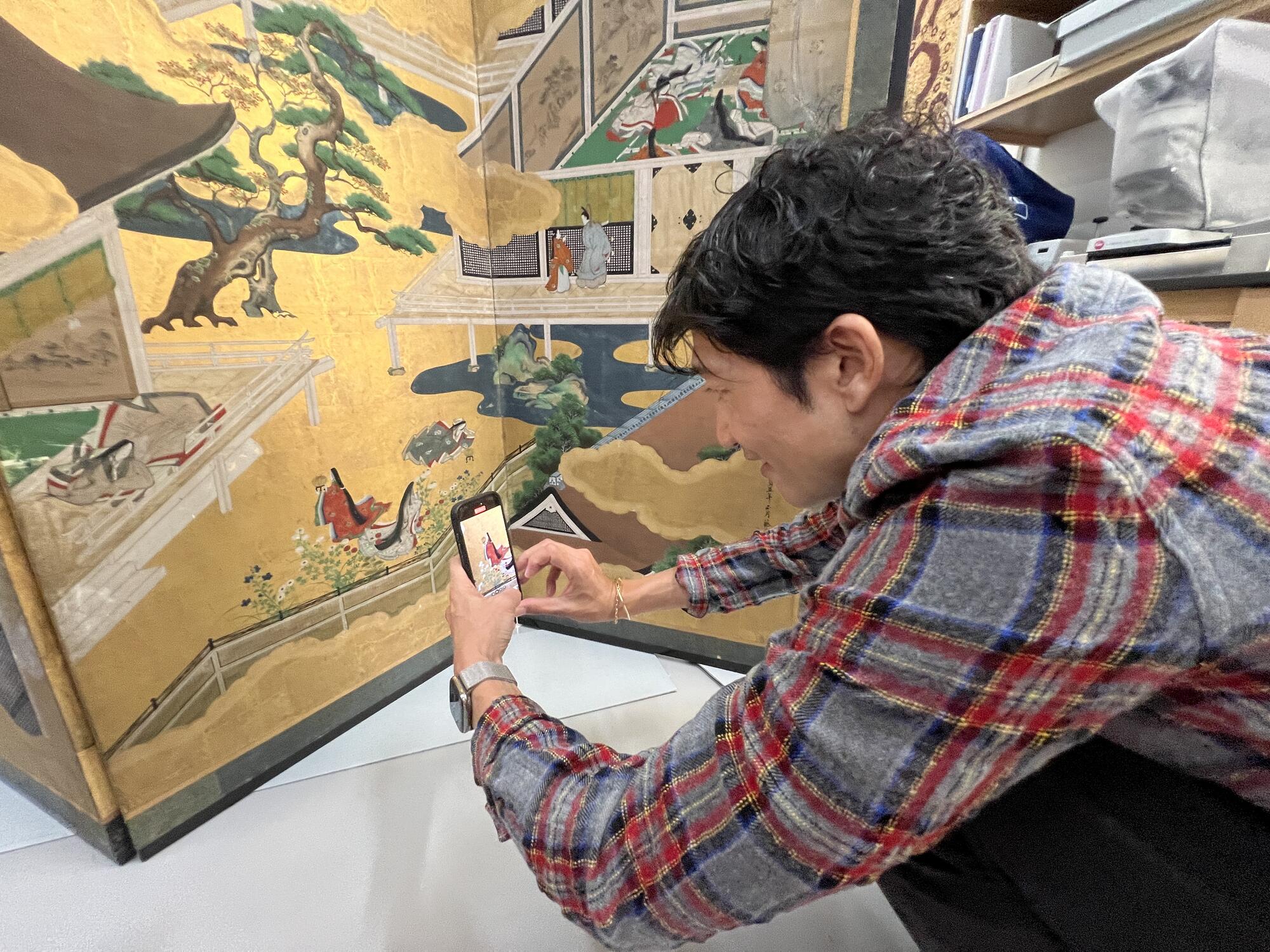
On his return in October, Matsu spent his first day in the Conservation Lab with Gabrielle Niu, Assistant Curator of The Collection and Exhibitions, examining a pair of screens that depict the twelve chapters of the Tale of Genji, one of the world’s earliest novels. Written around the year 1000 by Murasaki Shikibu, a lady-in-waiting at the Imperial Court in Kyoto, the story vividly portrays courtly customs through an intricate web of human relations. The screens will be the focus of a 2027 exhibition at the Museum about crafting and use of Japanese screens in everyday life, as well as how contemporary artists, including Matsu, have engaged the folding screen’s potential in their artwork. Gabrielle and Matsu spent the day unraveling the narrative details of the scenes, the courtly activities portrayed, and the techniques through which the screens were made.
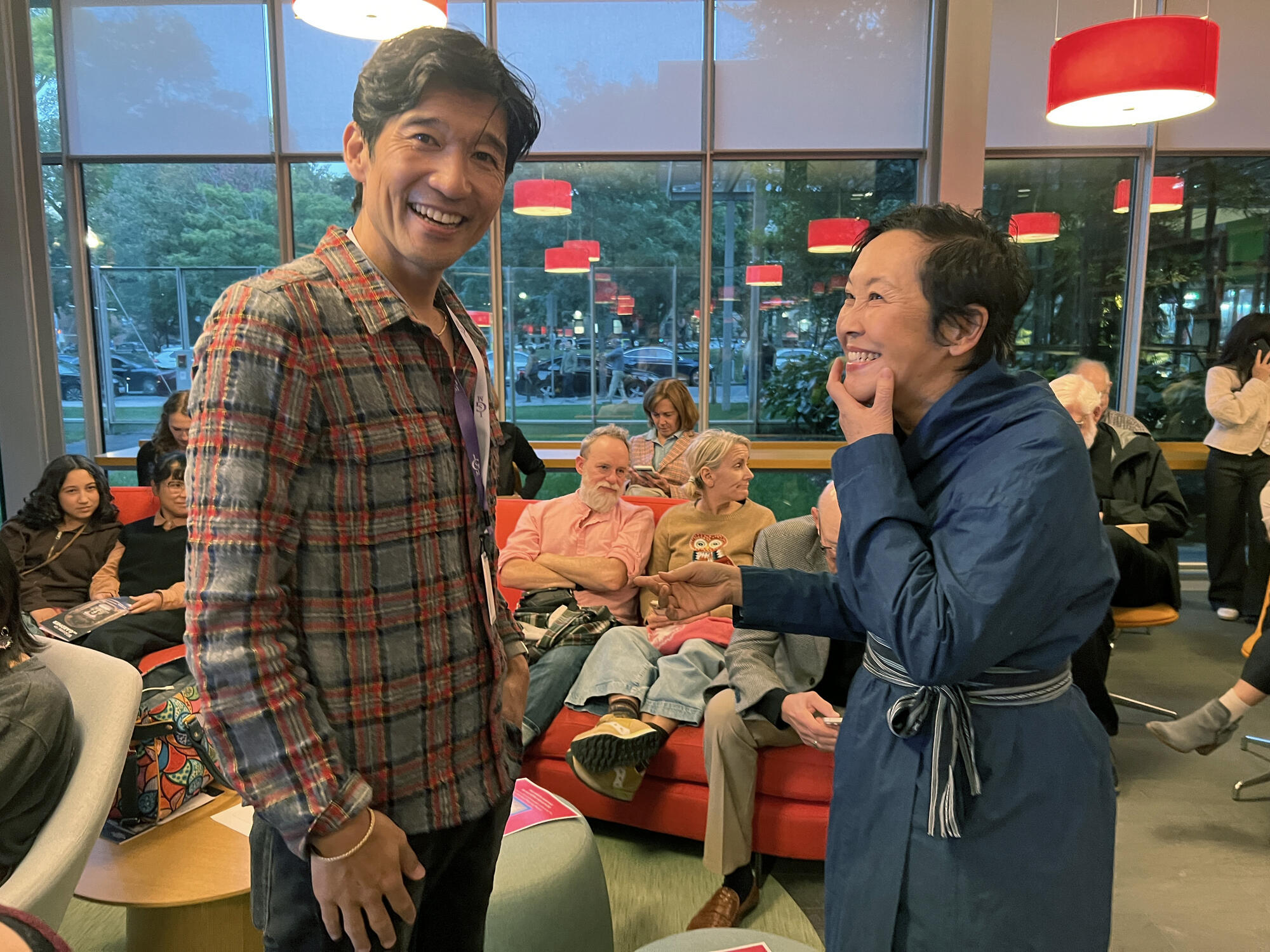
In addition to visiting the galleries, Matsu went on a late-night flashlight tour. He also attended a public conversation between Yu-Wen Wu (2024 Artist-in-Residence), archivist Shana McKenna, and Erika Rumbly, Stanley P. Kozak Director of Horticulture, moderated by Pieranna Cavalchini, The Tom and Lisa Blumenthal Curator of Contemporary Art, where he ran into an old friend, the artist Yuri Shimojo who was in Boston for an opening. Although he delighted in wandering and being social, the second half of his residency became a deeper dive into Isabella Stewart Gardner, with most of his time spent completely absorbed in intensive reading and research on her life, travels, and collection, all while brainstorming.
Matsu was given access to a rich collection of photographs that Gardner commissioned from Thomas E. Marr & Son to document her residence on Beacon Street, her summer retreat and gardens at Green Hill, and the Museum itself. He was introduced to Gardner’s friendship with Okakura Kakuzō, the curator of Chinese and Japanese art at the Museum of Fine Arts, Boston from c. 1904 until his death in 1913. In the winter of 1905, Okakura presided over a Japanese tea ceremony held by candlelight where he presented Gardner with a copy of his newly published essay, “The Book of Tea”. Later he gifted her a carefully curated tea set which Matsu was able to study through a series of photographs. Pieranna Cavalchini also connected him with Noriko Murai, a Japanese scholar and professor of art history at Sophia University in Japan who has been researching Kakuzo for years with plans to publish a book.
Other materials Matsu studied were the travel scrapbooks Isabella Stewart Gardner created during her and her husband Jack’s grand world tour in 1883, which took them through Japan, China, India, Cambodia, Indonesia (Borobudur), Singapore, Malaysia, Myanmar (Burma), Egypt, and finally Europe.
On both visits Matsu posted about his time at the Gardner on Social Media and in his final days of his residency he noted, “Every visit to the galleries brought new discoveries. Even the smallest details began to reveal how vast Isabella’s vision truly was. I’m leaving with a great many fragments of ideas and directions I’d like to pursue further.”
Artist Bio
Though he manages a dynamic, wide-ranging, and truly global practice that includes painting, sculpture, and large-scale public works, Matsuyama remains deeply committed to advancing the most personal and intimate dimensions of his aesthetic evolution.
Recent exhibitions include Tomokazu Matsuyama: Liberation Back Home, SCAD Museum of Art, Savannah, GA; Morning Sun, Edward Hopper House Museum, Nyack, NY; FIRST LAST,Tomokazu Matsuyama: First Last, Azabudai Hills Gallery, Tokyo; Mythologiques, 60th Venice Biennale, Venice, Italy; Fictional Landscape at both the Hirosaki Museum of Contemporary Art, Aomori, Japan and the Shanghai Powerlong Museum, Shanghai, China; Episodes Far From Home, Almine Rech Gallery, London, UK; Harmless Charm, Sotheby’s, Hong Kong; The Best Part About Us, Kavi Gupta Gallery, Chicago, IL, USA; Tomokazu Matsuyama: Accountable Nature, Long Museum West Bund, Shanghai, China, and Long Museum Chongqing; Tomokazu Matsuyama: Palimpsest, Harvard University, Cambridge, MA, USA; Thousand Regards, Katzen Arts Center at American University Museum, Washington, D.C., USA; Tomokazu Matsuyama: Oh Magic Night, Hong Kong Contemporary Art (HOCA) Foundation, Repulse Bay, Hong Kong; Tomokazu Matsuyama: No Place Like Home, Zidoun-Bossuyt Gallery, Luxembourg; Made In 17 Hours, Museum of Contemporary Art Museum, Sydney, Australia; and Edo-Pop: The Graphic Impact of Japanese Prints, Japan Society, New York, NY, USA, among others.
Monumental, permanent sculptural installations can be found at JR Shinjuku Station East Square, Tokyo, Japan, one of the busiest urban train stations in the world; at the heart of Ivy Station, a transformative, mixed-use development project in Culver City, CA; a 30m painted mural and two large-scale stainless steel sculptures in Dome Chiba, a cutting-edge, state-of-the-art cycling arena in Chiba, Japan; Magic City, a 124m x 150m LED billboard animating the facades of neighboring skyscrapers on the riverfront of downtown Chongqing, China; a large-scale, outdoor steel sculpture on the grounds of Meiji Shrine in Tokyo; as well as Thousand Regards, a monumental mural commissioned by the City of Beverly Hills, CA.
Matsuyama’s works are in the permanent collections of the Albertina Museum, Vienna, Austria; Los Angeles County Museum of Art (LACMA), Los Angeles, CA, USA; Asian Art Museum, San Francisco, CA, USA; de Young Museum | Fine Arts Museums of San Francisco, CA, USA; Crystal Bridges Museum of American Art, Bentonville, AR, USA; Pérez Art Museum Miami (PAMM), Miami, FL, USA; Institute of Contemporary Art (ICA) Miami, FL, USA; Peabody Essex Museum, Salem, MA, USA; San Jose Museum of Art, San Jose, CA, USA; Kalamazoo Institute of Arts, Kalamazoo, MI, USA; Bruce Museum, Greenwich, CT, USA; Minneapolis Institute of Art, MN, USA; the Long Museum, Shanghai, China; Powerlong Art Museum, Shanghai, China; Hirosaki Museum of Contemporary Art (MOCA), Japan; Yokohama Museum of Art, Japan; Pt. Leo Estate Sculpture Park, Melbourne, Australia; the Royal Family of Dubai; Dean Collection (Swizz Beatz and Alicia Keys), USA; and the corporate collections of Microsoft, Toyota Motor Corporation, Bank of Sharjah, NIKE Japan, and Levi Strauss & Co. Japan.