
Darren Waterston
Artist-in-Residence
Known for his ethereal paintings, imagined landscapes, and site-specific installations, Darren Waterston explores the tensions that emerge as idealized states transform into chaotic natural ones, and vice versa. Taking imagery from other time periods such as medieval animals, Victorian funeral homes, and Renaissance paintings, he combines and reinterprets them to explore themes of loss, the afterlife, and human endurance. Waterston first visited the Isabella Stewart Gardner Museum as a college student and returned over the years, sketching and taking notes that would influence his work.
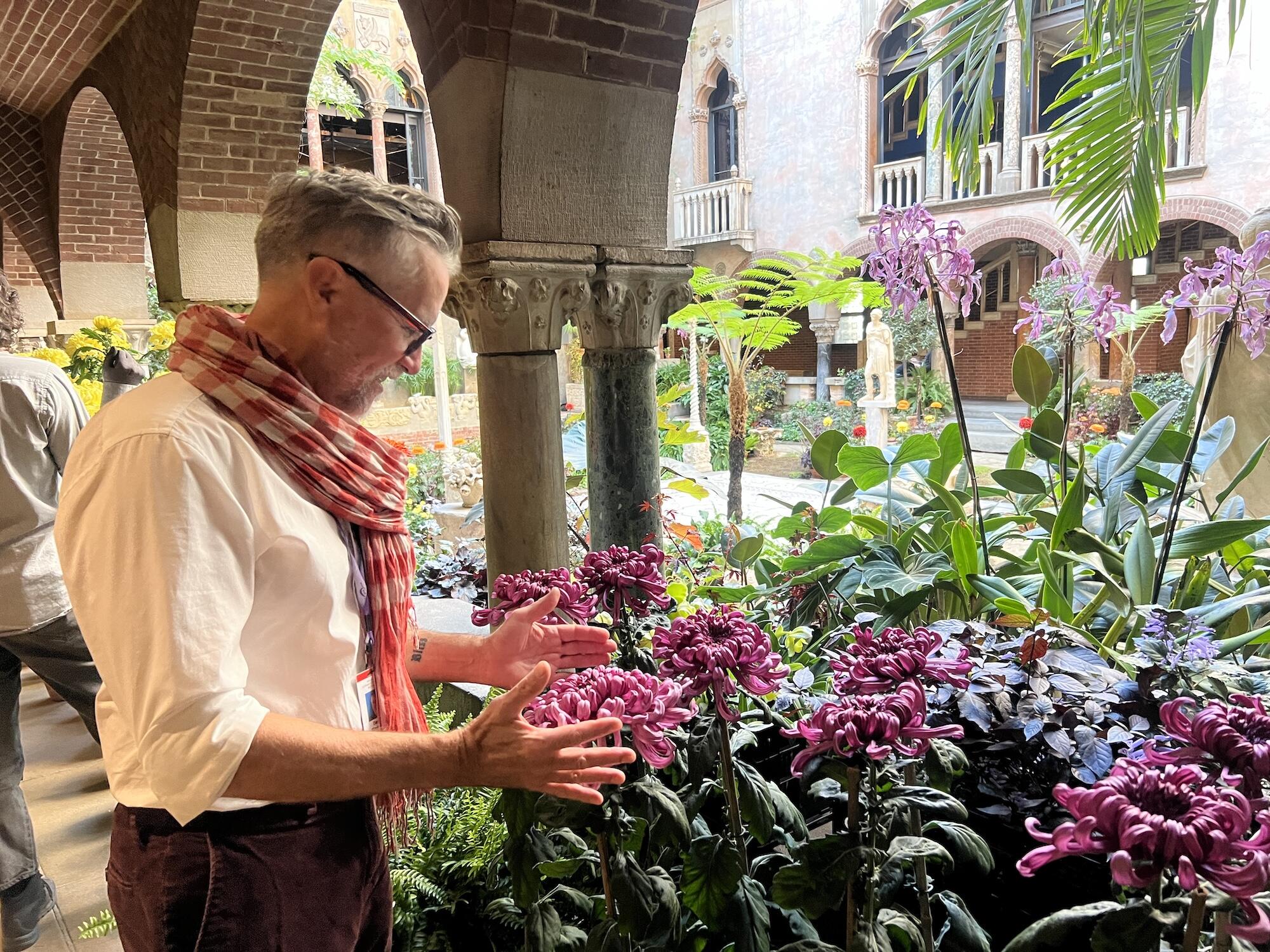
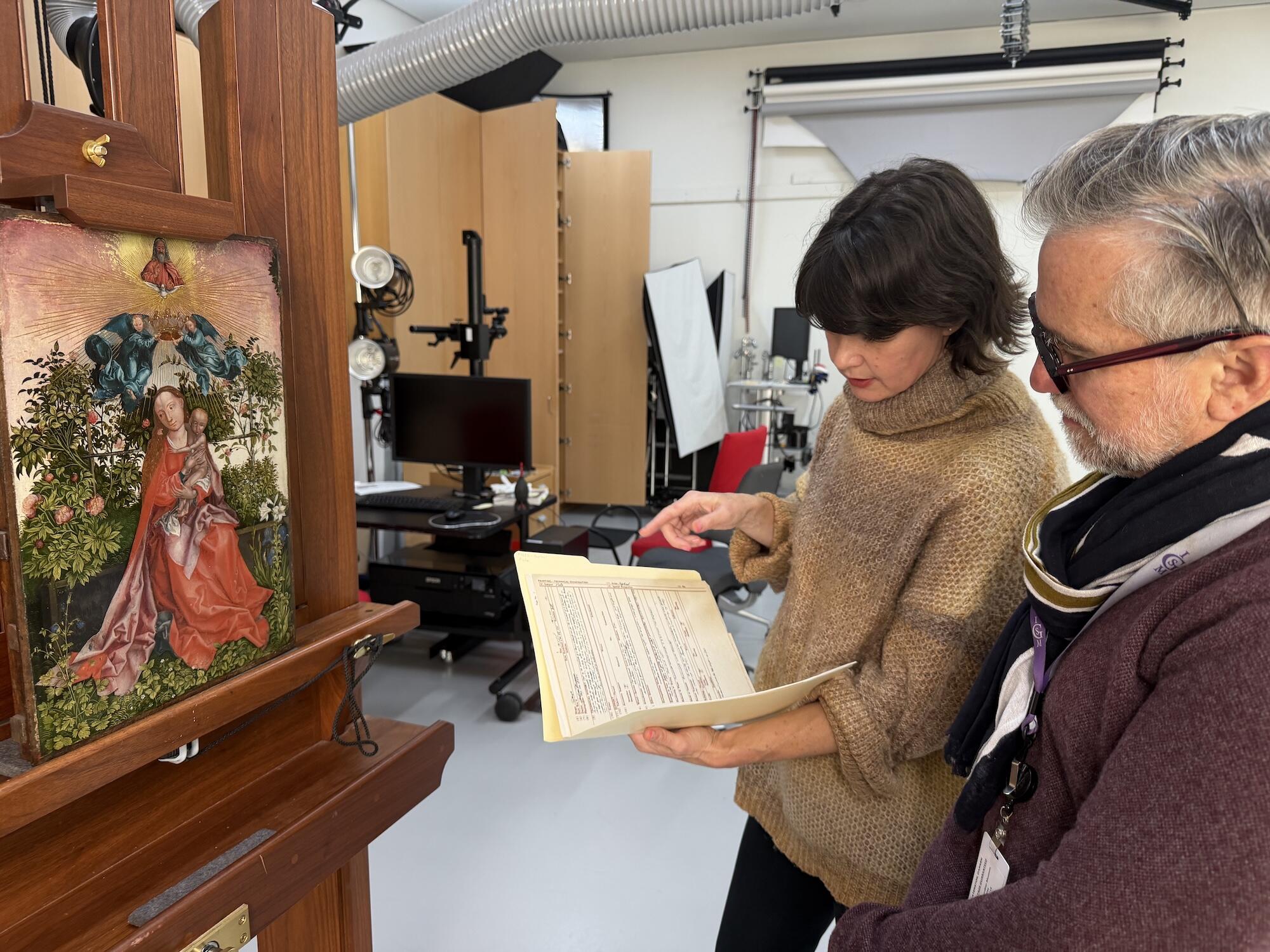
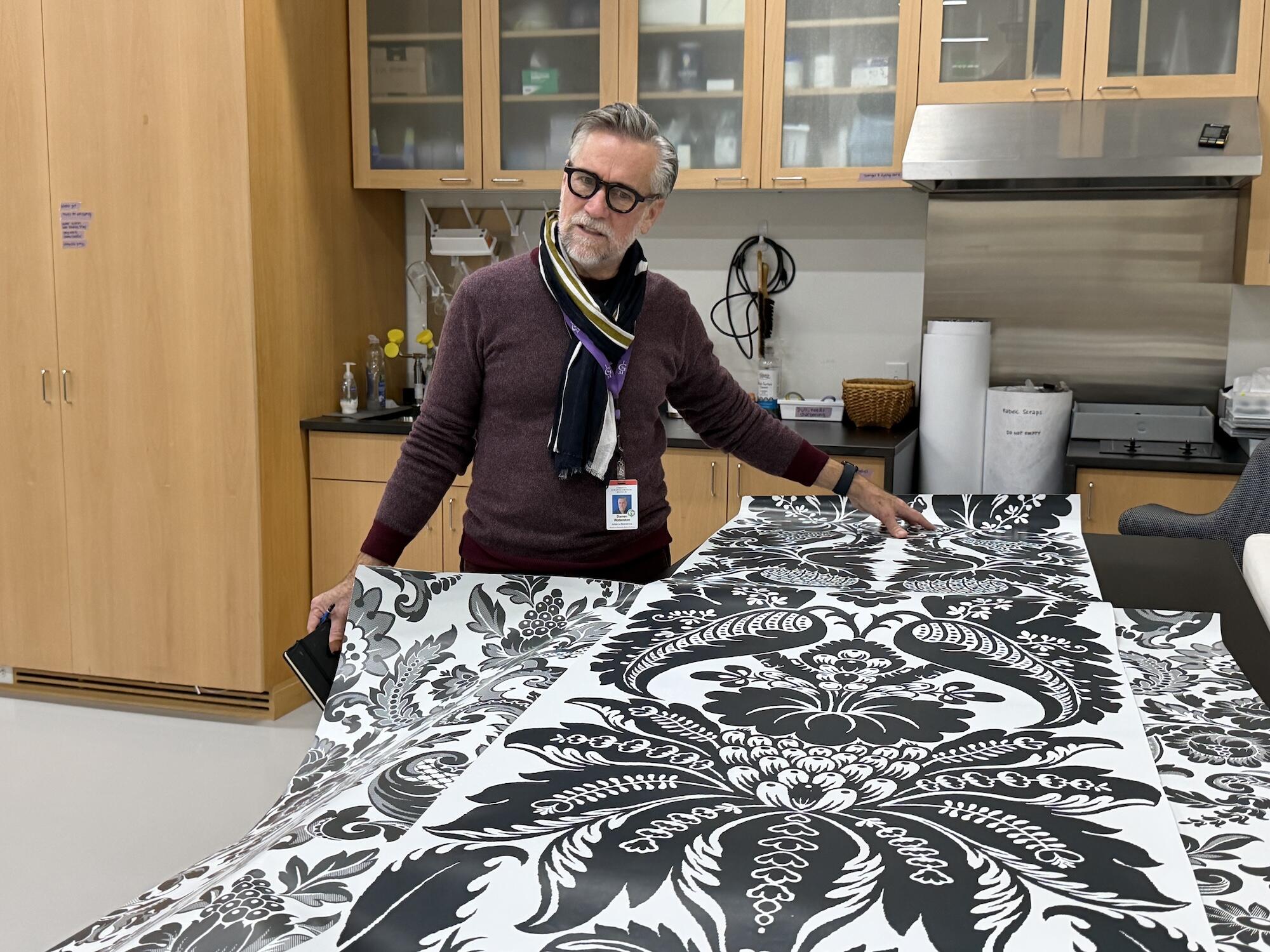
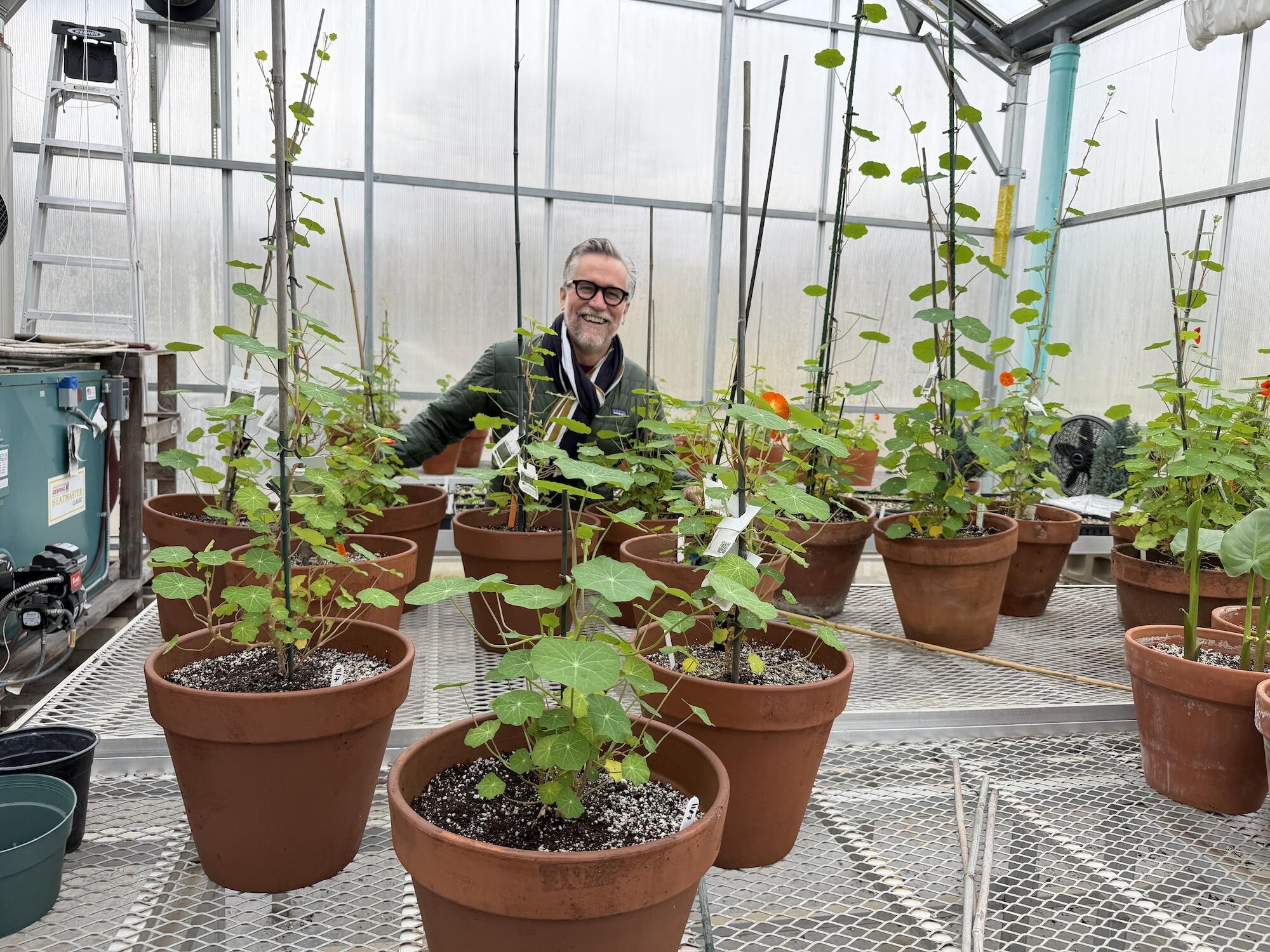
In 2025, Waterston lived and worked at the Museum as an Artist-in-Residence. He used the residency to deepen his engagement with the collection and pursue research. Staying on-site for an extended period of time provided a deeply immersive experience, with behind-the-scenes access and the opportunity to connect with Museum staff. Waterston spent time wandering the galleries and working on a new series of paintings in the apartment studio. While visiting the Poorvu Family Conservation Center, he observed several objects from the Dutch Room undergoing treatment as part of a room-wide restoration. Among these were the painting Virgin and Child of the Rose Bower and the patterns for the replacement wall fabrics. A trip to the Museum’s off-site greenhouses and a night-time flashlight tour of the galleries provided different perspectives of the collection, reshaping his understanding of the spaces.
Given his background working with historical records, Waterston was eager to explore the Museum's archives. Among his interests was interior design, which led him to examine a series of photographs Gardner commissioned from T.E. Marr & Son. These photographs documented her Beacon Street house, the Fenway Court galleries, and the Gardner family’s Green Hill estate in Brookline between 1900 and 1926. He gained insight into the plaster reliefs Gardner ordered for the ceilings of the Raphael and Titian Rooms, as well as the project to restore the distinctive “Bardini Blue” paint in the Long Gallery.
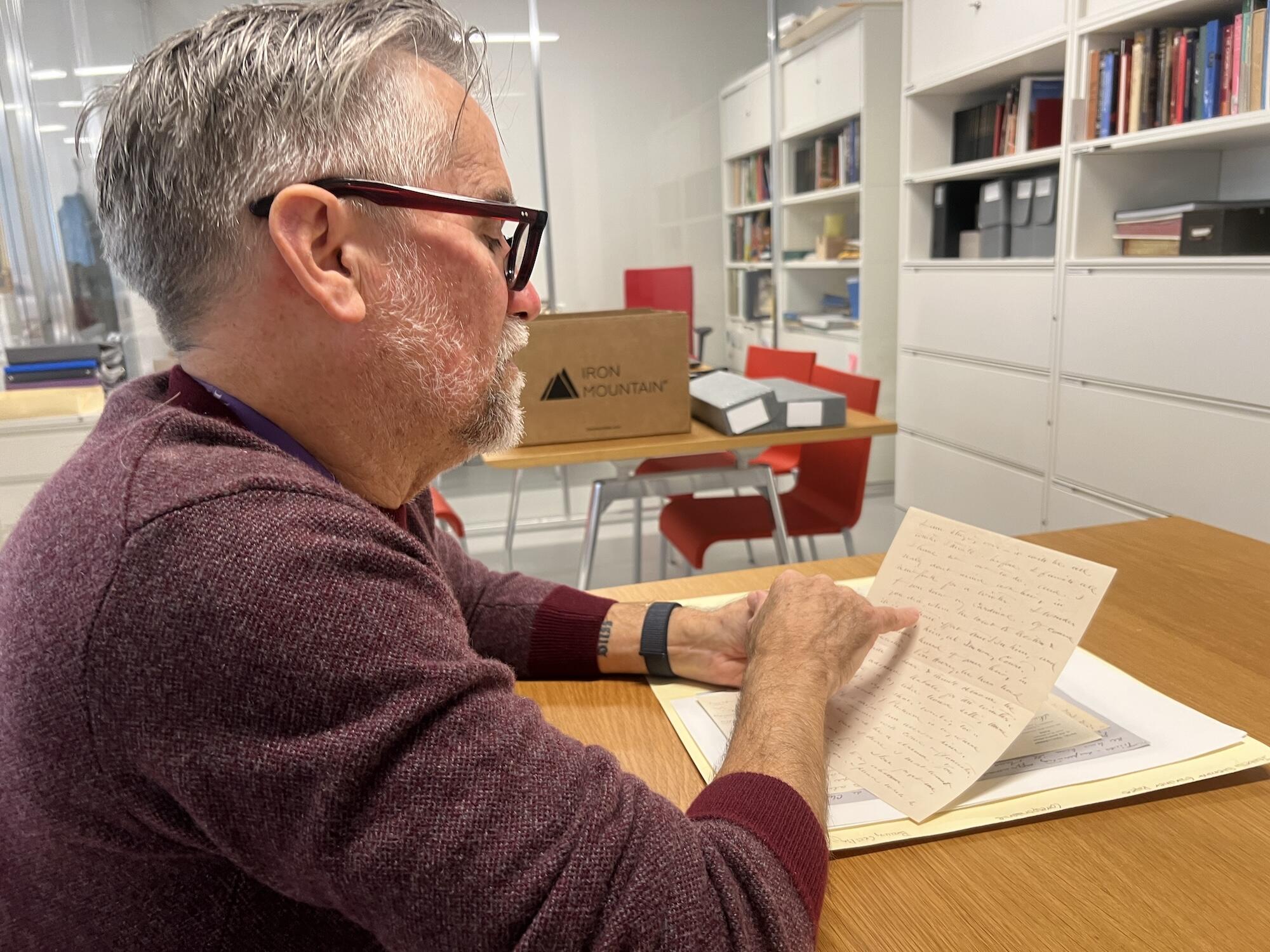
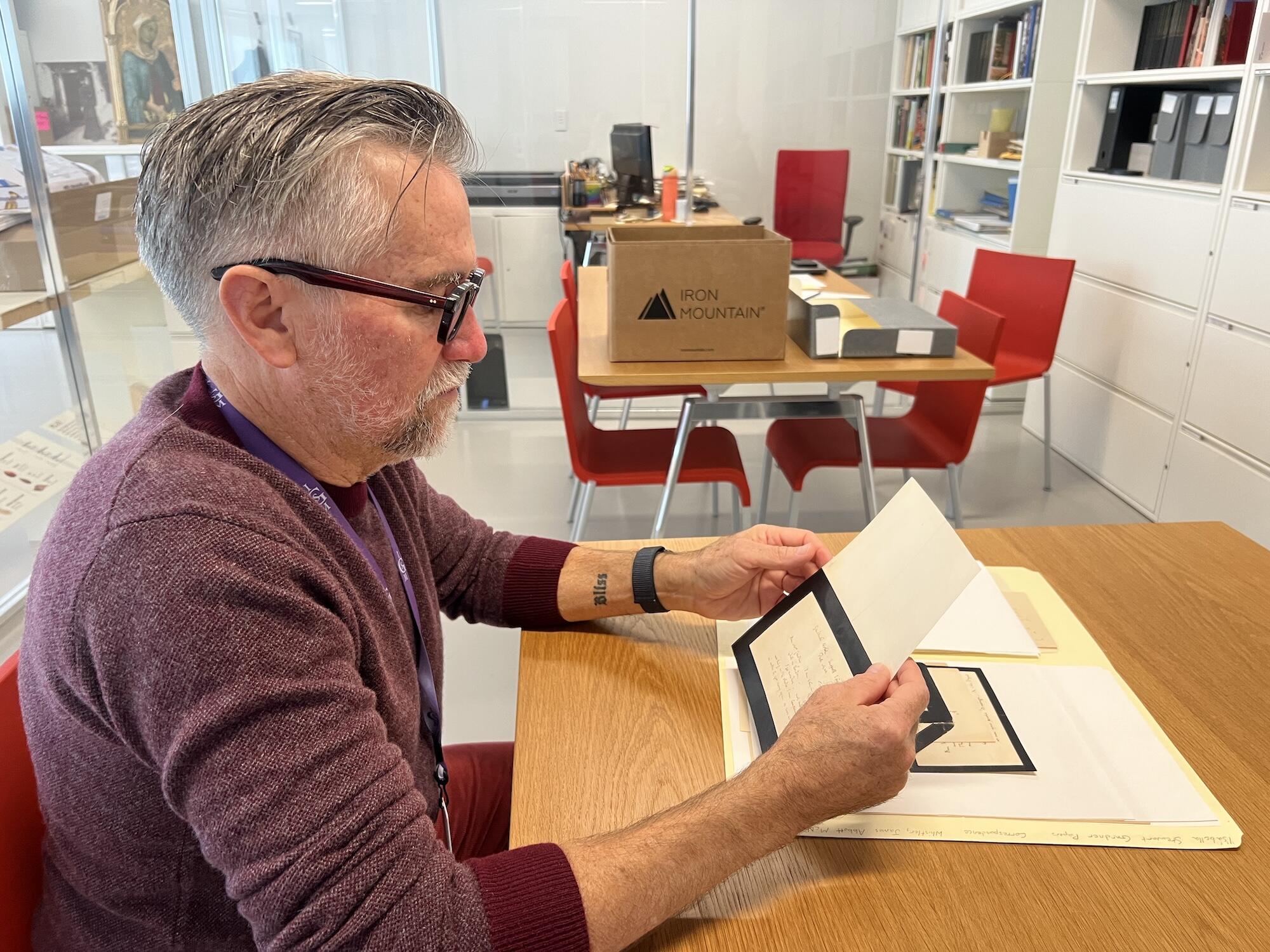
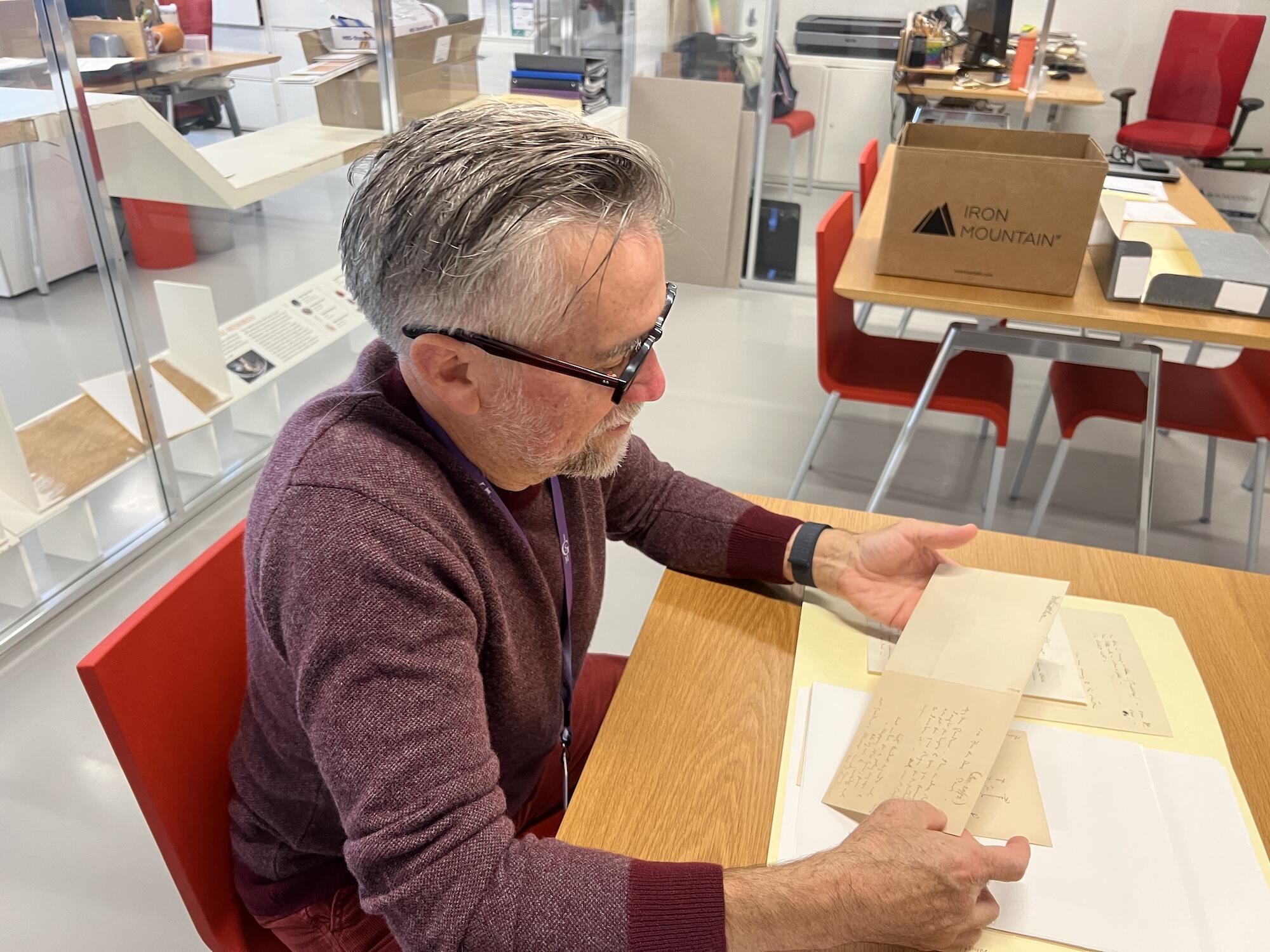
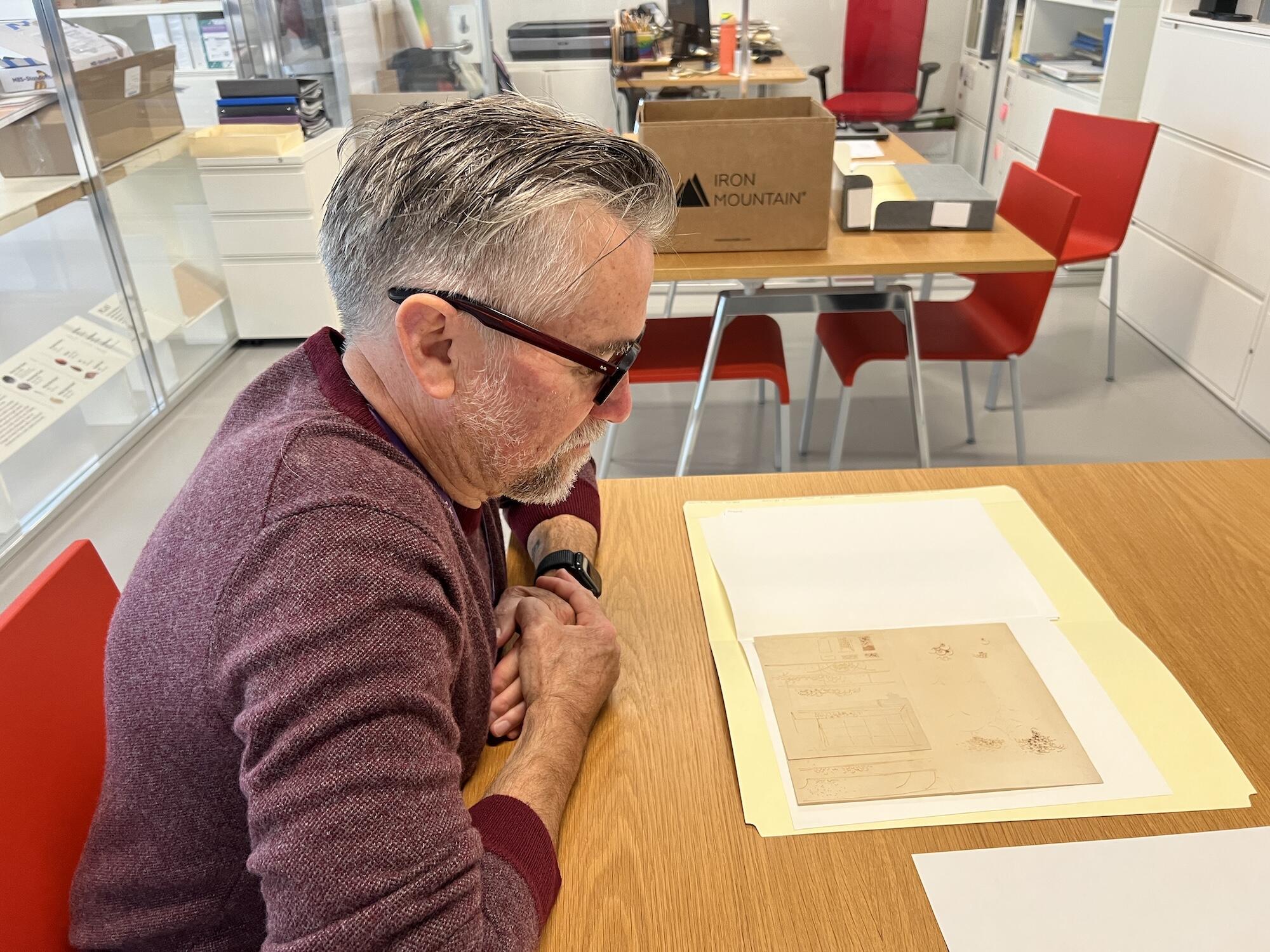
The archives also contain a wealth of materials that reveal Isabella Stewart Gardner’s friendships with artists. This includes James Abbott McNeill Whistler (1834–1903), with whom she maintained a warm friendship and patron-artist relationship for many years. Waterston also shares a bond with the artist. Whistler’s The Peacock Room, an ornate dining room created for the British shipping magnate Frederick Richards Leyland (1831–1892) between 1876 and 1877, served as a catalyst for Waterston's 2020 installation, Filthy Lucre. Waterston viewed drawings Whistler made to illustrate the room’s development for his friend R. G. Harper Pennington around 1885. These sketches were later gifted to Gardner by Pennington to add to her collection. He also spent time reading Whistler’s letters to Gardner, several of which were written following the death of his mother in 1881 and, later, his wife in 1896. This second loss proved an overwhelming tragedy that profoundly altered his life and career.
Of his time in the archives Waterston noted, “I spent time looking through letters and photographs including an afternoon reading correspondence between Isabella and James McNeill Whistler. There is something so extraordinary to hold in your hand these fragile, intimate objects that tell you so much about the friendships and ways in which these lives intersect.”
While in the archives, Waterston also explored materials related to another artist in Isabella Stewart Gardner’s circle, Cecilia Beaux (1855–1942). Despite a 15-year age difference, their close friendship is evident in their correspondence, where they talk candidly about concerns for a friend, summers in Gloucester, health issues, and the pains of growing older. Waterston was struck by the intimacy of the letters but noted, “It’s interesting that none of them demonstrate Gardner’s interest or respect for Beaux's artistic practice.”
While already familiar with Cecilia Beaux’s work, Waterston took a greater interest in the artist and began researching her during his residency. This was sparked by an invitation to develop a room installation that will open at the Amon Carter Museum of American Art, Fort Worth, in 2027. The work will be shown in conjunction with a monographic exhibition exploring Beaux’s work, her historical context, the gendered limitations she faced, and her influence on 21st-century painters. Both exhibitions will travel to the Isabella Stewart Gardner Museum, Boston, and then to the Pennsylvania Academy of Fine Arts, Philadelphia.
As Waterston delved into her life and work, he became captivated by a 1901 portrait Beaux painted of Bertha Hallowell Vaughan (1866–1948), now in Harvard University’s Portrait Collection. He was drawn not only to the image of the young woman draped in flowing fabrics, but also to the richness and subtlety of the artist’s palette. Bertha became a muse for Waterston, and her influence appeared in the work he was creating for an upcoming show at Berggruen Gallery, San Francisco. Titled A Tiny Radiance in a Dark Place, it honors both Bertha’s portrait and Waterston’s formative time at the Gardner.
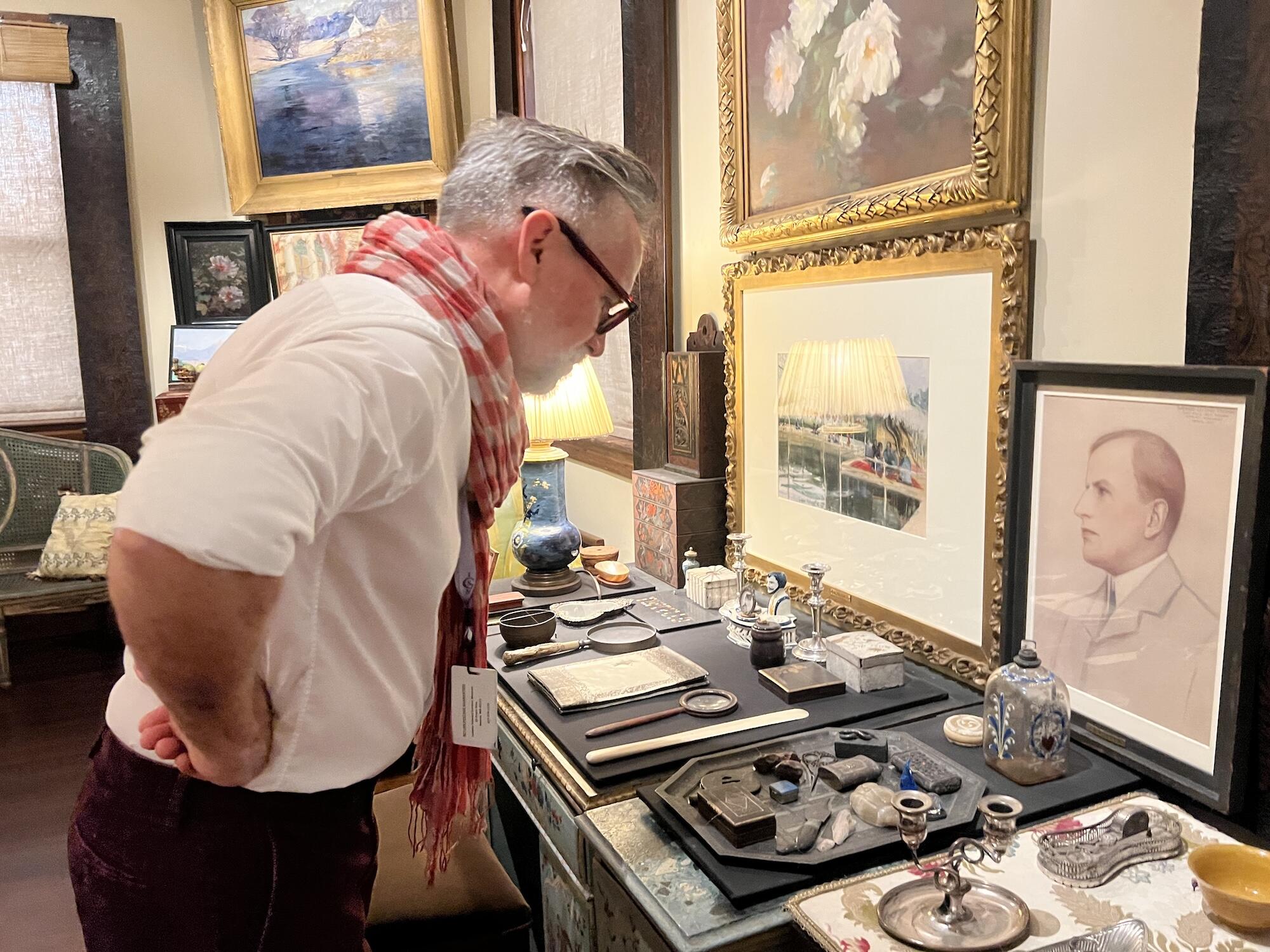
Darren Waterston (b. 1965, Fresno, CA) has exhibited his paintings, works on paper, and installations in the US and internationally since the early 1990s. Recent highlights include Filthy Lucre: Whistler’s Peacock Room Reimagined at the Victoria and Albert Museum (2020); Peacock Room REMIX at the Smithsonian’s Freer/Sackler Galleries (2016); Uncertain Beauty at MASS MoCA (2014); Forest Eater at The Contemporary Museum, Honolulu (2011); and Splendid Grief: The Afterlife of Leland Stanford Jr. at the Cantor Arts Center, Stanford University (2009).
His work is in numerous permanent collections, including a site-specific mural at The Frick Collection, New York; Los Angeles County Museum of Art; Fine Arts Museums of San Francisco; New York Public Library; Getty Research Institute; Seattle Art Museum; and Museum of Fine Arts, Houston.
Monographs include Darren Waterston: Representing the Invisible (CHARTA, 2007); A Swarm, A Flock, A Host: A Compendium of Creatures with poet Mark Doty (Prestel, 2013); Filthy Lucre (Skira Rizzoli, 2014); and Whistler’s Peacock Room Reimagined (Victoria and Albert Museum, 2020). Waterston earned a BFA from Otis Art Institute in 1988 and studied at the Akademie der Künste and Hochschule für Bildende Künste in Germany. He lives and works in Kinderhook, New York.