
Visitors who take the stairs to the Third Floor Stairhall, and make their way directly to the Gothic Room, may overlook a wood sculpture, Christ from a Deposition Group, installed just a few feet above eye level.
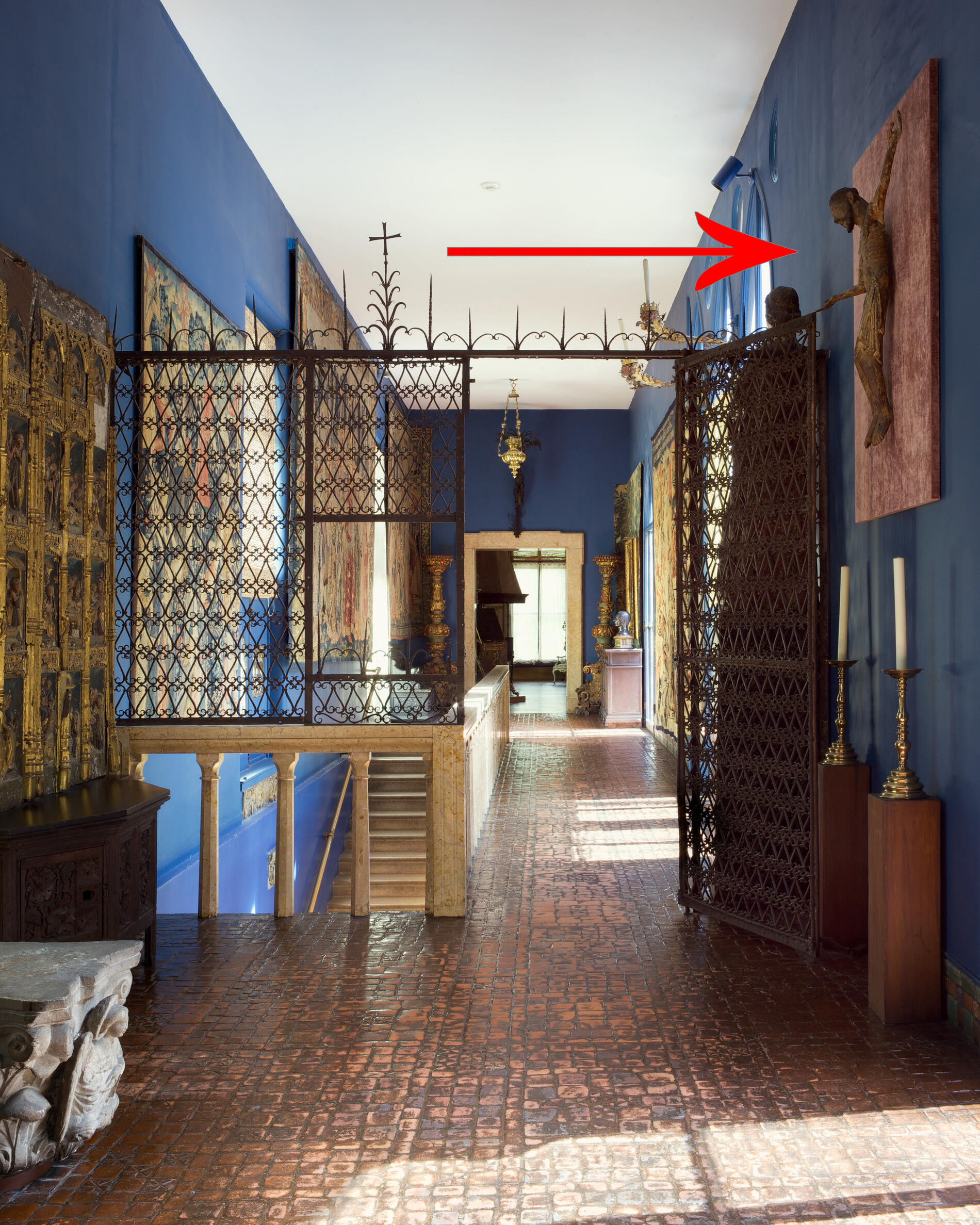
Isabella Stewart Gardner Museum, Boston. Photo: Sean Dungan
Third Floor Stairhall, showing Christ from a Deposition Group
The sculpture represents the dead Christ, but it is not a typical crucifix. Christ’s arms are not extended straight outwards, rather his left arm is raised upward at a diagonal while his right arm is angled downward, bending at the elbow with the hand extended out. This unusual composition is an important clue about the sculpture’s original function and context. In fact, the work was not originally intended to stand alone but belonged to a sculptural ensemble representing Christ’s Deposition from the Cross.
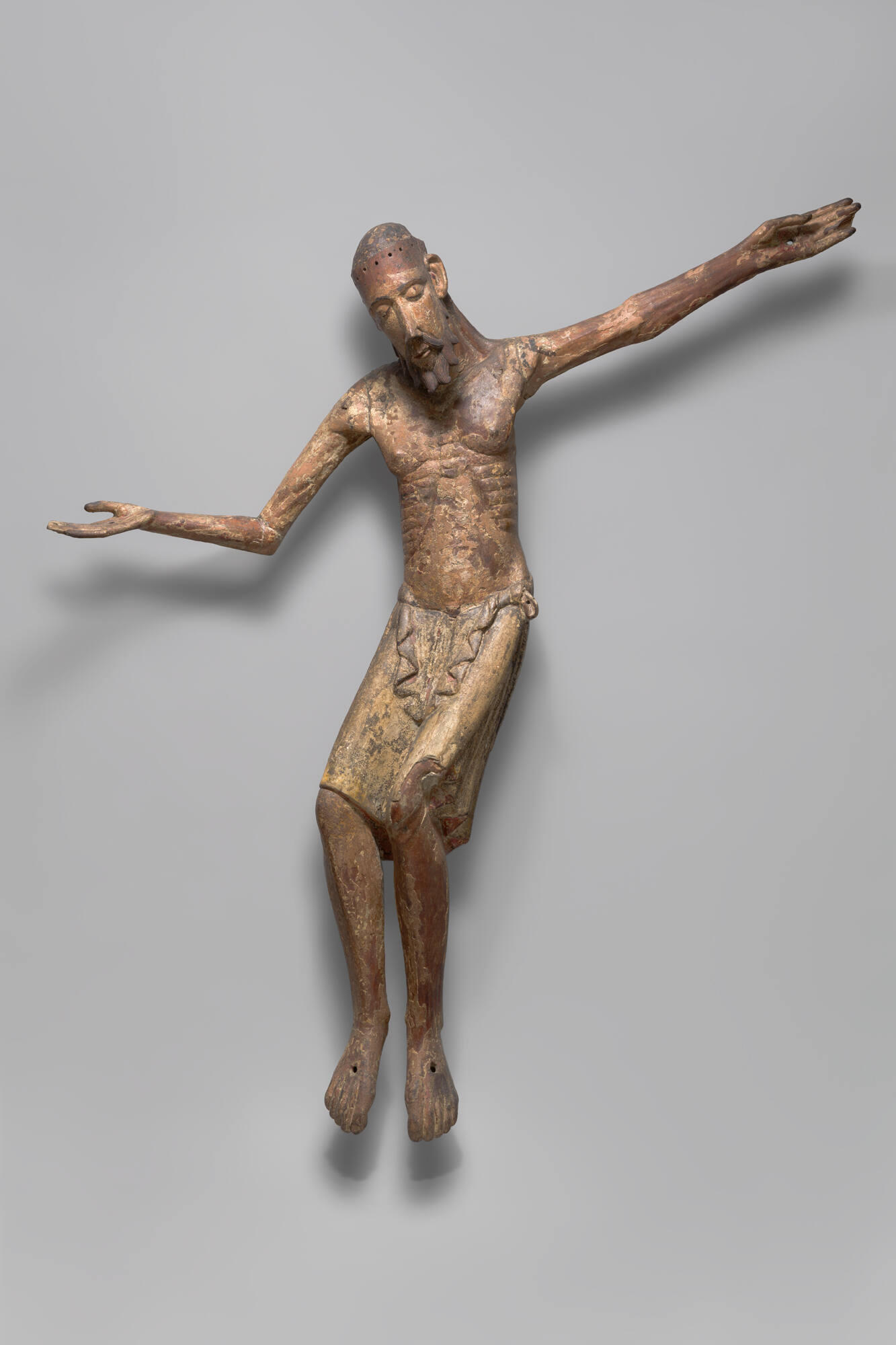
Isabella Stewart Gardner Museum, Boston (S31e2). See it outside the Gothic Room, in the Third Floor Stairhall.
Spanish, Catalonia, Christ from a Deposition Group, about 1150. Polychromed and gilded walnut, 111 x 94 cm (43 11/16 x 37 in.)
Deposition groups depict a transitional episode from after Christ’s death in between the Crucifixion and the Entombment. The suspended figure of Christ in these groups is neither fully attached nor detached from the cross, embodying this fleeting moment.
Carved in wood, Deposition sculpture groups were produced primarily in southern Europe from the twelfth to the late thirteenth century. Most surviving examples can be traced back to medieval Spain and Italy. Although many Deposition groups across both regions consisted of five figures, Romanesque Deposition groups made in Catalonia included up to seven figures. These multi-figure groups were displayed near altars in medieval churches, and helped to animate religious rituals, particularly during the Easter season.
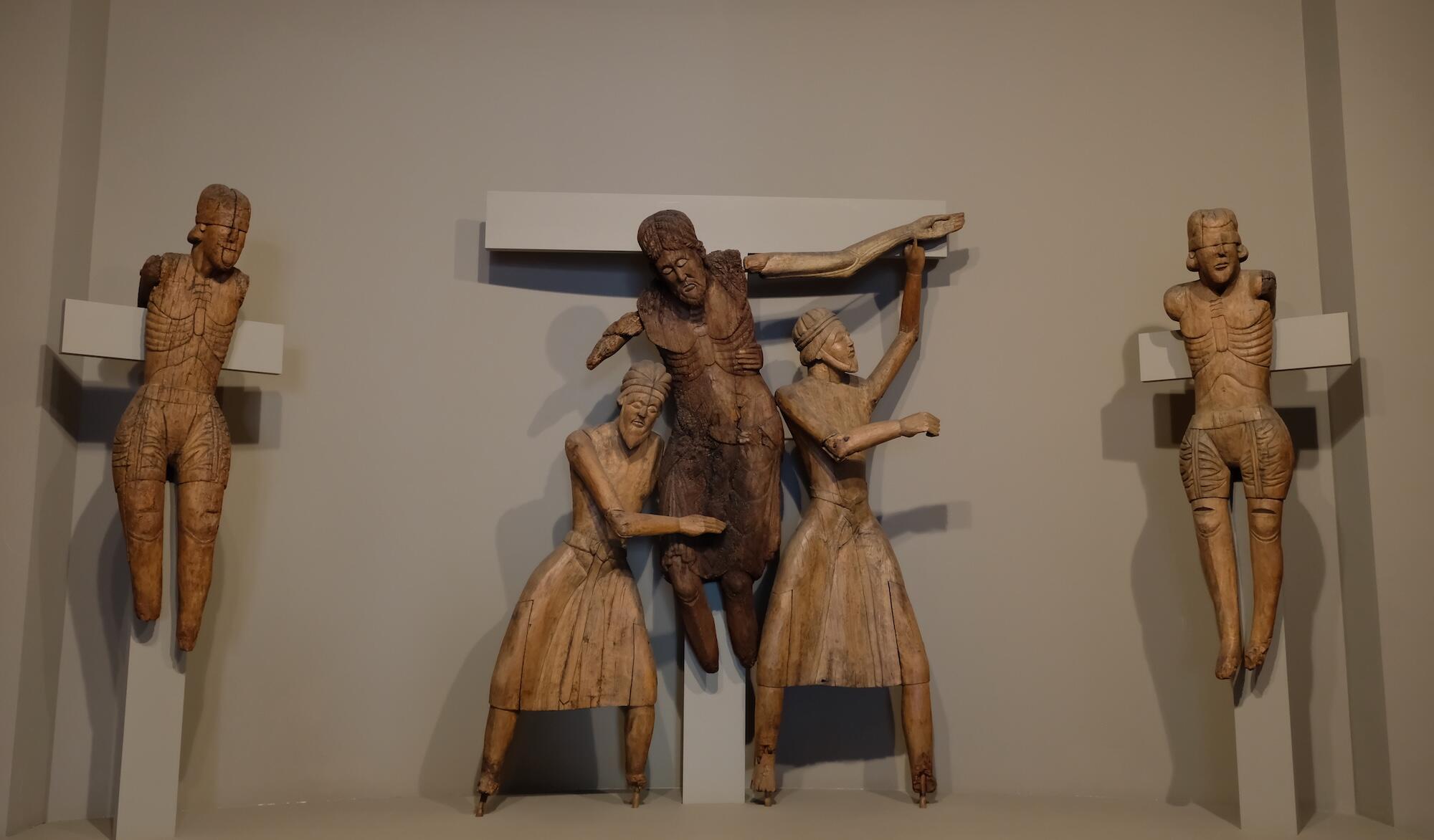
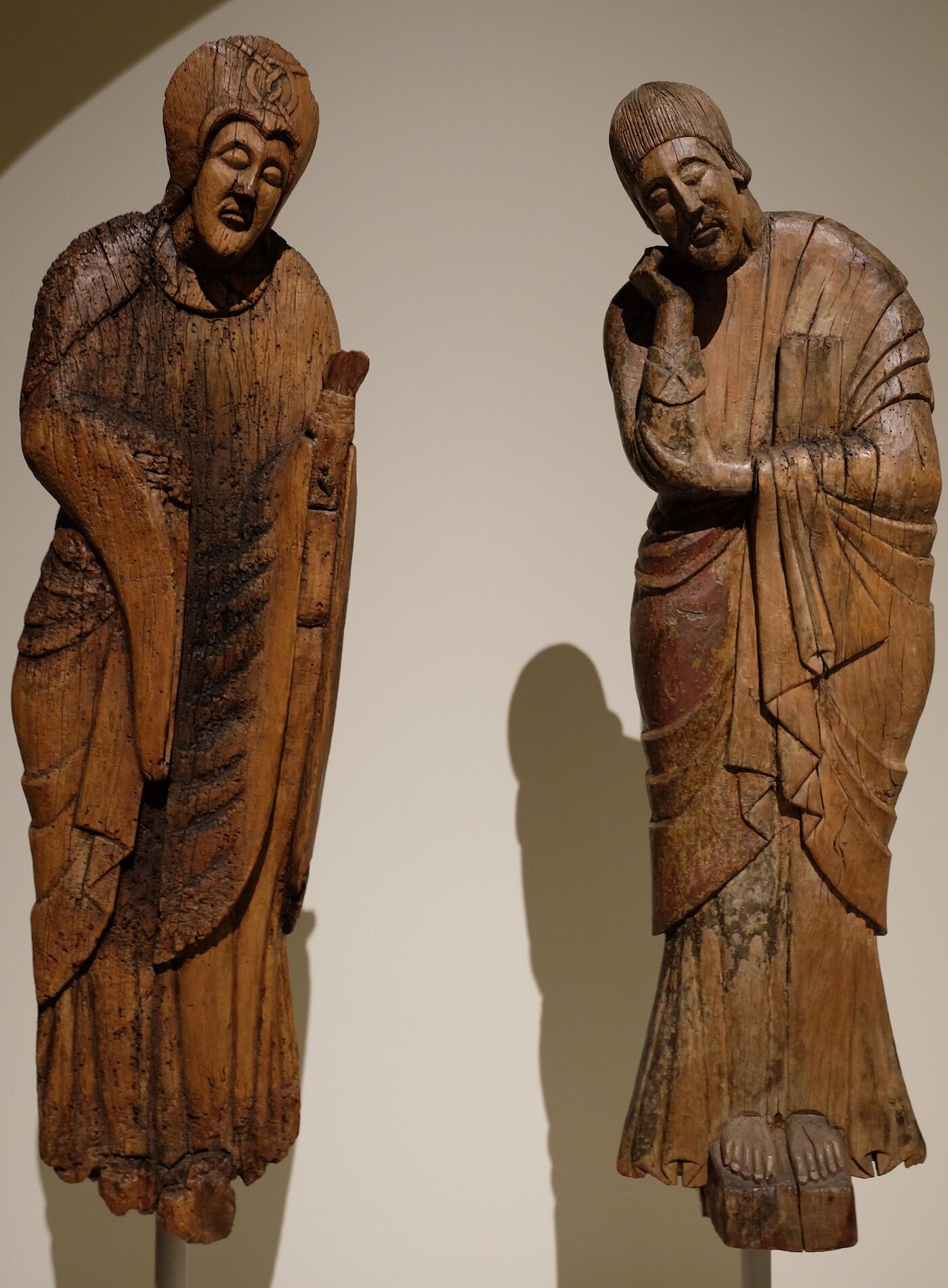
One surviving example with seven figures comes from the church of Erill la Vall, a small village in the Pyrenees mountains, at the border of modern Spain and France. At the center, Christ is lifted from the cross by two of his followers, Joseph of Arimathea and Nicodemus. In the group’s original configuration, Mary and John the Evangelist stood on either side of the central protagonists. The scene was framed by the Good Thief and Bad Thief, crucified alongside Christ. Some scholars have argued that images of the death of Christ may have served as affirmations of Church-sanctioned doctrine, particularly in the face of heterodox religious movements that developed in the twelfth century and rejected the notion of Christ’s human nature.
Isabella’s Deposition Christ shares stylistic characteristics with works produced in this region in the second half of the twelfth century, including elongated facial features, a deeply incised beard divided into elegant clusters, and a carefully rendered rib cage and loincloth with shallow folds.
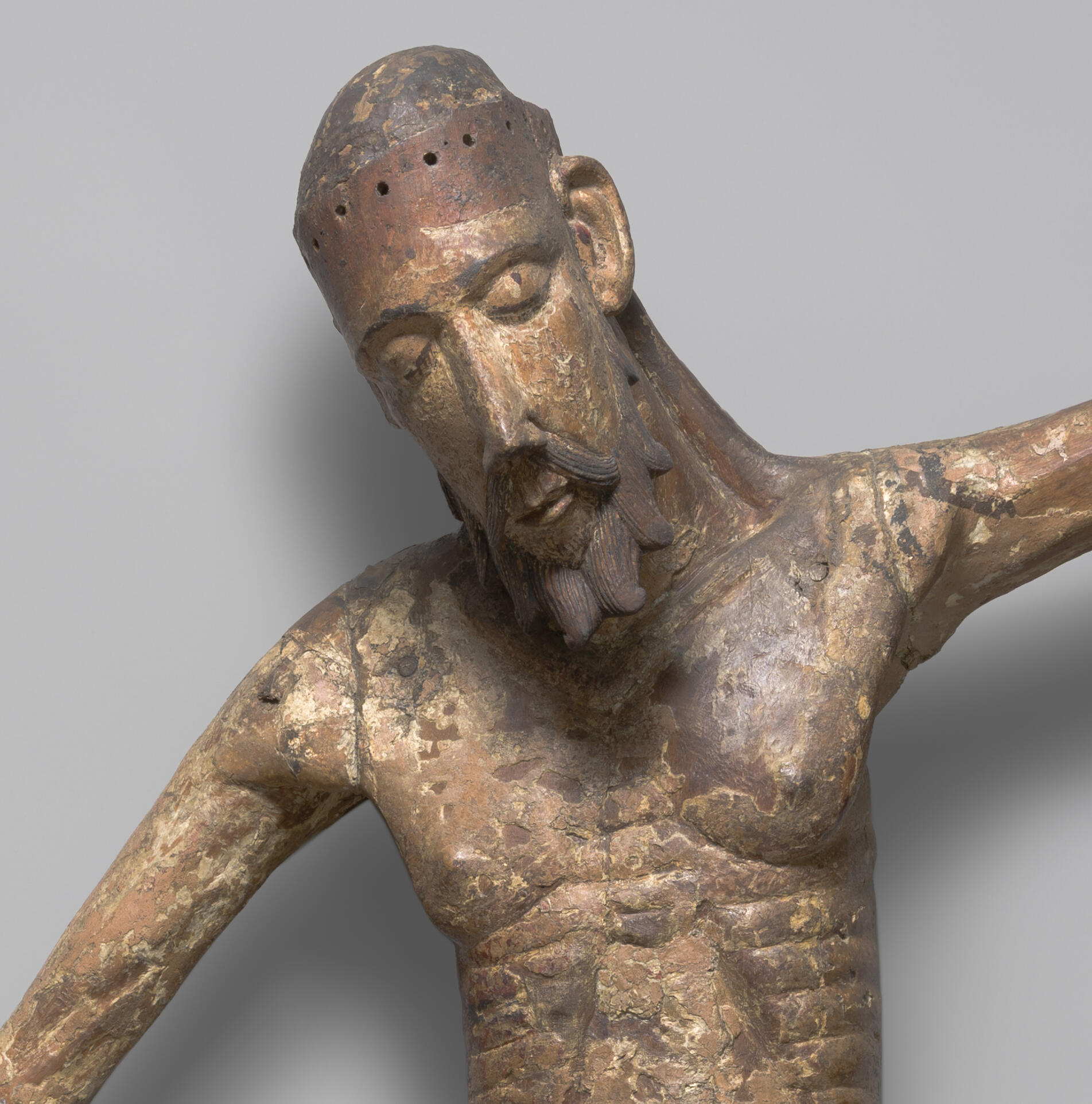
Isabella Stewart Gardner Museum, Boston (S31e2)
Spanish, Catalonia, Detail of the Christ from a Deposition Group, showing the beard and ribcage
Though smaller in scale than many Christ figures from Deposition groups, Isabella’s sculpture was no less striking. Technical studies conducted at the museum over the years have confirmed that the sculpture is likely made out of walnut and was entirely polychrome. Christ’s skin was painted in a light flesh tone, using white mixed with small amounts of red. Fragments of blue (lapis lazuli) and pink pigments were identified on the loincloth. Metal (possibly silver) with varnish was also applied, making it appear gold. The original color scheme is, however, covered by multiple layers of overpainting.[1]
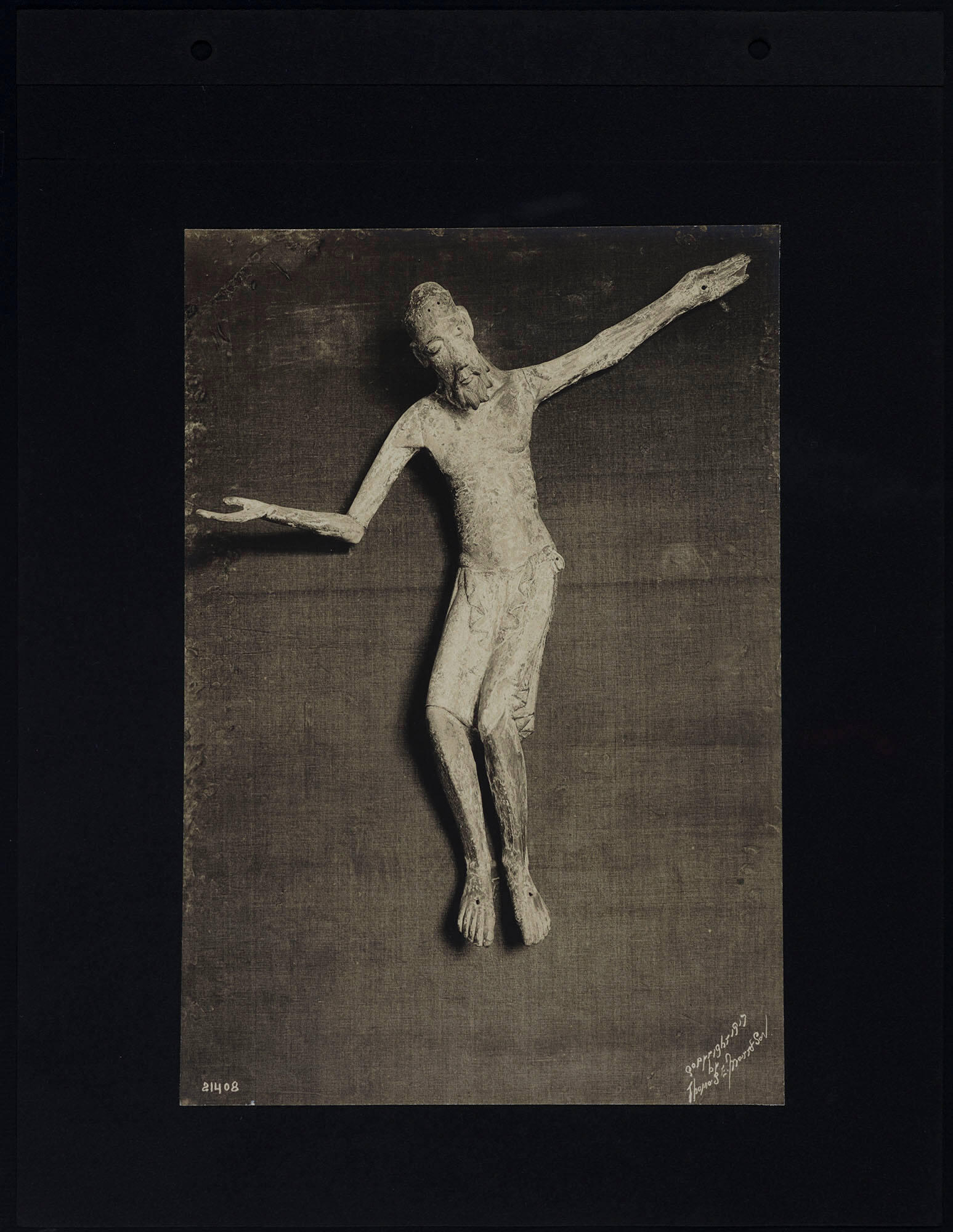
Isabella Stewart Gardner Museum, Boston (5.9.b)
Thomas E. Marr (Nova Scotia, 1849 - 1910, Boston), Album: Isabella Stewart Gardner Museum, 1902-1922, photograph of Christ from a Deposition Group taken in 1917
At an unknown moment, the sculpture was separated from its original group and church setting. As Deposition groups lost popularity during the Renaissance, their sculptures were sometimes repurposed. This seems to have been the case with Isabella’s Deposition Christ, which was transformed into a standalone crucifix.
When the art dealer, Joseph Brummer, acquired the sculpture before 1917, it had been adorned with artificial hair and beard, dressed in a linen robe, and its right arm had been raised upward—suggesting that the sculpture had continued to function as a cult object long after the twelfth century. Restorations undertaken before the work was sold to Isabella stripped the sculpture of these additions and returned the arm to its probable original position. Today, visitors to the Isabella Stewart Gardner Museum have the opportunity to see a rare example of a Christ sculpture from a medieval Deposition group in a North American museum collection.
Notes
ISGM Conservation File, research conducted by Michele D. Marincola, 1993, and Lucretia Kargère, 2000.
You May Also Like

Read More on the Blog
Revealing the Layers of Painted Wood Sculptures

Read More on the Blog
A Saint’s Many Faces

Read More on the Blog