
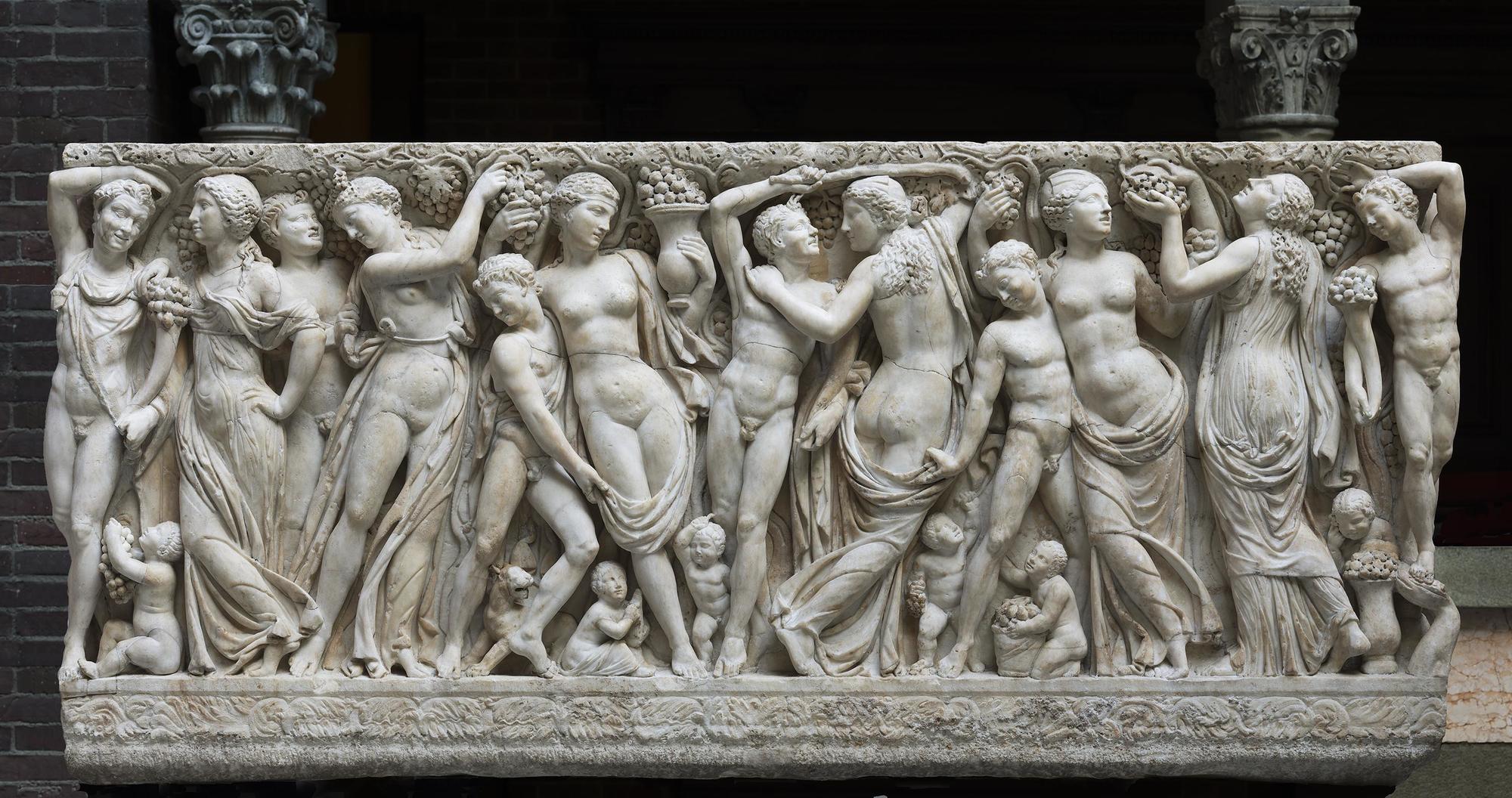
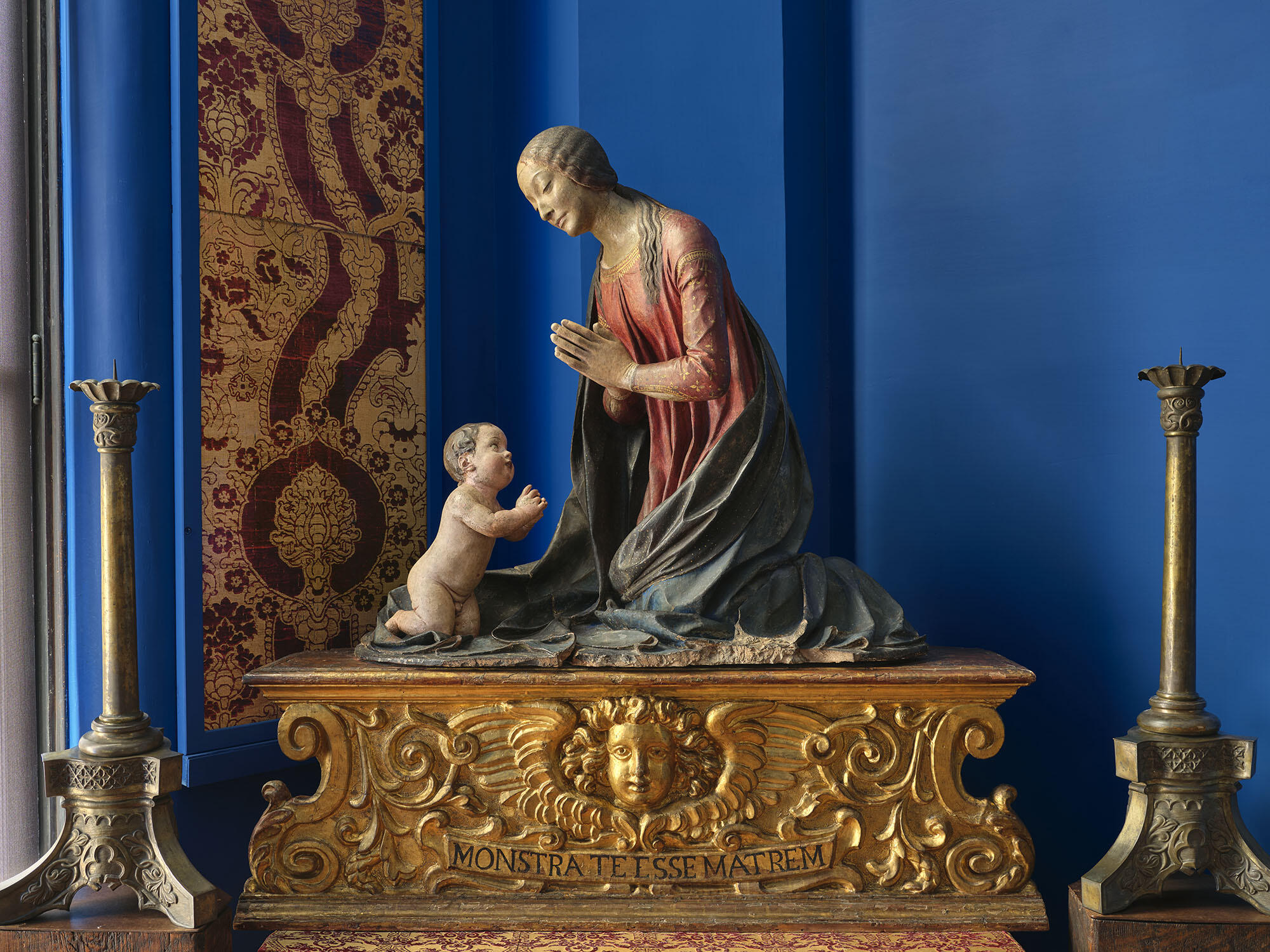
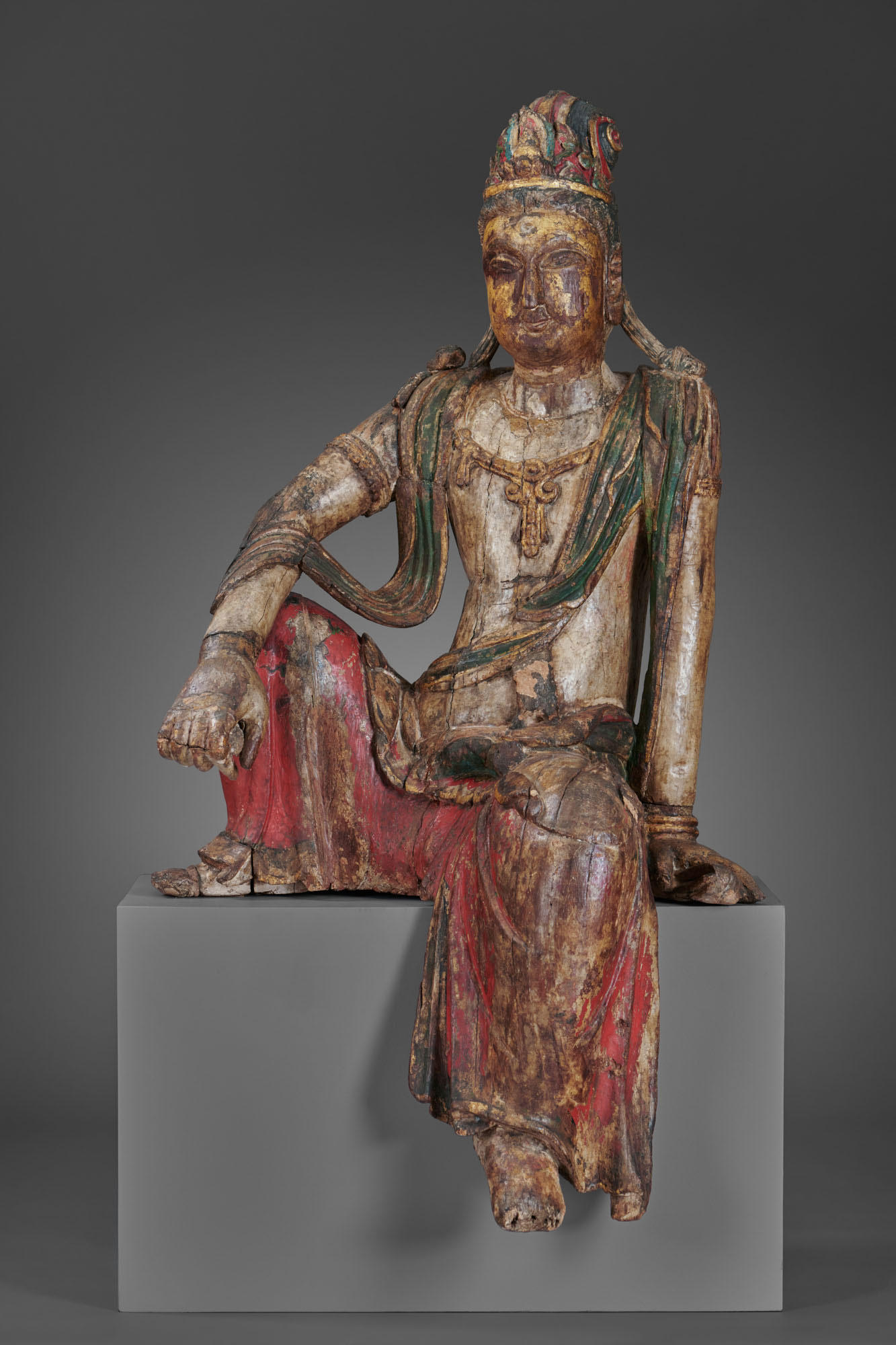
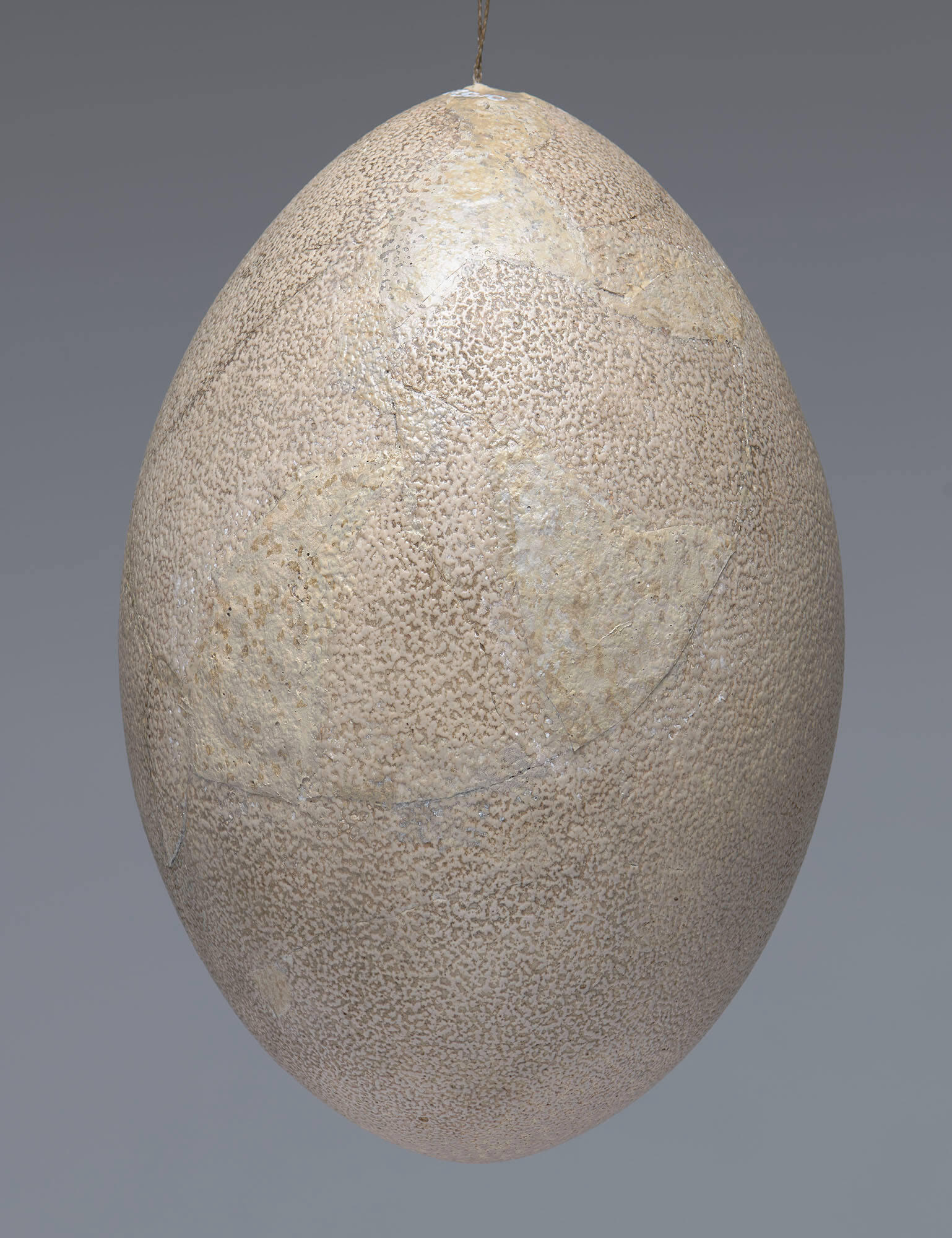
I’ve worked as an Objects Conservator at the Gardner Museum for 17 years and over the course of that time, I’ve had the opportunity to work on amazing artworks; Farnese Sarcophagus with Revelers Gathering Grapes, Virgin Adoring the Christ Child, Guanyin, not to mention an Emu Egg!
One of the things I enjoy the most about working at the Gardner Museum, is how much there is still left to be discovered about this eclectic collection! One of the objects that has always caught my eye is the Black Glass Madonna, displayed in the Veronese Room. Looking at her on display, you can tell how intricate and delicate the piece is but because Gardner displayed the sculpture inside a highly ornate Italian vitrine, it is hard to clearly see the sculpture.
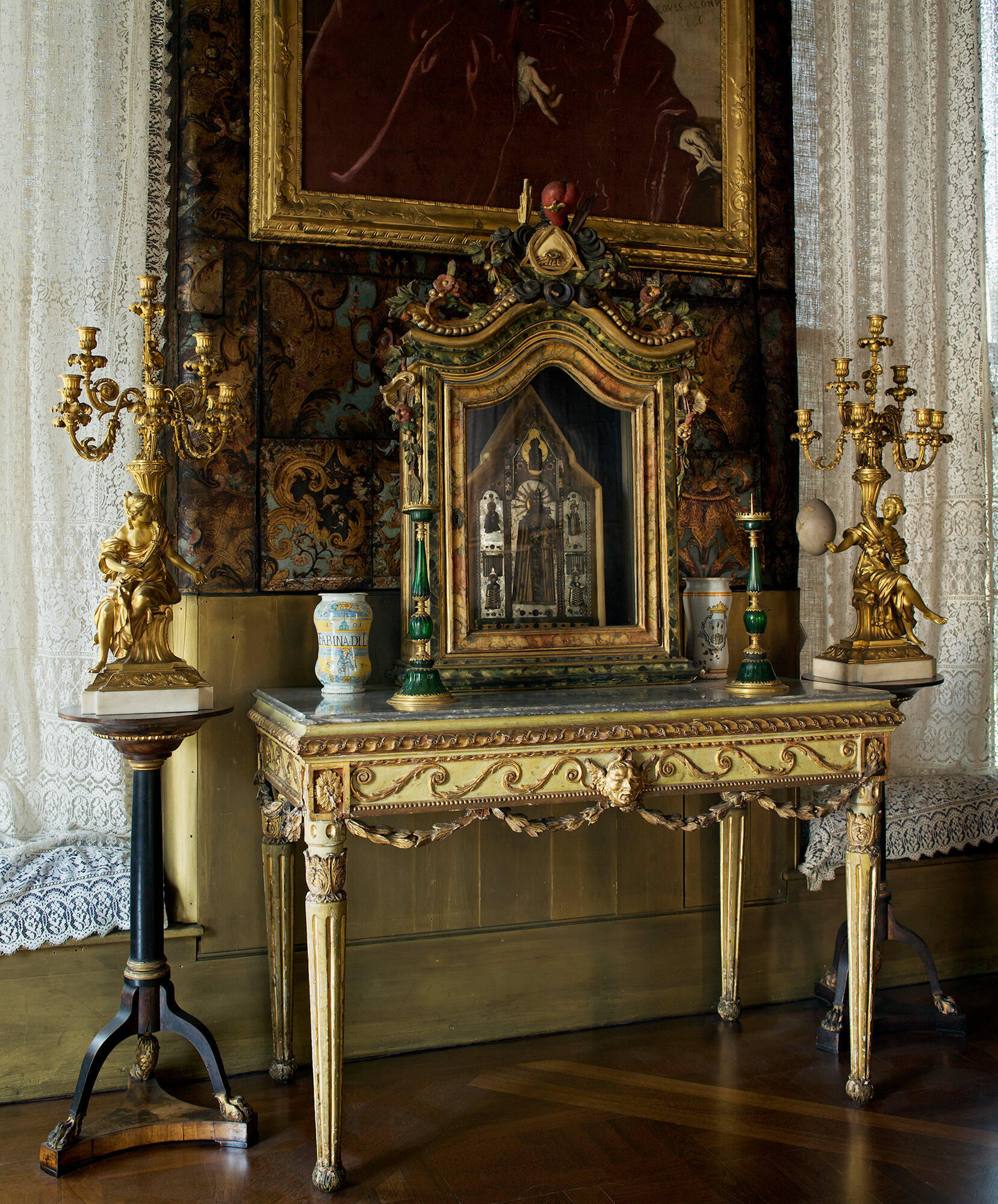
Isabella Stewart Gardner Museum, Boston. Photo: Sean Dungan
The Black Glass Madonna inside a vitrine in the Veronese Room
When I learned the Black Glass Madonna was going to be featured in the exhibition, Visions of Black Madonnas, I leapt at the opportunity to analyze and treat the sculpture. The goals of the analysis were to learn more about the materials and construction of the sculpture, while the treatment goals were to stabilize loose and detached pieces, clean the surface, and improve the overall visual appearance. The first step before any instrumental analysis or treatment is examination.
Examination
Conservators always begin by thoroughly examining and documenting an object through close looking and sometimes using magnifiers, microscopes or different types of light, such as ultraviolet light, to reveal information.
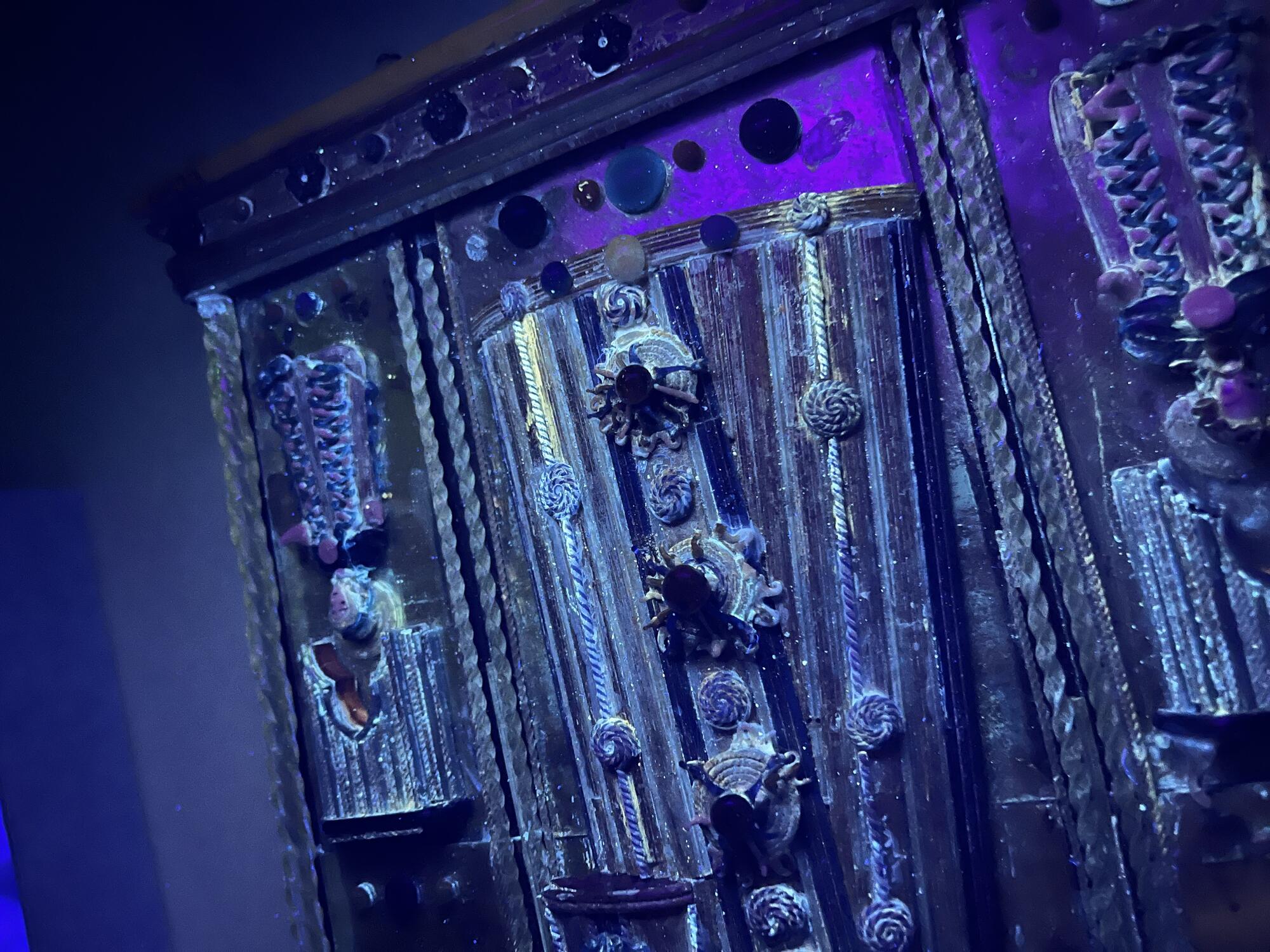
Isabella Stewart Gardner Museum, Boston
Detail of the sculpture during ultraviolet light examination showing UV-induced visible fluorescence of various adhesive materials
Next, I set about trying to figure out how the sculpture was constructed. Through a combination of visual inspection and reading through the prior documentation, I determined that the object is constructed from a thin wooden backing board with additional sections of wood added to create the higher relief of the architectural top section and the horizontal bottom edge. On top of the wood there is a paper layer, then a thin sheet of glass, followed by either a piece of thin mirrored glass (main section) or decorative paint that is sandwiched between layers of thin, clear glass sheets (architectural top section).
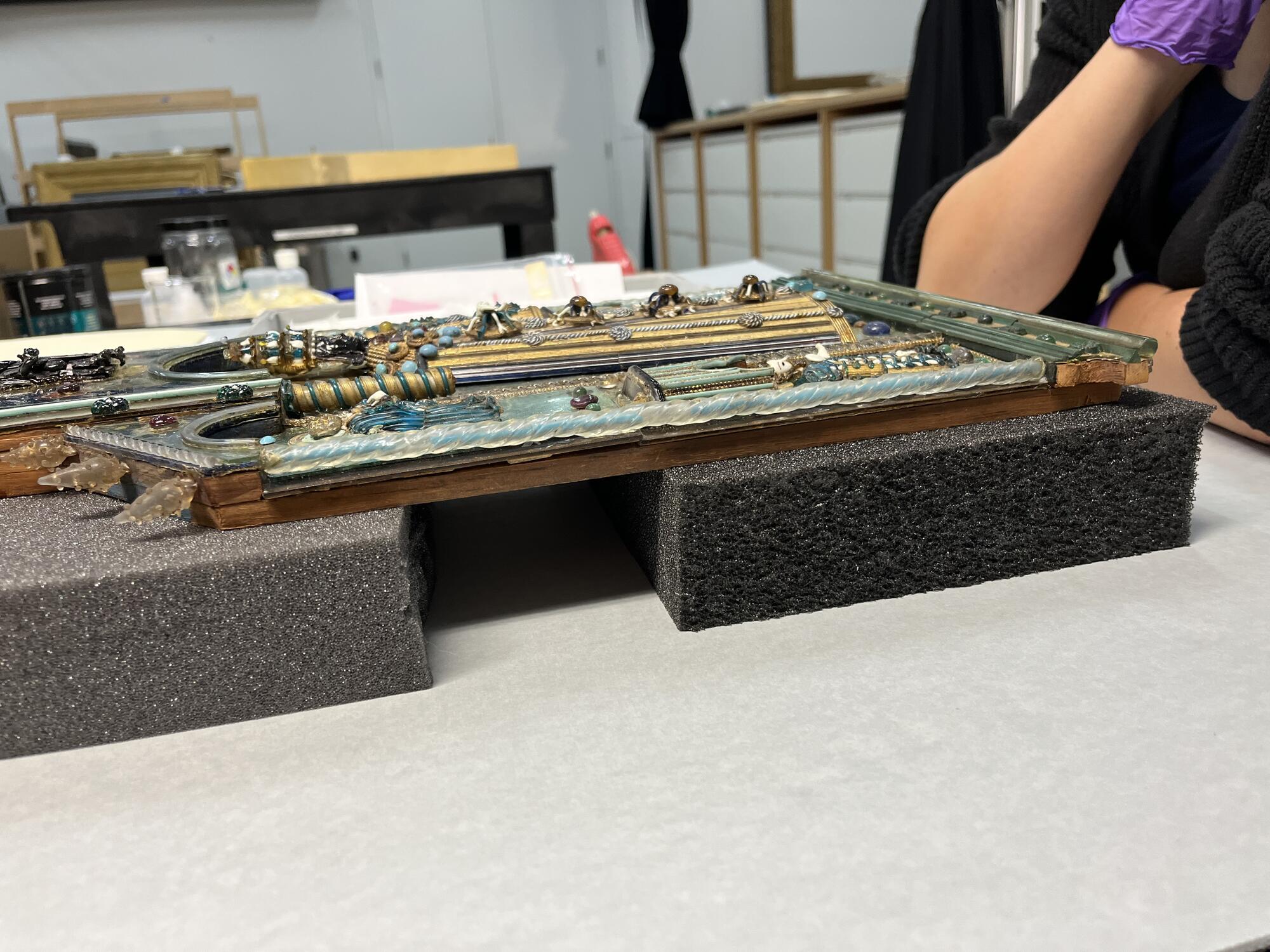
Isabella Stewart Gardner Museum, Boston (C25n7)
Side view of the sculpture showing the layered structure of wood, paper and glass
The majority of the applied decorations are flameworked glass rods or tubes that are glued onto the flat sheets of glass.
Glassmaking Techniques: Flameworking and Mold-pressing
Flameworking (sometimes called lampworking) is a technique for forming objects from rods or tubes of glass that, when heated in a flame, become soft and can be shaped and fused together.
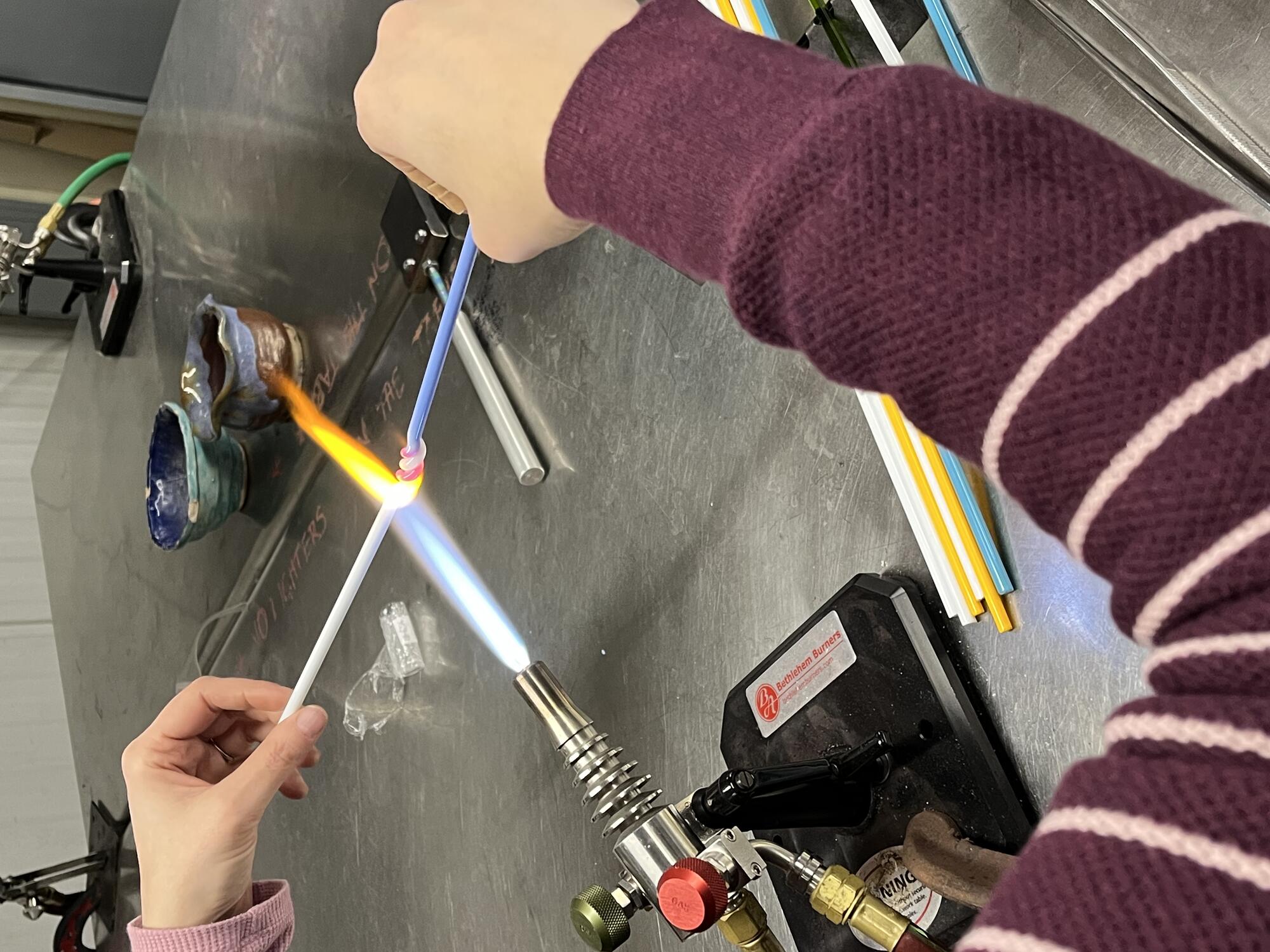
Isabella Stewart Gardner Museum, Boston
Trina Urrata-Weintraub of Fiamma Glass Studio in Waltham, Massachusetts, at the bench flameworking two rods of glass.
The Black Glass Madonna was made by Venetian artists in the glass workshop of Ferdinand II, Archduke of Austria (1529-1595). When Ferdinand II established his glasshouse in Innsbruck in 1570, he received special permission from the Venetian government for glassworkers to come work for him. Venetian artists on the island of Murano were especially talented flameworkers and brought this technique to new levels of intricacy. In the Renaissance period, the flame that heated the glass rods would have been an oil or paraffin lamp used with foot-powered bellows at a wooden workbench.
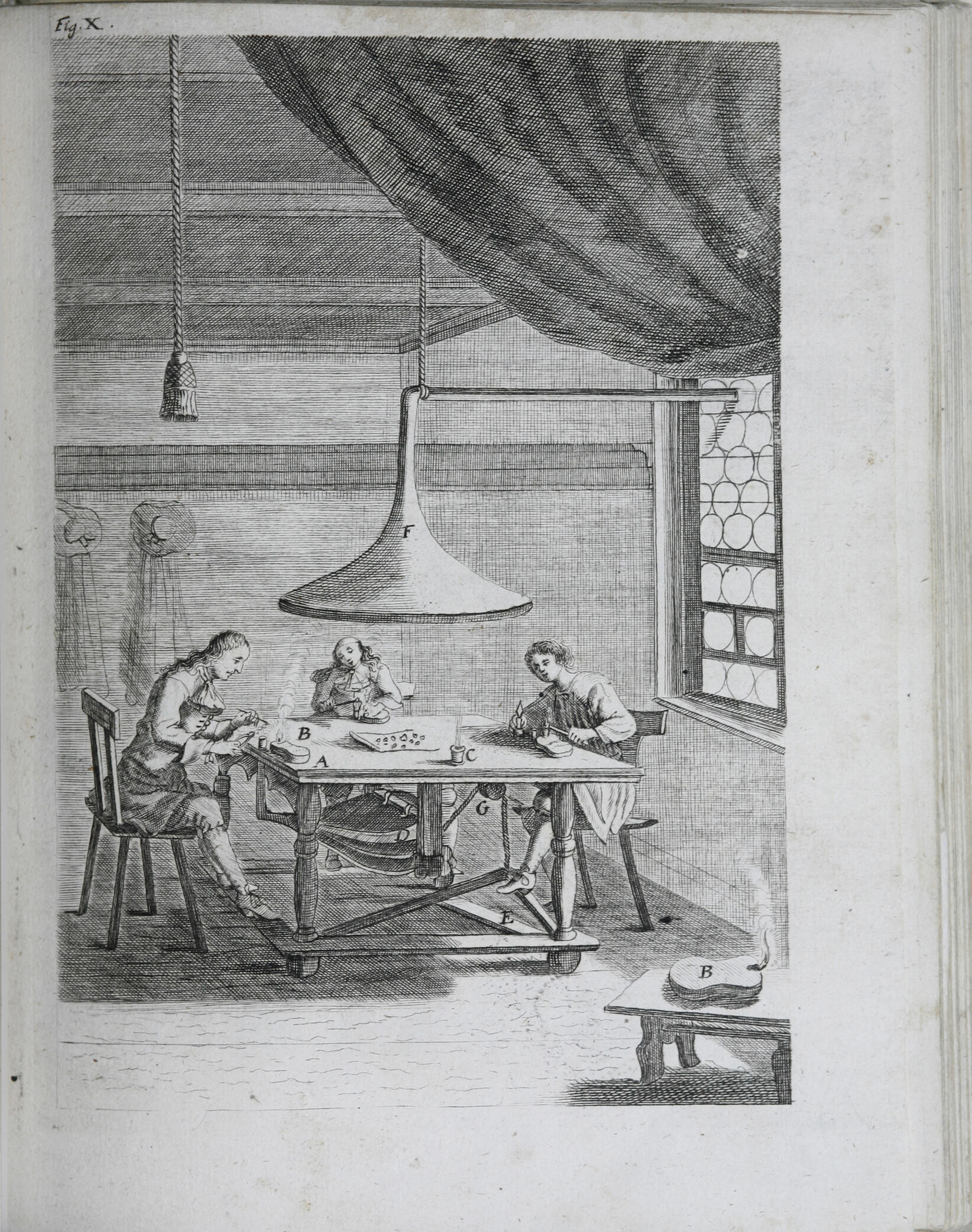
Rakow Research Library, The Corning Museum of Glass. https://cmog.primo.exlibrisgroup.com/permalink/01CORNING_INST/ba9jt9/alma99812883504126
Engraving of a lampworking workshop in Johannes Kunckel et al, Ars Vitraria Experimentalis, Frankfurt (1689), 455.
The only decorative pieces on the Black Glass Madonna that are not flameworked are the faces of the Madonna, Child, God the Father, the gilded face of the saint on the top left side (a previous replacement) as well as the green flowers along the bottom edge and central pinnacle. These elements would have been mold-pressed by heating a blob of glass on the end of a rod and pressing it into a carved mold.
I learned more about both of these techniques by consulting with glassworking professors from the Massachusetts College of Art and Design. Understanding the glassworking techniques helped me to better understand the construction of the sculpture and made me feel more confident about how to conserve it.
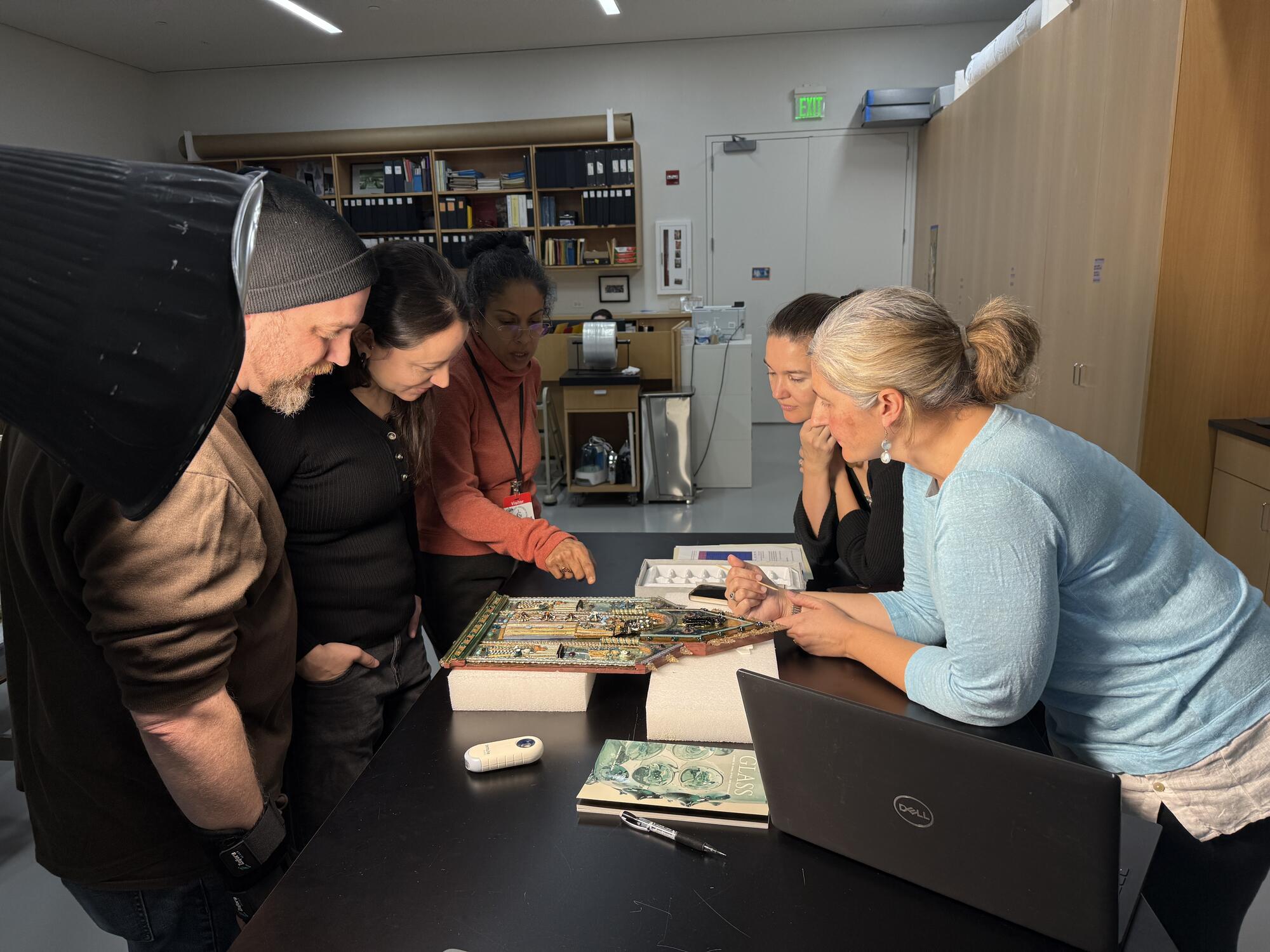
Isabella Stewart Gardner Museum, Boston
Glassworking experts from Massachusetts College of Art and Design consult with Gardner Museum art conservators about how the Black Glass Madonna sculpture was made
Scientific Analysis
With a team from the Museum of Fine Arts, Boston, I was able to conduct X-ray fluorescence spectroscopy and scanning electron microscopy which allowed us to learn more about the elemental composition and microscopic structure of the sculpture. Or something like that.
X-ray fluorescence spectroscopy is a mouthful, which is why conservators refer to it as XRF. XRF analysis is a favorite tool of conservators, because it’s quick, doesn’t require a sample (so it’s non-destructive) and can be used to analyze all sorts of materials. XRF identifies the elements that are present in a material, such as the elements in metal oxides that are used as glass colorants. With our XRF instrument, we confirmed the presence of manganese in the dark purple or “black” glass, copper in blue glass, lead and tin in white glass and gold in the gilded areas.
Scanning electron microscopy (SEM), is a technique that uses a microscope with a scanning beam of electrons to magnify up to 50,000 times and it can also characterize and map the concentration of elements that are present in a sample. SEM can detect lighter elements like carbon, sodium and oxygen that XRF cannot detect; however, SEM analysis usually requires removing a sample of material because the analysis chamber is quite small. But, because we already had small detached fragments in storage, we were able to use these for the analysis because they fit in the chamber. With the SEM analysis, we can confirm that the glass is a soda-lime silica glass, the gilding is pure gold, and the weight percentages of manganese, copper, tin, and lead align with published data from analyses of other glass pieces made at the same Innsbruck Court Glassworks in Austria and from the same time period as the Black Glass Madonna.
Treatment Time
Finally, I was able to treat the work to make sure it was stable for display. Two types of adhesives had been used in previous restoration campaigns, an animal-based glue and polyvinyl acetate (PVAC) adhesive. These adhesives were used in excess, and a thin layer of PVAC was smeared over much of the object, making it appear dull and cloudy. In order to make the glass sparkle again, glue residues were removed with a combination of scraping with sharp scalpels and cleaning with tiny cotton swabs dipped in a mild detergent solution and then rinsed with deionized water. Cleaning the Black Glass Madonna brought back a beautiful clarity and sparkle to the glass. The only glass surfaces that weren’t cleaned this way were the pieces that were gilded with gold leaf. The gilded glass pieces were water-sensitive, so they were cleaned with a non-polar solvent on cotton swabs.
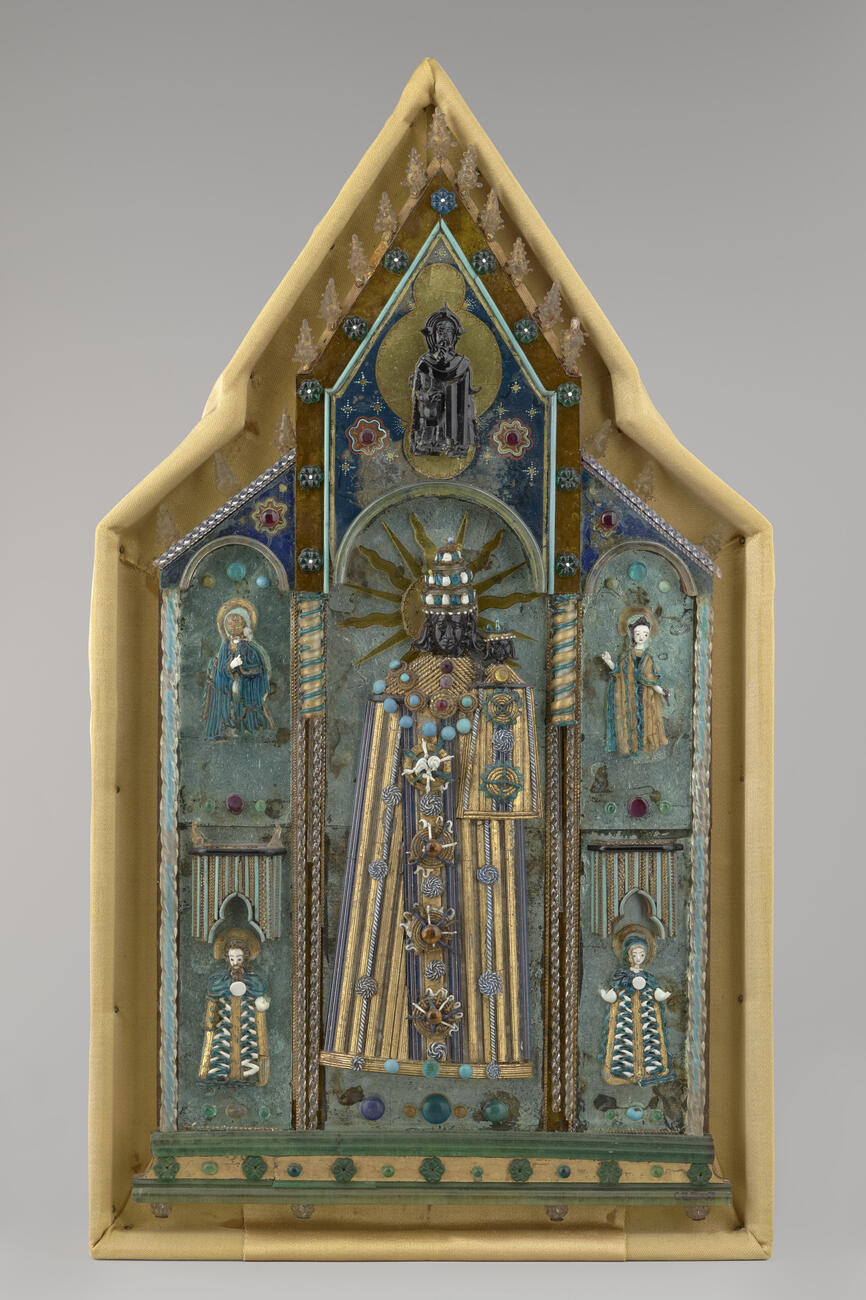
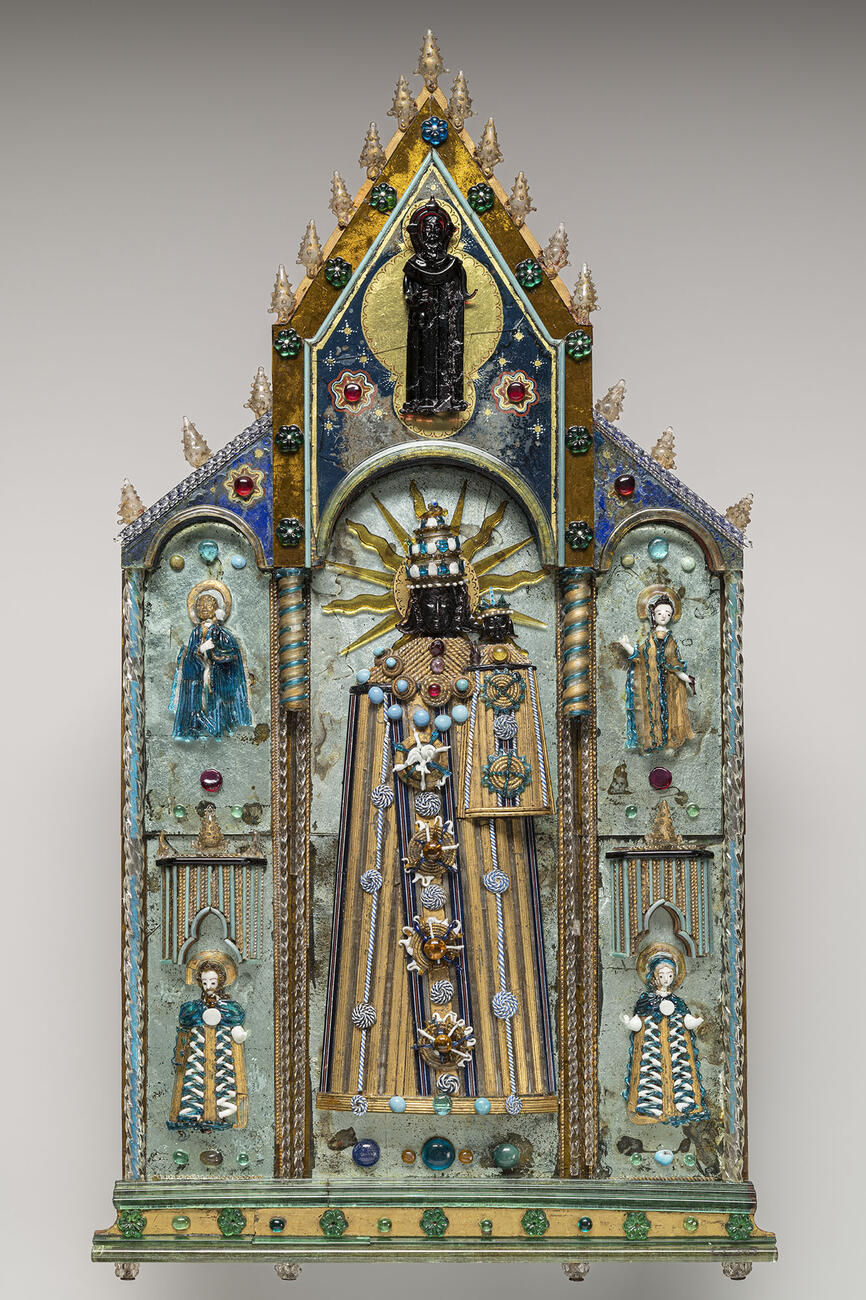
Isabella Stewart Gardner Museum, Boston (C25n7)
The sculpture before (left) and after (right) cleaning and conservation treatment
Loose pieces of flameworked glass were stabilized by applying a small amount of a conservation-grade, clear, colorless, thermoplastic resin called Paraloid B-72, with a small brush. Detached fragments of the Black Glass Madonna had been collected over the years and saved in storage. This treatment was a wonderful opportunity to find the right location on the sculpture and reattach the fragments - it felt like a treasure hunt when I found the right spot!
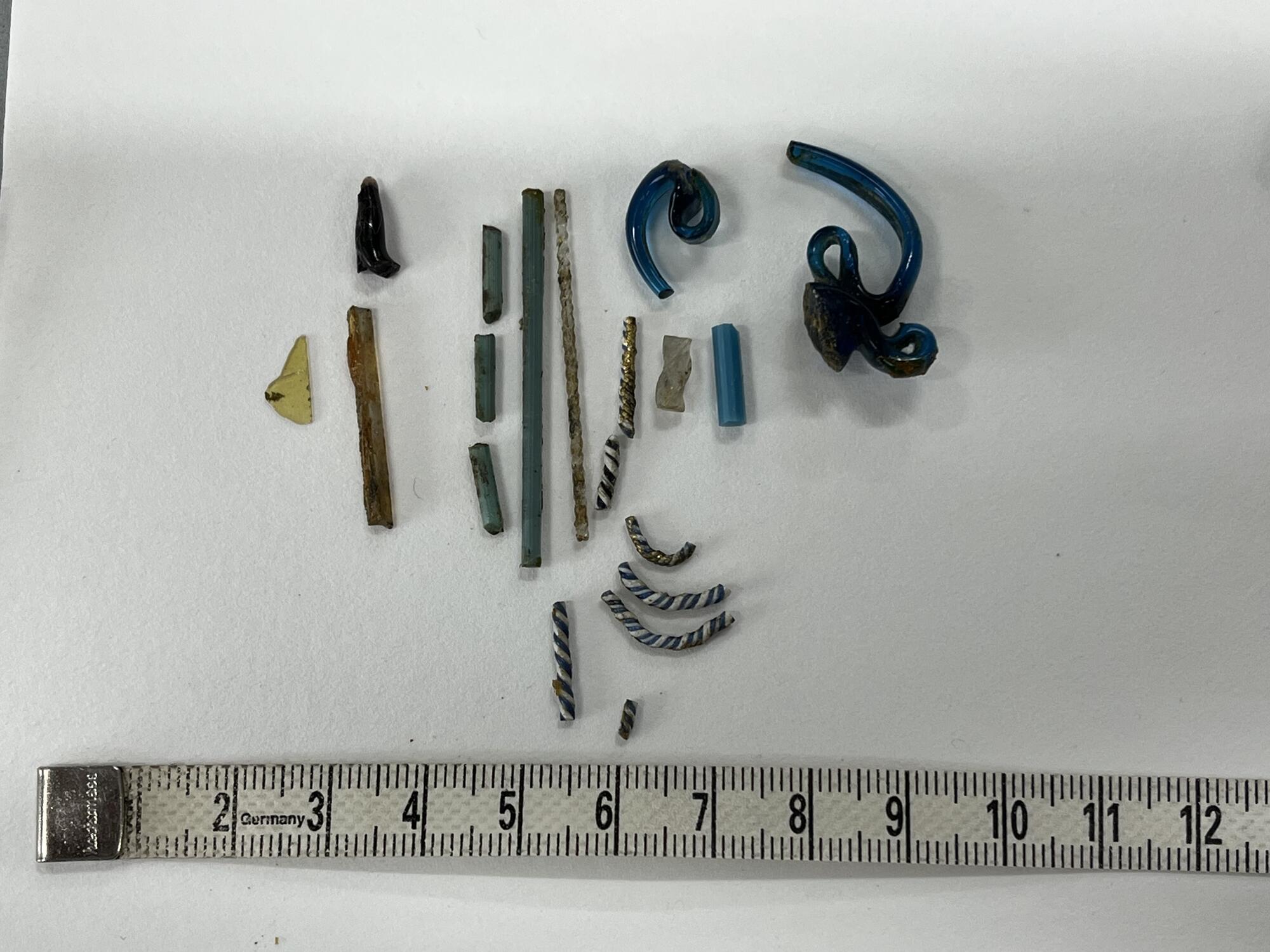
Isabella Stewart Gardner Museum, Boston (C25n7)
Various glass fragments from the sculpture that had been collected over the years and kept in storage.
The black glass figure of God at the top of the sculpture had been previously broken and reassembled incorrectly, including using a piece of glass that wasn’t even part of the original sculpture. To properly treat the figure it needed to be entirely taken apart piece-by-piece. This was accomplished by soaking cotton poultices in deionized water to soften and swell the adhesive so it could be safely pried apart with a scalpel. Once all the pieces of the figure were properly aligned, including some fragments that had been in storage, there were only two small losses and the length of the figure was restored to its full height, taking up the whole length of the gilded background behind it. The figure was fully lined with pieces of toned Japanese tissue paper and Paraloid B-72, in order to provide reinforcement of the adhesive joins.
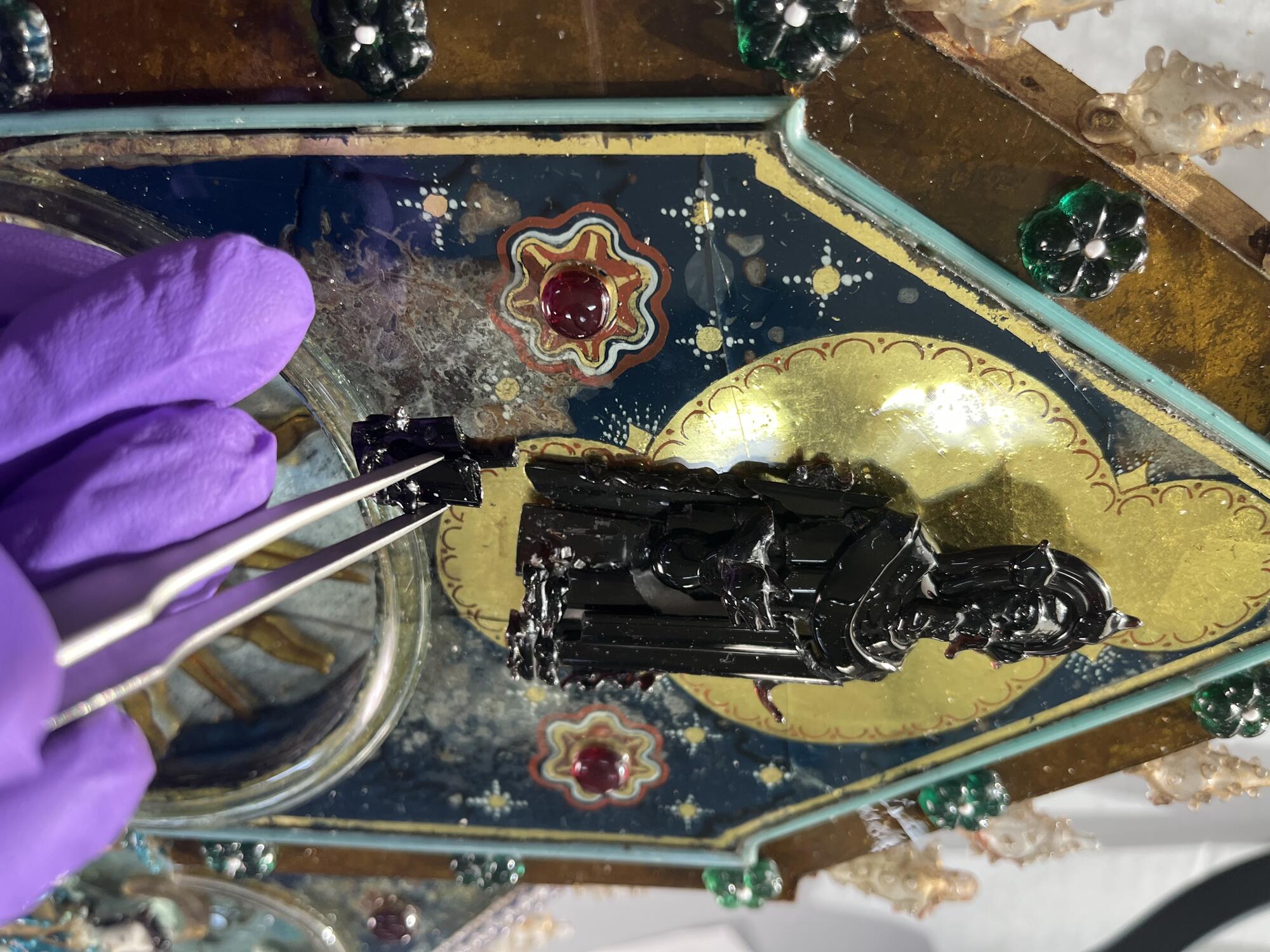
Isabella Stewart Gardner Museum, Boston (C25n7)
Beginning stages of disassembling the previously restored black glass figure above the Madonna and Child.
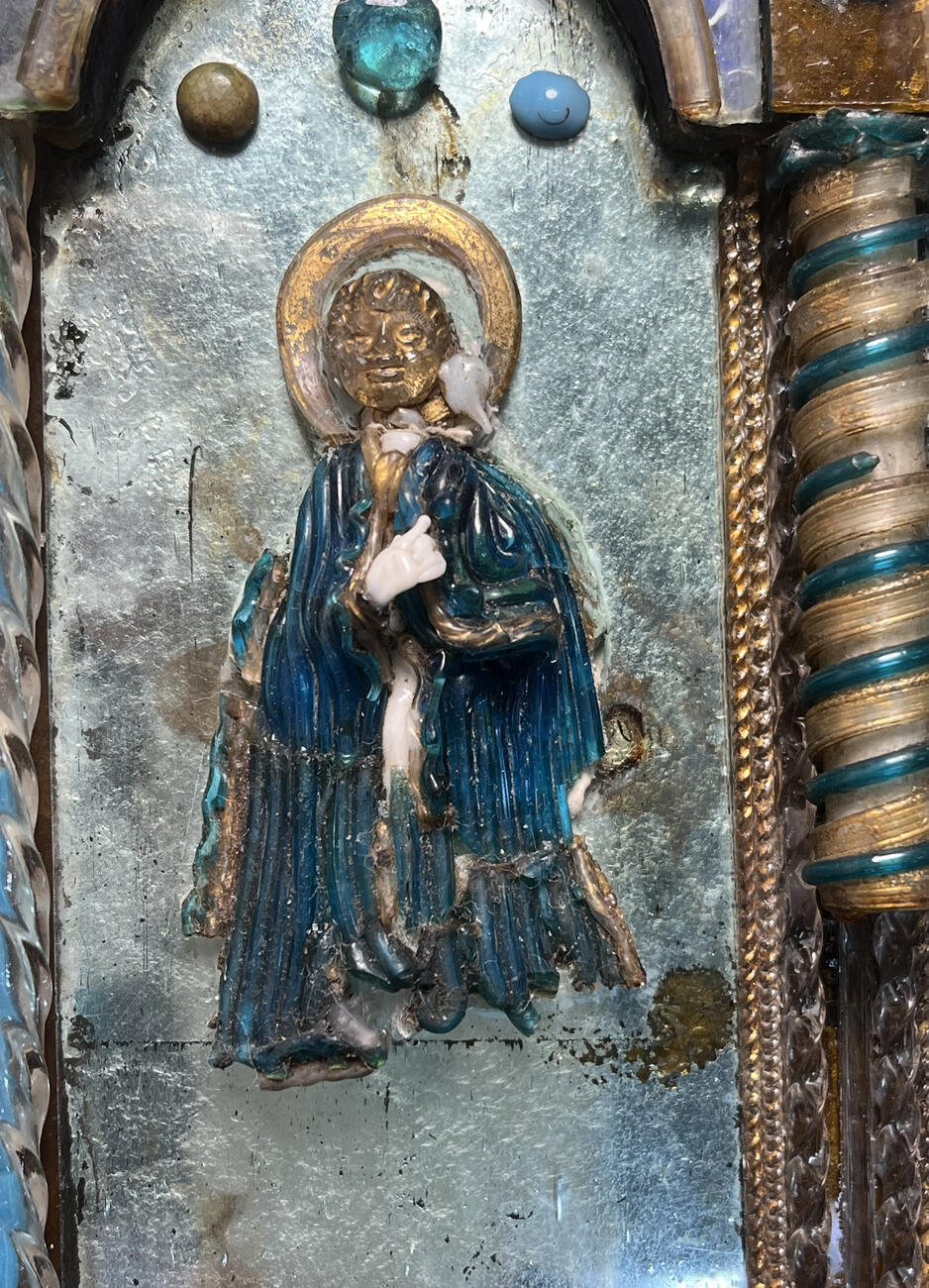
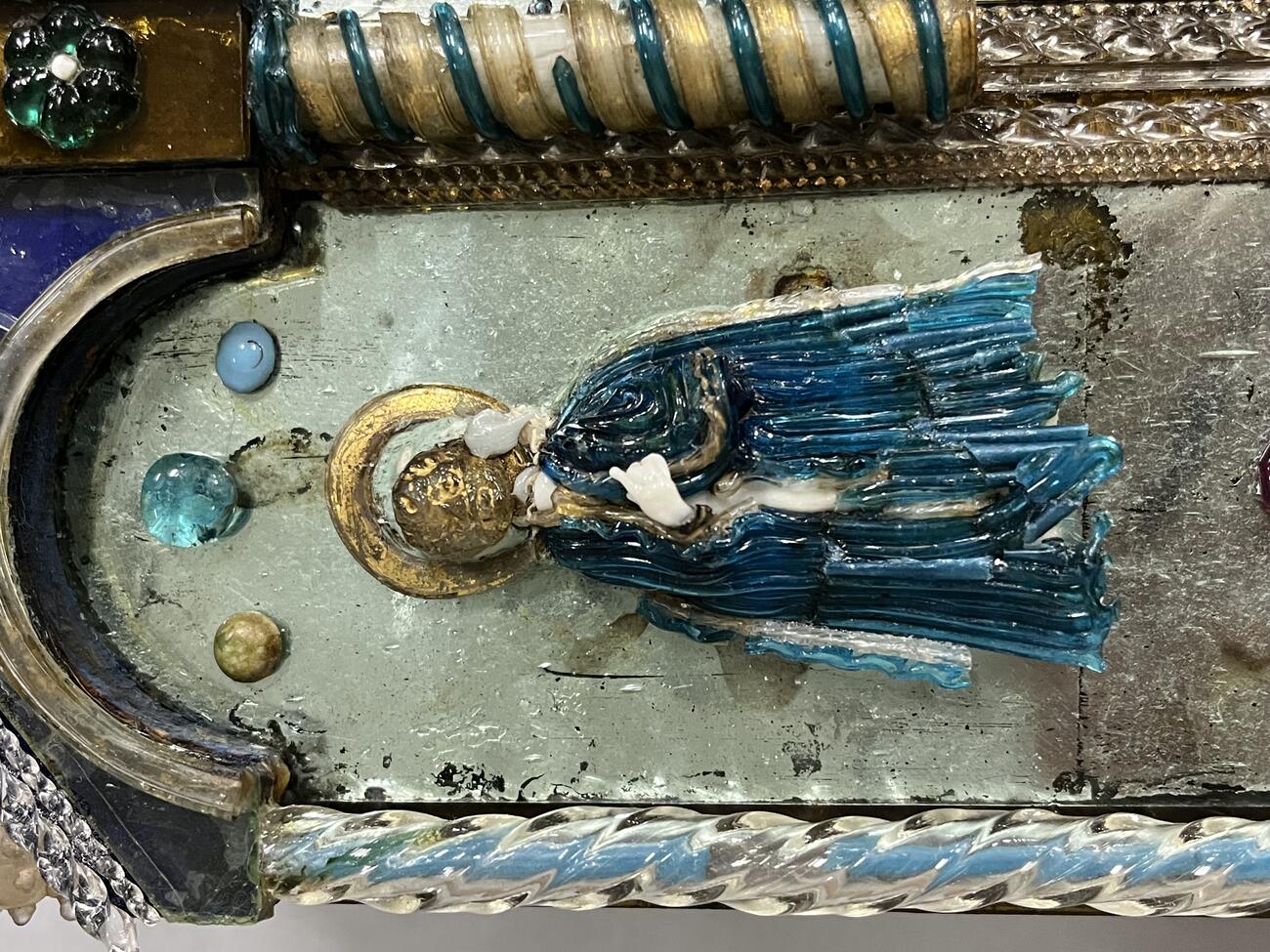
The upper left figure of a saint was missing several sections of its turquoise robe, which was visually distracting. On close inspection, the robe was made from very thin tubes of glass. To recreate the missing turquoise tubes, a strip of thin Gampi Japanese paper was toned with watercolor paint and then coated with diluted Paraloid B-72 to create a shiny, translucent finish on the paper. Once dry, the paper was wrapped around a 1 mm diameter acrylic rod and secured with a few daubs of Paraloid B-72 adhesive. The paper tubes were then trimmed to the appropriate length and adhered in place with Paraloid B-72.
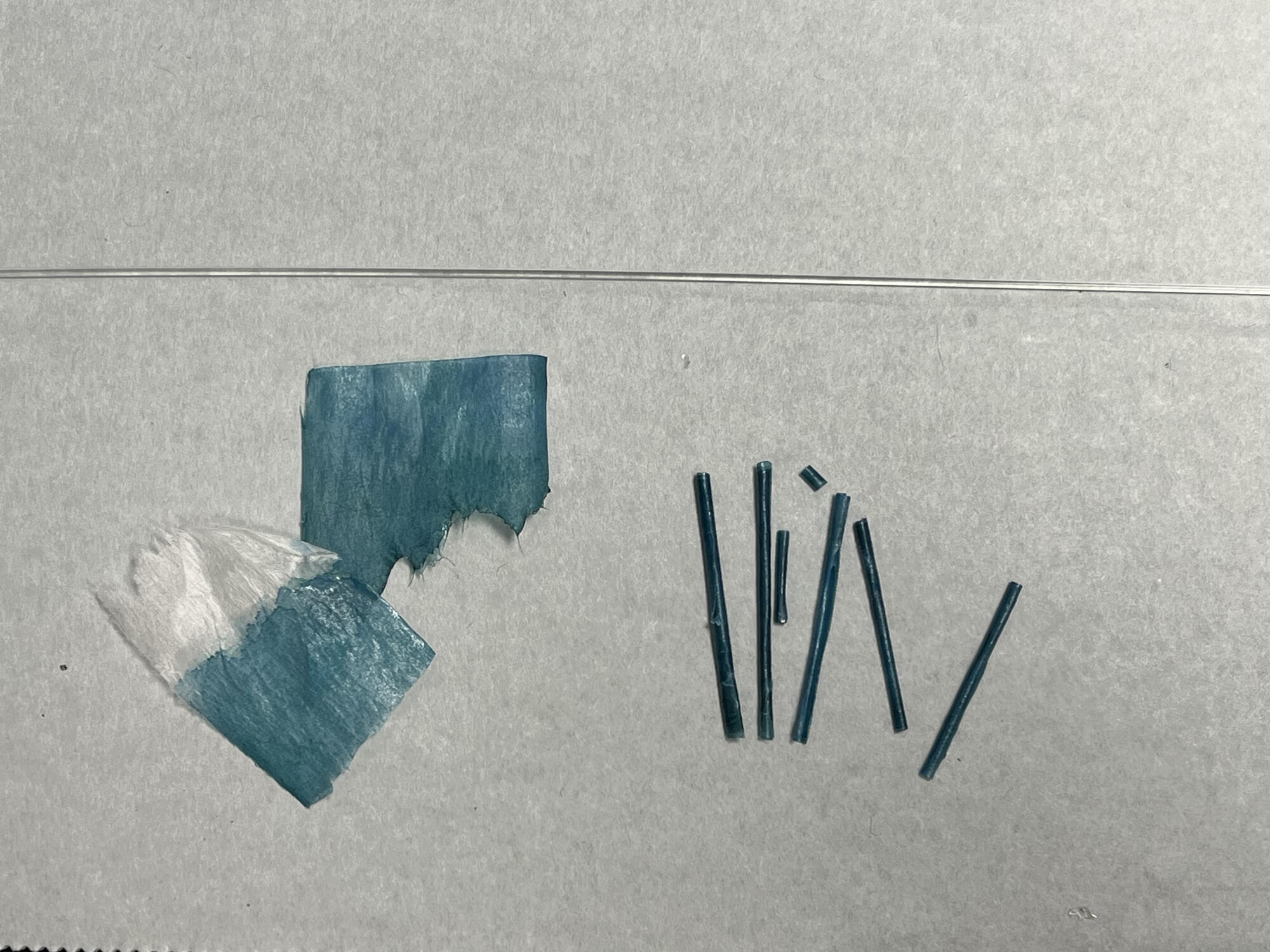
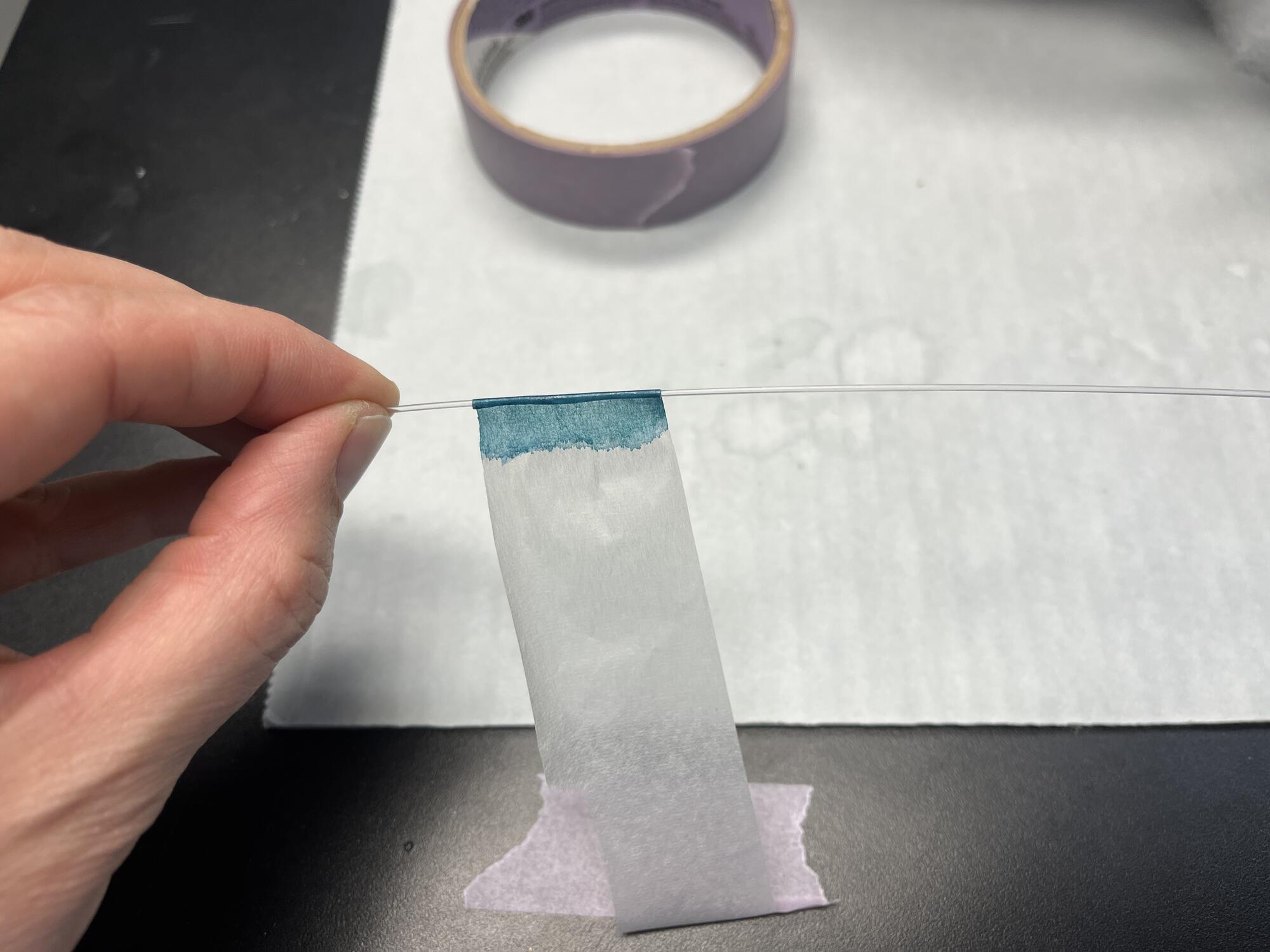
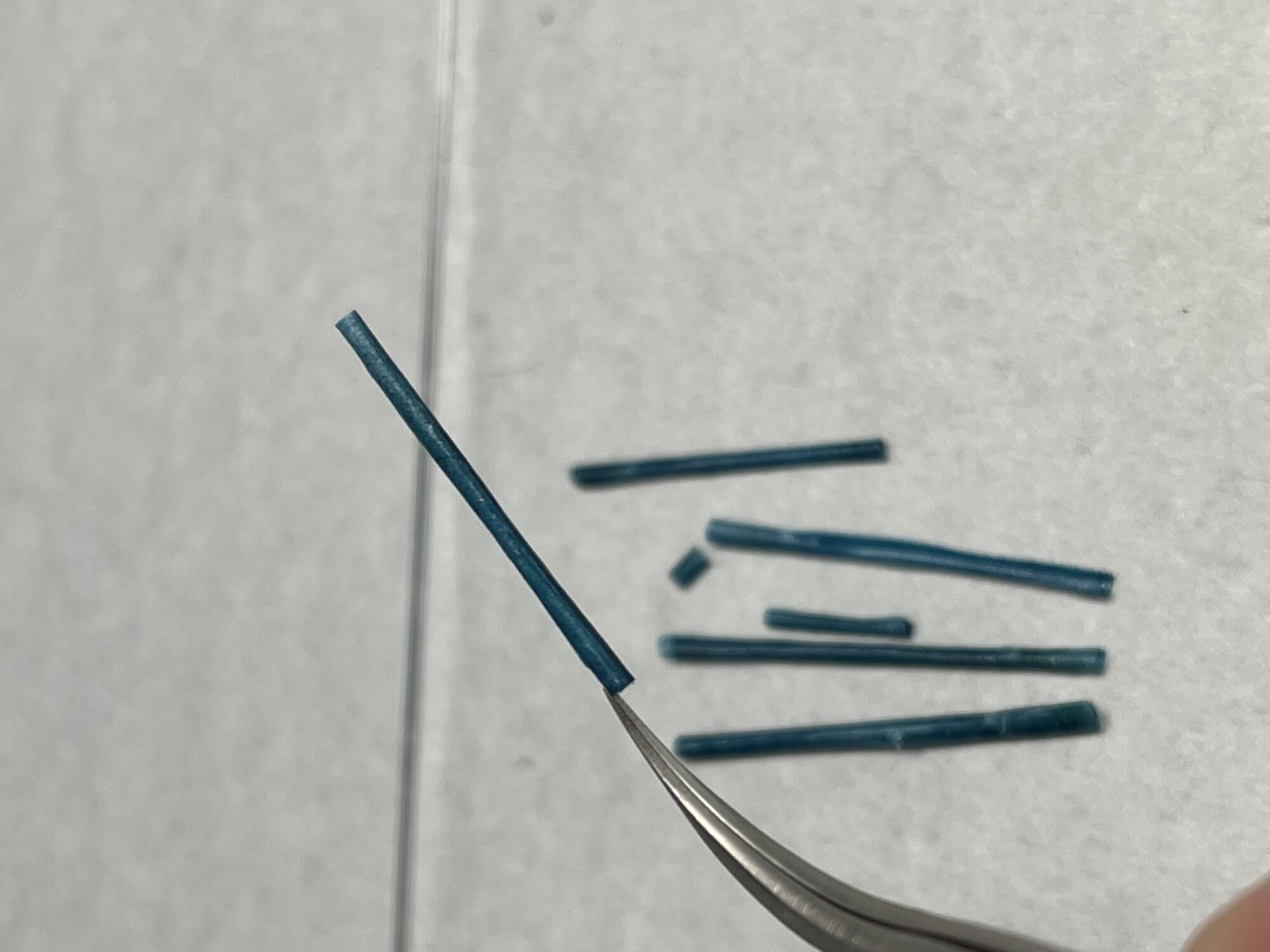
One of the goals for any conservation treatment is for our interventions to be as reversible as possible without causing any damage to the original material. All of the adhesives we use now, like Paraloid B-72, remain easily soluble over time and do not yellow with age. This is especially important when conserving glass since it is transparent. In addition, using paper to recreate missing pieces is easily reversible in the future for the next conservator who has the opportunity to work on this incredible glass sculpture.
Isabella Stewart Gardner Museum, Boston (C25n7)
Detail of the Black Glass Madonna, showing the upper left saint before (left) and after (right) its conservation treatment, with dirty surfaces and missing pieces of glass tubes
It was exciting for the Black Glass Madonna to get the chance to shine on display in the special exhibition, and I hope the next time you come to the museum, you’ll take a minute to visit this divine sculpture in the Veronese Room where she permanently resides.
You May Also Like

Read More on the Blog
Black and Beautiful: The Black Glass Madonna

Learn about the exhibition
Visions of Black Madonnas

Explore the Room
Veronese Room