Africa
LISTEN
00:00
/
1:15
Click on the arrow to hear Betye Saar’s voice and the kinds of sounds she experienced while she traveled through the Americas.(Run time 1 minute 15 seconds).
One of the things that I found interesting was how important Nubia was to Egypt. And most of the people there [in Egypt] had dark skin and kinky hair. You know, like the Nubians did. And now, in our history, they never even mention Nubia.
Africa has long captivated Saar—whether it was in a university art history class where she learned about ancient Egypt or in the context of understanding her own ancestry.
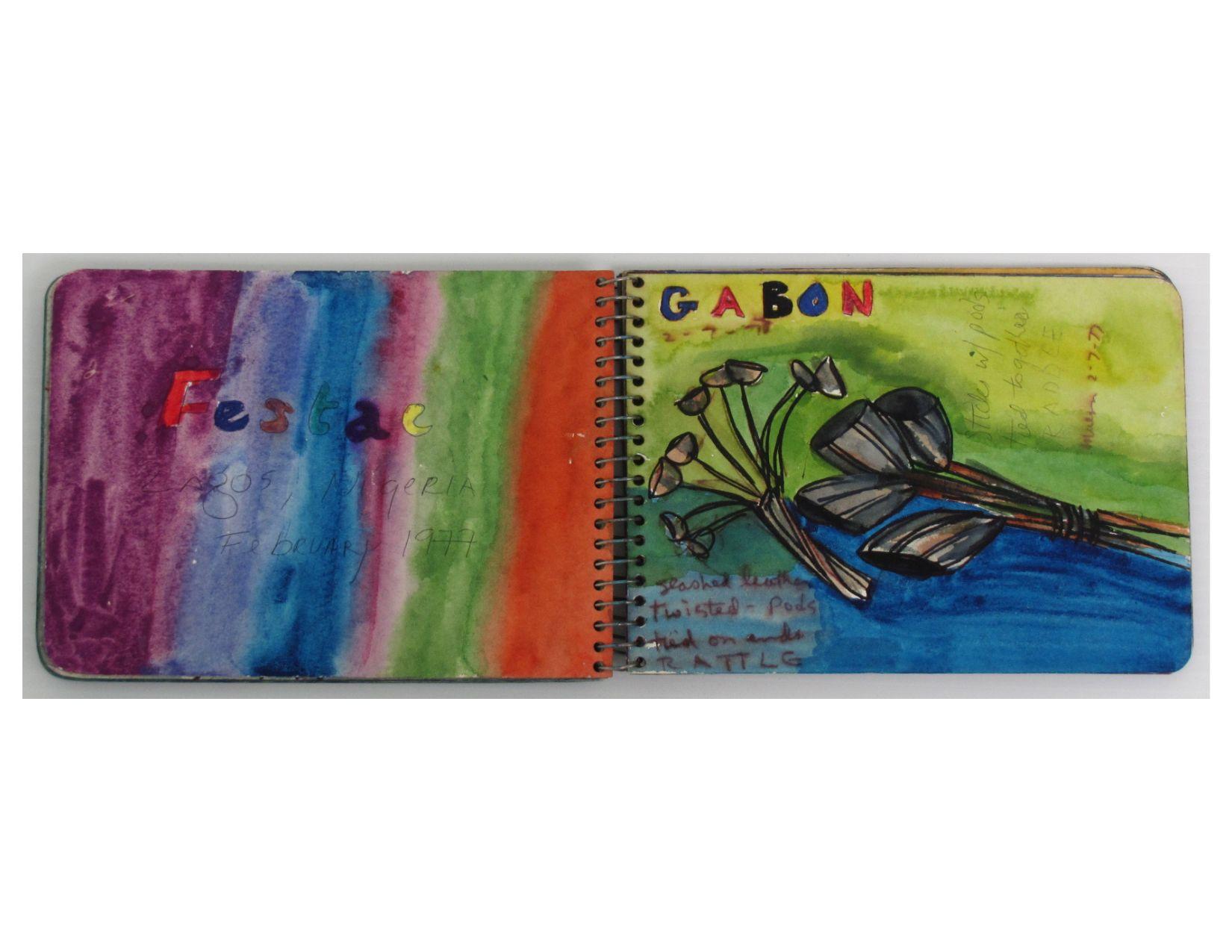
To date, Saar has traveled to Africa five times, exploring both the northern and Sub-Saharan parts of the continent. In 1977 she took a particularly inspirational trip to the Second World Black and African Festival of Arts and Culture in Lagos, Nigeria. The festival, which she documented in her sketchbooks, featured the literature, art, music, and dance of more than fifty nations. After this trip, Saar regularly incorporated the names of African spirits and images of African masks in her work.
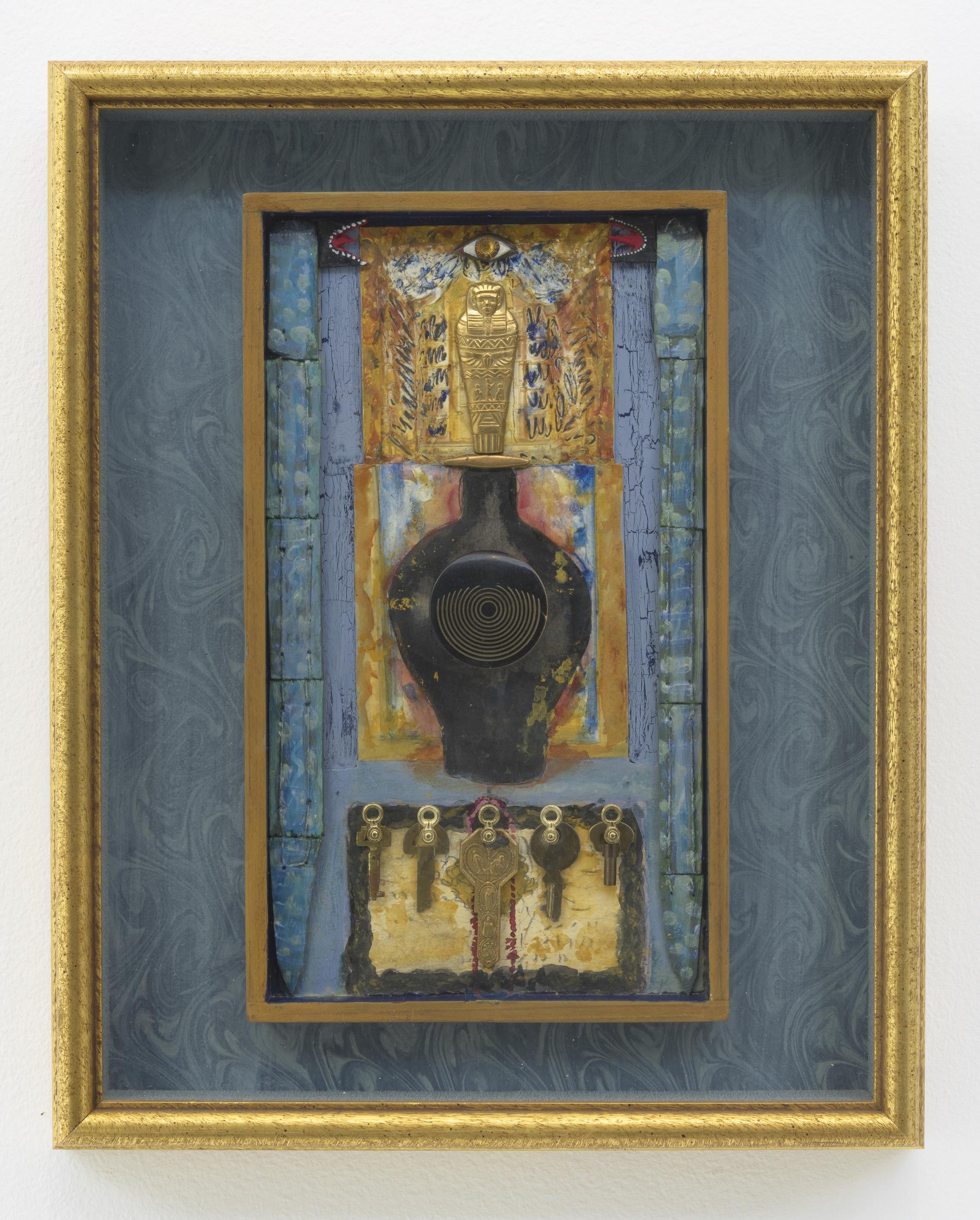
In 2000, Saar had the opportunity to visit Egypt. Though objects like miniature sarcophagi and scarabs have long appeared in her assemblages, the chance to see ancient Egyptian ruins and artifacts reaffirmed the potency of these symbols for the artist. The trip, which included lectures by scholars and archaeologists, also helped her understand the spiritual significance and historical context of the Egyptian symbols she was drawn to. Learning about the importance of Nubia (present-day Sudan) to ancient Egypt, she was struck by how her earlier education implied that Egyptians were white. Reflecting on this fact, she noted, “Wow. Racism is something.”
Click on the arrow to hear the kinds of sounds she experienced while she traveled through Africa. (Run time # minutes)