
An art museum might not be the first place you’d think to go to learn about sports, but Isabella’s collection is full of surprises. On display in the Veronese Room is a little piece of athletic history—Flemish painter Herri met de Bles’s Story of David and Bathsheba (about 1535–1540). This jewel of a painting is packed with action, featuring a hedge maze, a hunting party, and one of the earliest depictions of the game of tennis—a sport that Isabella Stewart Gardner herself enjoyed in Gilded Age America.
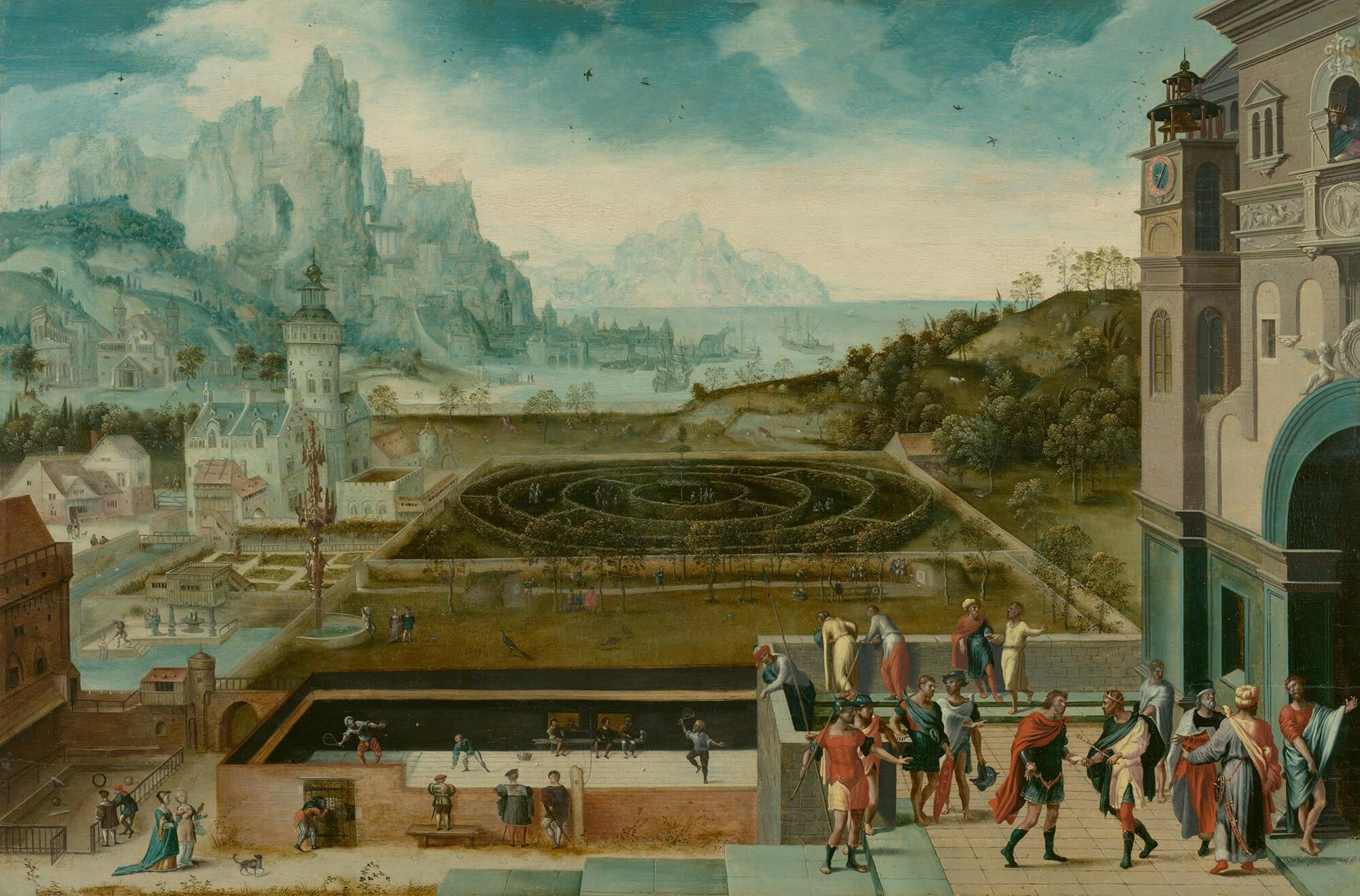
Isabella Stewart Gardner Museum (P25w40). See it in the Veronese Room.
Herri met de Bles (Flemish, about 1510–after 1550), The Story of David and Bathsheba, about 1535–1540. Oil on panel, 46.2 x 69.2 cm (18 3/16 x 27 1/4 in.).
Renaissance Tennis and the Bible
One might wonder why, exactly, an illustration of the story of David and Bathsheba includes a game of tennis? As with many things in art, it’s a mix of symbolism, allegory, and politics. The painting ostensibly depicts a familiar biblical account: David, king of the Israelites in the 1000s BCE, covets Bathsheba after he spies her bathing, summons her to his court, and sleeps with her. When he discovers that she’s become pregnant, David orchestrates the death of her husband, Uriah, in battle to cover up his actions.
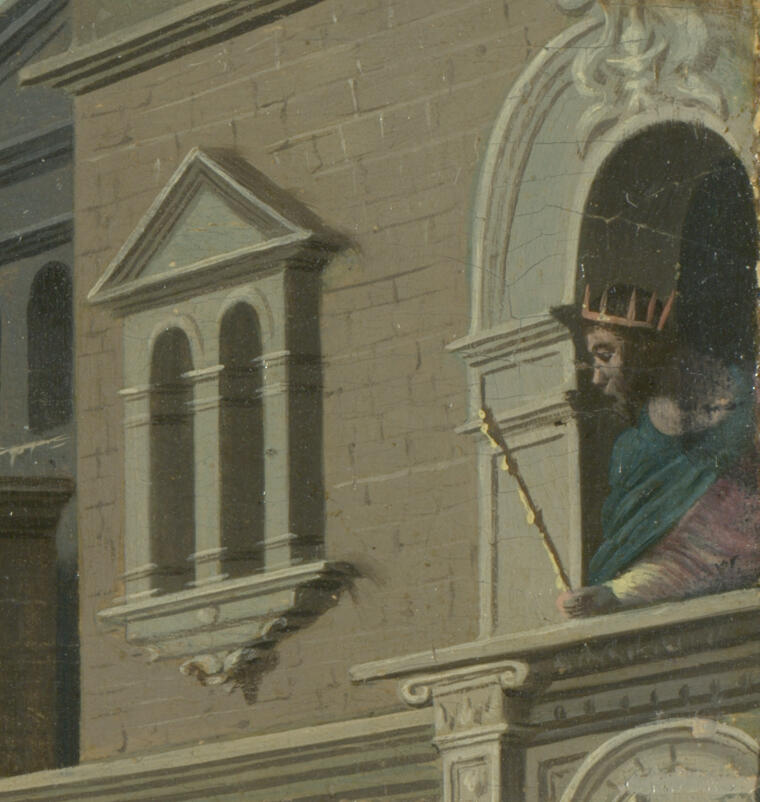
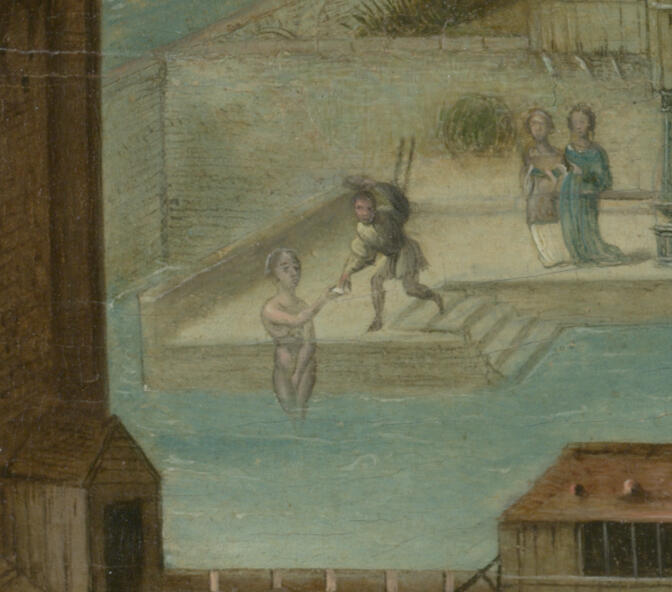
Rather than placing this drama in ancient Israel, however, De Bles transforms the distantly imagined environs of David's Jerusalem into a more familiar 16th-century European Renaissance palace and pleasure garden punctuated with leisure activities. While the Biblical figures are distinguished by their quasi-Roman garb, those enjoying the palace’s amusements are wearing contemporary attire.
Another aspect that places the story in Europe in the 1500s is the game of tennis in the foreground. At the time, tennis was becoming an increasingly popular aristocratic pursuit, as it evolved from a game played with open hands to one played on courts with rackets.
Royal leaders like Charles V and Henry VIII played the game and built courts at Coudenberg Palace and Hampton Court, respectively. De Bles may have modeled the tennis court in his painting on Charles V’s royal court, connecting David—and his story—to contemporary European monarchs.
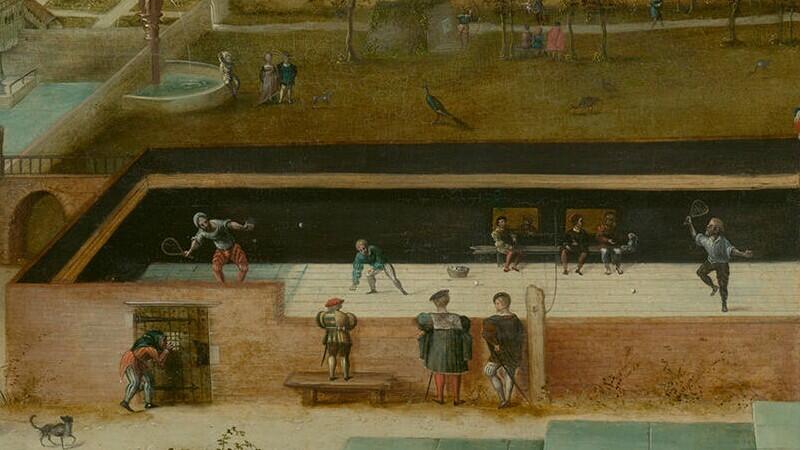
Isabella Stewart Gardner Museum (P25w40)
Herri met de Bles (Flemish, about 1510–after 1550), The Story of David and Bathsheba, about 1535–1540. Oil on panel, detail showing tennis court
Isabella Stewart Gardner and Tennis
By Isabella Stewart Gardner’s lifetime, tennis was no longer the exclusive purview of aristocrats—Gilded Age Americans were fascinated with the sport. Isabella, a noted sports fan, was hardly immune. She saved several newspaper clippings related to tennis, including an announcement of American tennis champion Eleonora Sears returning from Europe.
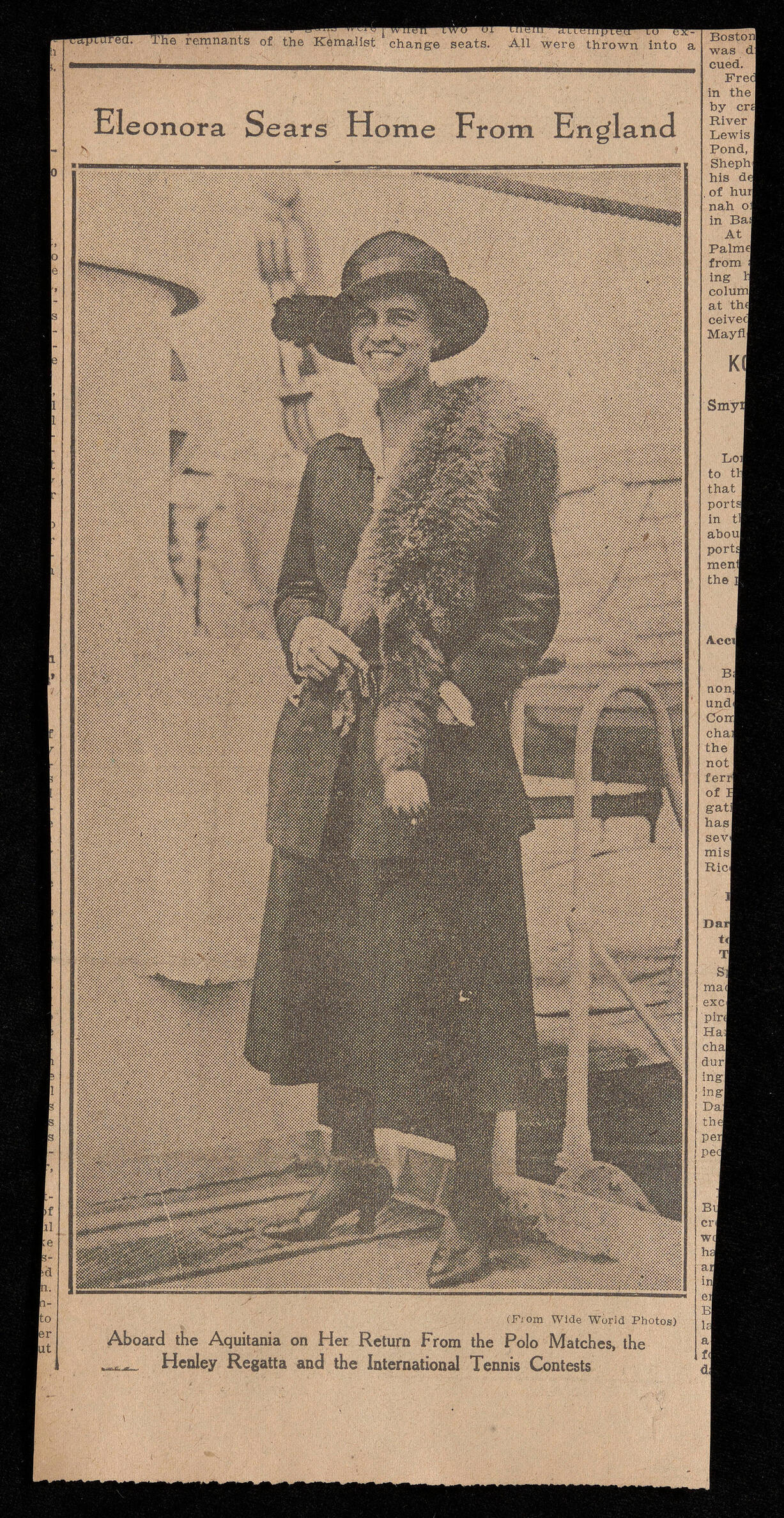
Isabella Stewart Gardner Museum (ARC.009461)
Unidentified American publisher and Times Wide World Photos (active New York, Paris, London, and Berlin, 1919–1941), "Eleonora Sears Home from England," July 1921. Newspaper clipping
Isabella also kept clippings from coverage of the Davis Cup tournament, an international team competition which originated at the Longwood Cricket Club in Boston. Most of these clippings reference the American Davis Cup team, including two sequential articles from 1908 chronicling the Americans’ victory over the British. She also saved a clipping showing members of Japan’s first Davis Cup team (Ichiya Kumagae 熊谷 一弥 and Zenzo Shimizu 清水 善造) in 1921, showing that her interest did not end with American players.
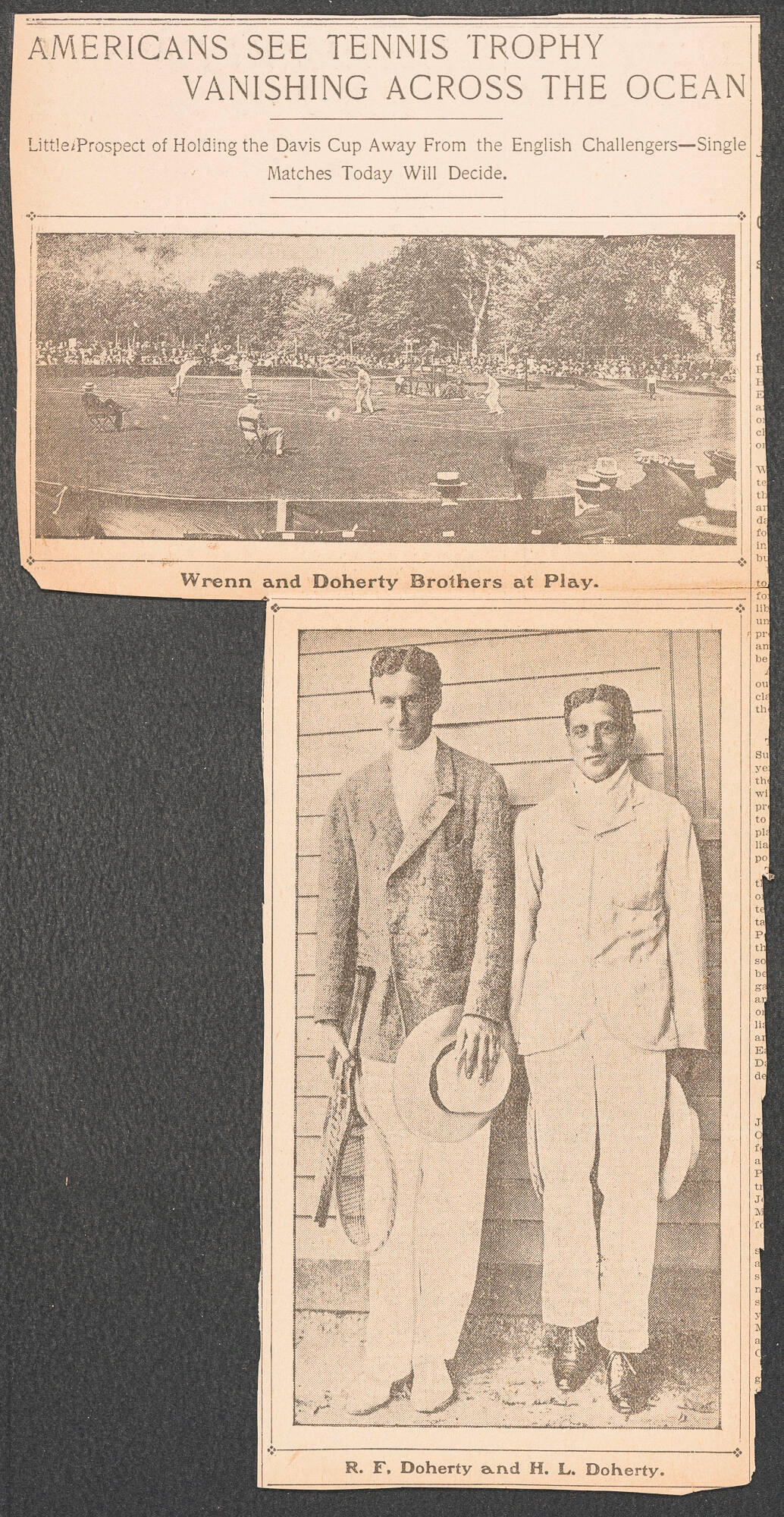
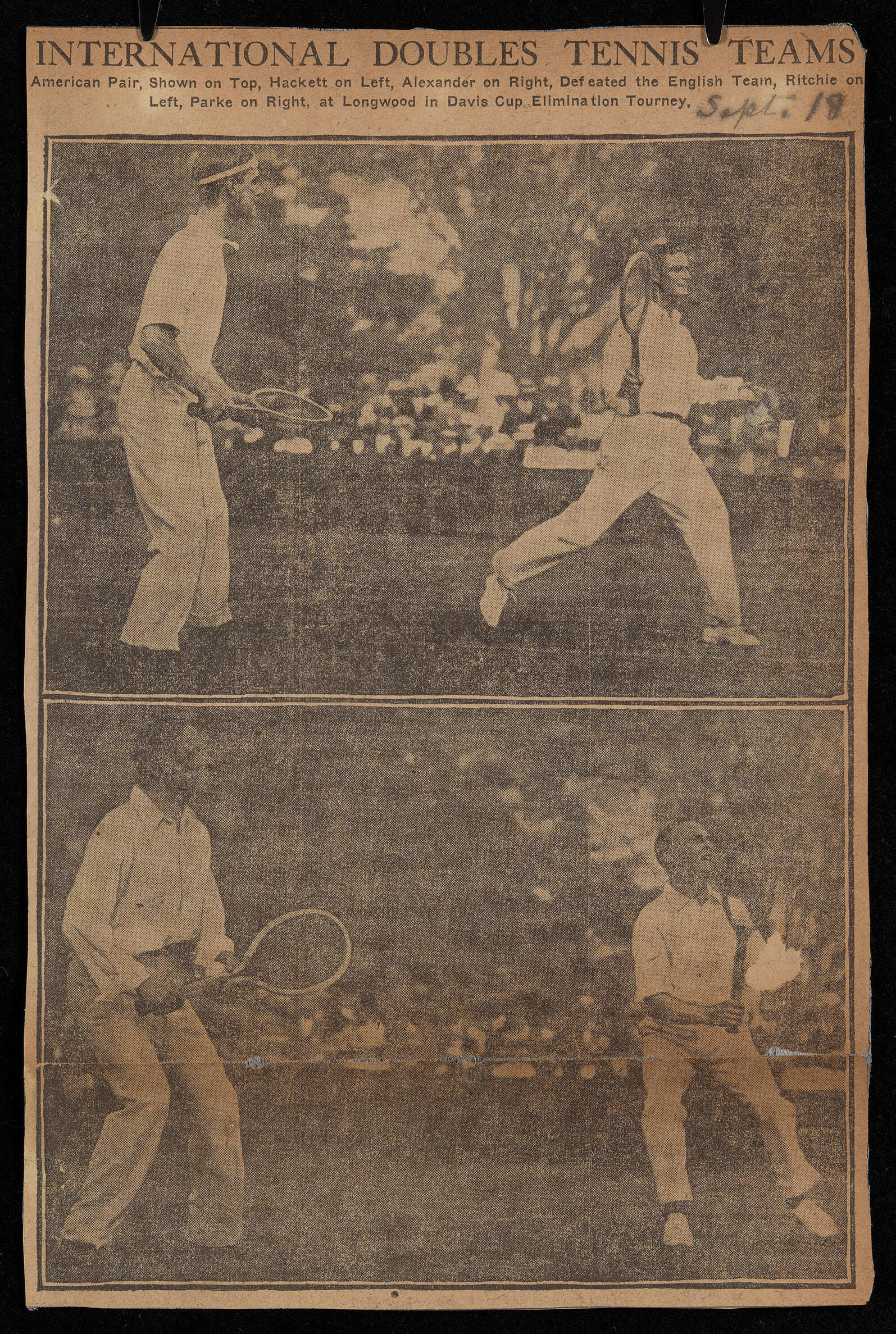
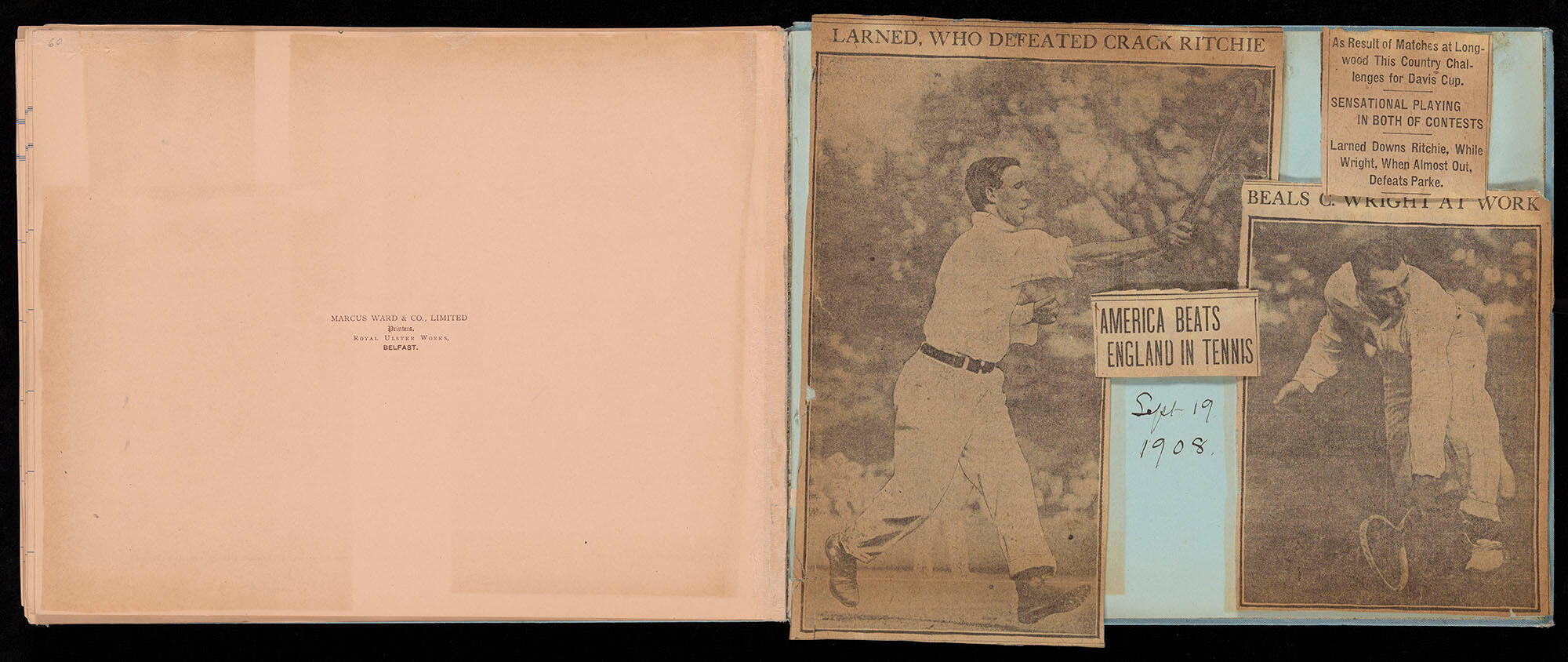
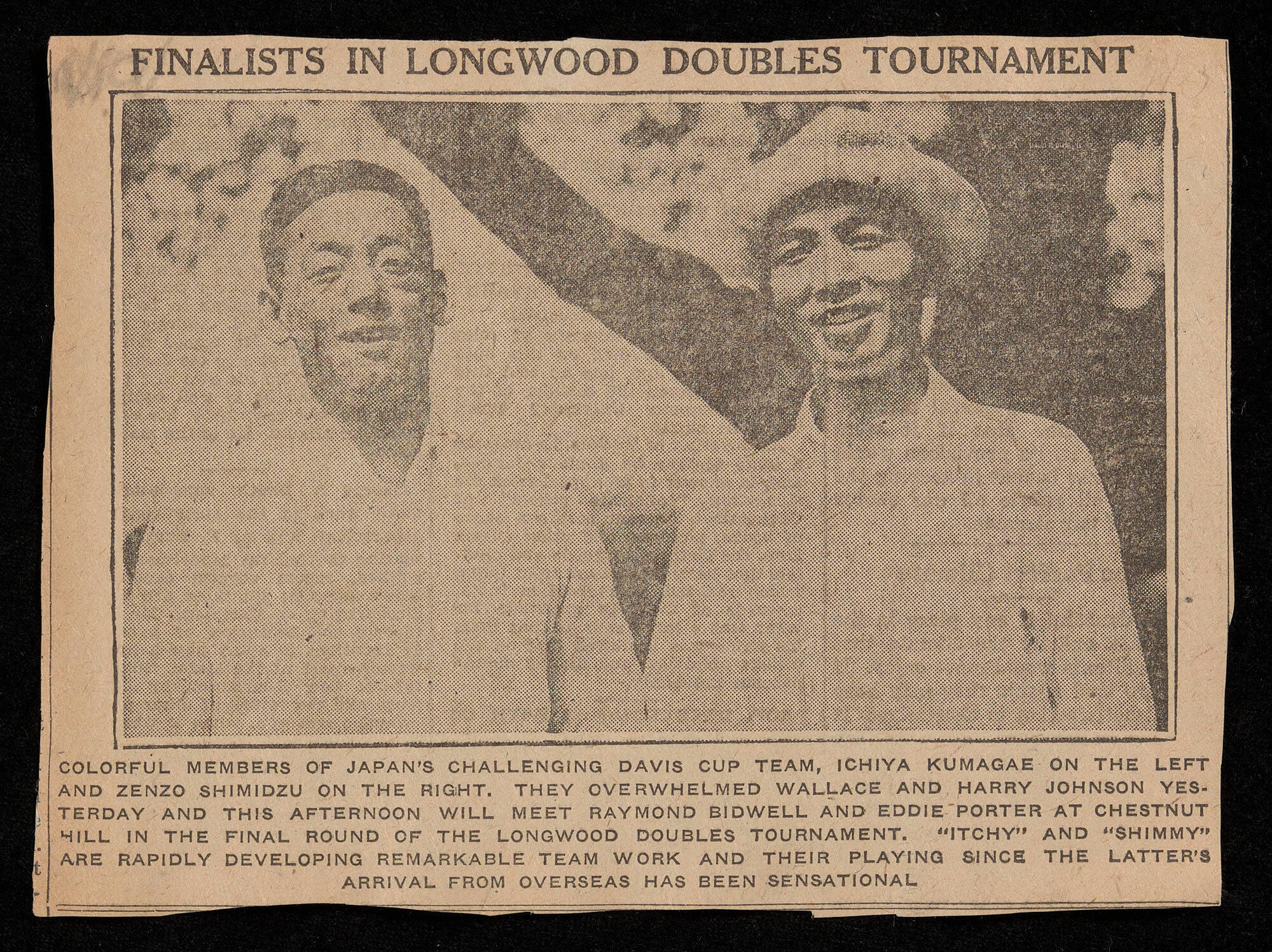
Isabella was also connected to the sport via her nephews. At the time, Harvard University was the only American university to have a tennis court facility installed (as part of the Randolph Hall athletic complex). Built by Isabella’s nephew Archibald Cary Coolidge and designed by his brother Joseph, the facility opened in 1907. Isabella likely visited the complex in 1909 to watch a match.
I caught a sidelong glimpse of you at the tennis court last Saturday. The Coolidges have added a charming feature to Cambridge, I think, by building this court. It is just the sort of thing we need to give us a little more distinction.
We don’t know if Isabella purchased Herri met de Bles’s Story of David and Bathsheba because of her personal fondness for tennis, or if other aspects of the work appealed to her. De Bles’s depiction of tennis in the 1530s might bear little resemblance to the game we know today, but it provides a fascinating look into the history and symbolism of a familiar pastime.
Further Reading
Cees de Bondt, Royal Tennis in Renaissance Italy (Brepols, 2006).
You May Also Like

Read More On The Blog
The Game: Isabella’s Football Fandom

Read More on the Blog
Oh You Red Sox! Isabella, Baseball Fan Extraordinaire

Explore the Museum