
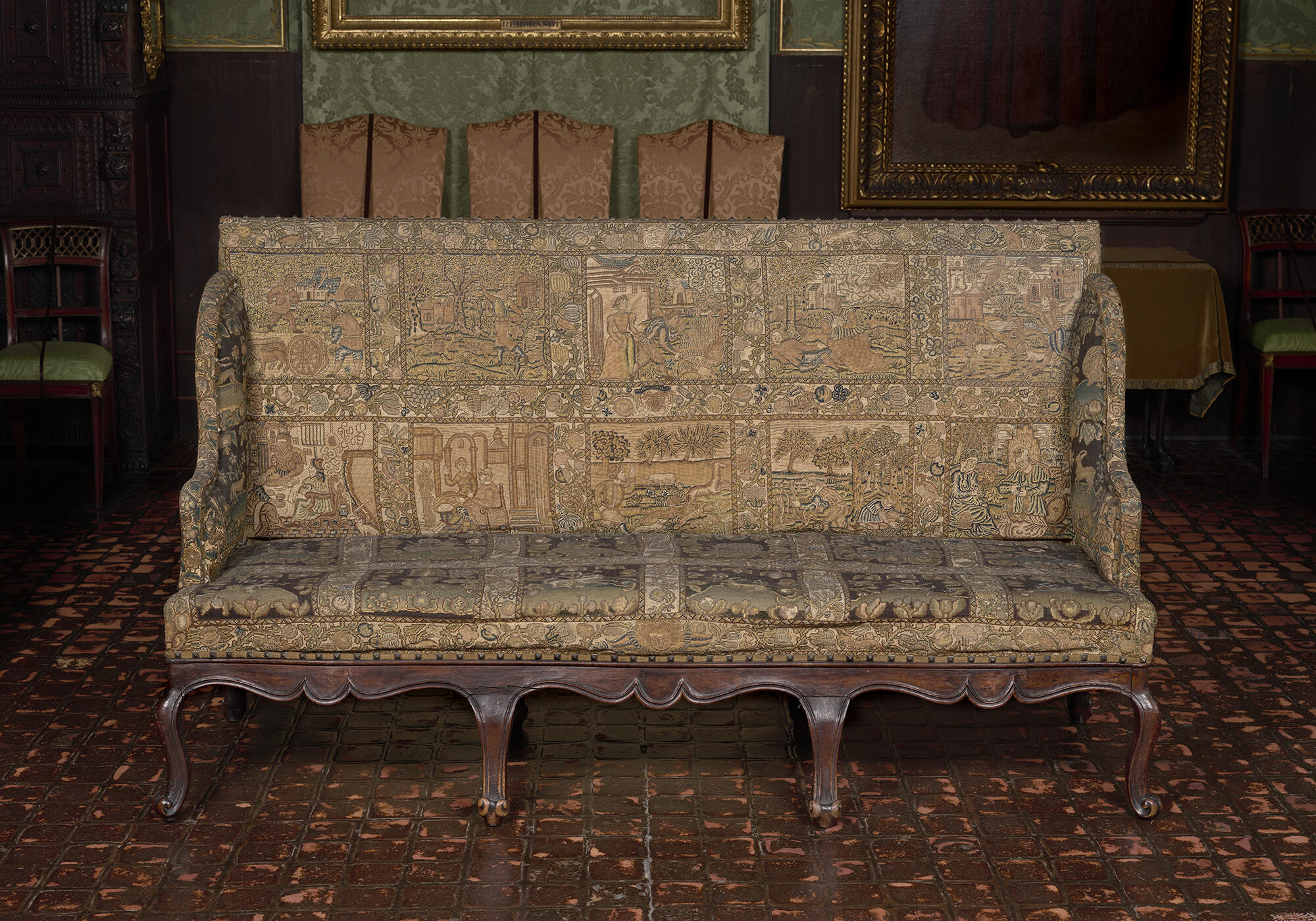
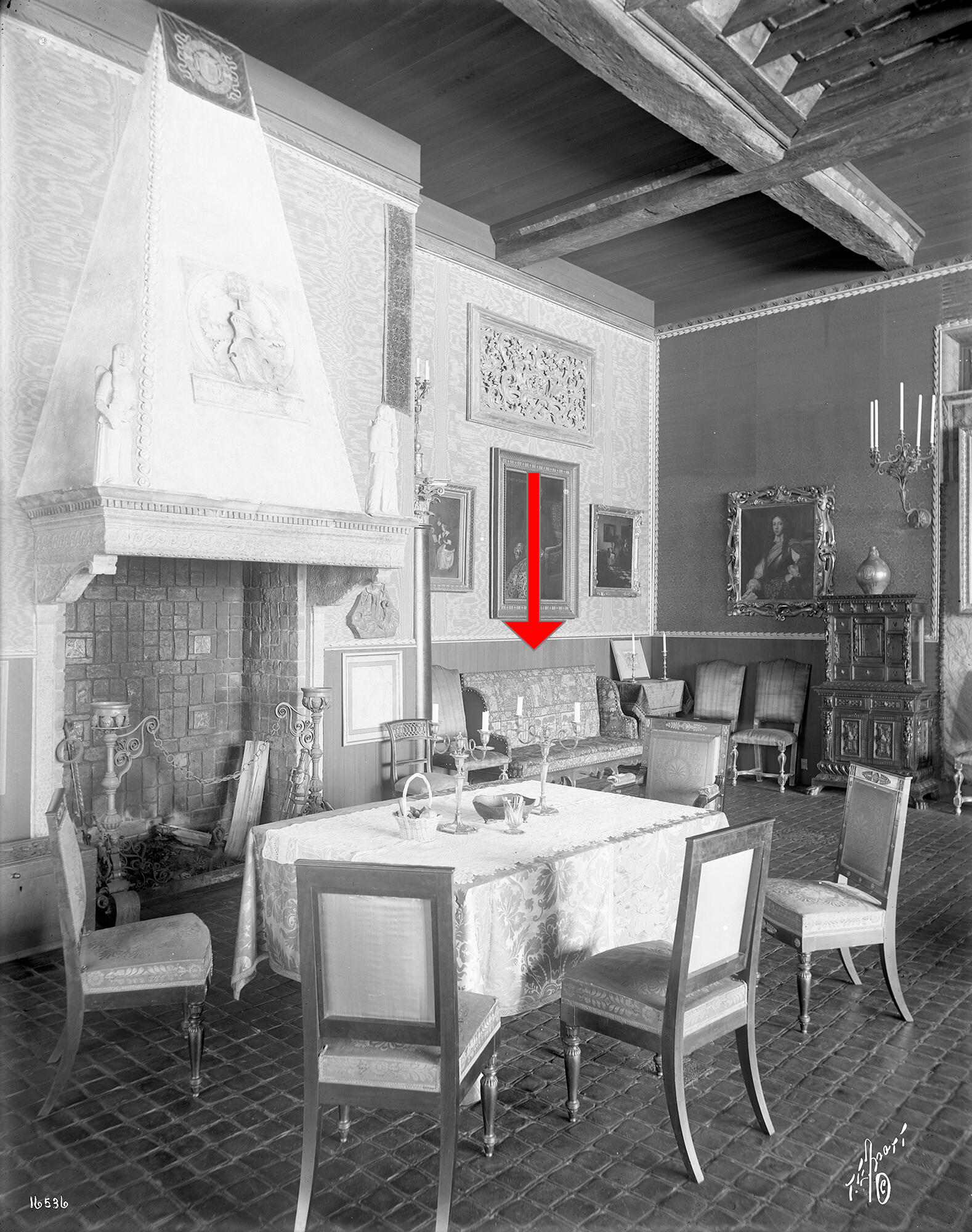
With all of the furniture in the Dutch Room (there really are a lot of chairs!), you may have overlooked a straight-backed, formal-looking sofa to the right of the fireplace.
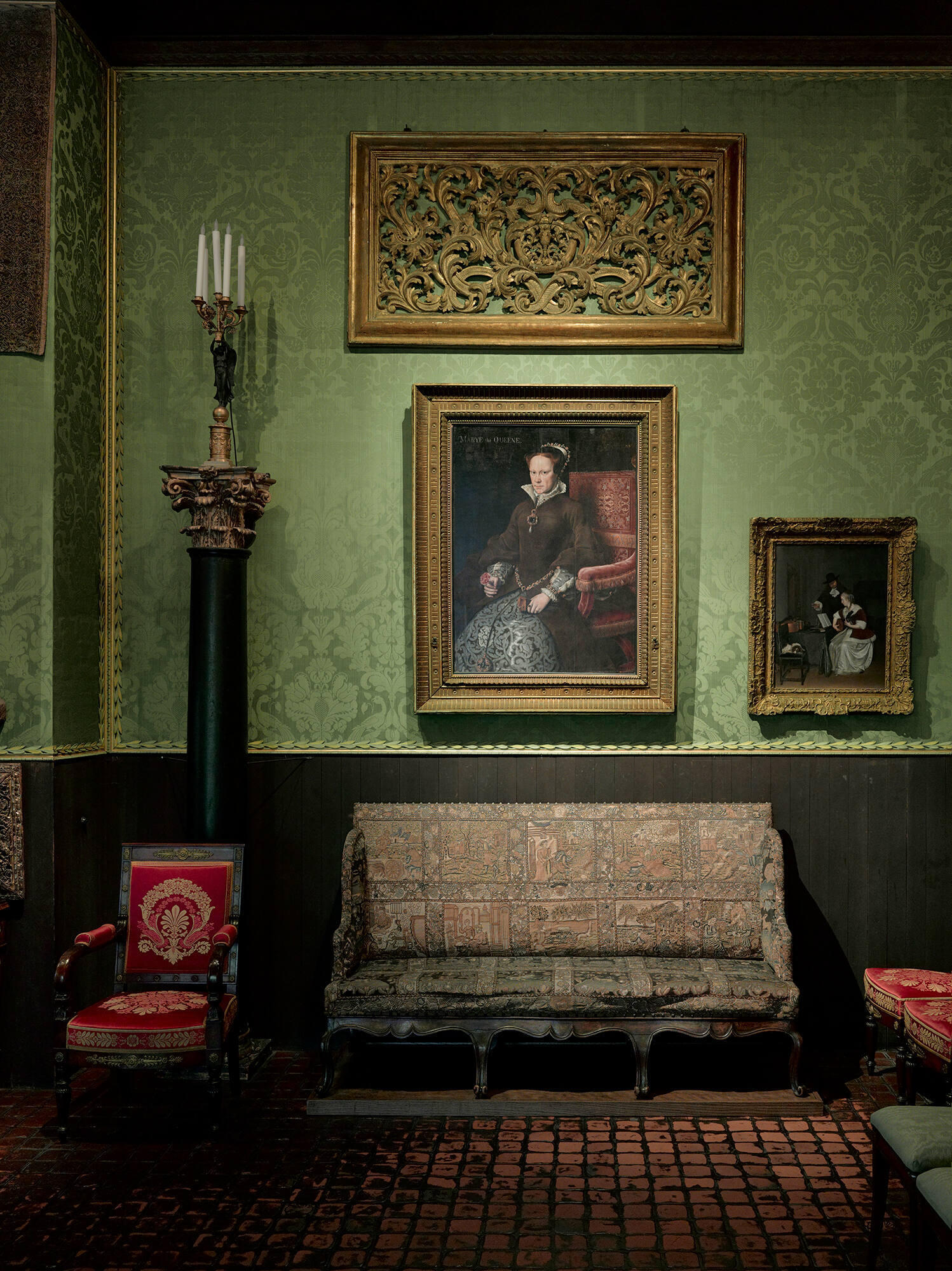
Photo: Sean Dungan
The Dutch Room, Isabella Stewart Gardner Museum, Boston, 2017. The French sofa is below the portrait of Mary Tudor.
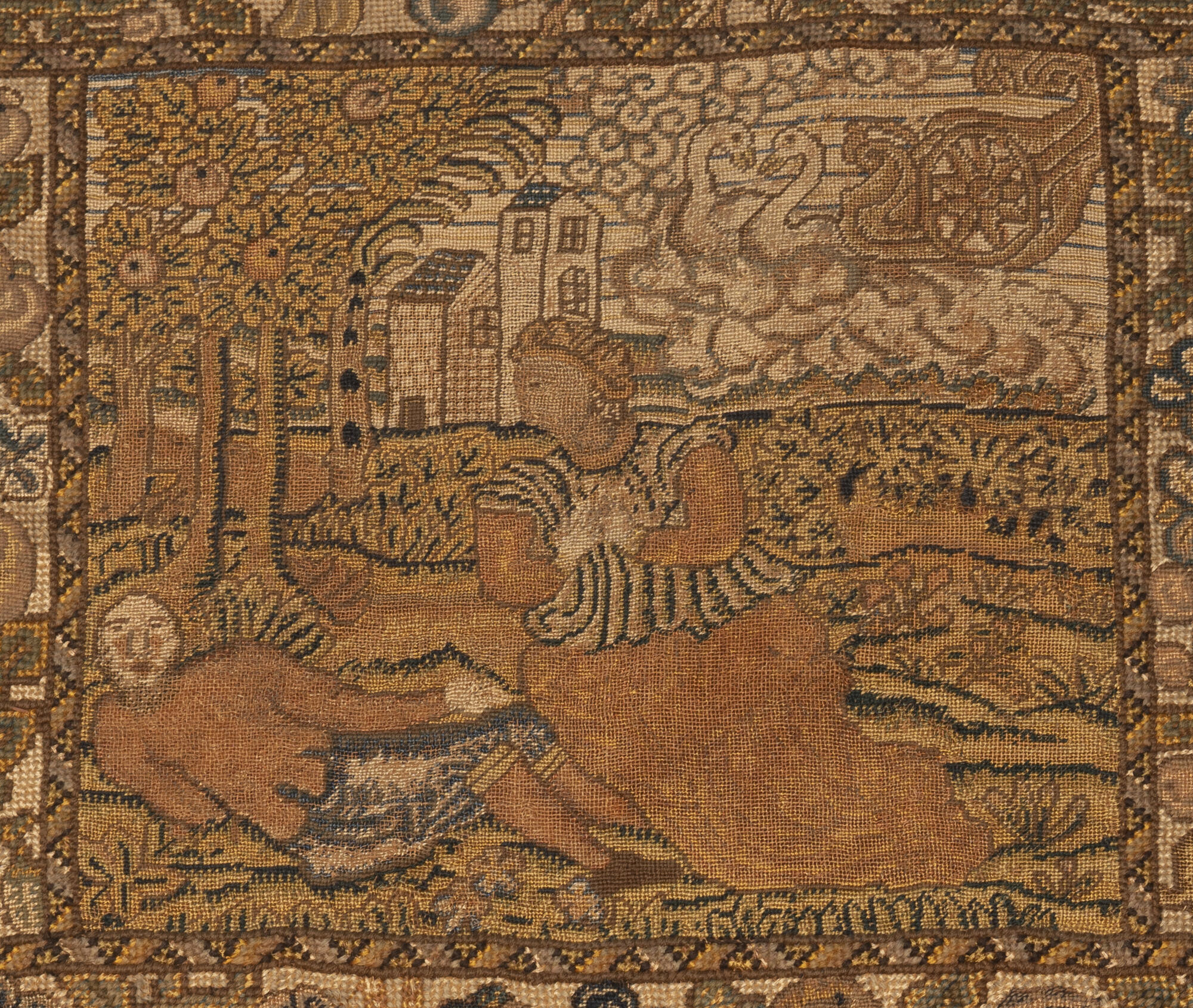
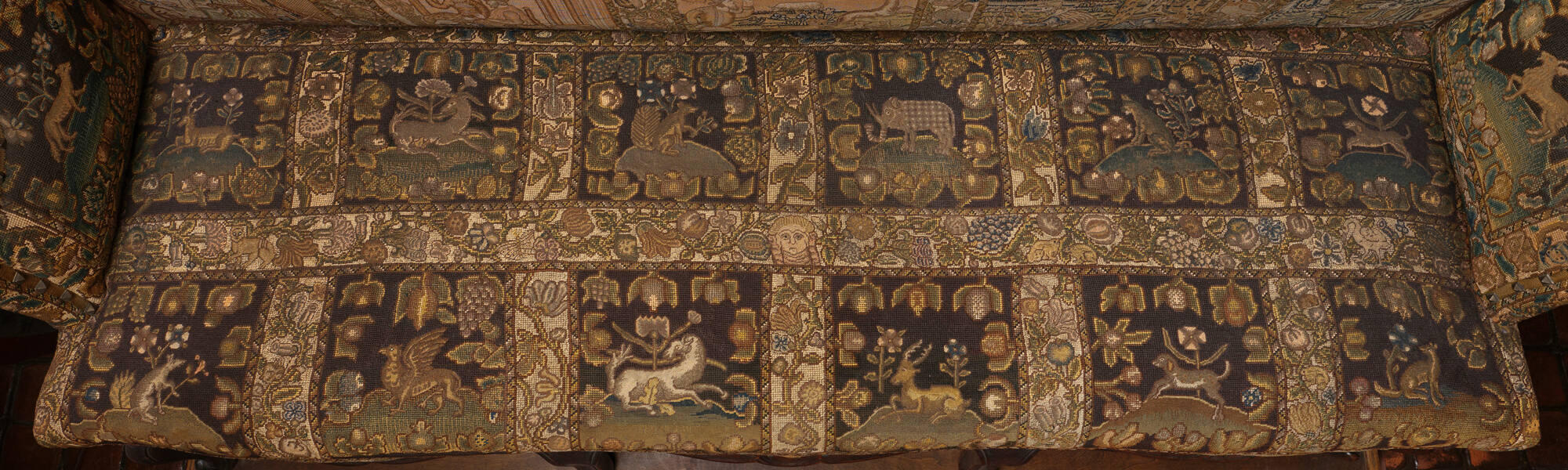
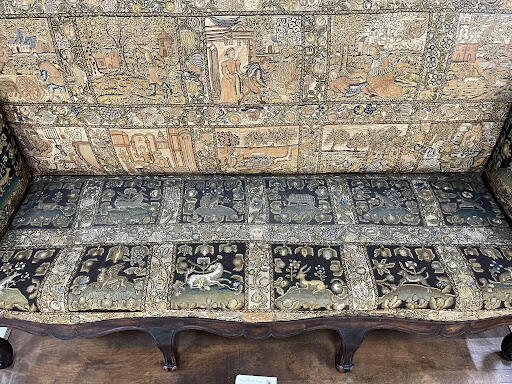
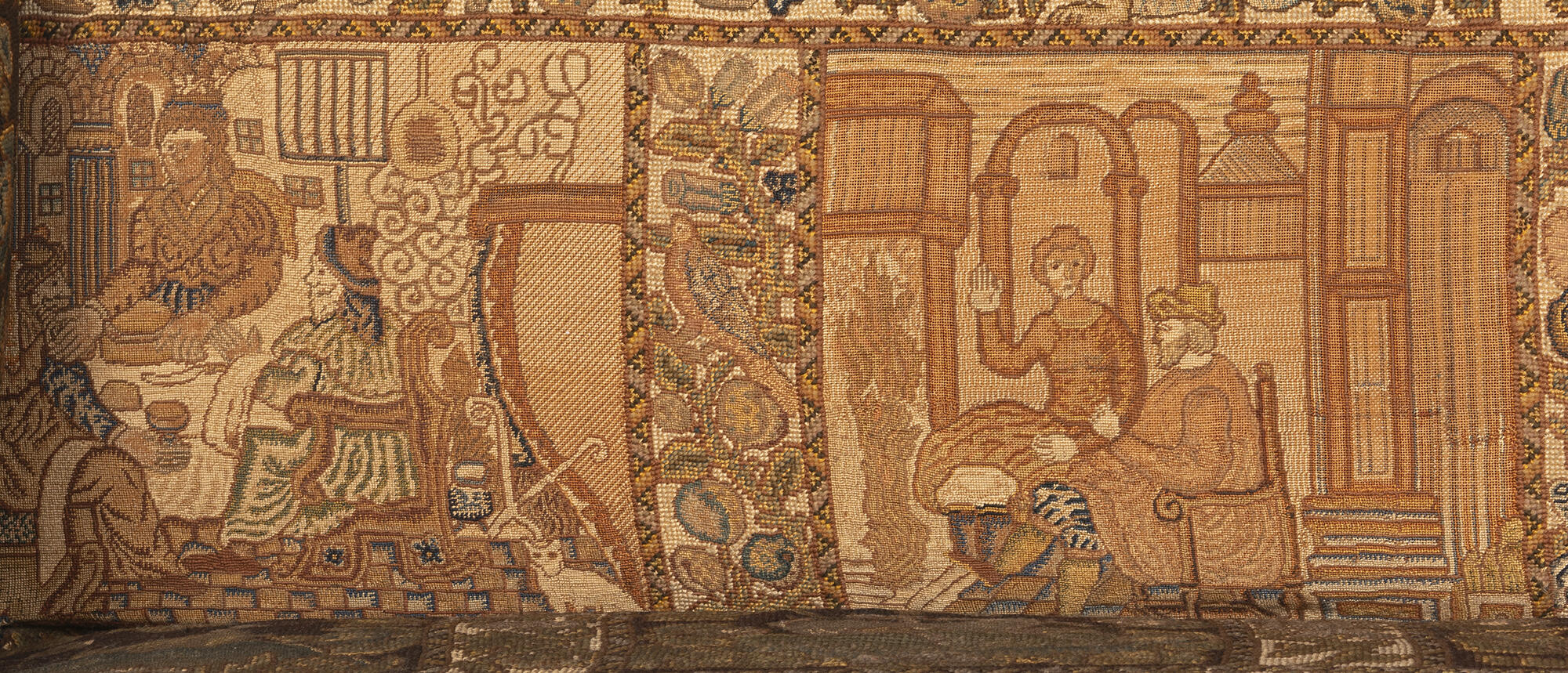
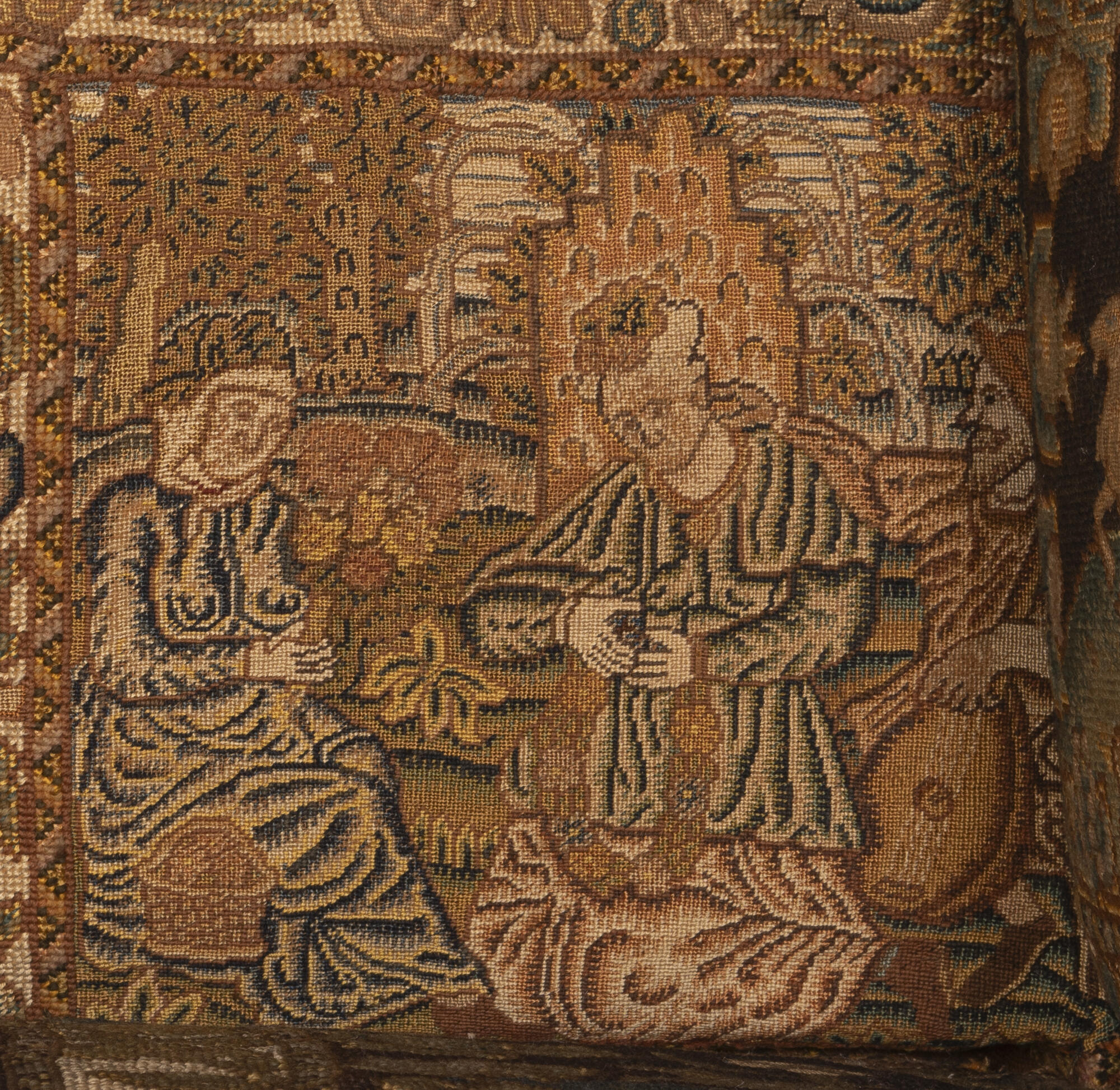
The sofa is upholstered with wool and silk cross-stitch embroidery. The compositions feature squarish scenes separated by decorative borders of undulating vines with fruit, flowers, creatures, and masks. The ten central embroideries depict figures performing tasks both outdoors and indoors while the seat depicts real and mythical creatures on grassy hills. If you look closely, you will notice unusual details like a swan chariot in the sky.
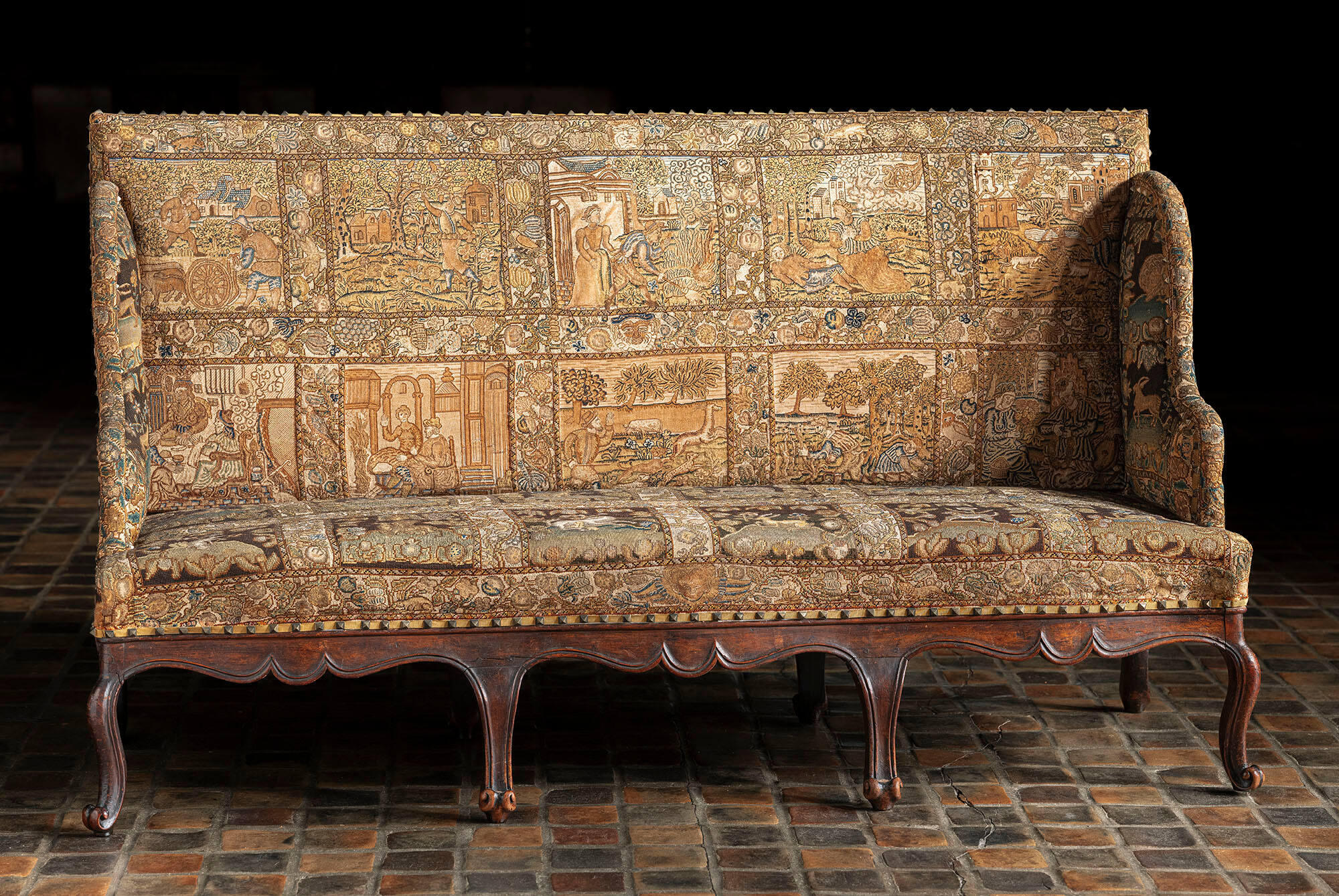
Past and present museum staff have theorized about what the scenes on the seat back represent. Is it the four seasons? Mythology? Occupations? Luckily, the 2024–2027 Dutch Room Restoration project provided an opportunity to spend some quality time with this sofa.
Noble Needleworking Nuns?
Most of what we knew about the sofa came from the gallery who sold it to Isabella Stewart Gardner in 1892. Galerie de l’Universelle displayed the sofa in Paris in 1892 as part of a collection of objects headed to the 1893 Chicago World's Fair. Translated documentation from the gallery claimed:
“The antique tapestry sofa was made by the ladies of the famous Ronceray Abbey, from all of the greatest families of France. It was presented to the d’A...family around 1660, in recognition of service rendered. The wood is from the renaissance period.”
In the 1600s in Europe, Roman Catholic parents may have sent daughters to convents to become nuns if they had insufficient funds for a favorable marriage. Ronceray Abbey, in Angers, France accepted women into their religious community who had familial ties to nobility on both their mother and father’s sides. Convent life provided an appropriate occupation for an unmarried woman in early modern Europe. And what was the hobby of choice for these nuns? Needlework, of course!
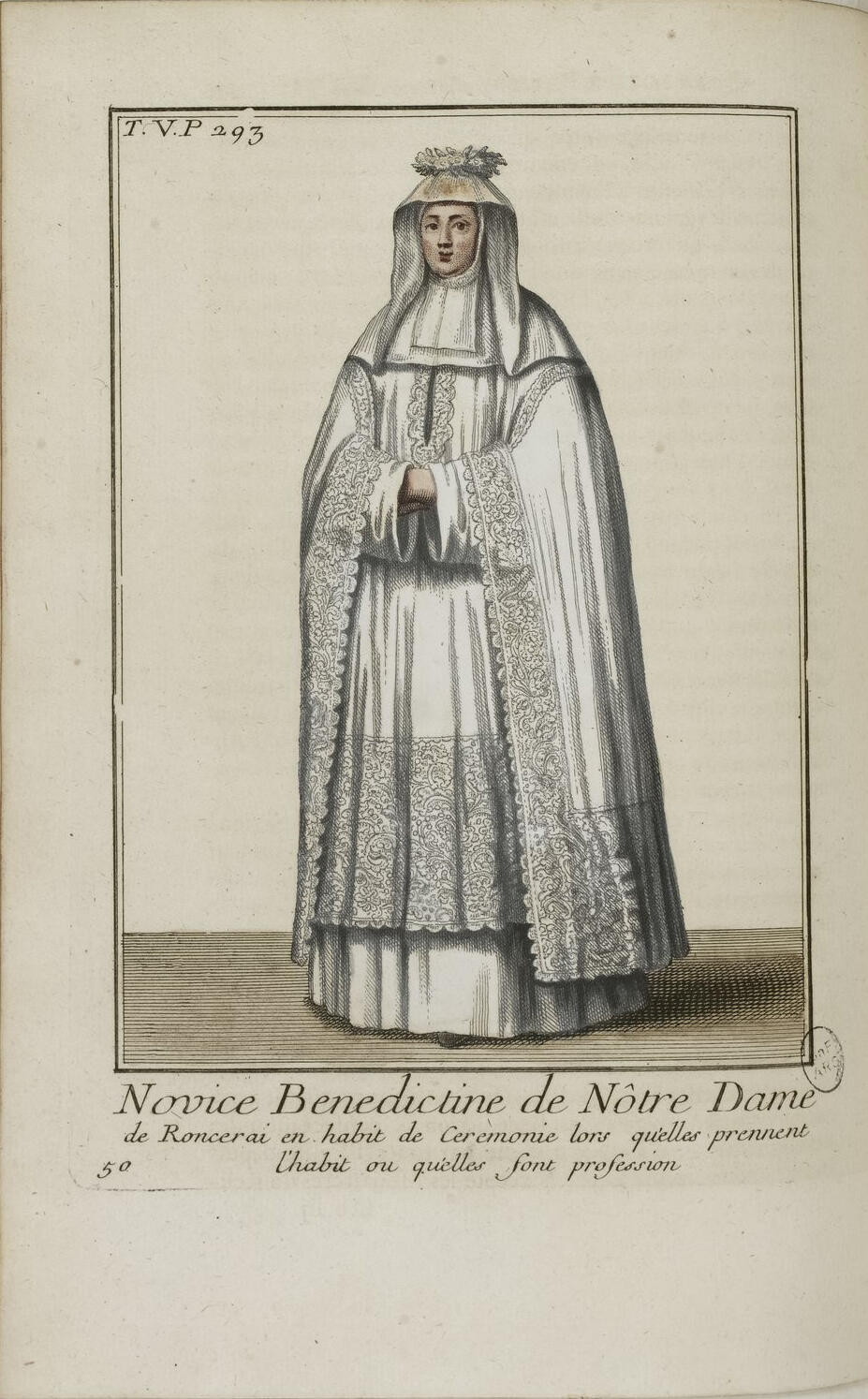
Bibliothèque nationale de France, département Arsenal, 4-H-6077 (5)
Benedictine novice of Notre-Dame de Ronceray in ceremonial habit, from Hippolyte Hélyot (French, 1660-1716, author), Histoire des ordres monastiques, religieux et militaires, et des congregations seculieres de l'un & de l'autre sexe, 1714-1719
Needleworking nuns would create embroideries for liturgical use and to add to the abbey’s ambiance. Surviving examples from the 1300s in Germany feature gridded scenes separated by decorative borders—compositionally similar to the embroideries on Isabella’s sofa. Where the German textiles and the Dutch Room sofa diverge is in their subject matter. The nuns typically chose to portray narratives about Jesus Christ and the saints, bringing biblical stories to life in their embroideries. The Dutch Room sofa, however, is decorated with an undeniable lack of Christian representation.
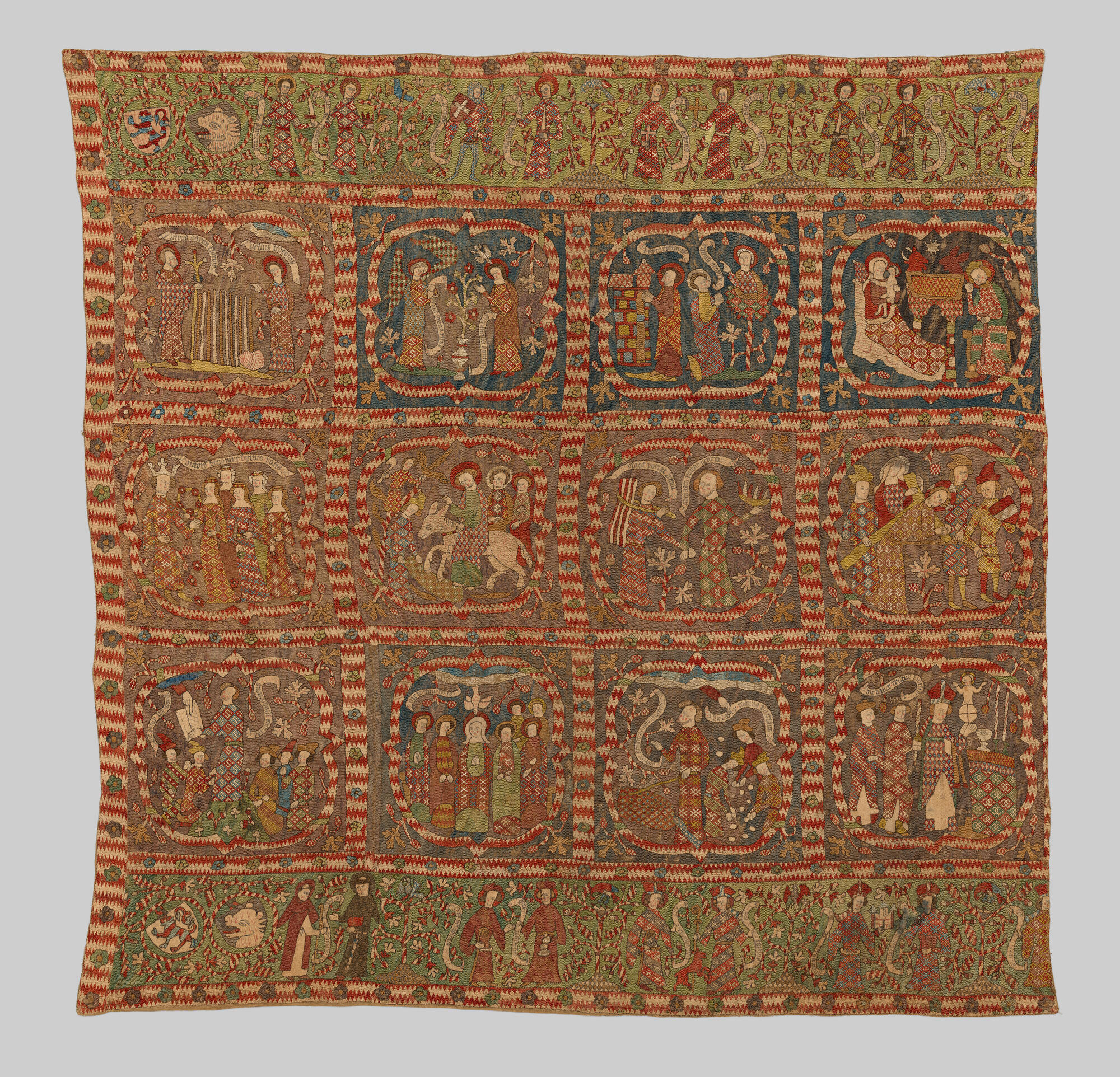
The Cloisters, Metropolitan Museum of Art, New York. Gift of Mrs. W. Murray Crane, 1969 (69.106)
Likely made by nuns in Hildesheim, Lower Saxony, Germany, Embroidered Hanging, late 14th century. Silk on linen, painted inscriptions, 63 x 62 1/2 in. (160 x 158.8 cm)
Conserving the Settee
While research progressed, we embarked on the conservation treatment. Practical use and years of display created a few problems the Conservation team hoped to address.
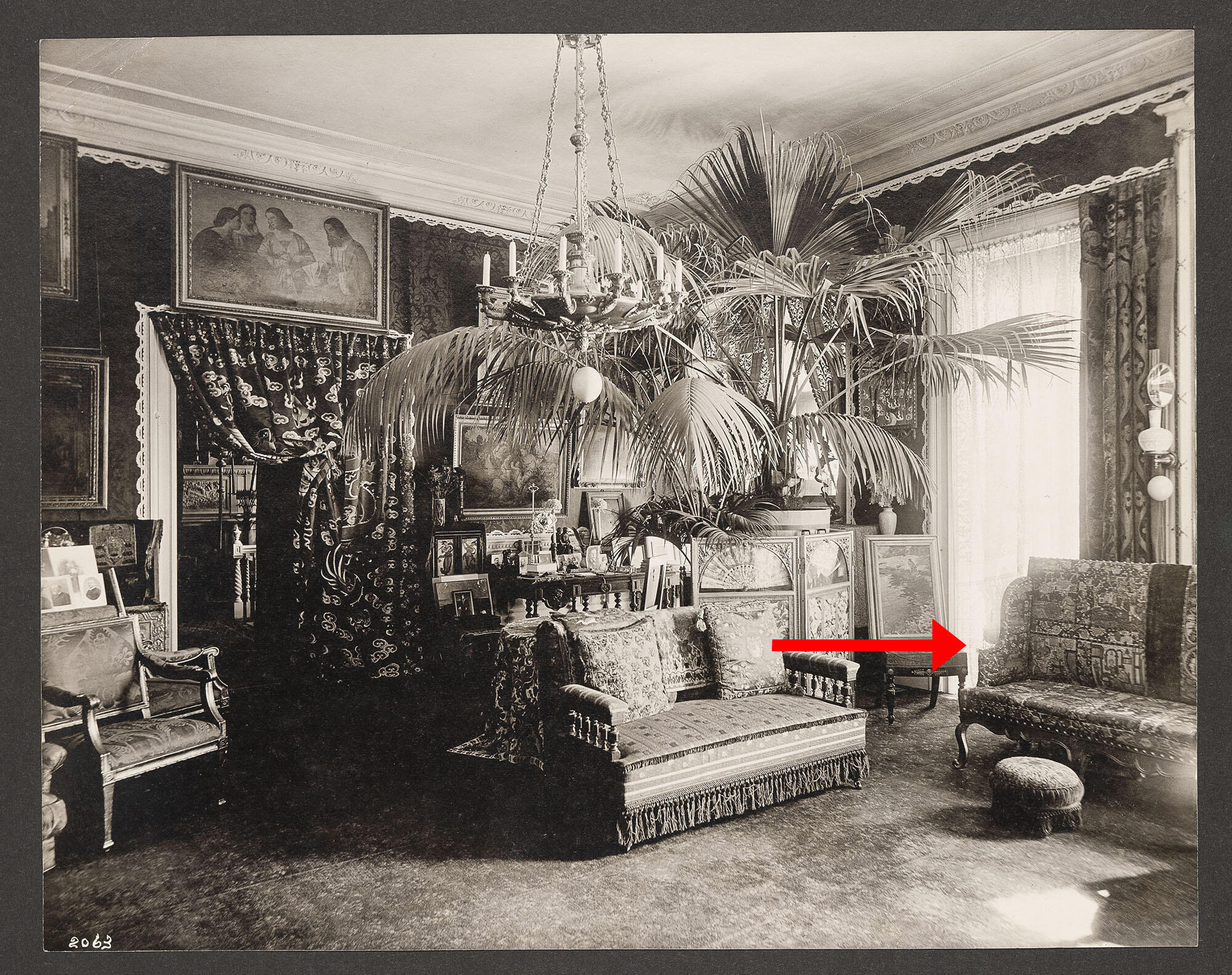
Isabella Stewart Gardner Museum, Boston (ARC.010185)
The sofa in Isabella’s home in Boston’s Back Bay neighborhood in 1900.
Thomas E. Marr (Canadian-American, 1849-1910), Drawing Room, 152 Beacon Street, Boston, 1900. Gelatin silver print
One of the most glaring condition issues we observed was disfiguring dimensional deformations—in other words it looked lumpy. Archival images of the Dutch Room showed a more streamlined profile of what the sofa looked like back in Isabella’s day. This helped us to develop a treatment plan.
We started our treatment with a gentle cleaning regimen. After some thorough vacuuming, we hoped to strategically clean the lighter fields of embroidery in order to improve contrast of the design. After testing a few different methods, we settled on using white cosmetic sponges which are not abrasive and pick up a surprising amount of grime. We also worked to humidify the brittle needlework to help restore flexibility.
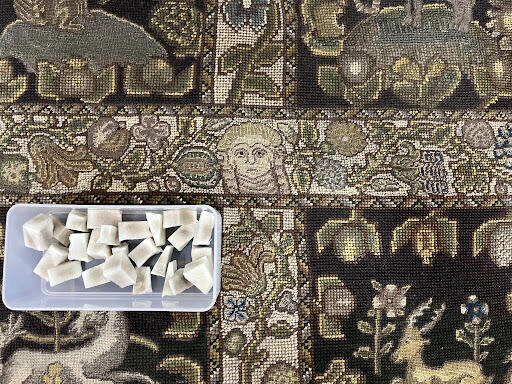
In order to address structural issues, we needed to partially disassemble the upholstery. Accessing the substructure, affectionately referred to as “the cake” by upholsterers, would allow us to better support the upholstery and stabilize areas of damage with conservation stitching.
After removing rusty nails and tacks from the sofa, we found evidence of a (now inactive) moth infestation. Its presence explained some of the deformities in the seat—the moth larvae had been feasting on the keratin rich horsehair stuffing.
Secrets Within the Seat
After documenting the damage and vacuuming up debris, we discovered something more exciting and objectively less gross. Across the wooden support on the back of the sofa, usually hidden under the upholstery, a pencil inscription read: Lucien (1878) 25[?] Janvier.
![the inscription in pencil on wood reads Lucien (1878) 25[?] Janvier](https://www.gardnermuseum.org/sites/default/files/styles/portrait_large/public/2026-05/141584.jpg)
Isabella Stewart Gardner Museum, Boston (F21e23)
The inscription found on the seat back support bar of the sofa, reading Lucien (1878) 25[?] Janvier
We scrutinized the sofa with Lucien’s dated signature in mind and concluded that the materials and techniques used are consistent with late 19th-century upholstery practices. We also inspected nail hole patterns in the wooden frame. There was only one set of holes corresponding with the current upholstery, indicating that the sofa had never been reupholstered. Therefore, since it appears that someone named Lucien assembled the sofa in 1878, it could not have been gifted to a noble French family around 1660 like the dealer claimed. So, what does this mean?
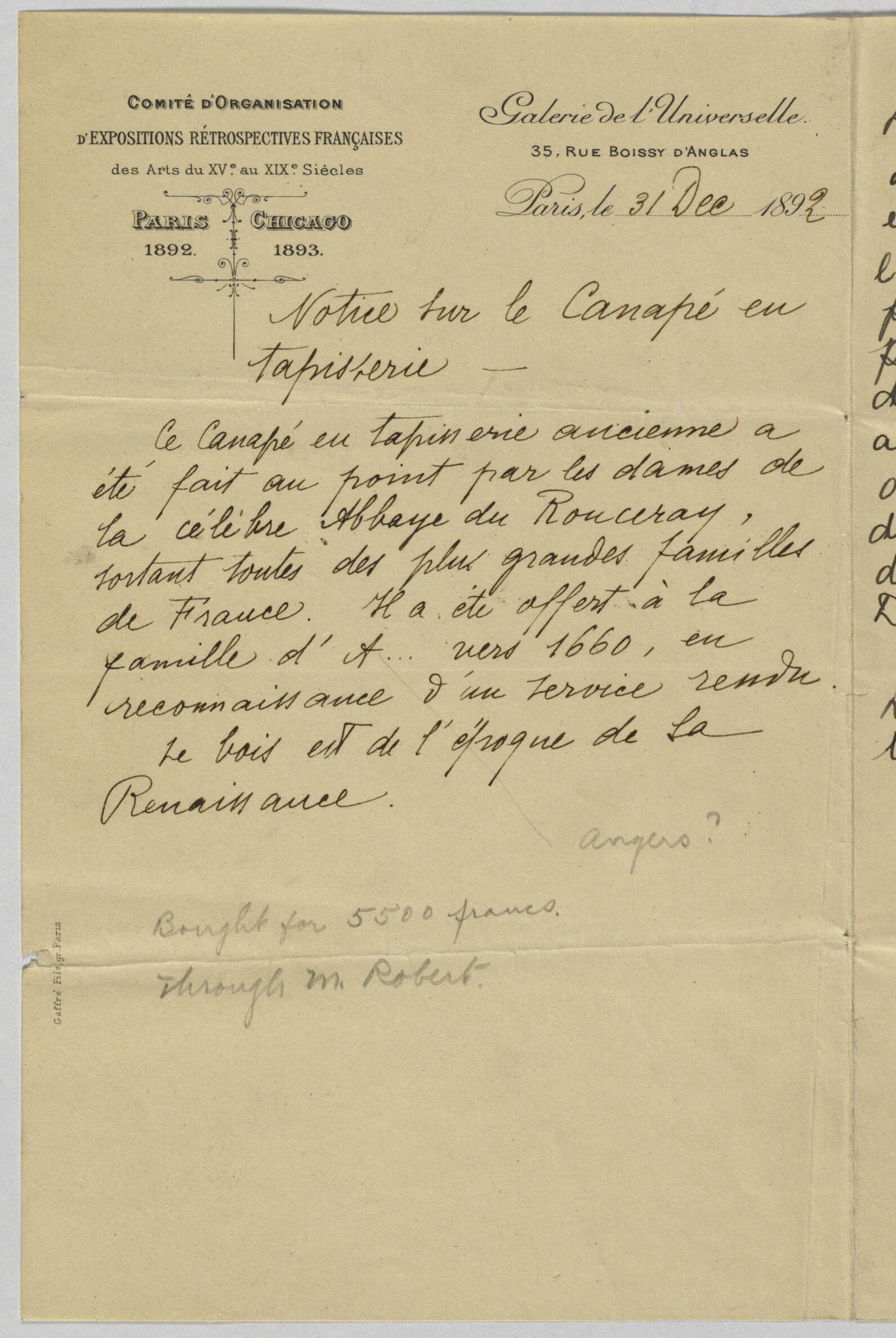
Isabella Stewart Gardner Museum, Boston (DF097.002a)
A receipt from the Galerie de l’Universelle describing the reported provenance of the embroidered upholstery on the sofa, 31 December 1892
It’s possible that the dealer fabricated the provenance in order to entice a buyer, which was not unheard of. Our examinations confirmed that the embroideries were not originally designed for the sofa, as multiple pieces had been cut down from larger works and seamed together. The likely scenario is that Lucian acquired several different embroideries and then proceeded to construct the sofa.
While we knew that the subject matter embroidered on the seatback was not religious, further research revealed that they represent months of the year. The Middle Ages in Europe saw a rise in using secular, agricultural and domestic scenes to symbolize the months and seasons. These scenes were found in Books of Hours, calendars, almanacs, and of course, textiles—culminating in the 16th century Flemish tapestries known as the Months of Lucas. These twelve tapestries gained popularity through the 17th and 18th centuries and this imagery was adapted by French and Flemish artisans. It was likely during this time that the embroideries on the sofa were created by craftspeople in France or Flanders, not the famous nuns of Ronceray Abbey.
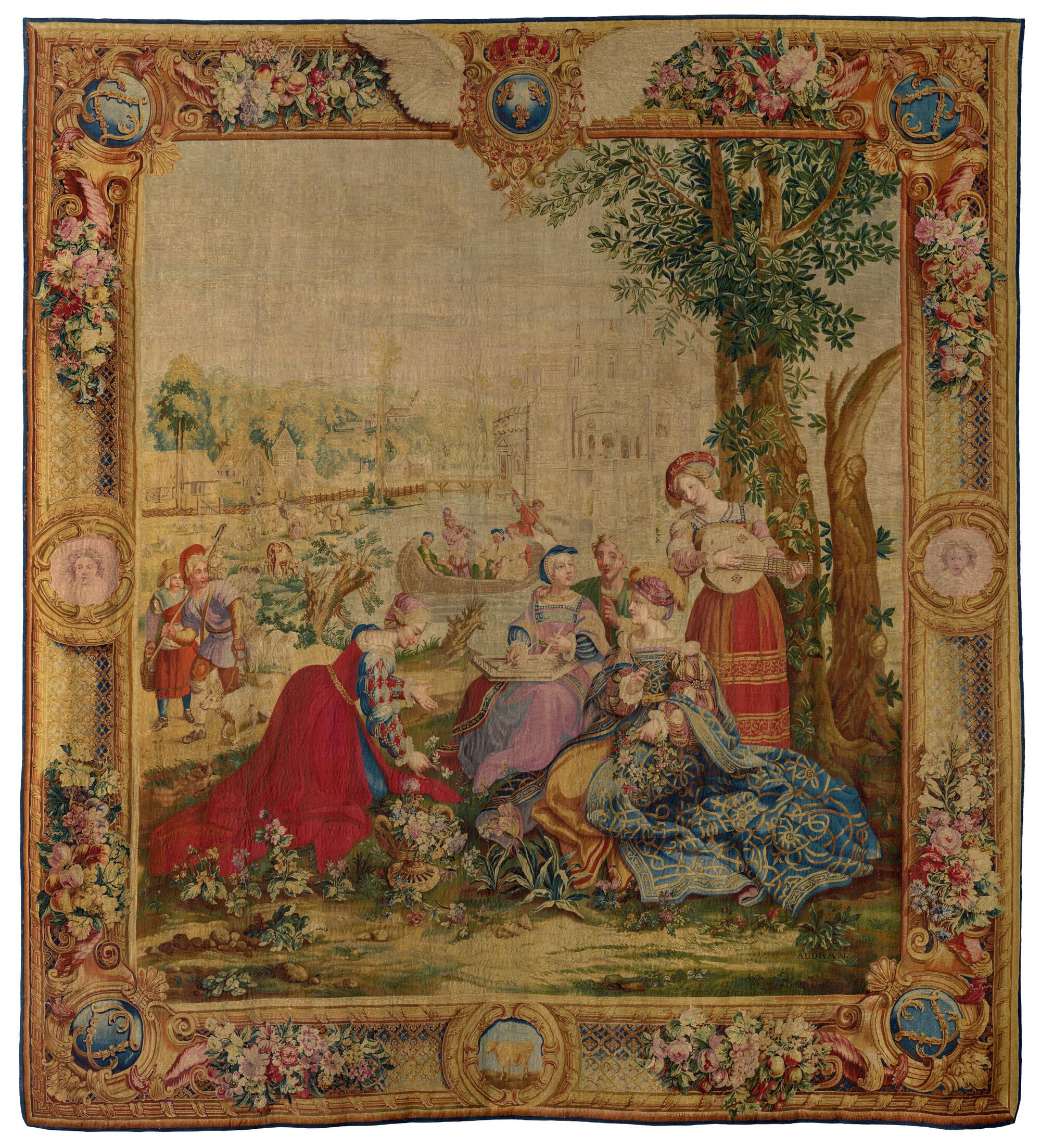
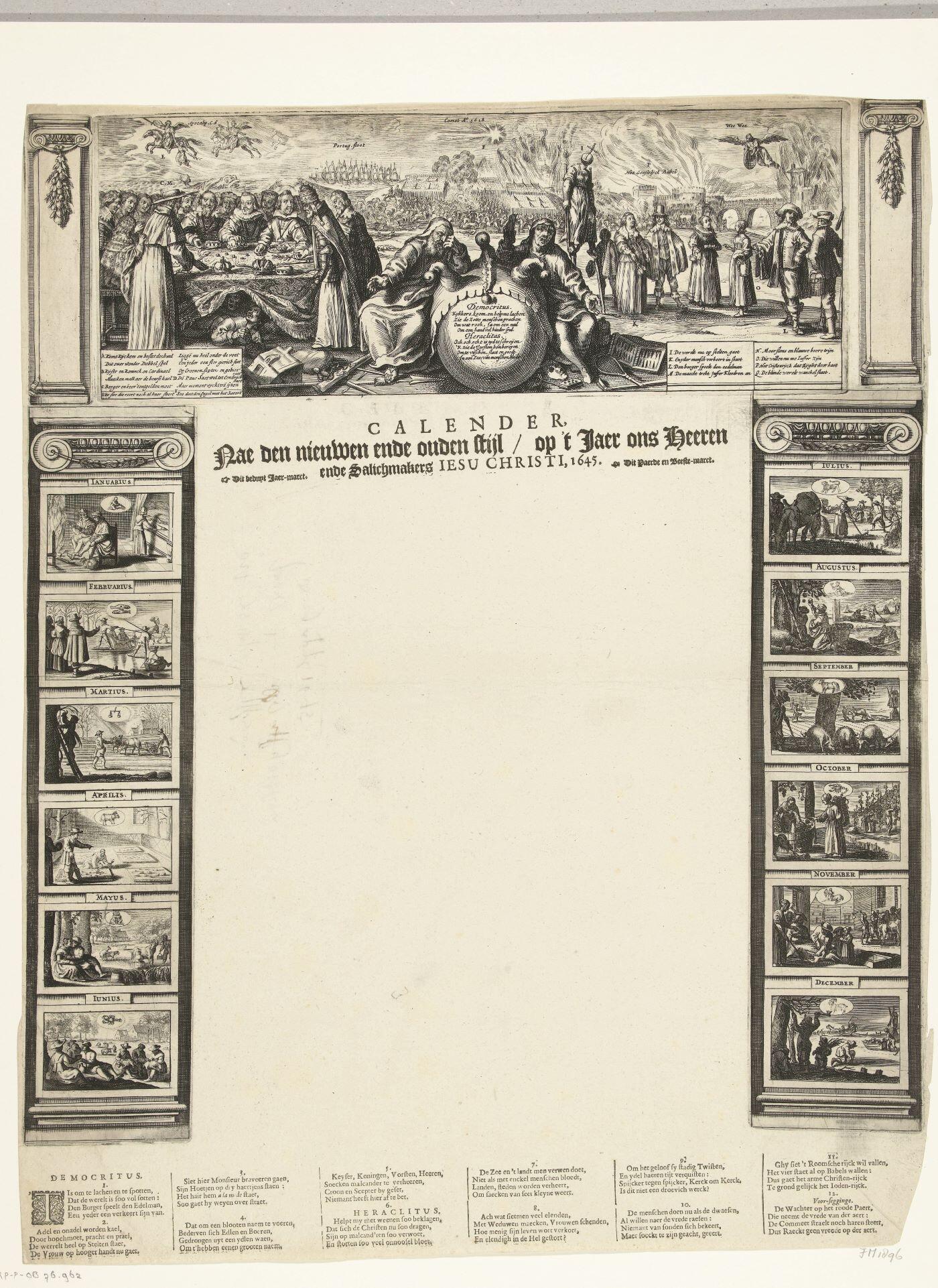
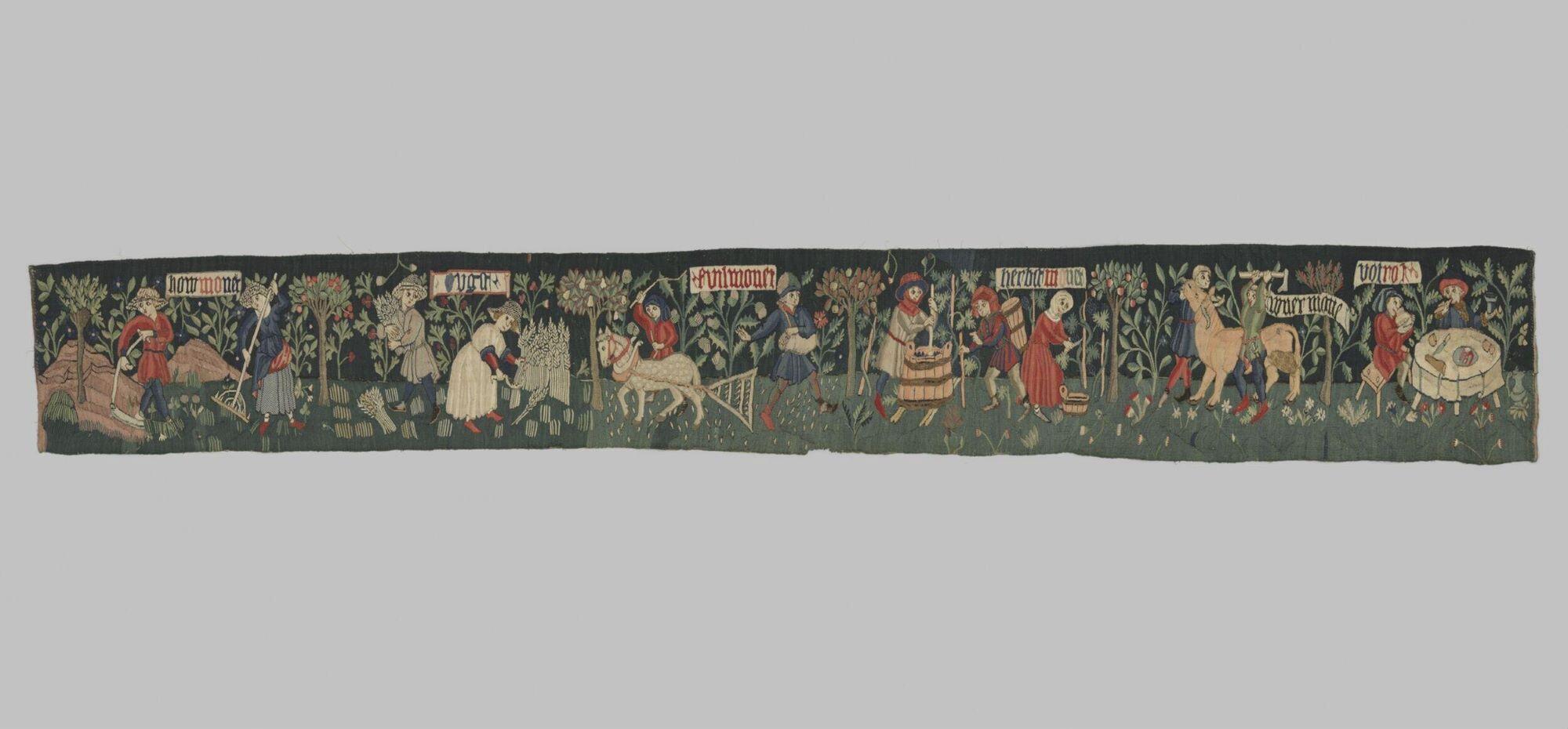
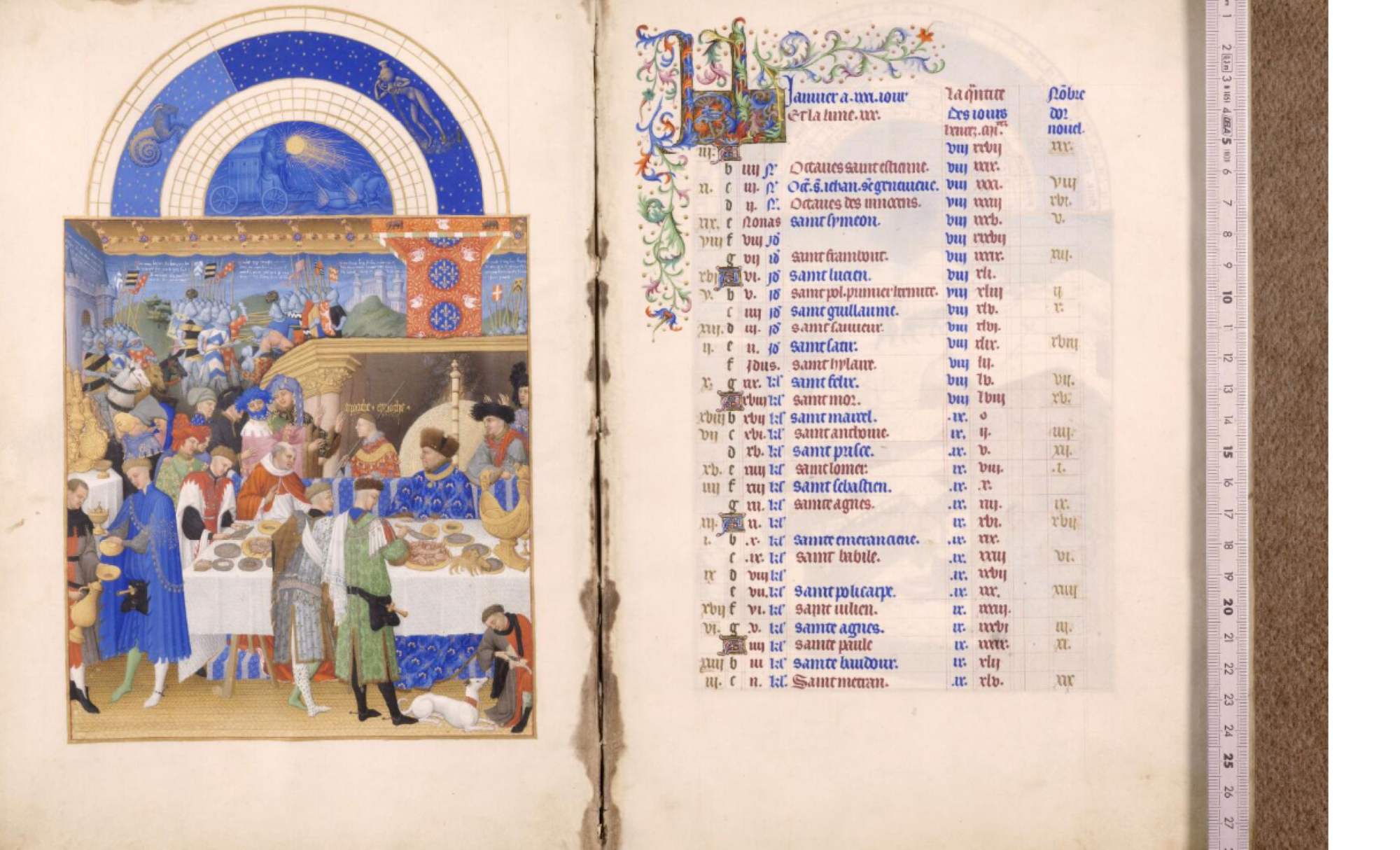
While there are only ten months represented, almost certainly due to the restraints of space, Isabella’s sofa still reflects common themes found in other iterations. January and February are typically depicted as indoor affairs, either a feast or a man warming himself in front of a fire, both of which can be seen in the bottom row of the sofa and in the examples above. April, as the heart of springtime, sometimes features women weaving flower wreaths and playing stringed-instruments. The swan-drawn chariot, often a symbol of Venus, even begins to make sense in a scene in the top row when you consider the goddess’s association with spring.
Icing on the Cake
To complete the conservation treatment, we added new, archival layers of padding to the seat, building up the cake to better support the embroidered upholstery. We finally closed up the sofa with a combination of conservation stitching and some new brass nails strategically inserted into the original nail holes.
The conserved sofa is now back in the Dutch Room, where it can be viewed through a different historical lens. It may not have the distinguished provenance Isabella believed it to have, but this does not minimize its importance. If anything, it serves as a reminder that new discoveries can be made each day, and isn’t that just the icing on the cake?
You May Also Like

Read More on the Blog
Reupholstering the Dutch Room Chairs

Read More on the Blog
Conservation of a Dutch Room Chest

Read More on the Blog
Unveiling the Italian Coffered Ceiling’s Hidden Story